




Inventory and Appraisal California: How the Probate Referee Values Estate Assets
The inventory and appraisal is one of the first major filings an executor or administrator faces in a California probate, and it shapes much of what happens afterward. It tells the court and the beneficiaries what the estate contains, it sets the starting point for later accountings, and it often determines how smoothly property can be sold or distributed. Many personal representatives are surprised to learn that a court-designated probate referee, not the family, appraises much of the estate. Knowing how the process actually works gives you real control over one of the most important stages of administration.
At the Law Offices of Roshni T. Desai, we help executors, families, and beneficiaries handle probate and trust administration in Southern California so you can move forward with confidence. This guide explains what the inventory and appraisal requires under the California Probate Code, how the probate referee fits into the process, and the mistakes and deadlines that most often cause problems.
What the Inventory and Appraisal Actually Requires
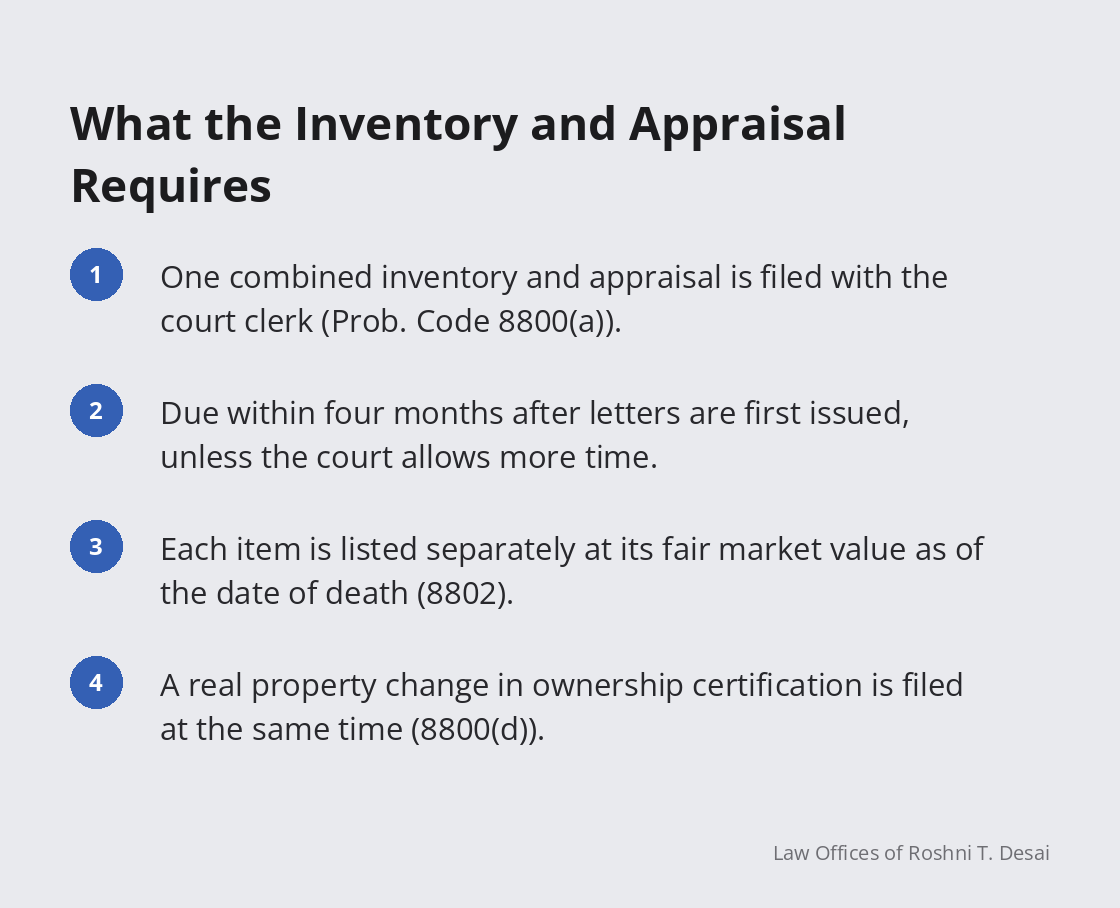
Probate Code Section 8800(a) requires the personal representative to file with the court clerk an inventory of property to be administered in the decedent’s estate together with an appraisal of that property, combined in a single document. The filing becomes part of the court record and is often the first complete picture the beneficiaries see of the estate. It also gives the court and the beneficiaries a starting point for later reports on how the estate was managed.
The Four-Month Filing Deadline
Under Section 8800(b), the inventory and appraisal must be filed within four months after letters are first issued to a general personal representative. The court may allow further time that is reasonable under the circumstances of the particular case, which can matter when an estate includes businesses, real estate in several counties, or assets that are difficult to locate. Section 8800(c) also allows partial inventories and appraisals where appropriate, but all of them must be filed before the time allowed under subdivision (b) expires.
How Each Item Must Be Listed
Section 8802 states that the inventory and appraisal must separately list each item and state the fair market value of the item at the time of the decedent’s death opposite the item. The date of death is the key reference point, not the date the inventory is prepared. Careful descriptions help avoid confusion later, especially for real property, vehicles, collections, business interests, and accounts that look similar on paper.
The Real Property Certification
Section 8800(d) adds a requirement that is easy to overlook. When the inventory and appraisal is filed, the personal representative must also file a certification that the change in ownership statement requirements either do not apply because the decedent owned no real property in California at death, or have been satisfied by filing a change in ownership statement with the county recorder or assessor of each California county where the decedent owned property. For estates with homes or rental properties in Orange County or elsewhere in the state, this step should be planned alongside the inventory itself.
How the Probate Referee and Personal Representative Share the Work
California divides appraisal duties between the personal representative and a neutral probate referee. Understanding who appraises what helps you prepare the right documents and avoid delays. It also explains why the family’s own estimate of a property’s worth is not the figure that ends up in the court file for most non-cash assets.
Assets the Personal Representative Appraises
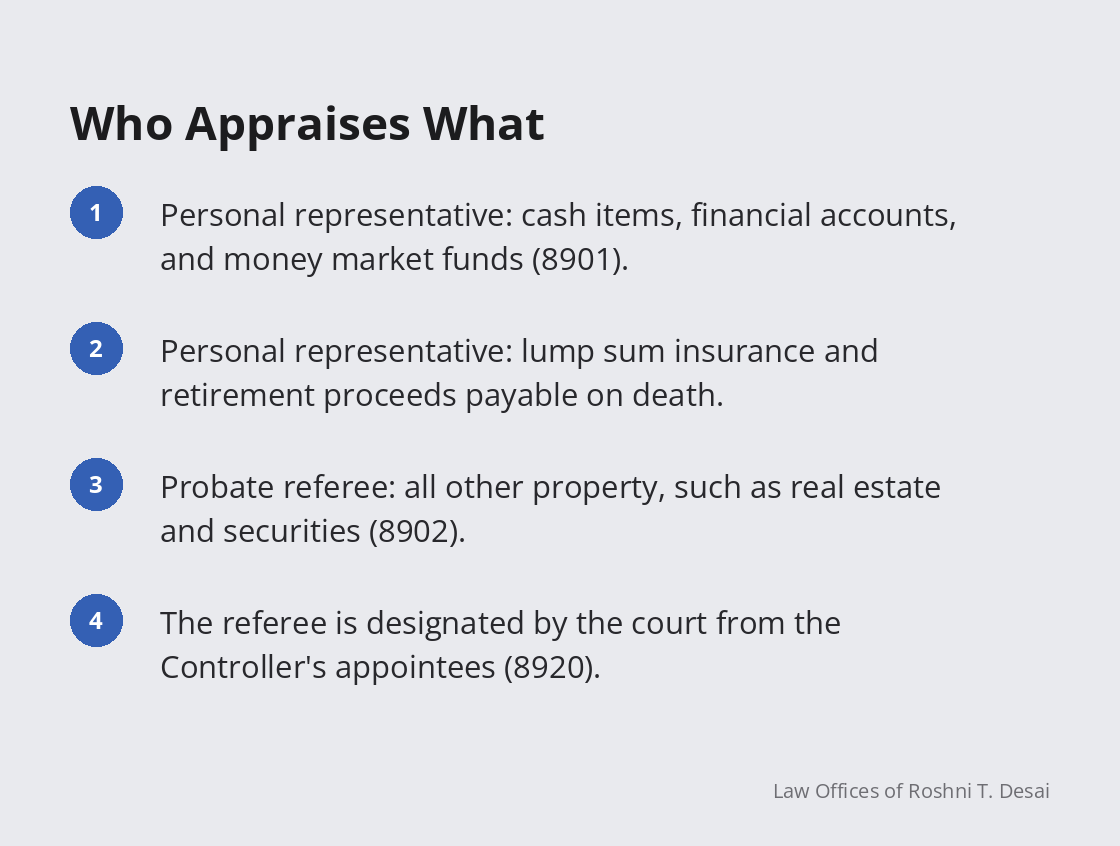
Under Probate Code Section 8901, the personal representative appraises cash and cash-like property. That includes money and other cash items such as checks issued on or before the date of death that can be immediately converted to cash, certain checks issued after death such as checks for wages earned before death and refund checks, accounts in financial institutions, cash deposits and money market mutual funds, and proceeds of life and accident insurance policies and retirement plans and annuities payable on death in lump sum amounts. Items whose fair market value, in the personal representative’s opinion, differs from face value are excluded from this list and go to the referee.
Assets the Probate Referee Appraises
Section 8902 provides that, except as otherwise provided by statute, the personal representative delivers the inventory to the probate referee designated by the court, together with the supporting data the referee needs, and the probate referee appraises all property other than the property appraised by the personal representative. Real estate, stocks and bonds, mutual funds other than money market funds, vehicles, business interests, and personal property such as jewelry and art generally fall into this category. Section 8901(d) specifically states that mutual funds, stocks, bonds, and other securities, other than cash deposits and money market funds, are appraised under the referee procedure.
Who the Probate Referee Is
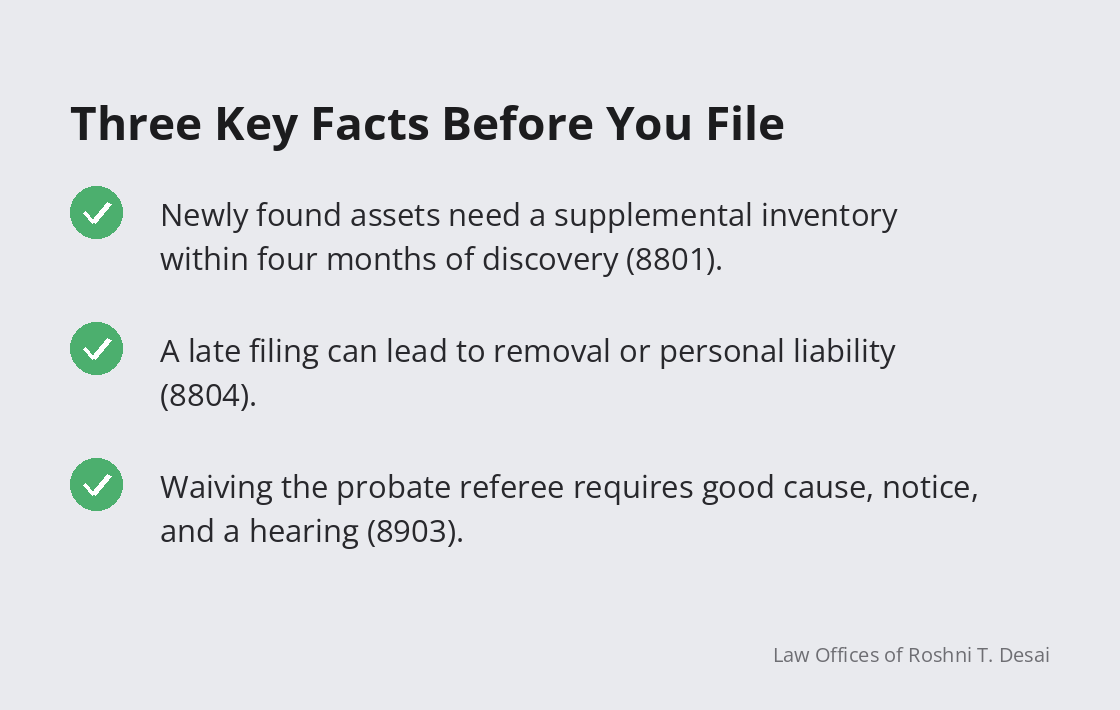
The probate referee is not chosen by the family. Under Section 8920, the referee designated by the court must be among the persons appointed by the Controller to act as a probate referee for the county, and the court may designate a referee from another county if no one is available or the court does not designate a person appointed for the county. The court can also, for good cause, waive appraisal by a probate referee under Section 8903, but the request must follow specific procedures, including notice to interested persons and a hearing, and the referee may oppose the waiver.
Mistakes That Complicate the Inventory and Appraisal
Errors in the inventory and appraisal can ripple through the rest of the administration. An incomplete list can lead to questions from beneficiaries, delays in sales, and complications when the estate is ready to close. A few common mistakes are worth avoiding from the beginning.
Leaving Out Assets Discovered Later
Personal representatives often learn about additional property months into the case, such as a forgotten account, a refund, or an interest in real estate. Section 8801 requires a supplemental inventory and appraisal of that property, prepared in the same manner as the original, within four months after the personal representative acquires knowledge of the property, unless the court allows more time. Keeping a running list of newly discovered assets and acting promptly prevents these items from becoming a problem at the end of the case.
Missing the Filing Deadline
Under Section 8804, if a personal representative refuses or negligently fails to file an inventory and appraisal within the time allowed, an interested person may petition the court. The court may compel the filing, remove the personal representative from office, or impose personal liability on the personal representative for injury to the estate or to an interested person that directly results from the refusal or failure. These consequences make it important to start gathering information as soon as letters are issued and to ask the court for more time when the circumstances justify it.
Appraising Assets That Belong to the Referee
Some personal representatives try to save time by assigning their own figures to real estate, securities, or valuable personal property. Unless the court has waived appraisal by a referee, those items belong in the referee’s portion of the inventory under Section 8902. Delivering accurate supporting information to the referee, such as account statements and property descriptions, keeps the process moving. If you have authority under the Independent Administration of Estates Act, a complete and timely inventory also makes later actions such as sales easier to support.
Final Thoughts
The California inventory and appraisal sets the foundation for the rest of a probate estate. Probate Code Section 8800 requires a combined inventory and appraisal within four months after letters are first issued, along with a real property certification, while Section 8802 requires each item to be listed with its fair market value at the date of death. Sections 8901 and 8902 divide appraisal duties between the personal representative and the probate referee, Section 8801 covers assets discovered later, and Section 8804 describes what can happen when the filing is not made on time.
If you were recently appointed, start collecting statements, deeds, titles, and account records right away, keep a list of every asset as you find it, and calendar the four-month deadline from the date your letters were issued.
If you are serving as an executor or administrator and need help preparing the inventory and appraisal or working with the probate referee, contact the Law Offices of Roshni T. Desai to discuss your estate and the steps that make sense for your family.