




Letters Testamentary California: How an Executor Gets Legal Authority to Act
Letters testamentary in California are the document that turns a name in a will into real legal authority. Many people are surprised to learn that being named executor does not, by itself, allow them to sell property, close accounts, or deal with banks on behalf of a loved one’s estate. Until the probate court appoints you and letters actually issue, institutions will usually decline to work with you, and the law gives you only very limited power to act. Understanding how letters work gives you real control over the first months of an estate administration.
At the Law Offices of Roshni T. Desai, we help families in Southern California open probate estates, obtain letters, and move through administration in the right order, so you can move forward with confidence. This guide explains what letters testamentary actually are, how to obtain them, what the court and the law require before they issue, and the mistakes that most often delay an executor’s appointment.
What Letters Testamentary Actually Are in California
When someone dies with a will that goes through probate, the court must formally appoint a personal representative to manage the estate. Letters are the court document that proves that appointment. California Probate Code section 8400 states that a person has no power to administer the estate until the person is appointed personal representative and the appointment becomes effective, and that the appointment becomes effective when the person appointed is issued letters. In practical terms, letters are the key that unlocks the estate.
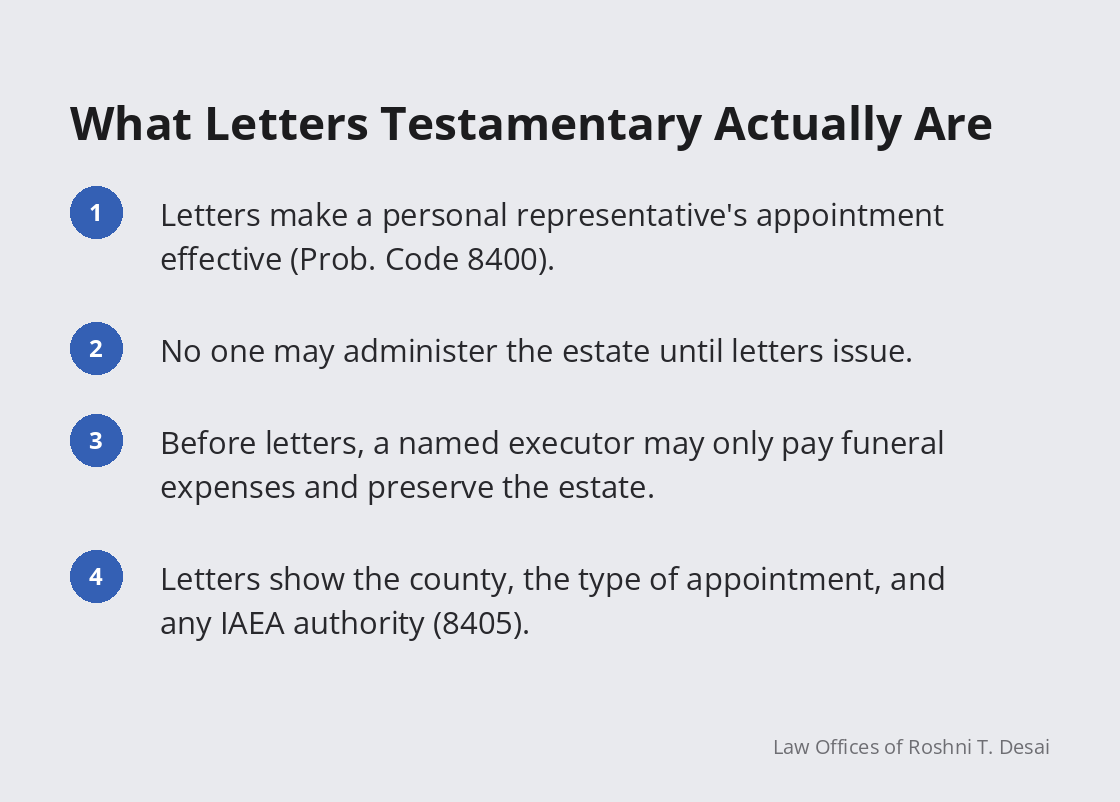
The same statute requires the order appointing a personal representative to carry a capitalized warning on its first page stating that the appointment is not effective until letters have issued. That warning exists because families often assume the court order itself is enough. It is not. The order approves the appointment, and the letters make it effective.
Letters Testamentary Versus Letters of Administration
The type of letters depends on the situation. When the person named as executor in a will is appointed, the letters identify that person as an executor, which is why they are commonly called letters testamentary. Under Probate Code section 8405, letters must state whether the personal representative is an executor, administrator, administrator with the will annexed, or special administrator. An administrator is appointed when there is no will, and an administrator with the will annexed is appointed when there is a will but no executor able or willing to serve.
Why a Named Executor Cannot Act Right Away
A will expresses who the decedent wanted in charge, but the court still has to confirm that choice. Probate Code section 8400 applies whether or not the person is named executor in the will. The law carves out a narrow exception: before the appointment becomes effective, a named executor may pay funeral expenses and take necessary measures for the maintenance and preservation of the estate. Anything beyond that, such as selling assets or distributing property, generally has to wait.
What Letters Show on Their Face
Letters are signed by the court clerk under the seal of the court. Section 8405 requires them to include the county that issued them, the name of the personal representative and the type of appointment, and a notation of whether the personal representative is authorized to act under the Independent Administration of Estates Act. If independent authority was granted, the letters also show whether that authority includes or excludes powers such as selling or exchanging real property, granting an option to purchase real property, or borrowing with a loan secured by real property.
How to Get Letters Testamentary in California
Obtaining letters follows a defined sequence. Each step has its own requirements, and skipping one can push back the date when you can finally act for the estate. Planning ahead and gathering documents early keeps the process moving.
Delivering the Original Will
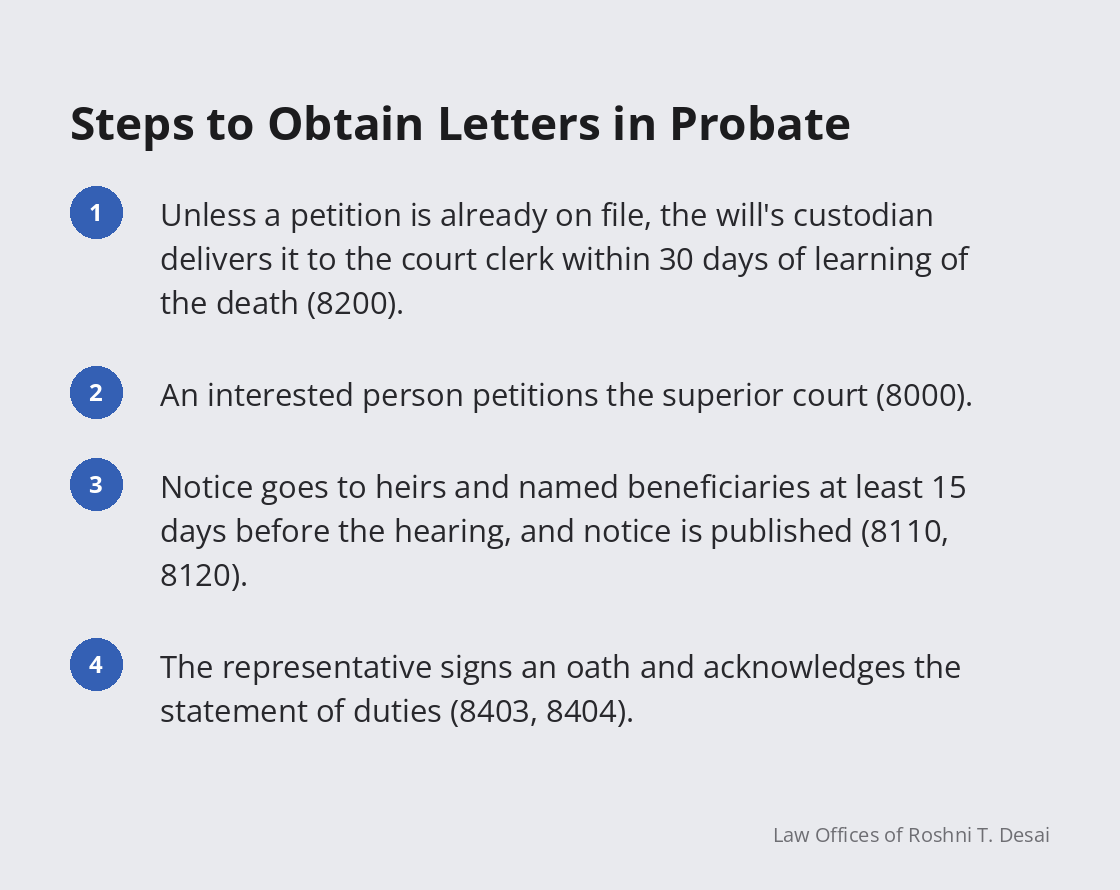
The process often begins before anyone files a petition. Under Probate Code section 8200, unless a petition for probate of the will is filed earlier, the custodian of a will must, within 30 days after having knowledge of the death, deliver the will to the clerk of the superior court of the county in which the estate may be administered and deliver a copy to the person named as executor, if that person’s whereabouts are known. A custodian who fails to comply can be liable for damages caused by the failure.
Filing the Petition
Probate Code section 8000 allows any interested person, at any time after the death, to start proceedings by petitioning the court for an order determining the date and place of death and for appointment of a personal representative, probate of the will, or both. The petition may be filed even if the will is not in the petitioner’s possession or is lost or destroyed. The named executor usually files, but the statute is not limited to that person.
Notice of the Hearing
The court will not grant the petition without proper notice. Under Probate Code section 8110, at least 15 days before the hearing, the petitioner must deliver notice of the hearing to each known or reasonably ascertainable heir and to each devisee, executor, and alternative executor named in any will being offered for probate. Section 8120 adds a separate requirement that notice of the hearing also be published before the hearing. Missing either form of notice can delay the hearing.
Oath and Acknowledgment of Duties
Even after the court grants the petition, letters do not issue automatically. Under Probate Code section 8403, the personal representative must take and subscribe an oath to perform the duties of the office according to law, and that oath constitutes acceptance of the office. Section 8404 also requires most personal representatives to file an acknowledgment of receipt of a statement of duties and liabilities in the form prescribed by the Judicial Council before letters are issued.
What Delays or Derails an Executor’s Appointment
Most delays in getting letters come from avoidable problems rather than contested litigation. Knowing where families typically run into trouble helps you avoid losing weeks or months at the start of an estate.
Acting Before Letters Issue
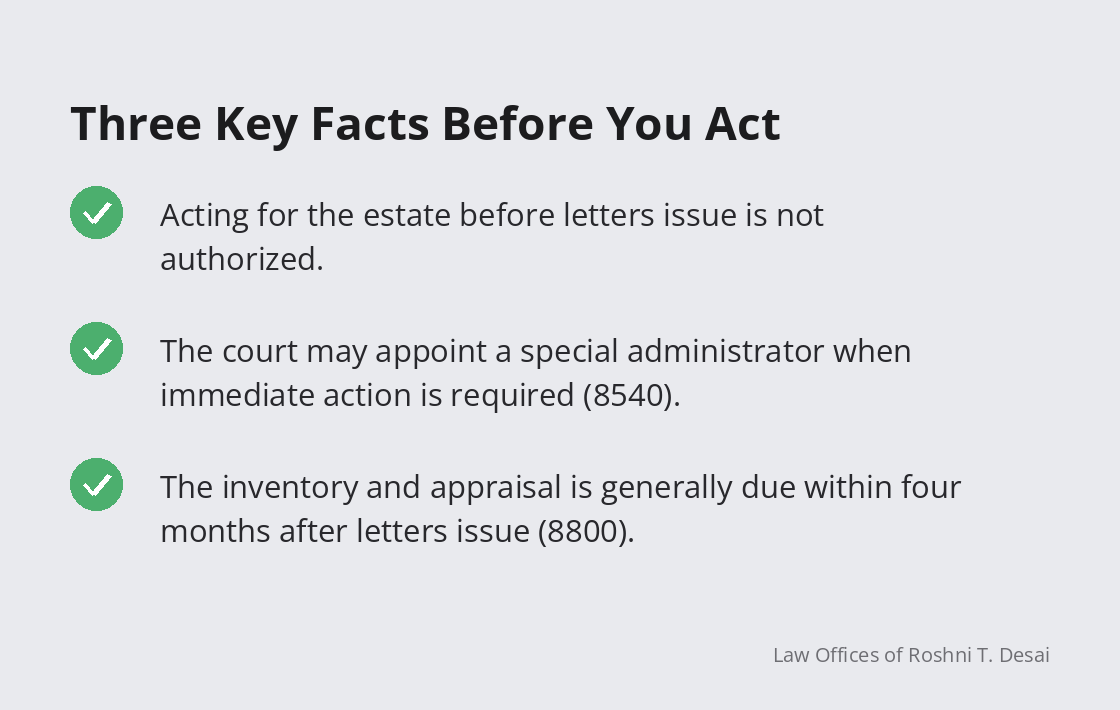
The most common mistake is treating the will as permission to start handling the estate. A named executor who closes accounts, sells a vehicle, or hands out property before letters issue is acting without legal authority under section 8400. Those actions can create disputes with beneficiaries and complications that later have to be unwound. Limiting yourself to preserving property and paying funeral expenses until letters issue keeps you on solid ground.
When the Named Executor Cannot Serve
Sometimes the person named in the will cannot be appointed. Probate Code section 8402 lists circumstances in which a person is not competent to act, including being under the age of majority or being subject to a conservatorship of the estate. When no executor is named, or every named executor has waived the right or is unwilling or unable to act, section 8440 calls for an administrator with the will annexed. When there is no will, section 8461 sets an order of priority for appointment as administrator that begins with the surviving spouse or domestic partner, followed by children and other relatives.
Urgent Situations and Special Administrators
The regular process takes time, and some estates cannot wait. If a business needs someone to make decisions or property needs immediate protection, Probate Code section 8540 allows the court to appoint a special administrator when the circumstances of the estate require the immediate appointment of a personal representative. The appointment can be limited to a specified term or to particular acts. This tool is meant for genuine urgency, not as a shortcut around the regular appointment process.
Forgetting What Comes After Letters
Receiving letters starts the next set of obligations rather than ending the work. Under Probate Code section 8800, the inventory and appraisal generally must be filed within four months after letters are first issued to a general personal representative, though the court may allow more time. Section 9050 also requires the personal representative to give notice of administration to the decedent’s known or reasonably ascertainable creditors, in addition to the published notice. Calendaring these duties the day letters issue prevents problems later.
Final Thoughts
Letters testamentary are what give an executor the legal power to manage a California estate. Getting them requires delivering the will, filing a petition, giving proper notice, and completing the oath and acknowledgment of duties. Until letters issue, a named executor’s authority is limited to paying funeral expenses and preserving estate property.
Handling these steps in the right order can save months and protect you from personal risk while you honor your loved one’s wishes. Clear guidance at the start makes the rest of the administration far more manageable.
If you have been named executor in a loved one’s will, contact the Law Offices of Roshni T. Desai to speak with our team in Southern California. We will explain the process, help you obtain letters, and help you take the next step with confidence.