




Living Trust Administration Attorney: Finding Compassionate Counsel
When a loved one passes away, administering their living trust can feel overwhelming. The process involves legal requirements, tax implications, and family dynamics that demand careful attention.
A living trust administration attorney guides you through each step while protecting your family’s interests. We at Law Offices of Roshni T. Desai understand that compassionate counsel matters as much as legal knowledge during this sensitive time.
Why Professional Guidance Matters in Trust Administration
The Legal Deadlines You Cannot Miss
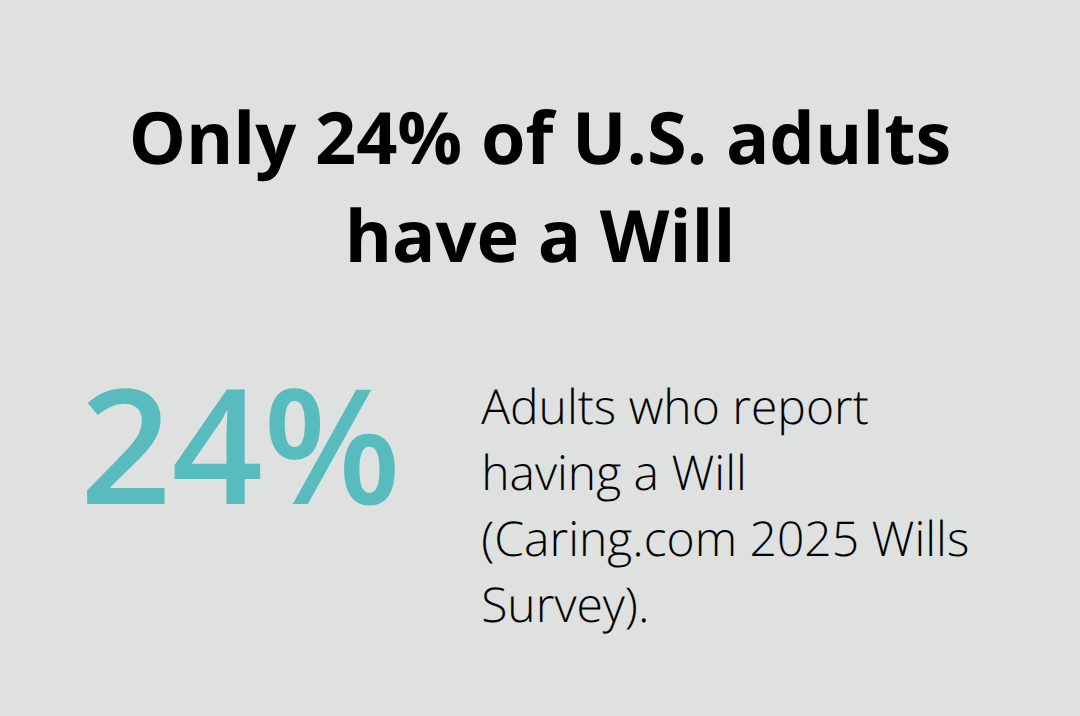
Administering a living trust involves far more than simply distributing assets. According to Caring.com’s 2025 Wills Survey, only 24% of adults have a Will, and even fewer understand what happens after someone passes away. The reality is that most trustees face unfamiliar legal deadlines, tax obligations, and procedural requirements that vary significantly depending on California law and the specific trust language.
Within 60 days of the settlor’s death, you must notify all beneficiaries under California Probate Code §16061.7. They then have 120 days to contest the trust under Probate Code §16061.8. Missing these windows creates liability exposure and potential legal complications. You also need to obtain certified death certificates-typically 10 to 15 original copies, since banks, investment firms, and government agencies each require their own. Locating the original trust document and any amendments proves your authority as trustee and establishes the exact terms you must follow.
The Financial Obligations That Trap Trustees
Many trustees underestimate the financial side of administration. You cannot distribute assets before paying debts, funeral expenses, medical bills, and taxes. The decedent’s final Form 1040 must be filed, and depending on the trust’s income and assets, a fiduciary Form 1041 may be required. If the estate exceeds the federal exemption threshold of $13.61 million in 2024, Form 706 becomes necessary.
California imposes no state inheritance tax, but federal obligations remain substantial for larger estates. Most trust administrations take 6 to 12 months, though cases involving real property, business interests, or significant tax issues extend considerably longer. Mistakes in tax elections or asset valuation at the date of death directly affect capital gains calculations when assets are eventually sold.
Mistakes That Cost Families Thousands
The most common mistakes occur when trustees commingle personal and trust funds, fail to keep beneficiaries informed throughout the process, or distribute assets prematurely. Special needs beneficiaries present additional complexity-distributing assets incorrectly disqualifies them from SSI or Medicaid benefits, requiring careful coordination with guardians or caregivers.
Professional guidance from someone familiar with Southern California trust and probate law prevents these pitfalls while maintaining the privacy and efficiency that living trusts are designed to provide. We at Law Offices of Roshni T. Desai bring over 25 years of experience navigating these requirements. Ms. Desai’s dual licensure as an attorney and real estate professional streamlines property-related transactions that often arise during administration, reducing unnecessary costs and delays for your family.
Understanding what qualifies as a trustee’s fiduciary duty and how to meet California’s specific requirements sets the foundation for sound administration. The next section examines what qualities and experience matter most when selecting an attorney to guide you through this process.
Selecting an Attorney Who Understands Your Situation
Finding the right trust administration attorney means looking beyond credentials alone. You need someone with demonstrated experience navigating Southern California’s specific probate requirements, combined with genuine understanding of how family stress compounds legal complexity. When you interview potential attorneys, ask direct questions about their recent cases involving trust administration in California. How many administrations have they completed in the past two years? What percentage involved contested distributions or special needs beneficiaries?
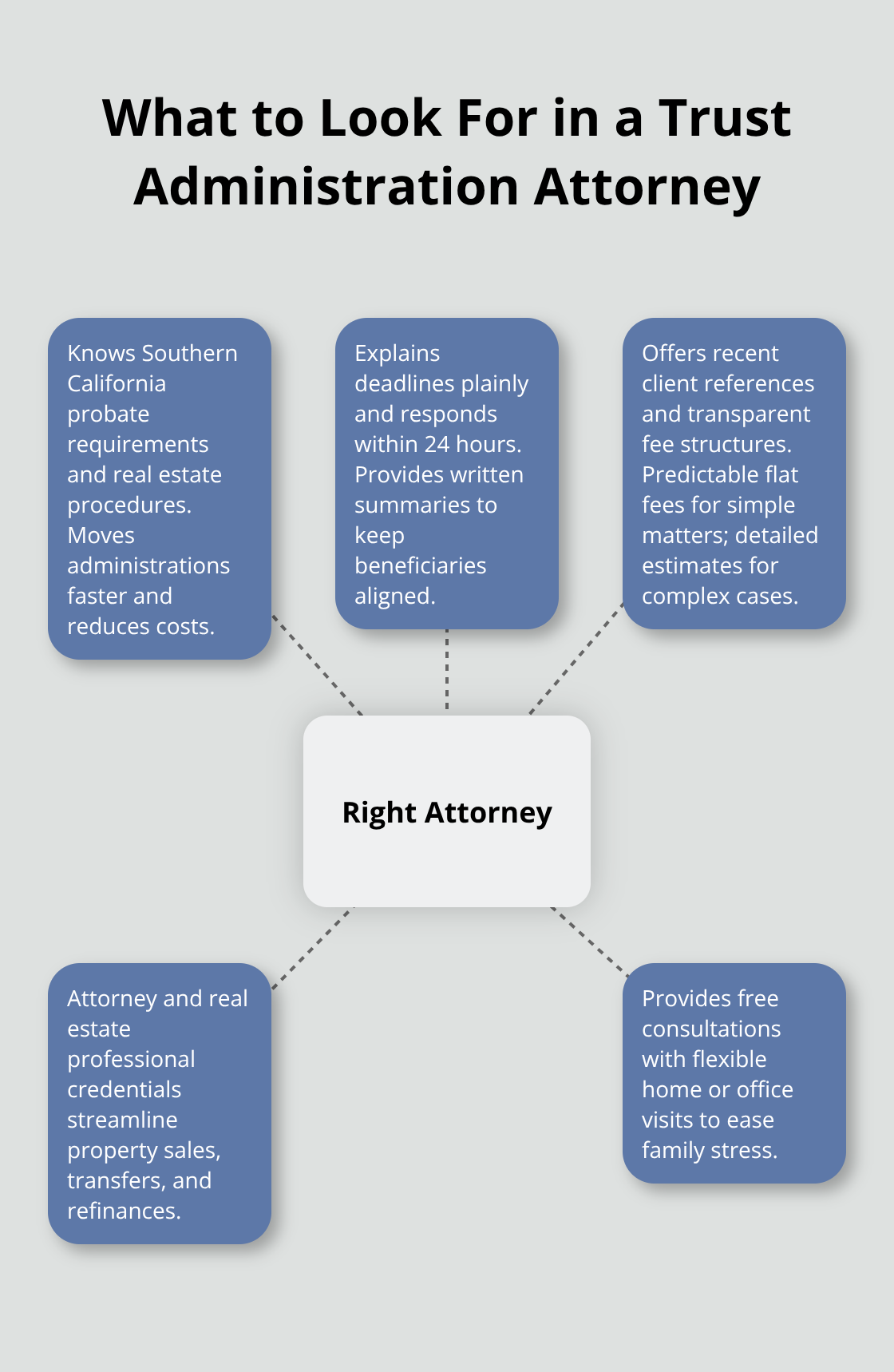
An attorney who hesitates or speaks only in generalities hasn’t done enough frontline work to handle your situation effectively.
Experience with Local Property Law
Experience with Southern California property law matters significantly because real estate often represents the largest trust asset. An attorney who understands both legal requirements and real estate procedures moves the administration faster and reduces costs substantially. Verify that your potential attorney has handled trust administrations where property needed to be sold, refinanced, or transferred to beneficiaries. Ask specifically about their experience with the Heggstad petition process in case any assets weren’t properly funded into the trust before death-this practical issue arises more often than most people realize.
Clear Communication Without Legal Jargon
Compassion in trust administration means your attorney explains deadlines and obligations clearly, then stays accessible when questions arise. The 60-day beneficiary notification window and 120-day contest period create genuine time pressure, and you need someone who responds promptly rather than in weeks. Ask prospective attorneys about their communication practices: Do they return calls within 24 hours? Can you reach them by email or phone, or only during scheduled appointments? When selecting counsel, prioritize firms that provide clear written summaries of what they’ve completed and what comes next-this prevents confusion among multiple beneficiaries and reduces family conflict.
Verifiable Track Record in Your Region
Request references from clients who completed trust administrations within the past three years, and contact them directly. Ask whether the attorney caught problems early, whether communication remained clear throughout the process, and whether the administration stayed within the estimated timeline. An attorney’s longevity in a specific region matters; someone who has worked with local probate courts, title companies, and financial institutions for years moves cases forward more efficiently than someone new to the area. When interviewing attorneys, ask about their fee structure upfront-flat fees for straightforward administrations offer predictability, while hourly billing for complex cases with disputes should include detailed estimates and regular updates so you’re never surprised.
Dual Expertise in Law and Real Estate
Law Offices of Roshni T. Desai combines legal knowledge with real estate professional credentials, streamlining property-related transactions that frequently arise during administration. This dual licensure reduces unnecessary delays and communication friction between your family, financial institutions, and title companies. The firm offers free consultations with flexible home or office visits, recognizing that families managing grief and complex finances need convenience rather than additional obstacles.
The right attorney brings both technical knowledge and genuine responsiveness to your family’s needs. Understanding what questions to ask and what red flags to watch for positions you to make a confident choice. The next section examines the actual steps involved in trust administration and what you can expect at each stage.
What Happens After Someone Dies
The First Week: Immediate Actions
Trust administration follows a structured timeline, though the exact pace depends on asset complexity and tax obligations. The initial phase demands immediate action. Within the first week, you must obtain 10 to 15 certified death certificates since banks, brokers, and government agencies each require originals. Simultaneously, locate the original trust document and any amendments-these establish your authority and spell out exactly what you must do.
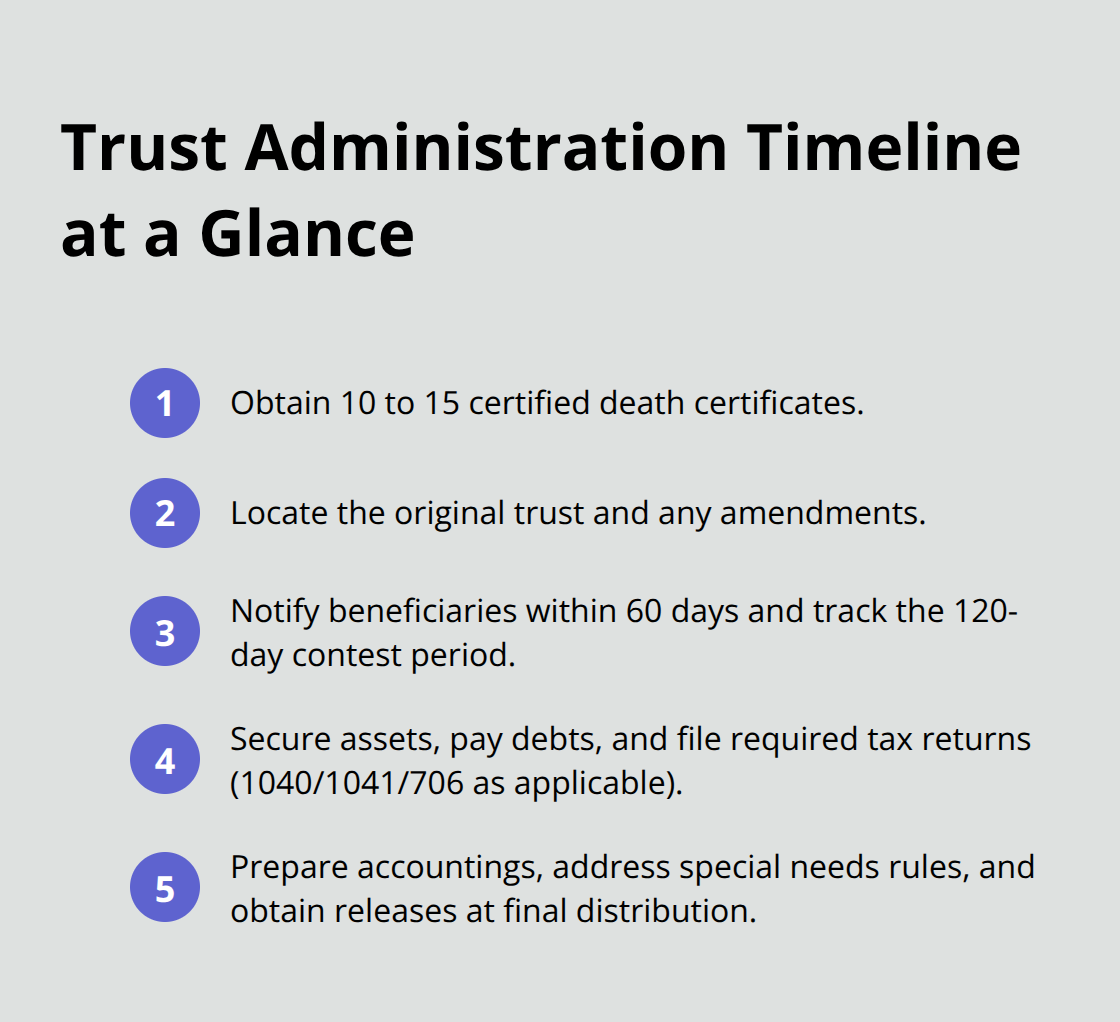
Read the trust thoroughly to identify all beneficiaries, specific gifts, distribution conditions, and any special instructions for particular assets.
The 60-Day Notification Window
California Probate Code §16061.7 requires you to notify all beneficiaries within 60 days after the trust becomes irrevocable. They then have 120 days to contest the trust under Probate Code §16061.8, so mark these dates clearly on your calendar. During this same period, you must secure all trust assets including real property, bank accounts, investment accounts, business interests, and valuable personal property. Record the date-of-death value for each asset since this figure determines future capital gains taxes when assets sell. Apply for an Employer Identification Number (EIN) from the IRS and open a dedicated trust bank account to keep income, expenses, and distributions completely separate-commingling funds creates audit risk and muddles your accounting obligations.
Managing Debts and Tax Obligations
The middle phase involves financial obligations that cannot be rushed. You must pay debts, funeral expenses, medical bills, and ongoing property costs from trust funds before distributing anything to beneficiaries. File the decedent’s final Form 1040, and prepare a fiduciary Form 1041 if the trust generated income. If the estate exceeds the federal exemption threshold of $13.61 million in 2024, Form 706 becomes necessary. California imposes no state inheritance tax, but federal rules still apply for large estates. Most administrations take 6 to 12 months, though real property sales, business interests, or substantial tax issues extend timelines considerably.
Accounting and Special Beneficiary Considerations
You must prepare a detailed trust accounting showing all assets, income earned, expenses paid, and distributions made-California Probate Code §16062 gives beneficiaries the right to annual accountings and a final accounting, though written waivers are possible. Special needs beneficiaries require extra documentation to protect their SSI or Medicaid eligibility, meaning you must follow supplemental needs trust guidelines rather than standard trust language. This careful coordination prevents disqualification from critical government benefits.
Final Distribution and Asset Transfers
The final phase involves distributing remaining assets per the trust’s instructions. You transfer real property through deeds from the trustee and coordinate with financial institutions for fund transfers. Obtain written receipts or releases from beneficiaries to protect yourself from future liability claims. We at Law Offices of Roshni T. Desai handle each step with meticulous attention to deadlines and beneficiary communication, recognizing that families navigating this process need clarity and responsiveness rather than delays.
Final Thoughts
Trust administration demands more than legal knowledge-it requires someone who understands both the technical requirements and the emotional weight families carry during this time. When you select a living trust administration attorney, prioritize demonstrated experience with Southern California probate law, proven responsiveness to client communication, and a track record handling administrations similar to yours. An attorney who explains deadlines clearly, returns calls promptly, and anticipates problems before they escalate protects your family from costly mistakes and unnecessary delays.
We at Law Offices of Roshni T. Desai bring over 25 years of experience guiding families through trust administration with genuine compassion and practical efficiency. Ms. Desai’s dual licensure as an attorney and real estate professional streamlines property transactions that frequently arise during administration, reducing communication friction and unnecessary costs. Special needs beneficiaries, contested distributions, or property sales require someone who has navigated these situations repeatedly and knows how to protect your family’s interests without creating additional stress.
Contact Law Offices of Roshni T. Desai to discuss your specific situation and understand how we can guide your family through trust administration with clarity and care. We offer free consultations with flexible home or office visits, recognizing that families managing grief and complex finances need accessibility rather than obstacles. Whether you face immediate administration needs or plan ahead, our team provides the personalized attention your family deserves during this significant time.