




Living Trust Administration Tasks: From Setup to Asset Transfer
A living trust is one of the most effective ways to manage your assets and protect your family’s future. Living trust administration tasks might seem overwhelming at first, but breaking them down into clear steps makes the process manageable.
We at Law Offices of Roshni T. Desai have guided countless clients through every stage-from creating their trust to transferring assets to beneficiaries. This guide walks you through what you need to know.
Building Your Trust From the Ground Up
A living trust starts with three foundational decisions: the trust structure, which assets go inside, and who manages everything. Revocable trusts dominate for good reason-they offer maximum flexibility during your lifetime and avoid probate entirely when you pass. You can modify them, remove assets, or dissolve them completely without legal friction. Irrevocable trusts lock in your choices permanently, which creates tax advantages in specific scenarios like estate tax reduction or Medicaid planning, but they demand careful consideration upfront because reversing course becomes nearly impossible. Most people benefit from revocable trusts simply because life changes unexpectedly. The IRS reports that approximately 55% of Americans die without any estate plan, yet those with living trusts avoid the probate process entirely-a system that consumes 3-7% of estate value in fees and takes 6-12 months on average according to state court data. Your choice between revocable and irrevocable hinges on your net worth, tax situation, and whether you need ongoing control.
Funding Your Trust Requires Deliberate Action
Funding means transferring ownership of your assets into the trust’s name. This step separates a living trust from a piece of paper-without funding, the trust accomplishes nothing. Real estate transfers require new deeds with the trust listed as owner; financial institutions need formal requests to retitle accounts; vehicles demand title changes through your state’s Department of Motor Vehicles. Many people create trusts but leave assets in their personal names, which defeats the entire purpose. This mistake surfaces frequently and remains correctable but tedious to fix later. Beneficiary designations on retirement accounts and life insurance policies should typically name the trust as beneficiary only in specific scenarios (usually when minor children are involved or when you want the trust to control distribution timing). Digital assets, cryptocurrency holdings, and online accounts present newer challenges; you’ll need a comprehensive inventory documenting usernames, locations, and access methods so your trustee can locate everything.
Naming Your Trustee and Beneficiaries Shapes Everything
Your trustee manages trust assets during your life and distributes them after your death. This person needs reliability, financial competence, and the ability to handle family dynamics without bias. Many people name themselves as initial trustee, then designate a successor trustee-typically an adult child or professional fiduciary-to take over if illness or death occurs. Corporate trustees like banks charge ongoing fees ranging from 0.5% to 2% annually depending on portfolio size, while family members serve free but may lack investment knowledge. Beneficiaries are the people who ultimately receive assets. You can name primary beneficiaries who inherit first and contingent beneficiaries who inherit if primaries predecease you. Specific bequests work too-leaving your home to one child and investment accounts to another. Minor children present complications; without a guardianship plan inside your trust, courts will assign guardians even if you’ve created the trust. Naming a backup trustee to manage assets for minors until they reach adulthood keeps control within your family rather than court systems (avoiding delays and reducing costs associated with court-supervised guardianships).
Moving Forward With Your Trust Structure
These three decisions-trust type, funded assets, and named fiduciaries-form your trust’s backbone. Once you’ve made these choices and completed the funding process, your trust stands ready to manage your assets during your lifetime. The next phase involves maintaining detailed records and understanding how your trustee operates day-to-day, which keeps your trust functioning smoothly as circumstances evolve.
Managing Your Trust During Your Lifetime
Your living trust requires active management during your lifetime, not just at creation. Many people set up their trust, then treat it like a completed project gathering dust. This approach creates problems when you need to access funds, make changes, or handle unexpected situations. The key is treating your trust as a living document that demands regular attention.
Document Every Asset in Your Trust
Create a master inventory listing every asset inside your trust-real estate addresses, bank account numbers, investment account details, insurance policies, and digital assets. Update this list annually or whenever you acquire significant property. Your trustee cannot distribute assets they cannot find, and the IRS estimates that unclaimed property in the United States exceeds $58 billion. Without clear records, your beneficiaries may never locate everything you intended to leave them.
Store this inventory with your trust documents in a secure location, and provide your successor trustee with access instructions before you need them. This single step prevents countless headaches and ensures your trustee can act quickly when the time comes.
Understand Your Trustee’s Day-to-Day Responsibilities
Your trustee’s responsibilities during your lifetime are surprisingly limited if you serve as trustee yourself. You can buy and sell assets, take loans against property, and make investment decisions without court approval-this is the revocable trust advantage. However, your trustee must keep trust assets separate from personal funds, file a separate tax return if the trust generates income above $600 annually (the IRS threshold for filing), and maintain detailed records of all transactions.
These requirements apply whether you manage your own trust or delegate to someone else. If you name a professional trustee during your lifetime, expect to pay annual fees starting around $2,000 to $5,000 depending on portfolio complexity. Serving as your own trustee eliminates these costs until incapacity occurs.
Update Your Trust When Life Shifts
Life changes demand trust updates. Marriage, divorce, births, deaths, significant asset purchases, tax law changes, or moves to different states all warrant reviewing your trust document. Many people delay updates thinking minor changes don’t matter, but outdated beneficiary designations or asset descriptions create disputes when distribution time arrives. A 2023 survey by Caring.com found that 60% of Americans haven’t updated their estate plans in over five years, yet life circumstances shift constantly.
Update your trust when you sell your primary residence and purchase another, when you receive an inheritance, when children are born or reach adulthood, or when your net worth changes substantially. Amendment documents called trust modifications allow you to make changes without rewriting the entire trust, which saves money and maintains consistency. Some situations require complete trust replacement-if your trustee becomes incapacitated or refuses to serve, or if your original goals no longer align with your circumstances.
Work with an attorney when making significant changes rather than attempting DIY modifications, as poorly drafted amendments create ambiguity about your actual intent. Your trust succeeds only through consistent maintenance and timely updates that reflect your current life situation. Once you’ve established these management practices, your attention turns to what happens when you pass-the distribution phase that your beneficiaries depend on.
Transferring Assets After You Pass Away
The First 30 Days Set the Pace
Your trustee’s responsibilities shift dramatically once you pass away. During your lifetime, managing the trust felt routine-updating beneficiary information, maintaining records, perhaps adjusting asset allocations. After death, your trustee faces a compressed timeline with legal obligations that demand immediate attention.
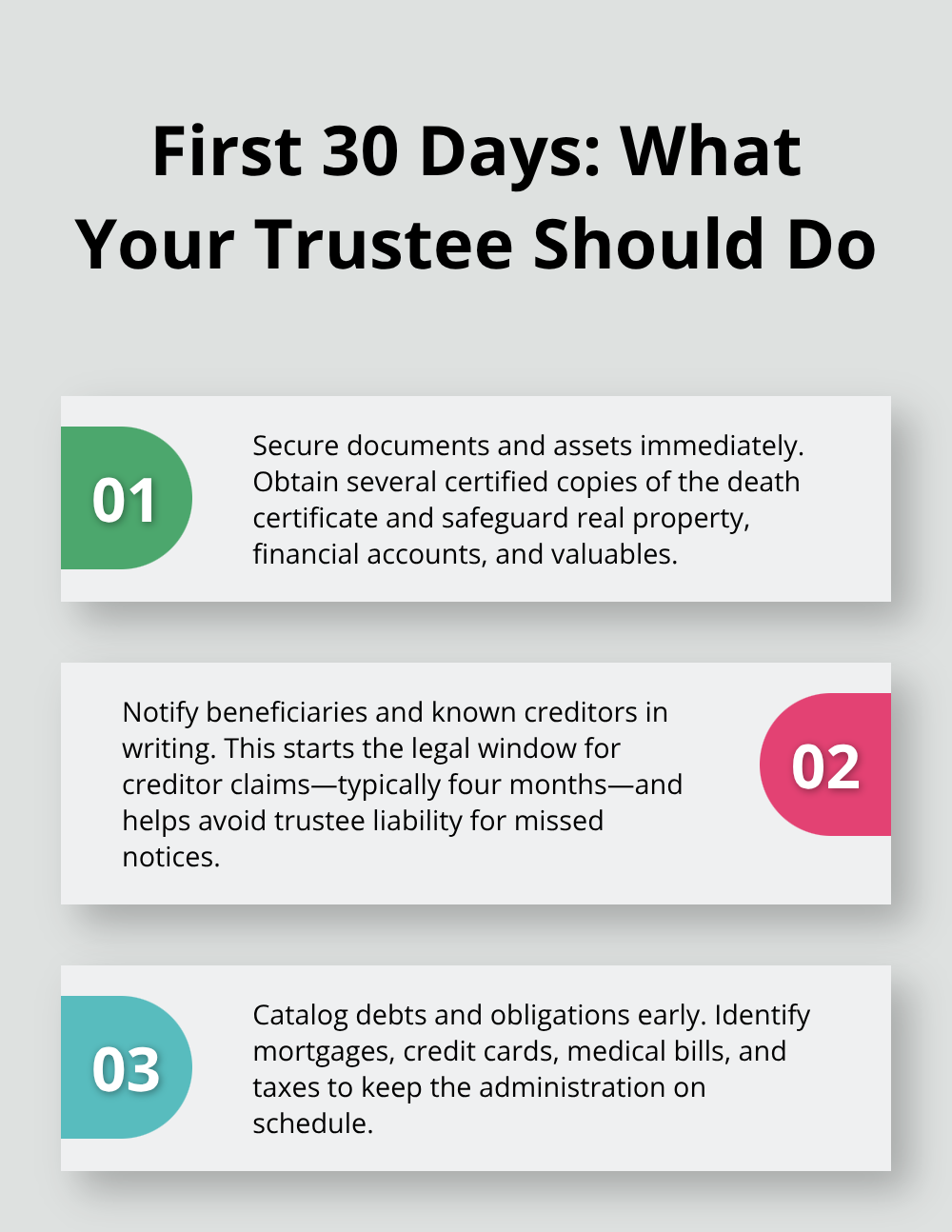
The first 30 days are critical. Your trustee must locate your death certificate, secure all trust assets, and notify beneficiaries and creditors. This notification triggers a specific legal window: creditors typically have four months from the date of death to file claims against your estate. Failing to notify known creditors can expose your trustee to personal liability.
Your trustee should send written notice to all beneficiaries named in your trust, including contingent beneficiaries, along with a copy of the trust document. Many states require this notification within specific timeframes-California law mandates notification within 60 days of death. Simultaneously, your trustee must identify all debts: outstanding mortgages, credit card balances, medical bills from final illness, and tax obligations.
Handling Financial and Tax Obligations
The IRS gives estates nine months to file the final income tax return for the deceased, though an extension can push this to 18 months. Your trustee should compile a complete asset inventory using the master list you maintained during your lifetime, then obtain updated valuations for real property, vehicles, and investments as of the date of death. This valuation determines the tax basis for beneficiaries and affects any estate tax calculations if your estate exceeds federal thresholds (currently $13.61 million for deaths in 2024, according to IRS guidelines).
Distributing Assets According to Trust Terms
Distributing assets requires your trustee to follow your trust’s specific language exactly. If your trust states that your home goes to your oldest child and investment accounts divide equally among three children, that’s what happens-no flexibility, no exceptions based on financial need or family politics. Your trustee cannot favor one beneficiary over another or interpret vague language creatively. If disputes arise about your intent, courts interpret the trust document as written, which is why precise language during setup matters enormously.
Managing Property Transfers
Real property requires new deeds transferring ownership from the trust to beneficiaries, filed with the county recorder’s office. This process typically takes 30 to 60 days and costs between $200 and $500 in recording fees depending on your county. Vehicles need title transfers through your state’s Department of Motor Vehicles, which usually completes within two weeks.
Investment accounts and bank funds transfer more smoothly-your trustee provides death certificates and trust documentation to financial institutions, which then retitle accounts into beneficiary names or distribute funds directly. Some financial institutions move slowly; expect two to four weeks for bank accounts and six to eight weeks for investment accounts with complex holdings. Your trustee should request expedited processing when possible, though institutions rarely prioritize trust distributions over other transactions.
Selling Property as Part of Distribution
If your trust included real property that beneficiaries wish to sell-perhaps a vacation home nobody plans to use or a rental property requiring active management-your trustee can authorize the sale directly without court involvement. This is a major advantage of trusts over probate, where property sales require court approval and consume additional time and legal fees.
Property sales tied to trust administration can become complicated, particularly when multiple beneficiaries own the property jointly. We at Law Offices of Roshni T. Desai hold dual licensure as both attorneys and real estate professionals, which streamlines these transactions, reduces costs, and prevents miscommunication between legal and real estate sides of the transaction.
Final Thoughts
Living trust administration tasks span from initial setup through final asset distribution, and mastering each phase protects your family and preserves your wealth. The foundation matters most-choosing between revocable and irrevocable structures, funding your trust completely, and naming reliable fiduciaries determines whether your trust functions smoothly or creates problems later. During your lifetime, consistent record-keeping and regular updates keep your trust aligned with your actual circumstances. When you pass, your trustee faces compressed timelines and legal obligations that demand precision-notifying beneficiaries and creditors within required windows, handling tax filings, and distributing assets exactly as your trust specifies.
Many people underestimate how much attention living trust administration requires. The difference between a trust that works seamlessly and one that creates family conflict or missed deadlines often comes down to preparation and professional guidance at critical moments. You don’t need an attorney for every decision, but certain situations demand it: when your estate exceeds $13.61 million, when beneficiaries might dispute your intent, when property sales are involved, or when tax implications become complex.
We at Law Offices of Roshni T. Desai have guided clients through every phase of trust administration across Southern California. Our dual licensure as both attorneys and real estate professionals means we handle estate-related property transactions efficiently, reducing costs and communication problems that typically slow down distributions. Contact us for a free consultation with flexible scheduling-whether you prefer meeting at your home or office-so you can discuss your specific situation without pressure or expense.