



Los Angeles Probate Administration: A Practical Guide for Executors
Serving as an executor in Los Angeles comes with real legal obligations and tight deadlines. The probate process can feel overwhelming, but understanding the key requirements makes it manageable.
We at Law Offices of Roshni T. Desai have guided countless executors through Los Angeles probate administration. This guide walks you through what you need to do, where mistakes happen, and how to protect yourself along the way.
What Executors Must Do in Los Angeles Probate
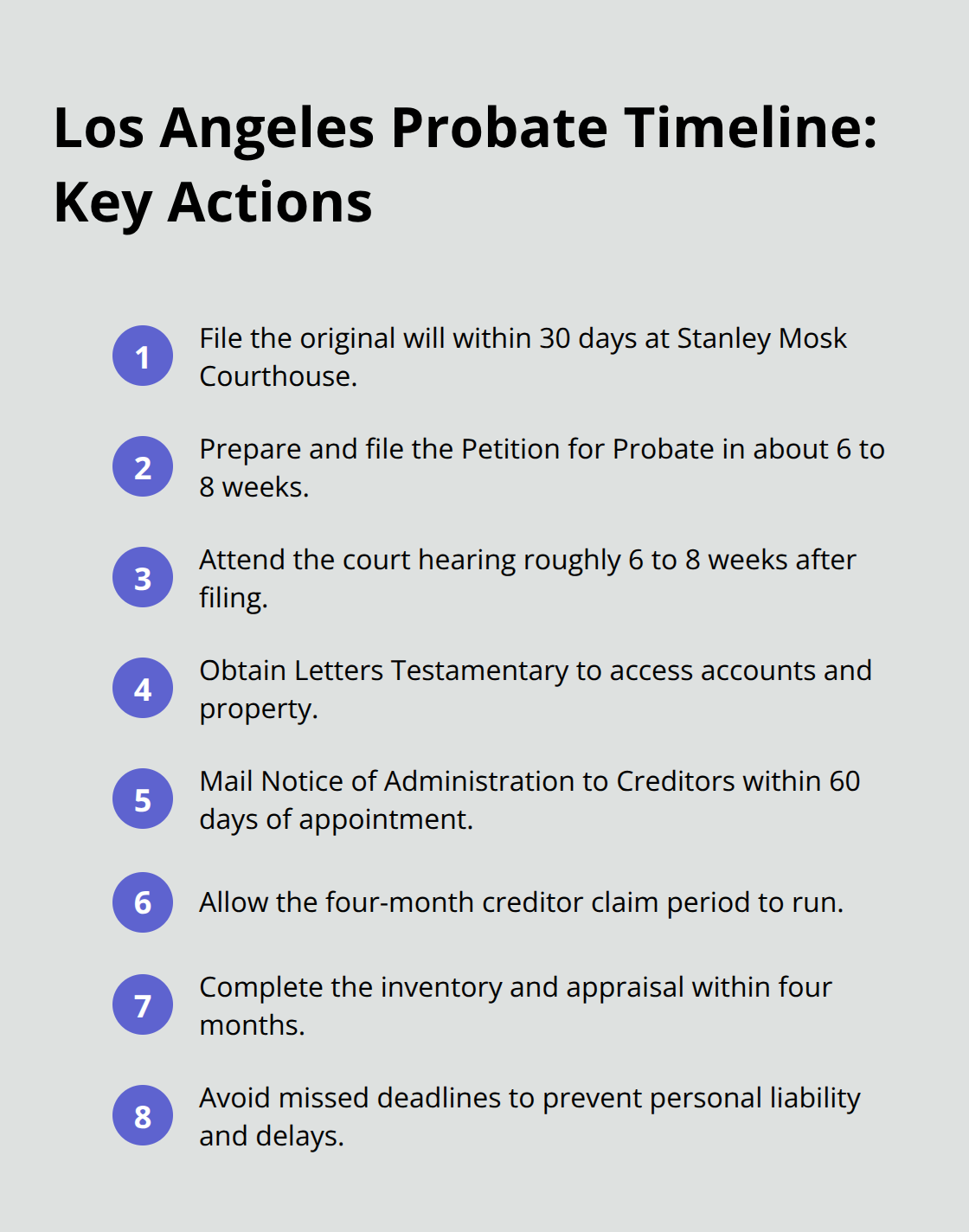
Los Angeles Probate Court operates under strict timelines that leave no room for delays. Within 30 days of death, you must file the original will with the court at Stanley Mosk Courthouse in downtown Los Angeles. You then have approximately 6 to 8 weeks to prepare and file your Petition for Probate, using forms DE-111, DE-131, DE-140, DE-121, and DE-147. The court will schedule a hearing roughly 6 to 8 weeks after filing, at which point the judge formally appoints you and issues Letters Testamentary. These letters are your proof of authority-you cannot access bank accounts, securities, or real property without them. Within 60 days of appointment, you must file Notice of Administration to Creditors, which triggers a four-month period during which creditors can submit claims against the estate. You must complete your inventory and appraisal of all assets within four months. The creditor claims period runs concurrently, so timing is critical. Missing any of these deadlines creates legal exposure for you personally and extends the entire probate process by months or even years.
Your Fiduciary Duty Creates Personal Liability
California law imposes on you the highest duty in law: a fiduciary duty. This means you cannot act in self-interest, cannot engage in self-dealing, and must protect beneficiaries above all else. A breach of this duty results in personal liability that lasts decades or extends beyond the decedent’s death. The statute of limitations for fiduciary breaches runs from discovery of the wrongdoing, and for minor beneficiaries, from their eighteenth birthday.
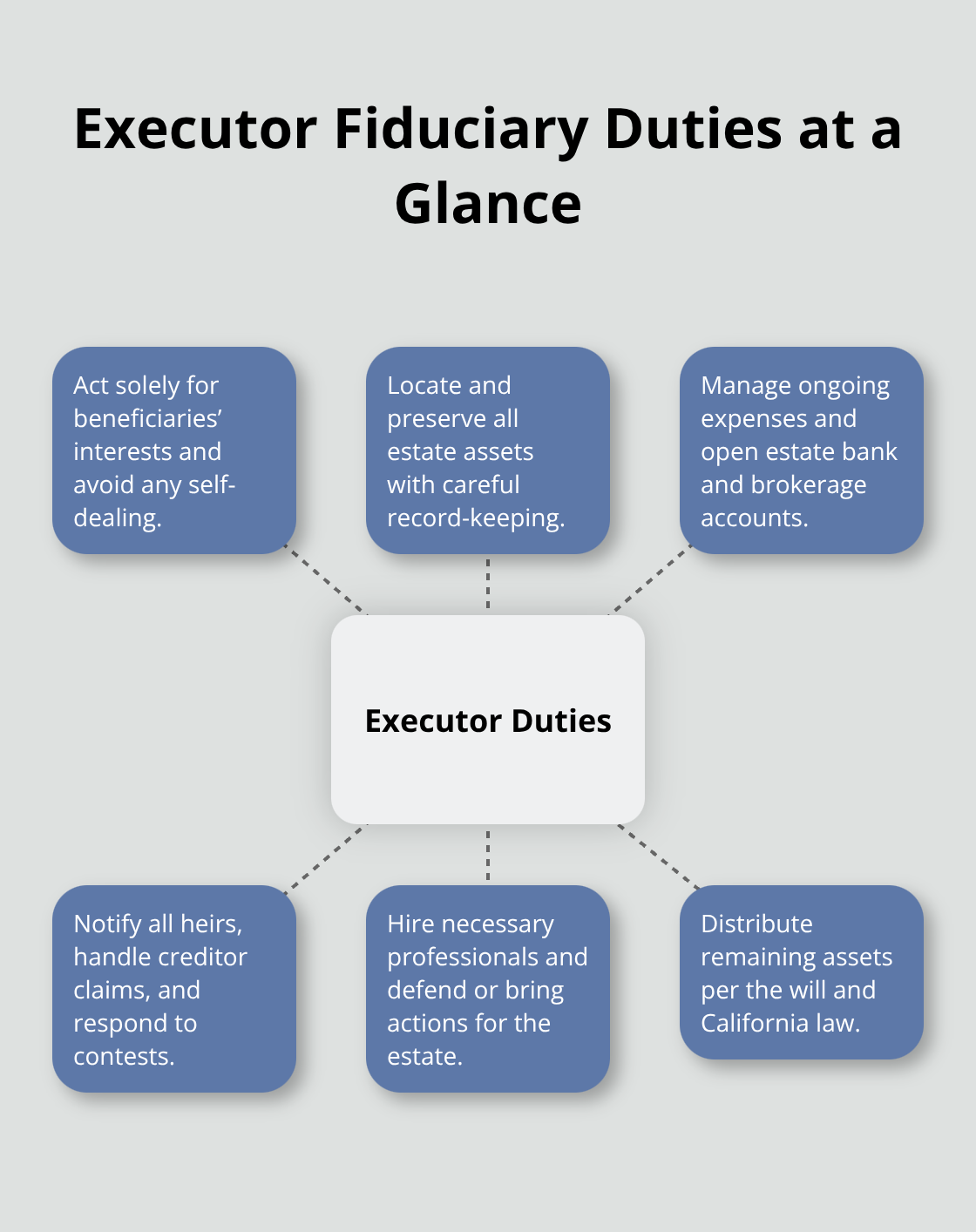
You can shorten this liability exposure by filing court-approved petitions and accountings, which bar future claims-but only if you complete them correctly. Your duties include locating all assets and preserving them, managing ongoing expenses like mortgage and utilities, setting up estate bank and brokerage accounts, identifying and notifying all heirs, handling creditor claims and contests, hiring necessary professionals, and distributing remaining assets according to the will and California law. You must also defend the estate in legal actions and consider filing suit to recover assets. Many executors underestimate this workload and make costly mistakes.
Common Filing Errors That Derail Probate
Filing in the wrong location tops the list of avoidable errors. All Los Angeles County probate cases must be filed at Stanley Mosk Courthouse in Room 113, regardless of where the decedent lived in the county. Incomplete petitions rank second-the court requires detailed information beyond standard forms, including complete property addresses, precise descriptions of business interests, and exact heir relationships. Undervaluing the estate happens surprisingly often and triggers fee disputes later. Try using bank and brokerage statements, recent real estate assessments, vehicle values from Kelley Blue Book or NADA, current stock prices, and professional business valuations. Insufficient notice to heirs and beneficiaries creates legal challenges that derail the entire process. You must mail Notice of Petition to Administer Estate at least 15 days before the hearing to everyone named in the will and all heirs at law. Publish the notice in a newspaper of general circulation for three consecutive weeks and file Proof of Publication. Failing to request Independent Administration of Estates Act authority on your DE-111 form forces you to seek court approval for routine actions, adding months to probate.
When You Need Professional Help
If your estate exceeds approximately $250,000 in value, hiring an attorney is not optional-it is a practical necessity in Los Angeles County. The local rules are complex, potential delays are common, and your fiduciary liability is substantial. An attorney familiar with Los Angeles probate procedures can help you meet deadlines, avoid costly mistakes, and protect yourself from personal liability. The Law Offices of Roshni T. Desai offers free consultations with flexible home or office visits to discuss your situation and next steps. With over 25 years of experience in probate administration across Southern California, the firm can guide you through each phase of the process. Ms. Desai’s dual licensure as an attorney and real estate professional also streamlines estate-related property sales and transactions to reduce costs, delays, and communication issues.
Managing estate assets and debts requires the same attention to detail and timing that you have already learned. The next section walks you through identifying what the estate owns, paying what it owes, and distributing what remains to the beneficiaries.
Managing Estate Assets and Debts
Locating and Inventorying Estate Property
Locating estate assets demands systematic detective work rather than guesswork after your appointment. Start by gathering bank statements, brokerage account records, mortgage documents, vehicle registrations, insurance policies, and business ownership documents from the decedent’s home and safe deposit boxes. Tax returns from the past three years reveal income sources and investment accounts you might otherwise miss. Contact the Social Security Administration to confirm the decedent’s earnings history, which often identifies retirement accounts. Search property records through the Los Angeles County Assessor’s office to find real estate holdings. Use Kelley Blue Book or NADA Guides to value vehicles accurately-undervaluing a car worth $15,000 as $8,000 creates inventory problems and fee disputes later. For investment accounts, pull statements dated within 30 days of death to establish the step-up basis for tax purposes.
You must file your Probate Inventory and Appraisal form within four months of appointment. A court-appointed probate referee will appraise assets at 0.1 percent of their appraised value-a cost you cannot avoid. Organize this information in a spreadsheet with asset descriptions, account numbers, institution contacts, and values. Many executors fail at this stage by assuming they know what the decedent owned, leading to missed assets and incomplete distributions months later.
Handling Debts and Tax Obligations
California law enforces a strict priority order for paying debts that protects certain creditors over others. File Notice of Administration to Creditors within 60 days of appointment to trigger the four-month creditor claims period. During this window, creditors submit written claims; you can reject invalid claims and contest them in court if necessary.
Federal estate taxes apply if the gross estate exceeds $13.61 million in 2024, though California has no separate estate tax. Death-year income taxes are due, and the estate itself may owe income tax on earnings during administration if assets generate interest or dividends. Hire a CPA or tax attorney to file Form 1040 for the decedent’s final year and Form 1041 for estate income-these filings are not optional, and missing deadlines triggers IRS penalties. Medical bills, credit card debts, mortgages, and property taxes must be paid from estate funds in statutory priority order: first, funeral and administration expenses; second, debts with security interests; third, judgment debts; fourth, all other claims.
You cannot distribute a single dollar to beneficiaries until these obligations are satisfied and the four-month creditor period expires. Many executors make the mistake of distributing assets early, leaving themselves personally liable for unpaid debts.
Distributing Assets to Beneficiaries
Once debts and taxes clear, you distribute remaining assets to beneficiaries according to the will. If no will exists, California intestate succession laws dictate distribution: surviving spouse receives community property and a share of separate property, children receive equal shares, and parents or siblings receive assets if no spouse or children survive. File a final accounting with the court showing all receipts, disbursements, and proposed distributions. The judge must approve this accounting before you receive discharge and your fiduciary liability ends.
The next section addresses how working with legal professionals and taking strategic steps can reduce delays and protect you from costly mistakes throughout this process.
Working With Legal Professionals and Avoiding Delays
Why Hiring an Attorney Protects Your Finances
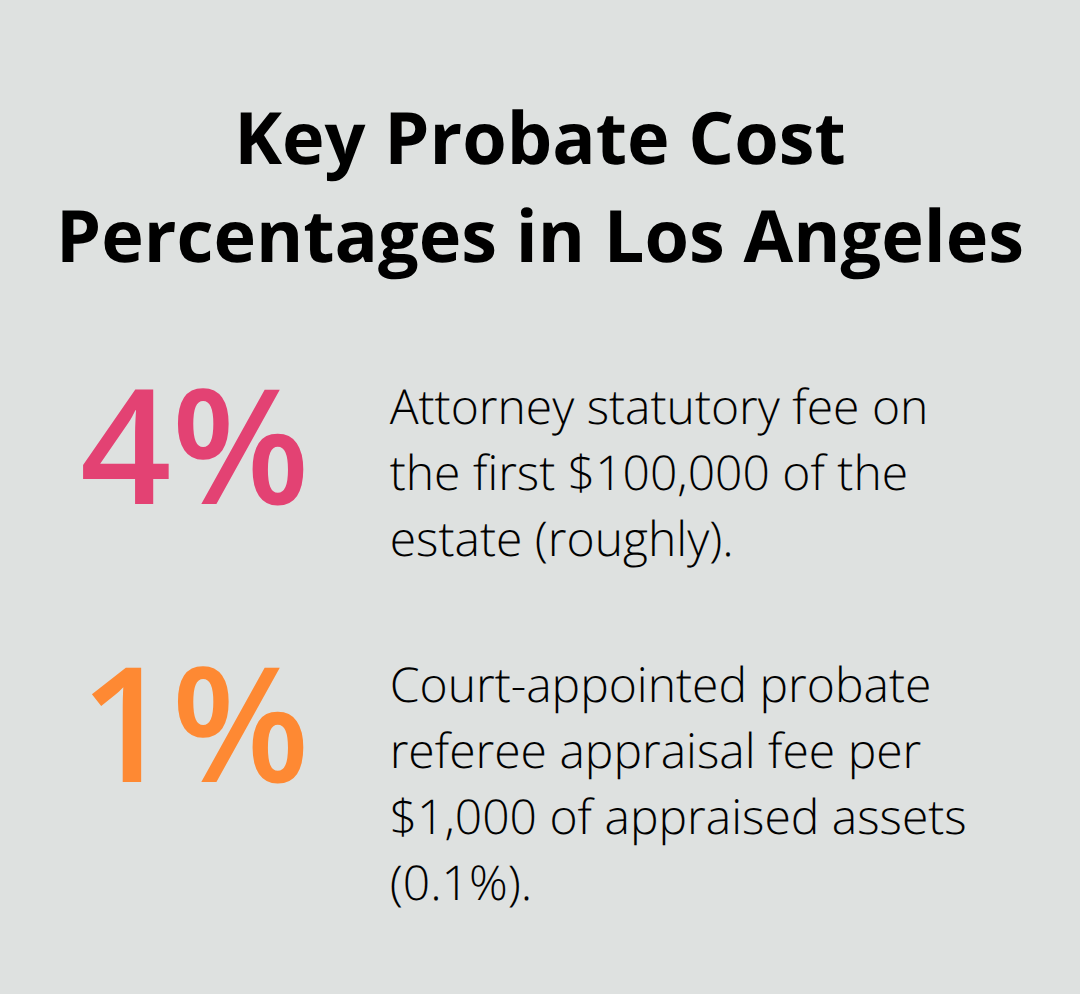
Probate administration in Los Angeles County becomes substantially more expensive when you make mistakes that an attorney would have caught. If your estate exceeds $250,000, the math is straightforward: paying an attorney’s statutory fee of roughly 4 percent on the first $100,000 and declining percentages thereafter costs less than the time you waste, the court delays you create, and the personal liability you expose yourself to. A typical probate in Los Angeles lasts 15 to 18 months, but missing deadlines, filing incomplete petitions, or undervaluing assets can extend that timeline to two or three years.
Each additional month ties up beneficiaries’ money and multiplies your stress.
The court-appointed probate referee fee of 0.1 percent on appraised assets is unavoidable regardless, so the real question is whether you pay an attorney to prevent costly errors or pay significantly more to fix them later. Estates under $250,000 sometimes succeed without legal help if assets are straightforward and heirs agree on everything, but probate court rules in Los Angeles are strict enough that even smaller estates benefit from at least a consultation with someone who files these petitions regularly.
Common Mistakes an Attorney Prevents
An attorney familiar with Los Angeles probate procedures protects you from the most damaging mistakes: filing in the wrong courthouse, submitting incomplete petitions that get rejected and resubmitted, undervaluing the estate, failing to provide proper notice, missing the 30-day will filing deadline, or requesting the wrong form of administration authority. These errors add months to probate and expose you to personal liability for breach of fiduciary duty.
Many executors benefit from having an attorney review their petition before filing rather than paying for full representation throughout probate. This targeted approach costs far less than full representation but catches critical errors before the court rejects your filing.
Strategic Legal Support for Property Sales
If your estate includes real property sales, an attorney with dual licensure as both attorney and real estate professional eliminates coordination problems between your lawyer and your real estate agent. This integration reduces timeline delays and communication confusion that typically cost months and thousands in unnecessary expenses. The probate process moves fastest when one professional understands both the legal requirements and the property transaction details.
Administrative costs in Los Angeles typically total $1,500 to $3,000 in court fees, publication, and referee costs before attorney fees, so investing in legal guidance upfront prevents those expenses from doubling or tripling through delays and corrections.
Final Thoughts
Serving as an executor in Los Angeles probate administration demands attention to deadlines, accurate record-keeping, and a clear understanding of your fiduciary obligations. The process typically spans 15 to 18 months from filing through final distribution, but this timeline depends entirely on how well you manage the early stages. Missing the 30-day will filing deadline, submitting incomplete petitions, or failing to provide proper notice to heirs creates delays that compound throughout probate and exposes you to personal liability that can last decades.
The most successful executors take three concrete steps immediately after appointment: gather all financial documents, property records, and asset information within the first month; file your Notice of Administration to Creditors within 60 days to start the four-month creditor claims period; and determine whether your estate size and complexity justify hiring legal support. Estates exceeding $250,000 almost always benefit from attorney guidance, but even smaller estates with real property or family disagreements warrant at least a consultation with someone familiar with Los Angeles County probate court procedures. Your fiduciary duty is not theoretical-it is the highest duty in law, and breaches result in personal liability that beneficiaries can pursue years after probate closes.
We at Law Offices of Roshni T. Desai have guided executors through Los Angeles probate administration for over 25 years. Contact us for a free consultation by visiting Law Offices of Roshni T. Desai to schedule a flexible home or office visit and discuss your specific situation with someone who understands both the legal requirements and the practical realities of probate in Southern California.