




Mastering Trust Administration Guidelines for Smooth Estates in Santa Ana, California
Trust administration requires careful attention to legal deadlines, beneficiary communication, and asset management. Many trustees in Santa Ana face confusion about their responsibilities and the California requirements they must follow.
We at Law Offices of Roshni T. Desai help trustees navigate these trust administration guidelines with clarity and confidence. This guide walks you through the essentials and common pitfalls to avoid.
What Trust Administration Actually Requires
Trust administration in California means stepping into the settlor’s shoes after death and executing the trust document’s instructions while following California Probate Code requirements. Your job as trustee is to inventory all assets, notify beneficiaries and creditors within strict timeframes, pay debts and taxes, and distribute what remains according to the trust terms.
Managing the Critical 120-Day Window
California law gives creditors approximately 120 days after notice to file claims against the estate, so you cannot rush distributions without risking personal liability. This window shapes your entire timeline and forces you to act methodically rather than hastily. Premature distributions expose you to surcharge actions if creditors later emerge with valid claims. The trustee must also maintain separate trust finances-open a dedicated bank account and keep meticulous records of every transaction. This separation prevents commingling trust assets with personal funds, which courts scrutinize heavily if disputes arise.
Record-Keeping That Protects You
Many trustees underestimate how detailed this record-keeping must be. You need receipts, valuations, correspondence with beneficiaries, tax filings, and accounting statements that clearly show where every dollar went. These documents protect you from liability claims and demonstrate that you fulfilled your fiduciary duty. Courts and beneficiaries will request these records, and incomplete documentation invites suspicion and litigation.
California’s Firm Deadlines and Tax Obligations
California Probate Code Part 4 governs trust administration and imposes firm deadlines you cannot ignore. Beneficiaries must receive notice of the trust within a reasonable time after the settlor’s death-not months later. If real property is involved, you must ensure it’s properly titled to the trust and recorded with the county recorder to avoid probate complications.
Tax obligations accelerate quickly: the decedent’s final income tax return is due nine months after death, and if the trust itself generates income, you file IRS Form 1041 and issue Schedule K-1 statements to beneficiaries. California has no state estate tax, but federal estate taxes apply to large estates, so understanding federal exemptions matters. Simple trust settlements typically take three to six months; complex estates with multiple properties, investments, or business interests often stretch to one or two years.
Your Fiduciary Duty and Asset Valuations
The trustee’s fiduciary duty includes loyalty to beneficiaries, prudent management of assets, and strict compliance with the trust terms and California law. Breach of duty can result in removal, surcharge actions, or personal liability for losses. Asset valuations must be professional-grade for real estate, valuable personal property, and business interests-rough estimates create tax problems and beneficiary disputes later.
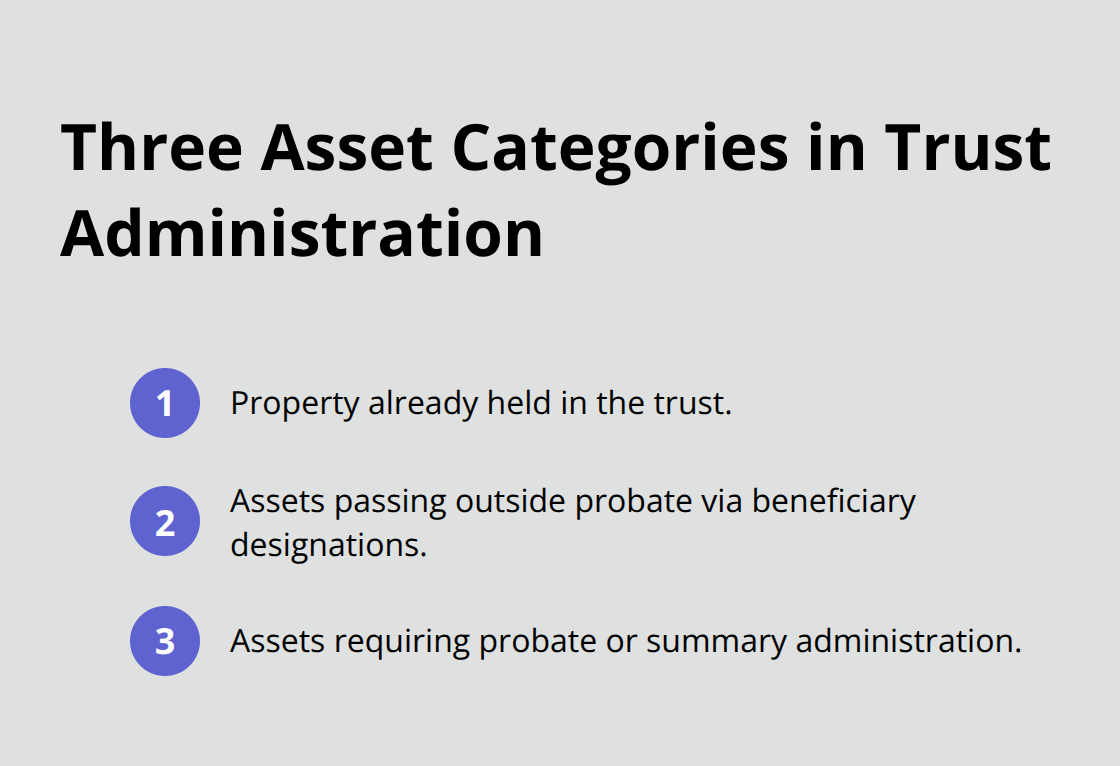
Start with a comprehensive inventory that classifies assets into three groups: property already in the trust, assets passing outside probate through beneficiary designations, and assets requiring probate or summary administration. This classification prevents costly mistakes and clarifies which assets you control directly. Understanding this distinction early shapes your entire administration strategy and determines which deadlines apply to each asset category.
Where Trustees Go Wrong
Trustees often stumble not because they lack good intentions but because they underestimate how quickly small oversights compound into serious problems. The three most damaging mistakes-poor beneficiary communication, sloppy asset management, and tax deadline neglect-account for the majority of trust disputes and trustee liability claims in Santa Ana and across California. These errors are entirely preventable with structured discipline and early professional guidance.
Silent Beneficiaries Invite Legal Action
Beneficiaries who receive no updates assume mismanagement or hidden problems. California Probate Code requires notice within a reasonable timeframe after the settlor’s death, yet many trustees interpret reasonable as months rather than weeks. A trustee who sends a single notification letter and then vanishes for six months practically invites beneficiary distrust and formal accounting demands.
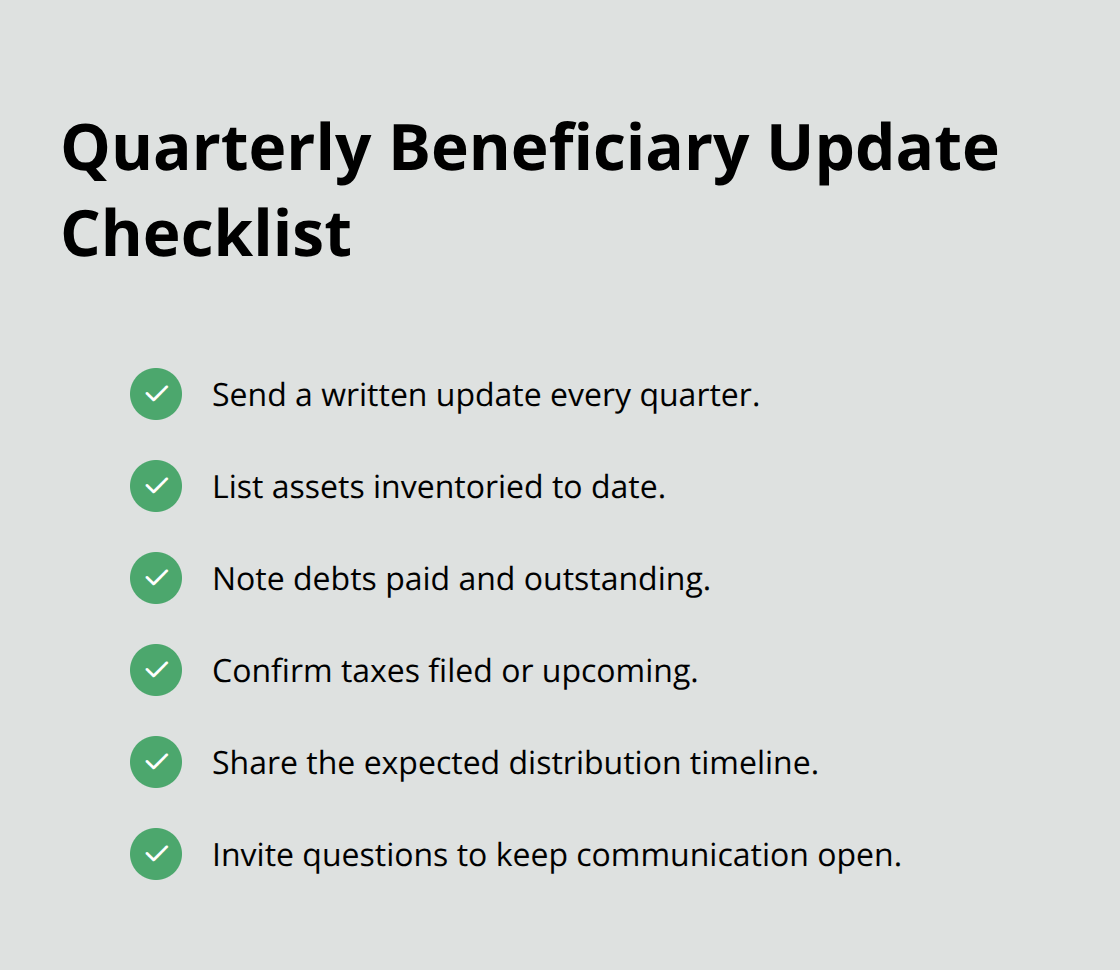
Send written updates every quarter that detail assets inventoried, debts paid, taxes filed, and the expected distribution timeline. Beneficiaries who receive regular, transparent communication file fewer complaints and rarely pursue litigation. This practice costs nothing but prevents expensive disputes later.
Asset Management Mistakes Create Exponential Damage
Some trustees invest too conservatively, leaving beneficiaries with eroded purchasing power; others chase risky returns trying to maximize distributions. The Uniform Prudent Management of Institutional Funds Act, embedded in California Probate Code Part 7, requires trustees to invest with the care, skill, prudence, and diligence of a prudent investor. This means diversifying holdings, avoiding concentrated positions in a single stock or property, and documenting your investment rationale.
If you lack financial knowledge, hire a professional financial advisor immediately-the cost of an advisor (typically 0.5 to 1.5 percent annually) is far cheaper than the liability exposure of self-directed poor decisions. Real estate holdings demand special attention: obtain professional appraisals, understand local Santa Ana and Orange County property market conditions, and do not hold property indefinitely while waiting for market appreciation. Beneficiaries expect timely distributions, not speculative holding strategies.
Tax Deadlines and Creditor Claims Require Precision
Tax deadline failure is the most common and costliest mistake trustees make. The decedent’s final income tax return is due nine months after death; the trust’s own Form 1041 is due by April 15 of the following year. Missing either deadline triggers IRS penalties, interest charges, and potential audits that extend the entire administration process by months.
Trustees who fail to obtain a federal tax ID for the trust cannot file Form 1041 or issue Schedule K-1 statements to beneficiaries, leaving them unable to file their own returns. Set calendar reminders for all tax deadlines 90 days in advance, and engage a CPA with California trust tax experience by month two of administration. Do not wait until month eight to discover you missed a deadline.
Creditor claim deadlines also demand precision: California’s 120-day creditor claim period starts from the date you mail notice to known creditors, not from the settlor’s death. Trustees who miscalculate this date risk distributing assets prematurely and facing personal surcharge liability when creditors emerge later. Document the exact date you mailed creditor notices and mark your calendar for 120 days from that date-only then can you safely distribute remaining assets to beneficiaries.
These preventable mistakes pile up quickly, and the financial and emotional costs mount fast. The next section covers the specific services that help trustees avoid these pitfalls and move administration forward with confidence.
Trust Administration Services That Prevent Costly Mistakes
Trust administration demands more than good intentions-it requires coordinated legal, financial, and tax work operating in lockstep. When trustees attempt to manage everything alone, they typically miss critical deadlines, miscalculate asset valuations, or fail to document decisions thoroughly enough to withstand beneficiary scrutiny. Structured professional support prevents these failures from the start.
Asset Inventory and Classification Shape Your Entire Timeline
The first step involves a comprehensive asset inventory and classification system that identifies which assets sit inside the trust, which pass through beneficiary designations, and which require probate or summary administration. This upfront classification prevents costly mistakes later because it determines which deadlines apply to each asset and which assets you control directly. Understanding this distinction early shapes your entire administration strategy and clarifies your actual responsibilities.
Tax Filings and Debt Payment Require Precision Coordination
A formal payment schedule for debts and taxes keeps administration on track and protects you from liability. Coordination with a CPA ensures all required returns file on time-the decedent’s final return within nine months, Form 1041 by April 15 of the following year. Securing the federal tax ID for the trust allows beneficiaries to receive proper Schedule K-1 statements and file their own returns without delays.
Real Estate Transactions Demand Integrated Legal and Property Expertise
Real estate transactions in Santa Ana and Orange County require particular attention, as property valuations directly affect tax liability and beneficiary distributions. Ms. Desai’s dual licensure as both an attorney and real estate professional streamlines property sales and eliminates the communication gaps that typically plague trustees working with separate real estate agents and attorneys. This integrated approach reduces transaction costs, accelerates timelines, and keeps all parties aligned on pricing, timing, and terms.
Conflict Resolution Protects Beneficiary Relationships
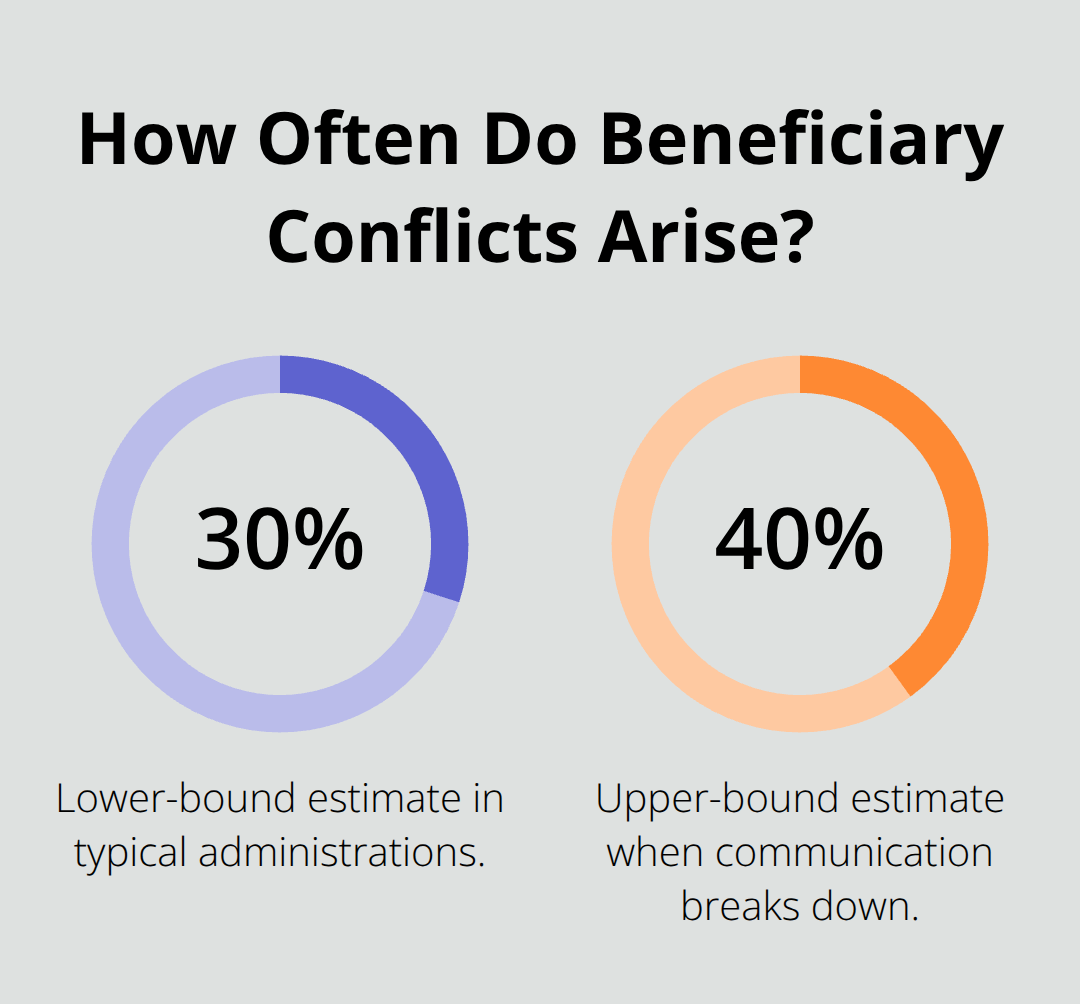
Conflict between beneficiaries emerges in roughly 30 to 40 percent of trust administrations, often triggered by perceived mismanagement or unequal treatment. Structured communication protocols and transparent accounting documentation demonstrate every decision’s rationale and address disputes early.
When beneficiaries disagree on asset distributions, investment strategy, or trustee compensation, mediation typically resolves the matter faster and cheaper than litigation. Professional guidance through the mediation process protects your interests if formal court involvement becomes necessary.
Free Consultations Help You Assess Your Situation
Law Offices of Roshni T. Desai offers free consultations that allow trustees to discuss their specific situation-whether it involves a simple revocable living trust with one property or a complex estate with multiple business interests and blended family dynamics. Flexible home or office visits accommodate your schedule. The cost of preventive legal guidance during administration remains minimal compared to the surcharge liability, removal actions, or litigation costs that trustees face when administration goes wrong.
Final Thoughts
Trust administration in Santa Ana demands precision, timing, and coordinated action across legal, financial, and tax matters. The trust administration guidelines outlined here-asset inventory, beneficiary communication, tax compliance, and debt settlement-form the foundation of successful administration. Trustees who follow these guidelines avoid the costly mistakes that trigger surcharge liability, beneficiary disputes, and extended timelines.
Professional guidance matters because trust administration involves overlapping deadlines, complex California Probate Code requirements, and high-stakes financial decisions. A single missed tax deadline or miscalculated creditor claim period exposes you to personal liability. Beneficiary conflicts that start as minor disagreements escalate into litigation when communication breaks down, and asset valuations that lack professional documentation create tax problems and distribution disputes years later.
We at Law Offices of Roshni T. Desai support trustees by handling the coordinated legal, financial, and property work that administration demands. Contact us for a free consultation to assess your trust administration situation and move forward with confidence.