




Probate Administration Basics: Quick Start for Beginners
Probate administration basics don’t have to be overwhelming. Whether you’re handling an estate for the first time or want to avoid costly mistakes, this guide walks you through what actually happens during probate.
We at Law Offices of Roshni T. Desai have seen how confusion about court deadlines, asset inventories, and creditor notifications derails families. The good news is that understanding these fundamentals upfront saves time and money.
The Three Core Tasks You Must Handle First
Probate administration rests on three foundational tasks that must happen in the right order. Miss deadlines on any of them, and you’ll face court penalties, angry creditors, and confused heirs.
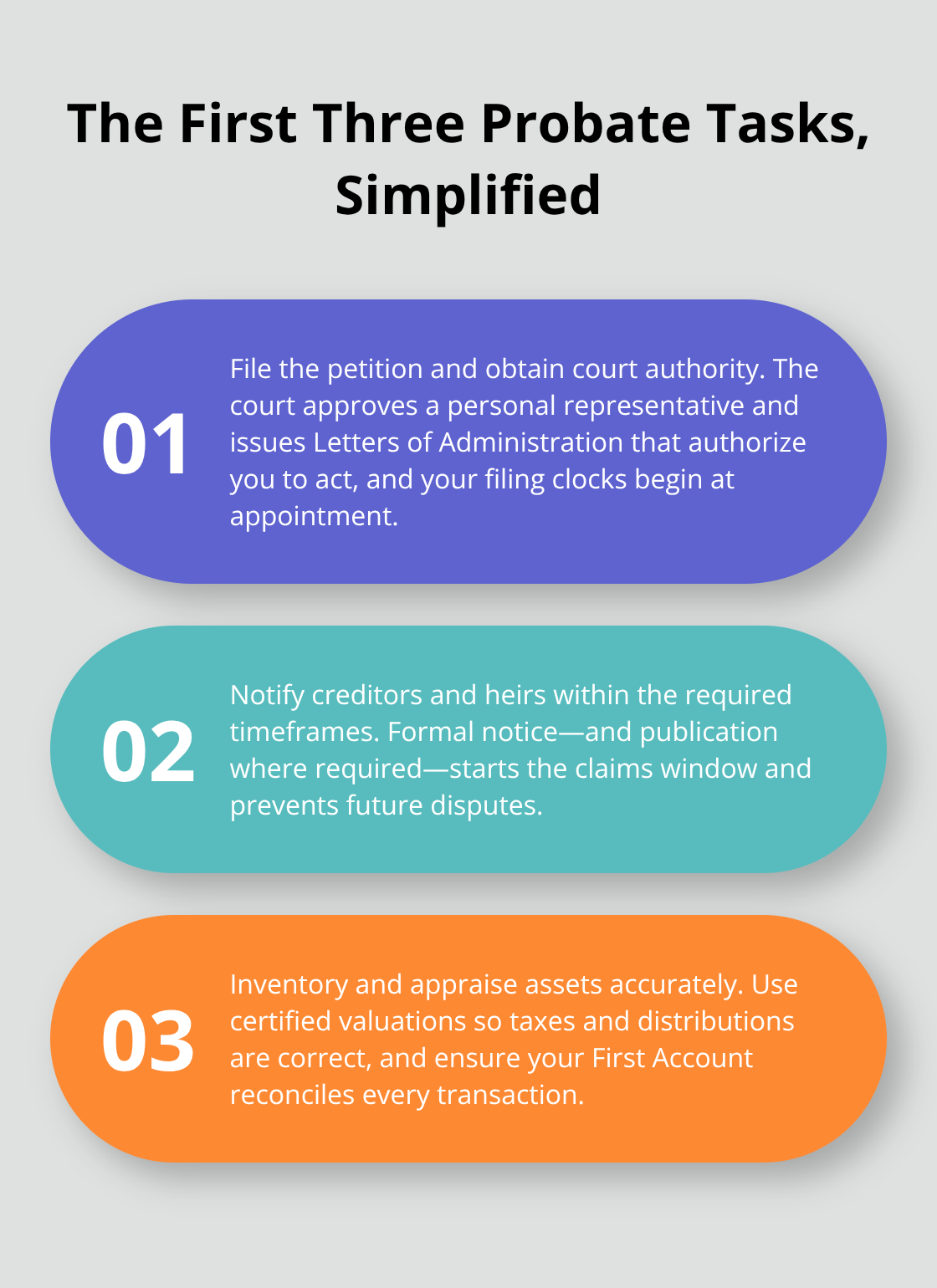
File Your Petition and Obtain Court Authority
The first task is filing your petition with the probate court in the county where the deceased lived, along with the death certificate and original will if one exists. In Maryland, you must file the will with the Register of Wills promptly after death, regardless of whether you’re ready to open probate. The court schedules a hearing to approve you as the personal representative, and once approved, Letters of Administration are issued that give you legal authority to act on behalf of the estate.
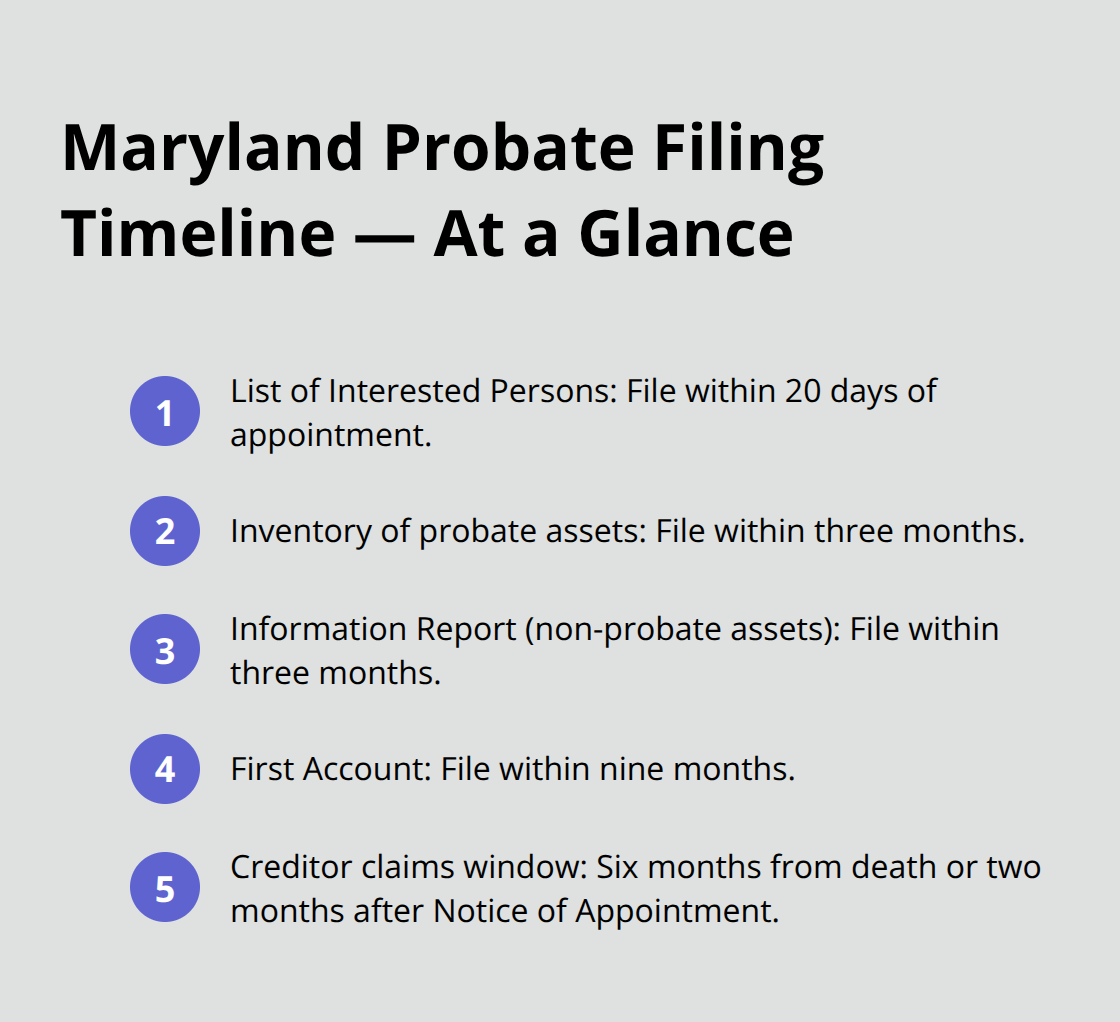
This typically happens within weeks, but the clock starts ticking on your filing deadlines the moment the court appoints you. You have 20 days to file a List of Interested Persons that includes the deceased’s heirs and beneficiaries. You also have three months from appointment to file an inventory of all probate assets with their date-of-death values, and another three months to file an Information Report covering assets that don’t pass through probate (like retirement accounts with named beneficiaries or joint bank accounts).
Notify Creditors and Heirs Within Legal Timeframes
The second task is notifying creditors and heirs so claims can be filed within the legal window. In Maryland, creditors have six months from death or two months after you deliver the Notice of Appointment, whichever is later. Some states require you to publish notice in a newspaper, which adds both cost and time. These notifications protect the estate by establishing a clear deadline for creditor claims and prevent future disputes with heirs who weren’t informed.
Inventory and Appraise Assets Accurately
The third task is inventorying and appraising estate assets accurately because these values determine tax obligations and fair distribution to heirs. Don’t guess at values; use certified appraisals for personal property, CMAs or appraisals for real estate, and official statements for bank accounts and securities. Your First Account, filed within nine months of appointment, must show opening balances, every deposit and disbursement, and remaining asset values down to the penny.
Why These Deadlines Matter
Delay on any of these three tasks creates liability for you personally, triggers court intervention, and frustrates beneficiaries who are already grieving. Open the estate promptly after death to prevent bills and taxes from piling up, and treat these deadlines as non-negotiable. The key milestones you’ll encounter from filing through final asset distribution are far more manageable when you stay organized and meet each deadline on time.
Common Probate Mistakes That Cost Time and Money
The three core tasks outlined above seem straightforward until you’re actually living them. Personal representatives file inventories three months late, miss the creditor claims deadline entirely, and distribute assets before taxes are paid. These aren’t minor oversights-they create personal liability for you, trigger court intervention, and sometimes force the estate back into probate to recover distributed funds. Maryland law holds you personally responsible for mishandling the estate, which means penalties, attorney fees, and court sanctions come out of your own pocket, not the estate’s account.
Treating Deadlines as Suggestions Rather Than Legal Requirements
The most expensive mistake occurs when personal representatives treat probate deadlines like suggestions rather than legal requirements. In Maryland, your First Account must be filed within nine months of appointment, and if you miss it, the court can remove you as personal representative and appoint a successor. Creditor claims have hard deadlines-six months from death or two months after you send the Notice of Appointment, whichever is later-and filing late means you’ve already paid claims that should have been barred. One case involved a personal representative who skipped the newspaper publication requirement in a state that required it and faced a lawsuit from a creditor who claimed they never received notice. The court forced a full accounting and extended the probate timeline by eighteen months.
Underestimating Tax Obligations and Filing Requirements
Tax obligations destroy estates when personal representatives underestimate them. You must file a final income tax return for the decedent and potentially an estate tax return if assets exceed federal or state thresholds. Failing to file these returns doesn’t make the obligation disappear-it creates back taxes, penalties, and interest that multiply over time. Asset distribution before taxes are settled is reckless because you may need to recover funds from heirs if the estate owes more than you anticipated.
Mishandling Asset Distribution and Property Transfers
Mishandling asset distribution itself creates disputes that lead to litigation between beneficiaries and against you personally. If you distribute real property without preparing a deed of distribution and recording it properly, you’ve created a legal mess that costs thousands to untangle later. These distribution errors compound when heirs receive assets they shouldn’t have or when the chain of title becomes unclear.
The solution is treating probate administration as a time-sensitive legal process where organization and deadline compliance protect both the estate and your own interests. When mistakes pile up, the path forward requires professional guidance to correct the record and satisfy the court.
How to Stop Probate Administration From Falling Apart
Organize Every Document in One Accessible System
Create a single folder or digital system where every document related to the estate lives. Death certificates, the will, bank statements, property deeds, tax returns, insurance policies, and creditor correspondence all belong in one accessible place. Forward the decedent’s mail to your address so nothing gets lost, and create a spreadsheet that lists every asset, its location, account numbers, and approximate value. When you file your inventory with the court, this spreadsheet becomes your foundation-courts expect precision, and guessing destroys credibility.
In Maryland, your inventory must list all probate assets with their date-of-death values within three months of appointment. Your First Account, filed within nine months, must show every single deposit and disbursement down to the penny. Disorganized personal representatives miss deadlines, underreport assets, and later face court orders to amend filings or explain discrepancies that cost thousands in attorney fees.
Assemble a Professional Team With Probate Knowledge
Reject the idea that you can handle probate alone. A probate attorney catches filing deadline traps before they become court sanctions, ensures your tax filings are complete, and handles property transfers correctly so heirs actually receive clear title. If real estate is involved, work with a probate realtor who understands how to market and sell property efficiently while the estate is open-inexperienced realtors waste months on showings and negotiations that drain the estate’s cash reserves.
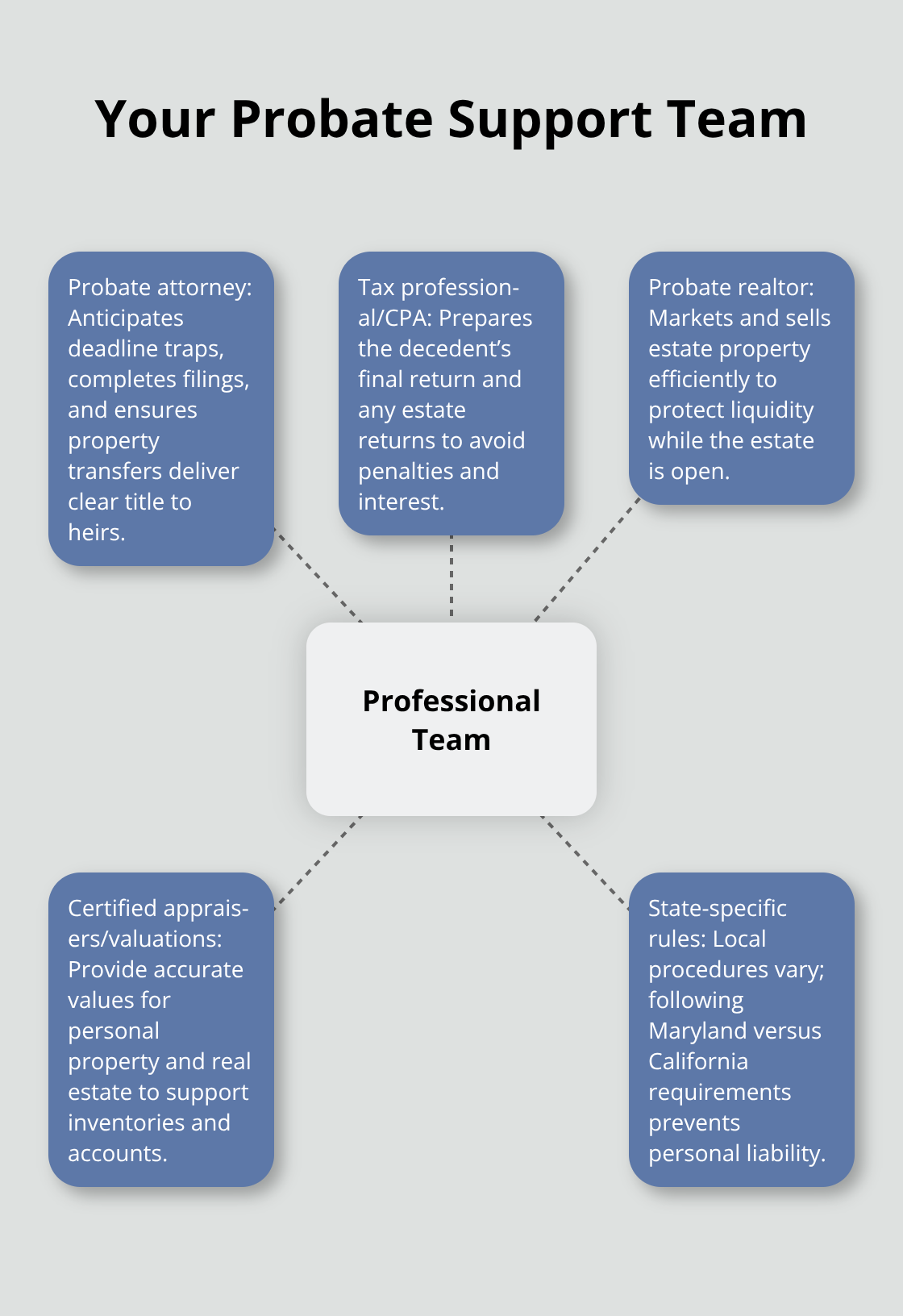
Your state’s rules matter enormously. Maryland’s requirements differ from California’s, and what works in one state creates liability in another. Attempting to navigate these variations without guidance is how personal representatives end up personally liable for taxes they didn’t file or distributions made before creditor claims were resolved.
Understand Your State’s Specific Deadlines and Rules
Each state imposes different filing deadlines, creditor claim windows, and distribution rules that affect your timeline and personal liability. Maryland requires you to file a List of Interested Persons within 20 days of appointment, an inventory within three months, and an Information Report within three months. Your First Account must be filed within nine months, and creditors have six months from death (or two months after you send the Notice of Appointment, whichever is later) to file claims.
Missing even one deadline triggers court intervention, removes you as personal representative, or forces the estate back into probate to recover distributed funds. The complexity increases when the decedent owned property in multiple states, which may require ancillary probate in another jurisdiction. Professional guidance prevents these costly mistakes before they happen.
Final Thoughts
Probate administration basics come down to three non-negotiable realities: file on time, notify creditors and heirs correctly, and inventory assets accurately. When you handle these tasks properly, the process moves forward without court intervention or personal liability. When you skip steps or miss deadlines, the costs multiply fast-court sanctions, attorney fees to fix mistakes, and sometimes forced recoveries from heirs who already received distributions.
The personal representatives who succeed treat probate as a time-sensitive legal obligation, not a task to squeeze in between work and family obligations. They organize documents immediately, assemble a professional team before problems arise, and verify their state’s specific deadlines rather than guessing. Maryland’s requirements differ significantly from other states, and what works in California creates liability in Florida (this variation is why attempting probate alone, even with good intentions, often backfires).
Seek professional guidance immediately if you manage an estate with real property, multiple beneficiaries, significant debts, or tax complexity. You should also reach out if you’ve already missed a deadline or filed something incorrectly-correcting the record early costs far less than defending yourself in court later. Contact us today to discuss your situation and learn how we can guide your estate through probate efficiently.