




Probate Administration for Executors: A Practical Guide
Serving as an executor means handling complex legal and financial responsibilities that most people encounter only once in their lifetime. We at Law Offices of Roshni T. Desai know that probate administration for executors involves navigating court systems, managing assets, and meeting strict deadlines.
This guide walks you through each step of the process with practical advice and real-world context.
Understanding Your Role as an Executor
When you accept appointment as executor, you inherit legal authority and personal liability in equal measure. Your fiduciary duty requires you to act in the estate’s best interest, not your own, and courts take this seriously. In Michigan, executors who mishandle assets, fail to file required paperwork on time, or ignore creditor claims face personal liability for losses. This isn’t theoretical-executors have been sued by beneficiaries and held financially responsible for administrative errors. Your first move is obtaining Letters of Authority from the probate court, which grants you the legal power to act on behalf of the estate. Without this document, banks won’t release funds, and title companies won’t transfer property.
Securing Your Authority and Initial Assets
File for appointment within the first week after locating the will and obtaining a certified death certificate. In the same window, secure the deceased’s residence, review insurance coverage, and start a running list of assets including real estate, bank accounts, investment portfolios, retirement benefits, life insurance policies, business interests, and valuable personal property. Open an estate checking account immediately and apply for an estate EIN using IRS Form SS-4-this prevents commingling personal and estate funds, which courts view as a red flag for mismanagement.
Deadlines That Control Your Timeline
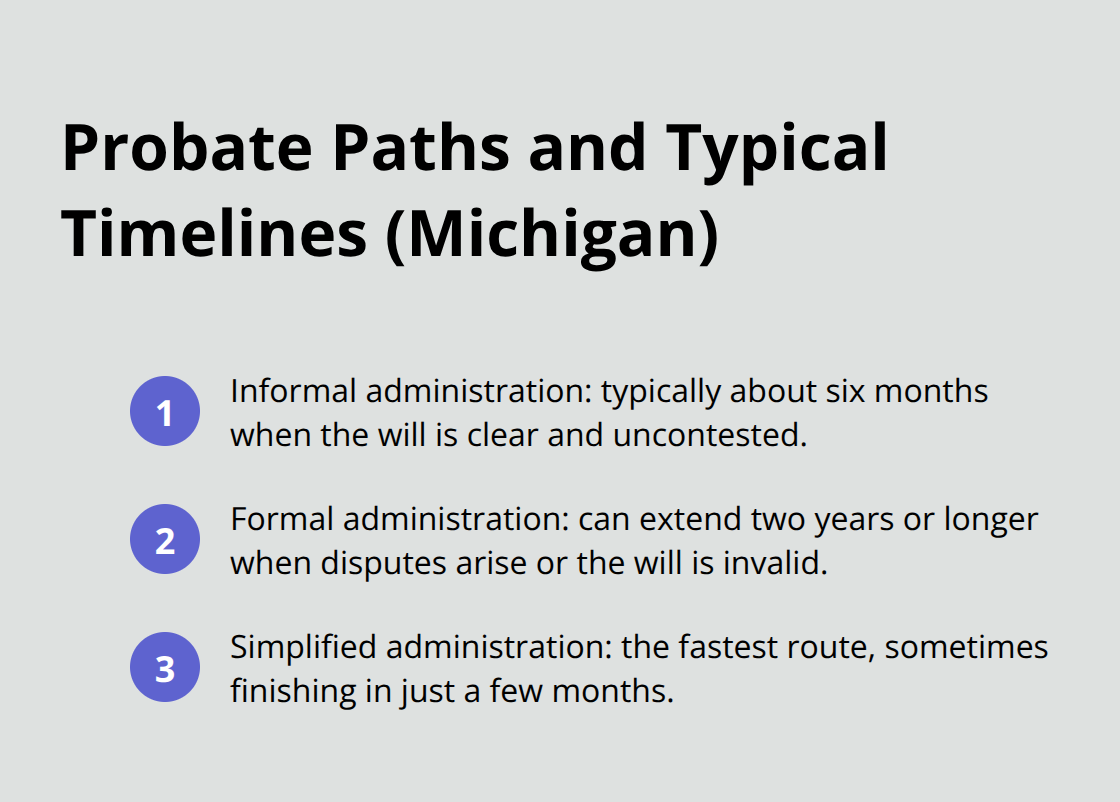
Probate moves at different speeds depending on the administration path. In Michigan, informal administration typically wraps up in about six months if the will is clear and uncontested. Formal administration, used when disputes arise or the will is invalid, can stretch two years or longer. Simplified administration for smaller estates moves fastest, sometimes completing in just a few months.
Within two weeks after the court admits the will to probate, send the statutory notice to interested parties. Your inventory and appraisal must be filed within three months of appointment unless you request an extension before the deadline passes. Creditor claims have a six-month window from the date of death, so you must advertise for claims and maintain organized records of what comes in.
Paying debts and taxes comes before distributing any assets to beneficiaries-this is non-negotiable. The biggest mistake executors make is distributing assets too early, thinking the process is finished when it isn’t. If you later discover unpaid debts or tax liabilities, you become personally liable for those amounts. Create a master checklist with immediate tasks (days 1–3), short-term tasks (days 4–30), and ongoing responsibilities. Tie everything to a calendar with court deadlines, creditor claim deadlines, and tax filing dates clearly marked.
Where Executors Actually Go Wrong
Sloppy record-keeping tops the list of executor mistakes. Courts require detailed accountings showing every dollar in and out of the estate account. Pay estate expenses from the estate account only and keep all receipts, bank statements, and supporting documents in an indexed file. Separate estate expenses from personal expenses completely.
A second critical error is failing to notify beneficiaries and creditors promptly. When beneficiaries feel left in the dark, they become suspicious and litigious. Send written updates at regular intervals explaining what assets you’ve found, what debts exist, and when distributions will happen. The third major mistake is not consulting a tax professional about the decedent’s final income tax return and whether the estate itself owes taxes.
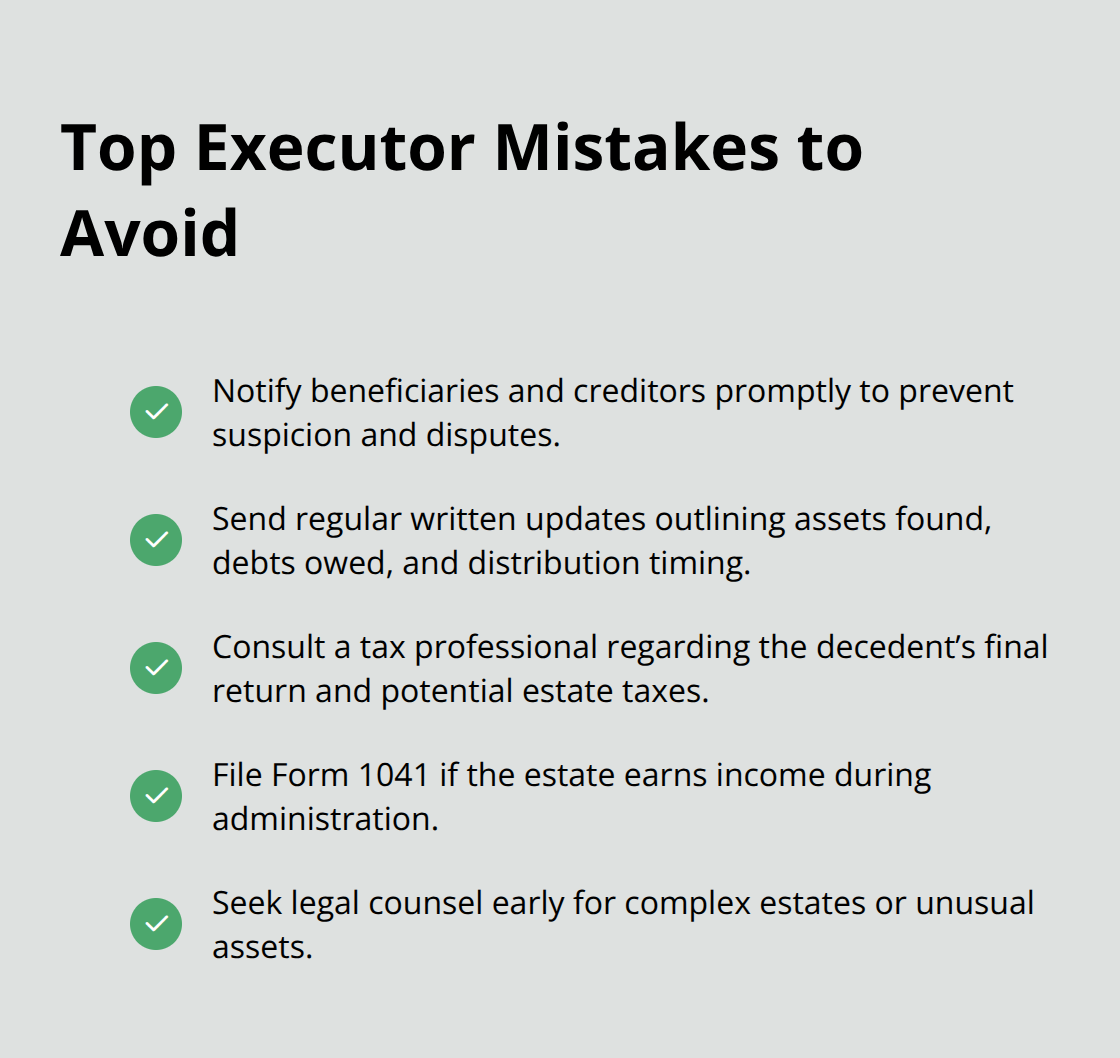
Estates that earn income during administration must file Form 1041. Missing this filing creates penalties and interest that reduce what beneficiaries receive.
Finally, executors often underestimate the complexity of unusual assets. If the estate includes business interests, multi-state real estate, or significant family conflict, consult an attorney before taking action. Acting without guidance when the situation demands it is the fastest way to face personal liability. The next section walks you through the specific steps for managing estate assets and liabilities-the work that determines whether beneficiaries receive their full inheritance or face unexpected losses.
Managing Estate Assets and Liabilities
Inventory and Valuation of Estate Property
Your inventory and appraisal of estate property directly determines whether beneficiaries receive accurate distributions and whether you avoid personal liability for tax errors. Request account statements dated to the date of death from every financial institution. Banks, brokerages, and retirement plan custodians will provide these without delay if you present your Letters of Authority. Real estate values matter enormously because they affect both distribution calculations and estate tax reporting. For significant properties, hire a professional appraiser rather than relying on online estimates or real estate websites. The appraisal cost typically ranges from $300 to $1,000 per property but protects you against beneficiary disputes later. Jewelry, art, and collectibles also warrant professional valuation if their combined value exceeds $5,000.
Create a spreadsheet listing every asset with its date-of-death value, location, account numbers, and ownership structure. This document becomes your single source of truth throughout administration. Unusual assets like business interests, mineral rights, or closely held stock require immediate legal consultation because their valuation can trigger disputes and tax complications that cost far more to fix later than to address upfront.
Evaluating and Paying Creditor Claims
Advertise for creditor claims in your local newspaper and maintain a dated log of every claim that arrives. Michigan law gives creditors six months from the date of death to file claims, and you must evaluate each one carefully before paying. Invalid claims should be rejected in writing with your reasoning documented. After the creditor claim deadline passes, you can distribute assets knowing that no surprise claims will emerge later. This waiting period protects you from unexpected liability and gives you time to verify that all legitimate debts are genuine.
Managing Taxes and Administrative Costs
Consult a tax professional about filing the decedent’s final Form 1040 and determining whether the estate itself owes taxes. Estates that earn income during administration must file Form 1041 with the IRS. Funeral expenses, probate court fees, attorney fees, and accounting costs all come from estate funds before beneficiaries receive anything. These administrative costs typically consume 3 to 7 percent of small to mid-size estates, so calculate them accurately when projecting what beneficiaries will receive.
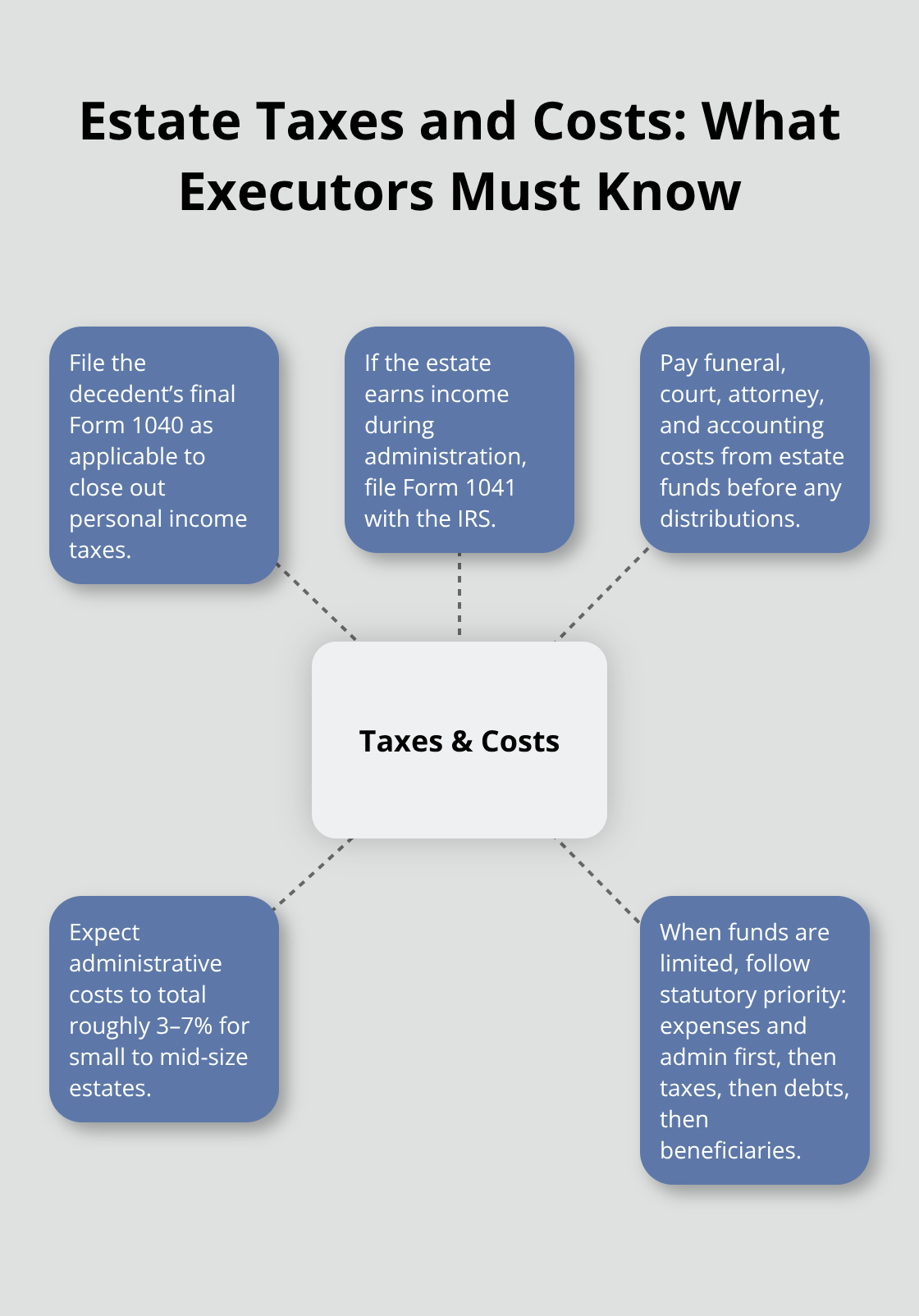
When funds run short, state law establishes a priority order: funeral expenses and administrative costs come first, then taxes, then debts to creditors, then distributions to beneficiaries.
Distributing Assets to Beneficiaries
Never distribute assets to beneficiaries before debts and taxes are completely resolved-this is the fastest path to personal liability. Once all debts are paid, taxes filed, and the creditor claim deadline has passed, prepare a distribution schedule showing exactly what each beneficiary receives and when. Document every transfer with bank statements, deed recordings, or investment account confirmations. Keep copies of everything in your estate file because you may need to prove your distributions were accurate if questions arise years later. The next section addresses the court filings and documentation requirements that validate your work and protect both the estate and beneficiaries from future challenges.
Navigating Probate Court and Documentation
Probate court filings transform your role from informal executor to a legally recognized fiduciary whose actions are recorded and reviewable. The petition for probate serves as your first critical filing-it notifies the court that you seek appointment as executor and triggers the formal administration process. In Michigan, you must file the original will, the death certificate, and the petition within a specific window after the person dies. Courts take filing deadlines seriously because delays create uncertainty for beneficiaries and creditors alike.
Obtaining Letters of Authority and Initial Court Filings
After the court admits the will to probate, you receive Letters of Authority, which is the document that banks, title companies, and government agencies actually require to release funds or transfer property. Without this piece of paper, you cannot act legally on the estate’s behalf, no matter how clearly the will names you as executor. The inventory and appraisal filing comes next, typically due within three months of your appointment. This document lists every asset, its date-of-death value, and supporting documentation like appraisals or bank statements. Courts scrutinize these filings because they form the basis for tax reporting and beneficiary distributions. Errors or omissions here create liability later when beneficiaries or taxing authorities challenge your valuations.
Many executors underestimate how detailed these filings must be-vague descriptions like “jewelry” or “household items” do not satisfy court requirements. Instead, itemize specifically: describe the property location, account numbers, ownership structure, and exact values with source documentation attached. Courts and beneficiaries expect thorough documentation of the property’s condition, including photographs and detailed condition reports.
Managing Creditor Notices and Claims
Michigan law requires you to advertise for creditor claims in a local newspaper, and you must maintain proof of publication in your estate file. The advertisement typically costs $200 to $400 depending on the newspaper, but it establishes a firm deadline after which creditors cannot surprise you with late claims. Document every claim that arrives with the claim form, the date received, the claimed amount, and your decision to approve or reject it. If you reject a claim, send written notice to the creditor explaining your reasoning-this creates a paper trail that protects you if the creditor later contests your decision.
Preparing Your Final Accounting
The final accounting filing summarizes all estate income, expenses, distributions, and asset transfers from start to finish. This document proves you handled money responsibly and distributed assets correctly. Courts require this accounting before they will close the estate, so completeness and accuracy matter enormously. The accounting must reconcile every dollar and show exactly where estate funds went throughout administration.
Organizing Documentation From Day One
Executors struggle most with organizing documentation for these filings-scattered bank statements, missing appraisals, and incomplete creditor records create delays and require refiling. Start a physical or digital estate file on day one with separate folders for court documents, financial records, creditor claims, tax filings, and distribution documents. As you complete each task, add the supporting evidence immediately rather than trying to gather everything at the end. This approach prevents the scramble to locate documents when court deadlines approach and reduces the risk that critical paperwork goes missing. If complexity overwhelms you, an experienced probate lawyer can guide you through each filing requirement.
Final Thoughts
Probate administration for executors demands attention to detail, strict adherence to deadlines, and honest communication with beneficiaries and creditors. You protect yourself from personal liability and ensure beneficiaries receive accurate distributions when you obtain your Letters of Authority immediately, maintain meticulous records from day one, and refrain from distributing assets before debts and taxes are fully resolved. These practices transform a complex process into a manageable one.
The emotional weight of serving as executor often catches people off guard because you grieve while managing complex financial and legal tasks simultaneously. You acknowledge that this work is difficult, use a structured checklist to reduce overwhelm, and give yourself permission to ask for help when situations exceed your knowledge or comfort level. Executors who try to handle everything alone often make costly mistakes that take years to correct.
Professional guidance becomes necessary when the estate includes business interests, multi-state property, significant family conflict, or assets worth more than $500,000 (tax complications, disputed claims, and contested wills also warrant immediate consultation with an attorney). We at Law Offices of Roshni T. Desai provide personalized estate planning and probate services across Southern California, and you can contact us for a free consultation with flexible home or office visits to discuss your specific situation.