




Probate Administration in Orange County, California: Key Steps and Considerations
Losing a loved one is difficult enough without navigating the complexities of probate administration in California. The process involves multiple court filings, asset inventories, creditor notifications, and beneficiary distributions-each with strict deadlines and requirements.
We at Law Offices of Roshni T. Desai help families understand what to expect and how to move through probate efficiently. This guide walks you through the essential steps, common obstacles, and practical strategies for settling an estate in Orange County.
What Probate Actually Costs and How Long It Takes
Timeline Expectations for Orange County Estates
Probate in Orange County typically runs between 9 to 18 months, though complex estates with disputes or multiple properties can stretch longer. The timeline starts when you file the Petition for Probate, form DE-111, at the Orange County Superior Court. The court then schedules a hearing, appoints a personal representative, and administration begins. Most cases hit their stride around month 6 when the inventory is complete and creditor claims have been addressed. If your estate involves federal estate tax implications, plan for closer to 18 months. The California Probate Code governs every deadline, from the four-month window creditors have to file claims to the final distribution hearing that closes the estate.
Breaking Down Probate Expenses
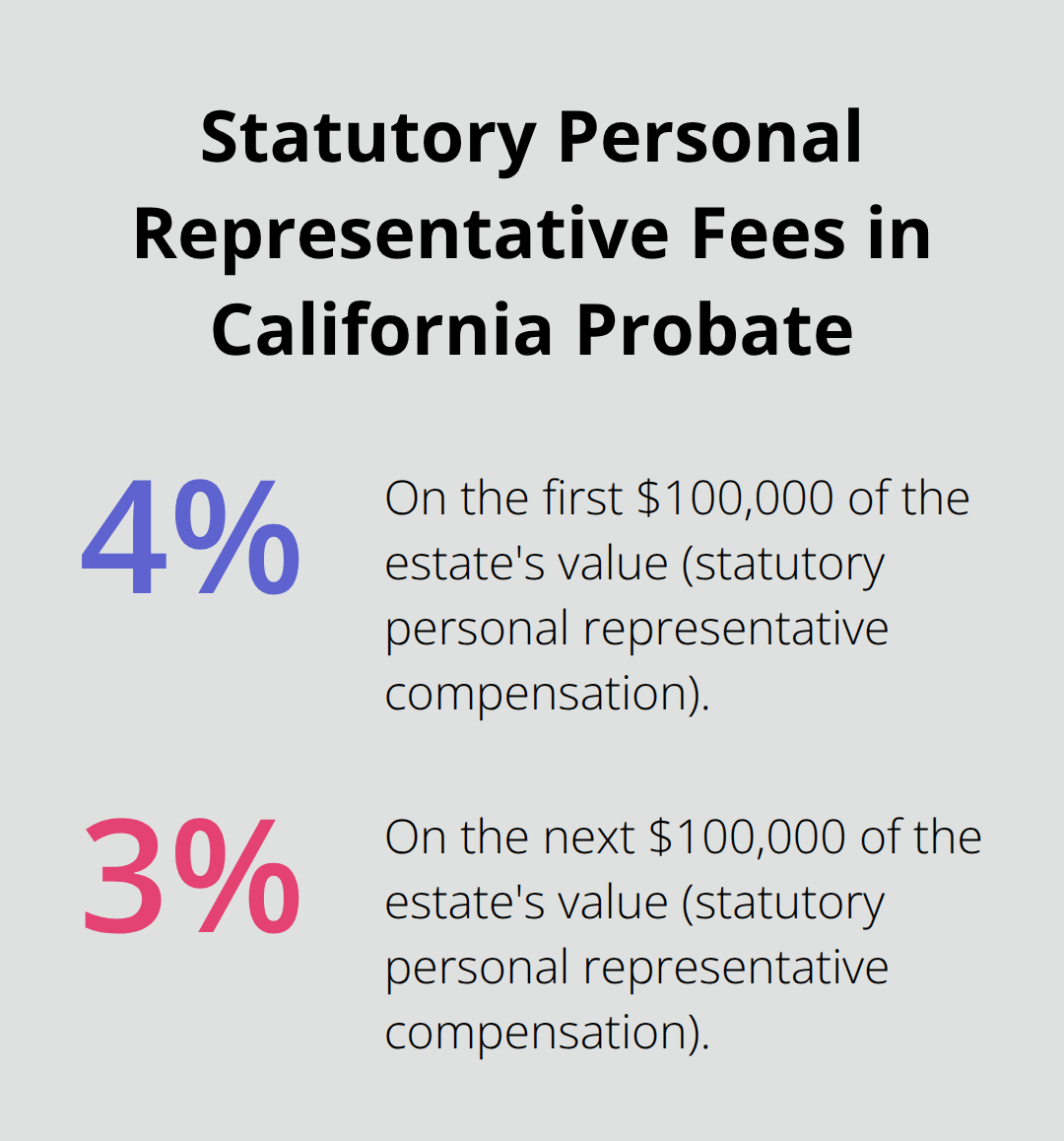
Costs add up faster than many families expect. The initial filing fee runs around $435, though you can request a fee waiver if you face financial hardship. Newspaper publication costs typically range from $200 to $500 depending on circulation requirements in your area. If the estate holds nonmonetary assets like real estate or collectibles, you’ll pay a probate referee to appraise them-fees vary but often reach $500 to $2,000. The personal representative’s attorney fees follow California law and run roughly 1.5 to 4 percent of the estate’s gross value, while the personal representative themselves receives statutory compensation of about 4 percent on the first $100,000 of estate value, then 3 percent on the next $100,000, with lower percentages above that.
Total probate administration costs often exceed $10,000 for moderate estates, though the court pays these from estate assets rather than from your personal pocket.
Avoiding Probate Through Strategic Planning
Assets held in a living trust skip probate entirely and transfer directly to beneficiaries through a successor trustee, avoiding court fees, publication costs, and lengthy delays. Joint tenancy with right of survivorship, payable-on-death accounts, and transfer-on-death deeds for real estate also bypass probate. If your estate is small enough, California offers streamlined procedures like succession without administration for estates under $18,000, which costs far less and moves much faster. The hard truth is that probate costs money and time, which is why estate planning before death makes financial sense. Strategic structuring of your estate means probate becomes unnecessary for most assets, keeping more money in beneficiaries’ hands and eliminating court involvement altogether.
Understanding these costs and timelines shapes how you approach estate settlement. The decisions you make now-whether to establish a living trust, designate beneficiaries on accounts, or structure property ownership-directly impact what your family faces after your death. These same considerations also apply when disputes arise among beneficiaries or when creditors make claims against the estate.
Moving Your Estate Through Probate Administration
Filing Your Petition and Initial Court Steps
The path from filing your initial petition to distributing assets follows a structured sequence, and understanding each stage prevents stumbling on preventable delays. You file the Petition for Probate, form DE-111, at the Orange County Superior Court to mark your official entry into the system. The court stamps your forms, assigns a department, and schedules a hearing within weeks.
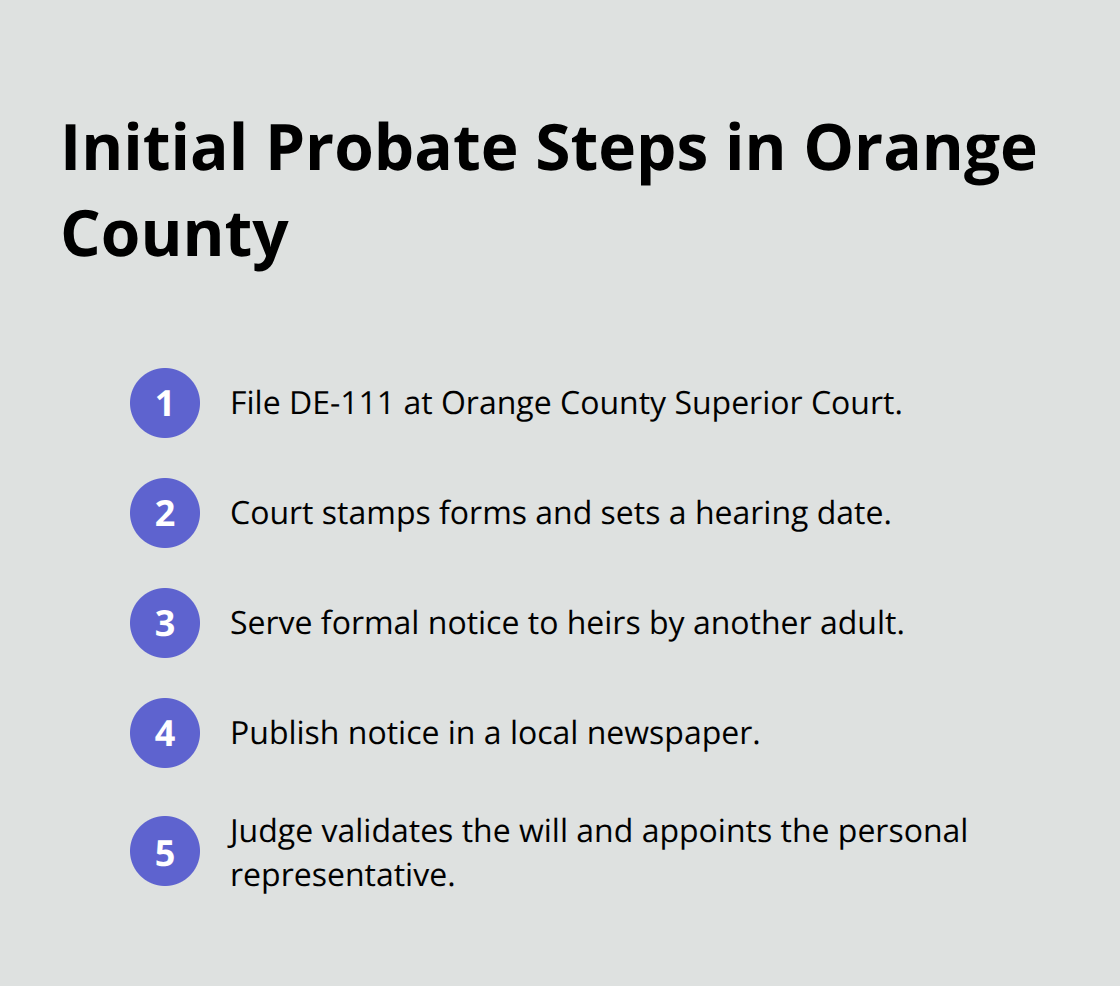
You must notify the decedent’s family members and potential heirs before that hearing through another adult who mails formal notice. California Probate Code requires you to publish notice in a local newspaper as well, which typically costs $200 to $500 depending on circulation size. At the hearing, the judge reviews the will’s validity and appoints a personal representative, usually the executor named in the will or, if no will exists, an administrator chosen by the court.
Inventory, Appraisal, and Creditor Notifications
Once appointed, your administration work intensifies immediately. You must file an Inventory and Appraisal form, DE-160, within four months of appointment, listing every asset the estate owns and its value as of the decedent’s death. Nonmonetary assets like real estate, art, or vehicles require appraisal by a probate referee, which costs $500 to $2,000 depending on complexity. Simultaneously, you send a formal Notice of Administration to Creditors, form DE-157, triggering a four-month window for creditors to file claims against the estate. This timing matters because valid debts must be paid from estate assets before beneficiaries receive anything. You’ll also need to file the decedent’s final personal income tax return and, if the estate earned income during administration, a final estate tax return.
Final Accounting and Distribution
When administration nears completion, typically around month 12 to 15 for straightforward estates, you prepare a final accounting showing how you managed every dollar, then file a petition for final distribution. The court holds a final hearing where interested persons can object, and if approved, you distribute remaining assets to beneficiaries according to the will or California intestacy law. This entire sequence demands meticulous record-keeping and adherence to statutory deadlines set by California Probate Code. The Orange County Superior Court provides specific forms and fee portals on its website to streamline filings. Navigating these requirements without professional guidance often leads to costly mistakes or extensions that stretch timelines into the 18-month range or beyond. The complexity of probate administration-from creditor claims to tax filings to final distributions-creates situations where disputes can emerge among beneficiaries or where creditors challenge the estate’s ability to pay their claims.
What Disrupts Probate and How to Keep It Moving
Beneficiary Disputes and Their Impact
Beneficiary disputes and creditor claims represent the two most common friction points that halt probate momentum in Orange County. When multiple heirs interpret the will differently or believe the personal representative mismanaged assets, litigation costs spike fast. California Probate Code allows any interested party to challenge distributions or question the executor’s decisions, which means a single unhappy beneficiary can trigger court involvement that stretches timelines from 12 months to 24 months or longer. The personal representative holds fiduciary responsibility, meaning they face personal liability if they distribute assets before settling legitimate debts. This legal exposure makes many executors overly cautious, which ironically delays distributions further.
Creditor Claims and Payment Obligations
Creditor claims follow a strict four-month window from when you publish the Notice of Administration to Creditors. Valid claims must be paid before beneficiaries receive distributions, and rejected claims can trigger lawsuits that drain estate funds. You must evaluate each claim carefully against estate assets, rejecting invalid claims rather than paying questionable debts. This aggressive approach protects the estate and prevents unnecessary depletion of funds that rightfully belong to heirs.
Real Property and Multiple Jurisdictions
Real property adds another layer of complexity because Orange County requires specific appraisal procedures and title transfers that demand careful coordination. Multiple properties in different counties trigger ancillary probate, multiplying filing fees and administrative burden across jurisdictions. These complications rarely resolve themselves, and the longer administration stretches, the more family tension builds and the more professional fees accumulate.
Three Concrete Steps to Prevent Delays
You should take three concrete steps from day one of administration. First, document everything meticulously because courts scrutinize personal representative conduct heavily, and detailed records prevent beneficiary challenges and reduce potential liability exposure.
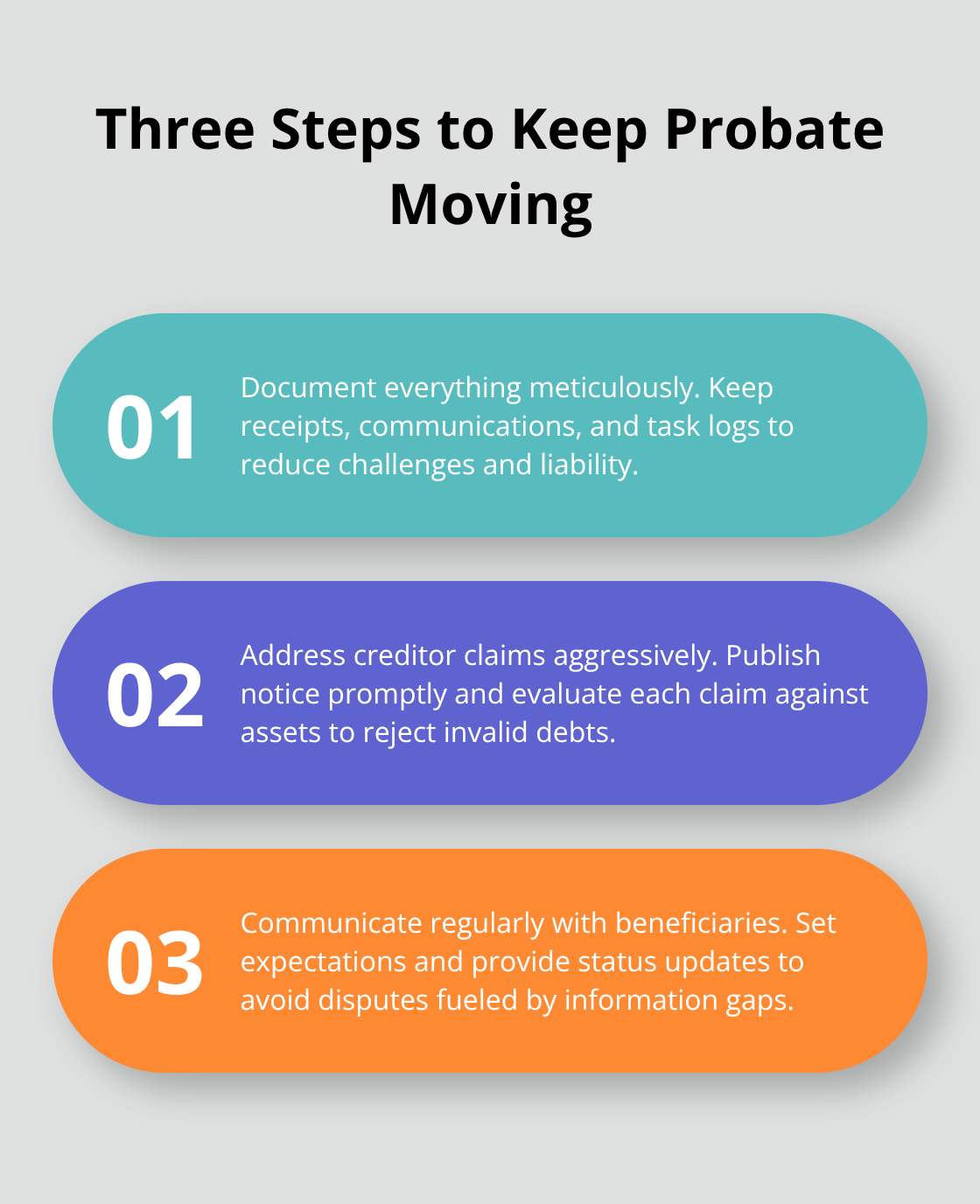
Second, address creditor claims aggressively by publishing notice promptly and evaluating each claim carefully against estate assets. Third, communicate regularly with beneficiaries about timeline expectations and asset status, since many disputes stem from information vacuums rather than genuine disagreements.
Professional Guidance and Court Procedures
For estates with real property, you should engage a probate referee early to establish accurate valuations that withstand beneficiary scrutiny. Personal representatives should consult with probate counsel before making major decisions, since attorney guidance during administration costs far less than litigation after the fact. Orange County Superior Court maintains specific procedures for resolving disputes through its probate department, but court intervention should be your last resort, not your first response. The strongest protection against delays involves treating probate administration as an active management process rather than a passive waiting game.
Final Thoughts
Probate administration in California demands attention to detail, strict adherence to statutory deadlines, and careful management of competing interests among beneficiaries and creditors. Orange County probate follows a predictable path from petition filing through final distribution, but the process requires navigating court procedures, asset valuations, tax filings, and creditor claims that trip up unprepared personal representatives. The timeline typically spans 9 to 18 months, costs often exceed $10,000 for moderate estates, and disputes can extend both duration and expense significantly.
Professional guidance early in the process protects you from delays and costly mistakes. A probate attorney helps you understand your fiduciary obligations, meet critical deadlines, and avoid decisions that trigger beneficiary challenges or creditor litigation. We at Law Offices of Roshni T. Desai bring experience handling probate administration across Southern California, guiding families through every stage from initial petition filing to final asset distribution.
If you face probate administration now or anticipate it in the future, a confidential consultation assesses your specific situation and charts the path forward. Visit Law Offices of Roshni T. Desai to schedule your consultation and begin moving your estate toward efficient settlement.