




Probate Administration Planning: Proactive Steps to Protect Your Heirs
Probate administration planning isn’t something most people think about until it’s too late. Court delays, missing documents, and family conflicts can turn what should be a straightforward process into years of frustration and expense for your heirs.
We at Law Offices of Roshni T. Desai have seen firsthand how the right preparation prevents these problems. This guide walks you through concrete steps to protect your family and streamline what comes after.
What Really Delays Probate and Costs Your Heirs
Court Backlogs Are Not the Main Problem
Court backlogs are real, but they rarely cause the longest probate delays. Most probate cases complete within a year with minimal court involvement, according to the American Bar Association. The actual delays stem from preventable administrative failures that families create themselves. Missing or disorganized financial records force executors to spend months tracking down bank statements, investment accounts, and property titles. Unclear documentation about asset ownership creates confusion about what belongs in the estate and what passes outside probate through beneficiary designations or joint ownership.
How Disorganization Multiplies Costs
These gaps don’t just waste time-they cost money. Large-estate probate fees typically range from 0.5% to 4% of the estate value, according to Charles Schwab, with California’s tiered fee schedule scaling from 4% on smaller portions down to 0.5% on larger portions. A $500,000 estate could easily cost $7,500 to $20,000 in probate fees alone, and that’s before attorney fees, court costs, or appraisal expenses.
The number 0% seems to be not appropriate for this chart. Please use a different chart type. Executors who lack access to the decedent’s accounts and records (online portals, emails, files) must hire professionals to locate and verify assets, adding thousands more to the final bill.
Family Disputes Stretch Timelines and Drain Resources
Family disputes and contested claims amplify these costs dramatically. When heirs disagree about the will’s validity, asset distribution, or an executor’s decisions, litigation becomes necessary. These disputes don’t resolve quickly-they can stretch probate from one year to three years or longer, with legal fees compounding at every step. The creditor claims deadline adds another layer of timing pressure. California and Tennessee allow creditors four months to file claims, meaning executors must hold assets in reserve and cannot distribute to heirs until that window closes. This forced waiting period is not negotiable, and any executor who distributes prematurely risks personal liability.
How Problems Compound Together
The real damage comes from the combination of these factors. A missing deed delays real estate transfers. Unclear beneficiary designations force assets through probate when they shouldn’t. Undocumented family disagreements about distributions erupt into lawsuits. Each problem independently adds months and thousands of dollars; together, they transform a manageable process into a financial and emotional drain on your heirs. The solution lies not in fighting the system but in preventing these problems before death occurs. Proactive planning strategies address each of these vulnerabilities head-on.
How to Build an Estate Plan That Actually Works
The Critical Difference Between a Will and a Functional Estate Plan
A will alone tells the court who receives what, but it does nothing to prevent the delays, costs, and family conflicts discussed earlier. A revocable living trust, by contrast, keeps assets out of probate entirely and allows a successor trustee to distribute property immediately after your death without court approval. The process requires two concrete steps: first, work with an attorney to establish the trust document itself, and second, retitle your assets into the trust’s name. This second step is non-negotiable and often overlooked. If you create a trust but never transfer property into it, those assets still go through probate when you die.
Which Assets Belong in Your Trust
Real estate, brokerage accounts, mutual funds, and personal property all need formal transfer into the trust during your lifetime. Retirement accounts and life insurance typically should not be titled in the trust; instead, name the trust as beneficiary on these accounts so the funds pass directly to your heirs outside probate. A pour-over will catches any assets you missed and directs them into the trust at death, but those assets will still require probate, so the pour-over functions as a backup tool, not a substitute for proper funding.
Strategic Funding With Annual Gift Exclusions
The 2024 annual gift exclusion of $18,000 per recipient allows you to fund trusts strategically without triggering gift taxes, and couples can double this amount to $36,000 per recipient. This annual exclusion is a real tool that reduces your taxable estate while you remain alive and prevents unnecessary tax complications for your heirs.
Create a Master Financial Record Your Executor Can Access
Organizing financial records is equally important and far simpler than most people assume. Create a single document listing every bank account, investment account, retirement account, insurance policy, and property you own, along with account numbers, login information, and the location of important documents. Store this master list somewhere your executor can access it immediately-a physical copy in a home safe, a password-protected file shared with your attorney, or a secure digital vault service. Without this, your executor faces weeks or months of detective work.
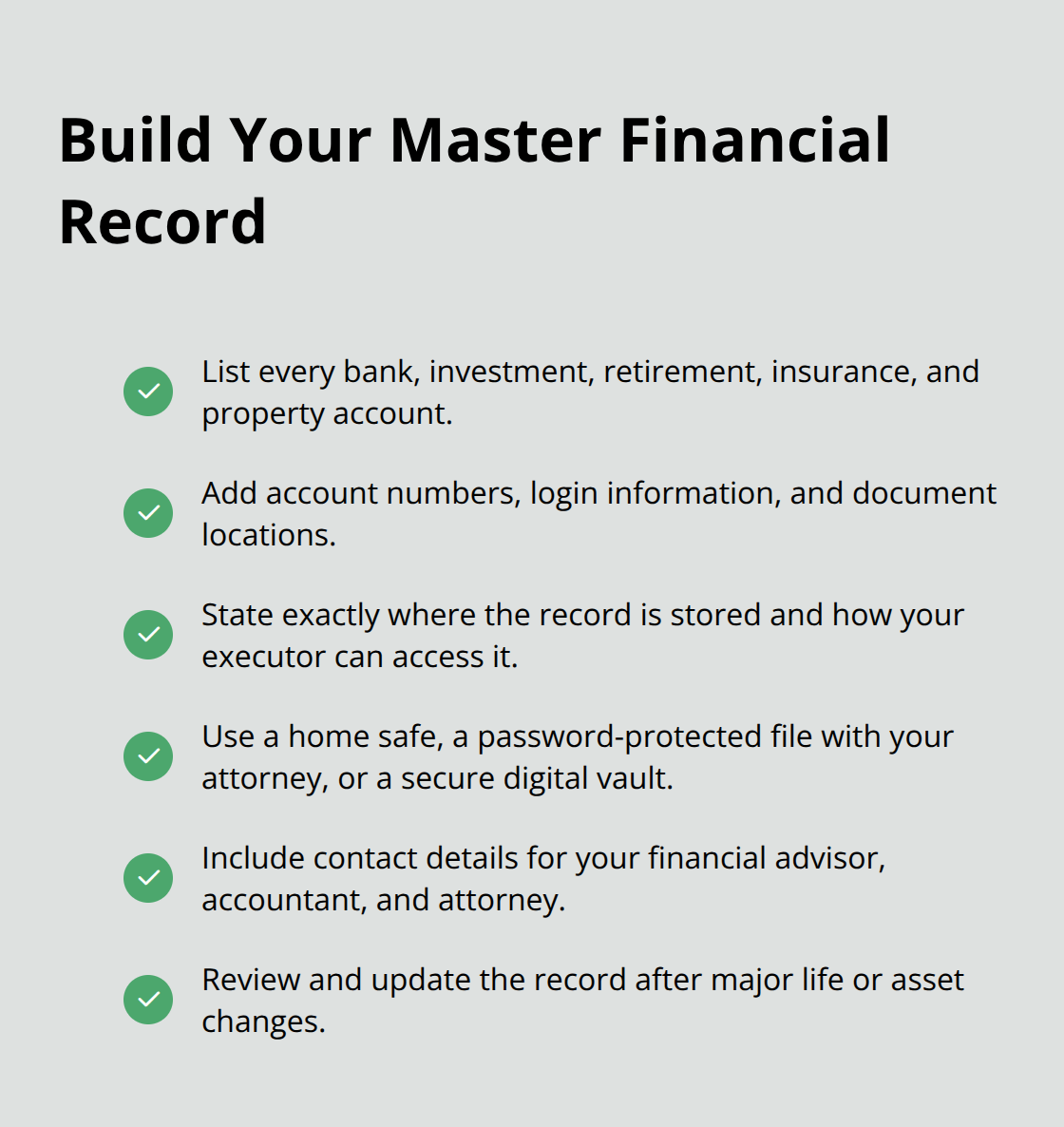
The creditor claims period in California and Tennessee is only four months, which means your executor cannot distribute assets to heirs until that window closes. A disorganized estate stretches this timeline further because your executor must spend those four months hunting for accounts instead of managing the estate. Additionally, property titles, deeds, and mortgage documents must be located quickly to determine whether assets pass through probate or to designated beneficiaries. Include the names and contact information for your financial advisors, accountant, and attorney in this document as well. Executors who have this information can move forward immediately rather than spending months on preliminary research.
With your estate plan in place and your records organized, the next step involves communicating these arrangements to the people who matter most-your family members and your executor.
Why Property Expertise Matters in Estate Administration
Real Estate Creates Dual Challenges in Probate
The difference between smooth probate and prolonged delays often comes down to how real estate gets handled. When an estate includes property, the executor faces a dual challenge: navigating probate rules while simultaneously managing a real estate transaction. Most probate attorneys handle the legal side of succession, but they refer property matters to real estate agents or brokers who lack probate knowledge. This separation creates friction, miscommunication, and unnecessary delays.
How Integrated Expertise Reduces Friction
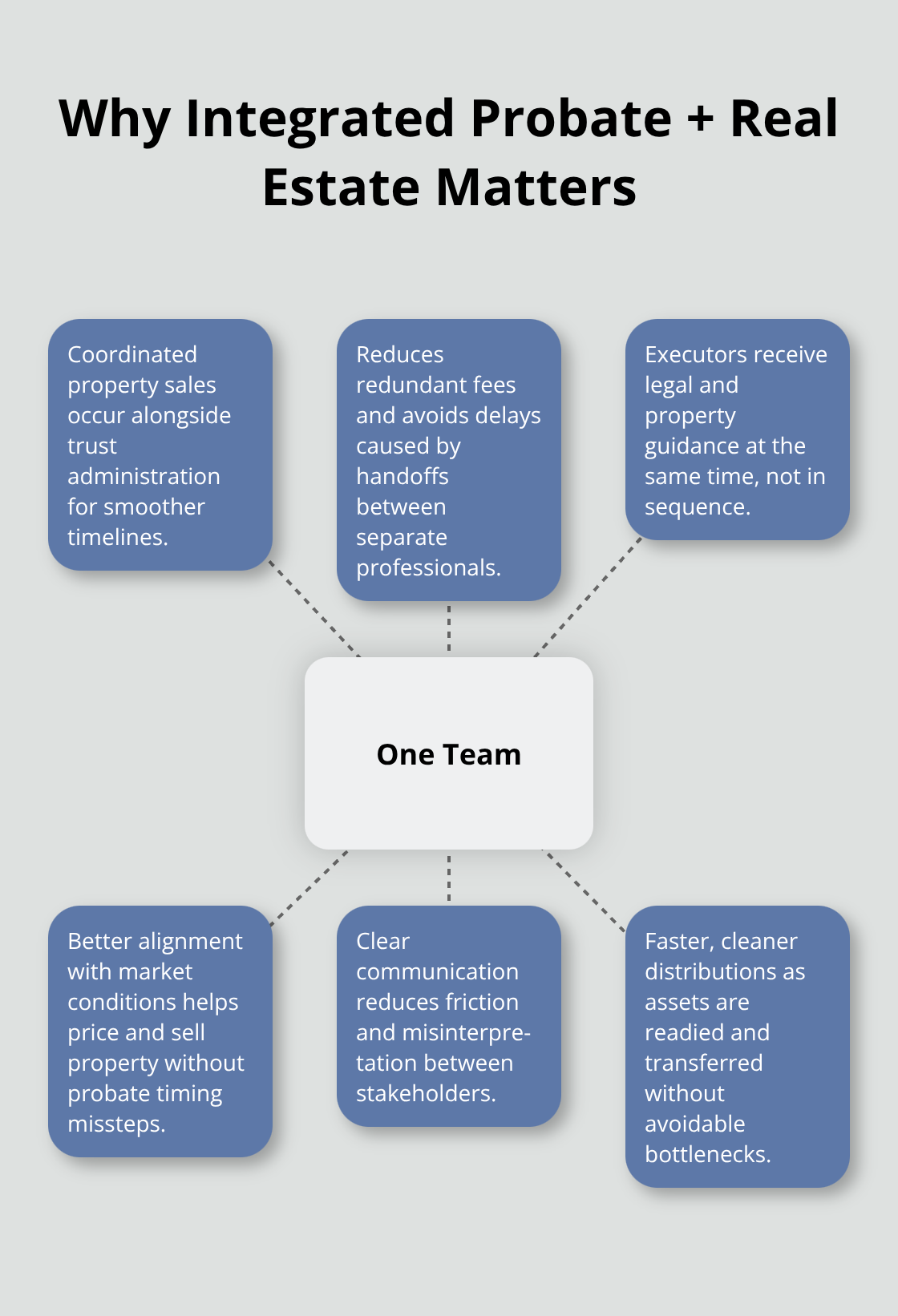
Ms. Desai holds dual licensure as both an attorney and a real estate professional, which means property sales and transfers happen within a single integrated process rather than across competing interests. When an estate must sell real property to pay debts or distribute assets, the property handling occurs alongside trust administration without the typical back-and-forth between legal counsel and real estate professionals. This streamlined approach reduces costs by eliminating redundant fees and cuts timeline delays caused by coordination gaps. Executors access probate guidance and property expertise simultaneously, not sequentially. For estates with significant real estate holdings, this dual capability prevents the common scenario where a property sits listed for months because the real estate agent doesn’t understand probate timelines or the attorney doesn’t grasp market conditions affecting sale price.
Personalized Assessment Uncovers Hidden Gaps
Estate planning must address the specific vulnerabilities in your situation, not follow a generic template. We at Law Offices of Roshni T. Desai offer free consultations with flexible scheduling at your home or office, which allows us to assess your actual assets, family structure, and goals before recommending any strategy. During these consultations, we examine whether your current beneficiary designations align with your trust structure, whether your property titles match your plan, and whether your records are organized enough for efficient administration. Many people discover during these conversations that their existing plans contain gaps they never noticed. A revocable trust created ten years ago may hold outdated property titles or miss recently acquired accounts. A will drafted before a divorce may name an ex-spouse as beneficiary on life insurance. These oversights don’t appear until someone reviews the full picture.
Consolidated Administration Prevents Missed Deadlines
We handle trust administration directly, managing asset inventory, creditor notifications, tax filings, and distributions to beneficiaries without requiring families to coordinate between multiple professionals. This consolidated approach reduces the likelihood of missed deadlines or miscommunication that extends probate timelines. Over 25 years of experience working with Southern California families means we understand local probate court procedures, real estate market conditions, and the specific tax implications affecting estates in this region.
Final Thoughts
Probate administration planning works because it addresses the real problems that delay estates and drain resources from your heirs. Court backlogs matter far less than the preventable failures that families create through disorganization, unclear documentation, and unresolved family conflicts. A comprehensive will and trust structure, organized financial records, and honest family communication eliminate most of these obstacles before they become expensive problems.
A $500,000 estate can cost $7,500 to $20,000 in probate fees alone, plus attorney fees, court costs, and appraisal expenses-money that should go to your heirs, not to administrative overhead. A revocable living trust keeps assets out of probate entirely, allowing a successor trustee to distribute property immediately without court approval. Real estate transfers happen faster, beneficiary designations align with your actual wishes, and tax complications shrink because your plan accounts for the 2024 annual gift exclusion of $18,000 per recipient.
We at Law Offices of Roshni T. Desai help families across Southern California build estate plans that actually work, with dual licensure as both attorney and real estate professional meaning property matters integrate seamlessly with trust administration. Contact us to schedule your free consultation and review your current plan for gaps or outdated provisions.