



Probate Administration Steps: From Filing to Distribution in Santa Ana, California
Probate administration steps can feel overwhelming when you’re managing a loved one’s estate in Santa Ana. The process involves multiple stages, from filing initial paperwork to distributing assets to beneficiaries.
We at Law Offices of Roshni T. Desai guide families through each phase so nothing gets missed. This guide walks you through what to expect and how to move forward.
Understanding Probate in Santa Ana
What Probate Actually Means in Santa Ana
Probate is the court-supervised process that transfers a deceased person’s property to their heirs or beneficiaries. In Santa Ana, this happens through the Orange County Superior Court’s Probate Division at the Central Justice Center. The court validates the will (if one exists), appoints a personal representative to manage the estate, inventories all assets, pays debts and taxes, and distributes what remains. This isn’t optional paperwork you can skip-it’s a legal requirement for most estates. The court oversees each step to protect beneficiaries and creditors alike. Without probate, heirs have no legal proof they own inherited property, and creditors have no clear path to collect what the deceased owed them.
Santa Ana Probate Timelines Lock You Into a Longer Process
Standard probate in California takes 12 to 18 months from the date the personal representative receives appointment. In Santa Ana, you’re looking at about 9 to 18 months total, with the actual distribution of assets occurring 1 to 3 months after the final court hearing. The Judicial Council of California sets a one-year completion target, but complex estates, family disputes, or contested wills extend this significantly. Court deadlines matter enormously-miss a creditor notification deadline or court hearing date, and you’ll add months to the process. The four-month creditor claims window alone locks you into a minimum timeframe. Court calendars in Orange County have grown congested due to generational wealth transfers and rising home values, with inherited properties in Irvine, Anaheim, and Santa Ana frequently exceeding $1 million. If you need faster results, California offers simplified probate for smaller estates under certain value thresholds, but only if the estate has minimal debts or tax claims.
Costs Consume 4% to 7% of What You’re Distributing
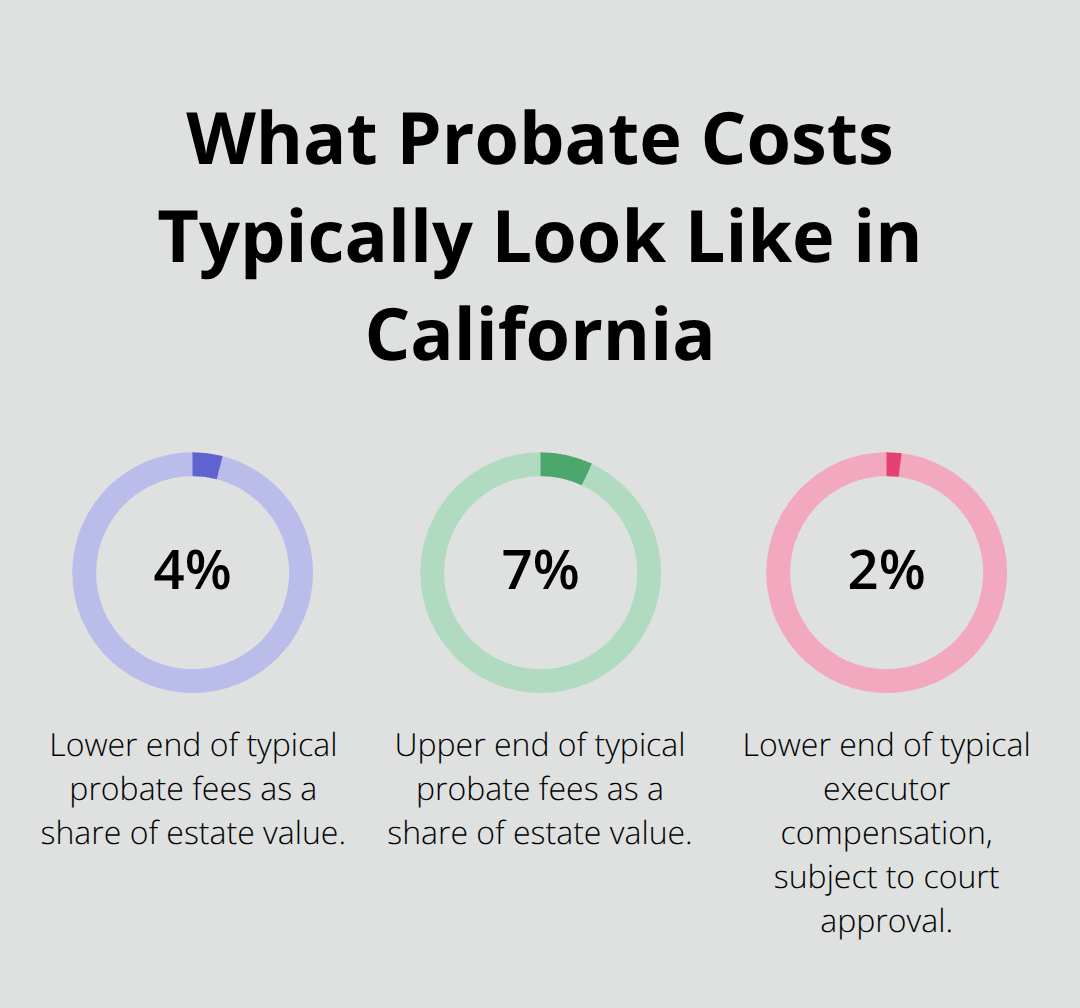
Probate fees typically run 4% to 7% of the estate’s gross value, according to California probate standards. On a $500,000 estate, that’s $20,000 to $35,000 in costs alone. These fees cover court filing costs, the probate referee’s appraisal of non-cash assets, executor compensation (typically 2% to 4% of the estate, subject to court approval), and attorney fees.
If real property needs to be sold, you’ll add appraisal costs and potential real estate commissions. Contested wills or creditor disputes push costs higher. These expenses come from estate funds before beneficiaries receive anything, which means a smaller inheritance for heirs. Understanding these costs upfront helps families decide whether to pursue probate or explore alternatives like living trusts that bypass the process entirely.
The next phase of probate administration-filing the petition and notifying heirs and creditors-sets the entire timeline in motion. Each step that follows depends on completing this initial phase correctly.
Filing and Initial Steps in Santa Ana
Submit Your Petition to Start Probate
Filing a Petition for Probate with the Orange County Superior Court’s Probate Division at the Central Justice Center in Santa Ana initiates the entire administration process. You’ll submit Form DE-111 along with the original will (if one exists), the death certificate, and proof that you have legal standing to serve as executor or administrator. The Judicial Council of California provides standardized forms that Orange County accepts, and the Superior Court of Orange County offers fillable versions through their Self-Help Center to reduce errors.
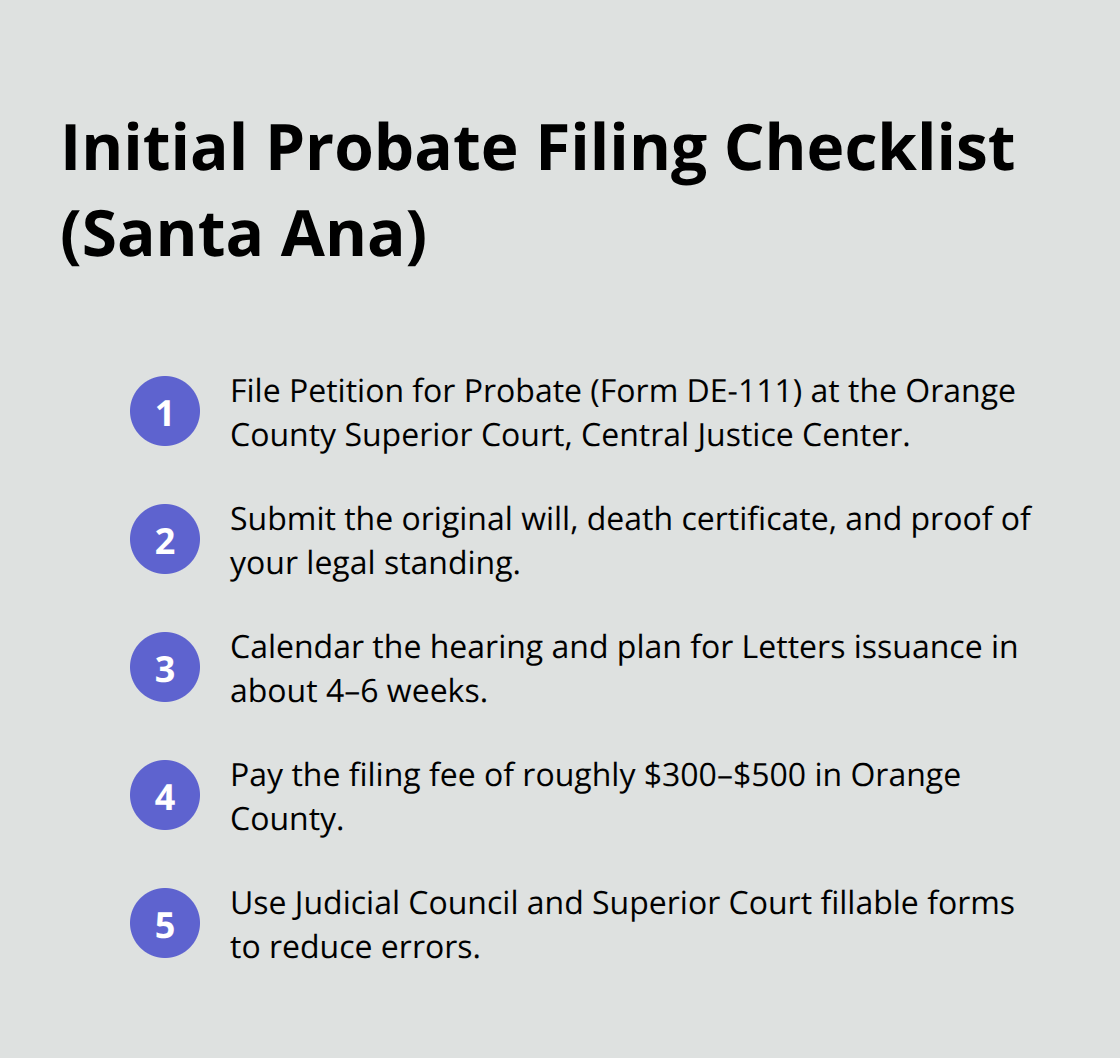
File the will within 30 days of death-missing this deadline creates unnecessary complications. The court typically issues Letters Testamentary (if there’s a will naming an executor) or Letters of Administration (if there’s no will or no named executor) within 4 to 6 weeks after your petition hearing.
These letters grant you legal authority to access bank accounts, sell property, and manage estate assets. The filing fee in Orange County runs roughly $300 to $500 depending on estate value, but this is a one-time court cost that pales compared to the overall administration expenses you’ll face.
Notify Heirs and Creditors Immediately
Notifying heirs and creditors happens immediately after appointment and locks in critical deadlines you cannot miss. State law requires you to publish a legal notice in a local Orange County newspaper and mail formal notices to all beneficiaries named in the will plus any legal heirs under California intestacy law. The creditor notification triggers a four-month claims period-any creditor who doesn’t file a claim within this window loses the right to collect from the estate. This deadline is absolute, and the court tracks it carefully.
Maintain regular, clear communication with heirs throughout this phase to reduce confusion and potential conflicts. Respond promptly to court notices and deadlines to avoid procedural delays that extend the overall timeline.
Inventory and Appraise All Estate Assets
You must inventory every asset the deceased owned: real estate, bank accounts, investments, vehicles, jewelry, and business interests. The court appoints a Probate Referee to appraise non-cash assets like real property or artwork, and this appraisal establishes the asset values for tax and distribution purposes. The referee typically charges between $200 and $500 per property, depending on complexity. Create a detailed Inventory and Appraisal form listing everything with corresponding values-sloppiness here invites court objections and delays.
Keep meticulous records of all transactions and communications throughout this phase, as the court requires a complete accounting later. If inherited property in Irvine, Anaheim, or Santa Ana exceeds $1 million in value, coordinate with a probate-savvy real estate professional early to plan whether selling or transferring the property to beneficiaries makes financial sense (this decision affects both the timeline and the tax implications for your estate).
Once you’ve completed the inventory and notified all parties, the focus shifts to managing the estate’s financial obligations-paying debts, handling creditor claims, and resolving any disputes that arise among beneficiaries.
Managing the Estate and Resolving Claims
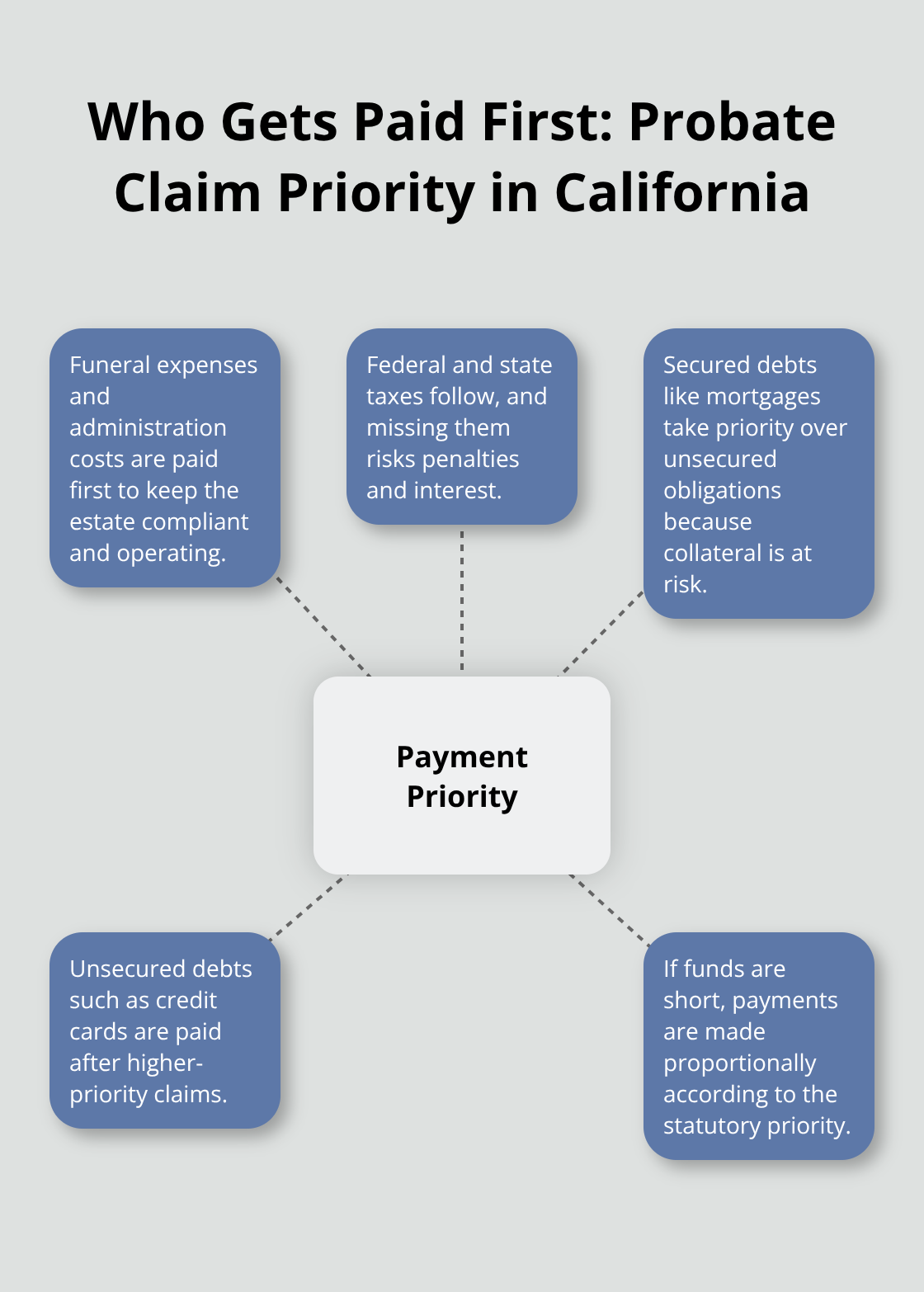
The four-month creditor claims period that starts when you notify heirs is your window to identify, verify, and pay legitimate debts against the estate. During this time, creditors file formal claims, and you must evaluate each one carefully. Valid claims receive payment from estate funds before beneficiaries receive anything. The personal representative’s fiduciary duty requires you to act with complete honesty and impartiality when you decide which claims to approve or reject. If a creditor’s claim is questionable, you can object to it in writing, and the court will decide whether it’s valid. California law establishes clear priority rules for payment: funeral expenses and administration costs come first, then federal and state taxes, then secured debts like mortgages, and finally unsecured debts like credit cards. If the estate lacks sufficient funds to pay all creditors in full, payments are distributed proportionally according to priority.
Establish Separate Financial Controls
Open a separate estate bank account immediately after you receive your Letters of Administration or Testamentary-never commingle estate funds with your personal accounts. This separation protects you against accusations of mismanagement and creates a clear audit trail for the court. The Orange County Superior Court tracks compliance with payment deadlines, and failure to pay taxes or court-approved creditor claims can result in personal liability for the executor. Careful financial management becomes critical at this stage. Maintain transparent, detailed records of every payment, deposit, and transaction throughout the administration period.
File Required Tax Returns
The decedent’s final personal income tax return must be filed by April 15 of the year following death, and the estate itself files Form 1041 if it generates income during administration. If the estate exceeds $13.61 million in 2024, federal estate tax applies, requiring Form 706 filing within nine months of death. California does not impose a state-level estate tax, but you still must file state tax returns. Missing these deadlines triggers penalties and interest that reduce what beneficiaries ultimately receive.
Address Disputes Among Beneficiaries
Disputes among beneficiaries over asset distribution or interpretation of the will surface during this phase and can derail the entire timeline. If heirs disagree about whether real property should be sold or transferred directly, or if they question the executor’s decisions, the conflict must be resolved before final distribution occurs. If a serious dispute emerges-such as a will contest claiming the deceased lacked capacity or was subject to undue influence-only someone with legal standing (a beneficiary or heir with a financial interest) can challenge the will, and the deadline for filing is strictly enforced by the court. These disputes consume thousands in additional legal fees and extend probate timelines significantly.
Communicate Transparently With All Heirs
Maintain clear communication with all beneficiaries about the estate’s financial status and your administration decisions. Keeping heirs informed reduces the likelihood that disputes escalate into costly court battles. Address potential conflicts early by explaining your decisions and the reasoning behind them. This proactive approach prevents misunderstandings and protects the estate’s assets from being consumed by unnecessary litigation.
Final Thoughts on Completing Probate Administration
After months of creditor claims, tax filings, and dispute resolution, you reach the final phase where the court releases the estate to beneficiaries. You submit a complete accounting to the Orange County Superior Court that documents every dollar received, spent, and distributed throughout the probate administration steps. The court reviews this accounting carefully-any discrepancies or missing documentation trigger objections that delay closure. Once the court approves your accounting, you file a Petition for Final Distribution that proposes how remaining assets will be divided according to the will or California intestacy law, and the judge must sign off on this petition before any distributions occur.
After court approval, actual distribution happens relatively quickly. Real property transfers through recorded deeds to heirs, personal property moves to beneficiaries, and cash assets are distributed from the estate account. This distribution typically occurs one to three months after the final court hearing. You then file a final report with the court confirming that all distributions have been completed and the estate is closed.
The complexity of these final steps makes working with experienced guidance invaluable. We at Law Offices of Roshni T. Desai handle the accounting, court filings, and distribution logistics so families can focus on moving forward. Contact us for a free consultation to discuss your specific situation.