



Probate Administration Steps SoCal: A Practical How-To
Probate in Southern California involves specific court procedures and timelines that many people find overwhelming. We at Law Offices of Roshni T. Desai have guided countless families through probate administration steps in SoCal, and we know the process doesn’t have to be confusing.
This guide walks you through each stage, from filing your initial petition to handling creditor claims and final accounting. You’ll learn what to expect, which deadlines matter most, and how to sidestep common mistakes that delay estates.
What Probate Actually Involves in Southern California
The Core Purpose of Probate
Probate in California is the legal process that transfers property from a deceased person’s name into the names of their beneficiaries or heirs. Many people assume probate only happens when someone dies without a will, but that’s incorrect. Even with a will, most estates go through probate unless they’re structured differently from the start.
In Southern California, probate serves a specific purpose: it validates the will, identifies all assets, pays debts and taxes, and distributes what remains according to the person’s wishes or California law. Without probate, there’s no legal mechanism to change property titles or access bank accounts held solely in the deceased person’s name.
How Probate Protects Everyone Involved
The process protects beneficiaries by notifying creditors and giving them a chance to claim what’s owed. It also protects the estate by preventing fraudulent claims down the road. This structured approach means heirs know exactly where they stand and when they’ll receive their inheritance.
Two Distinct Paths Through Probate
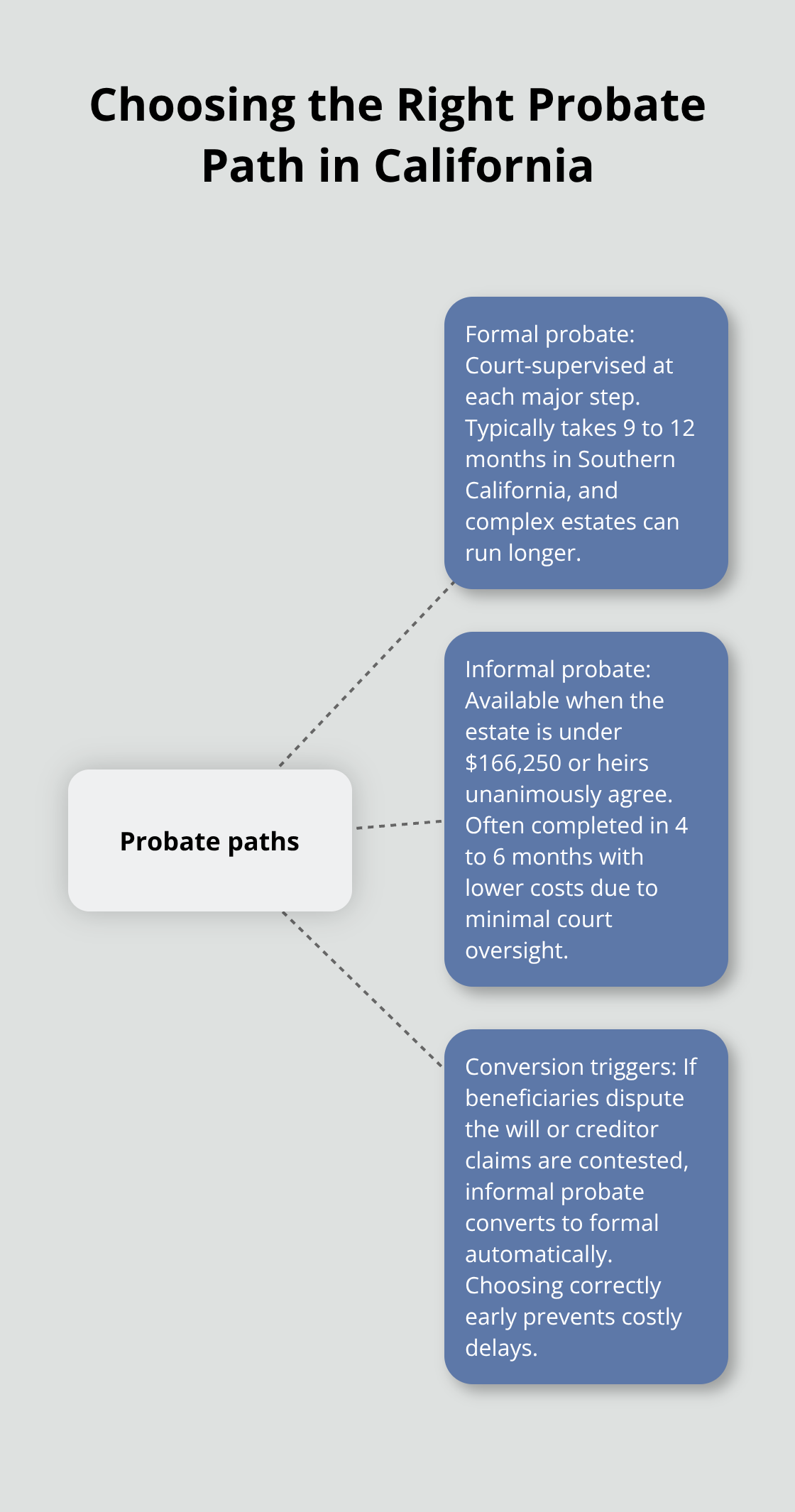
California courts recognize two distinct paths through probate, and choosing the right one saves significant time and money. Formal probate involves court supervision at every major step-the judge must approve the petition, inventory, appraisals, and final accounting before distribution happens. This path typically takes 9 to 12 months in Southern California, though complex estates often run longer.
Informal probate, also called succession without administration, skips most court involvement if the estate qualifies. To use informal probate in California, the estate must be valued under $166,250 as of 2024, or the heirs must unanimously agree to it. Informal probate can be completed in 4 to 6 months and costs significantly less because there’s no ongoing court supervision.
When Your Choice Matters Most
However, if beneficiaries dispute the will or each other, or if creditor claims are contested, informal probate converts to formal probate automatically. This choice shapes everything that follows, from filing requirements to how long you’ll wait for distributions. Understanding which path fits your situation early prevents costly mistakes later.
Step-by-Step Probate Administration Process
Filing Your Petition With the Court
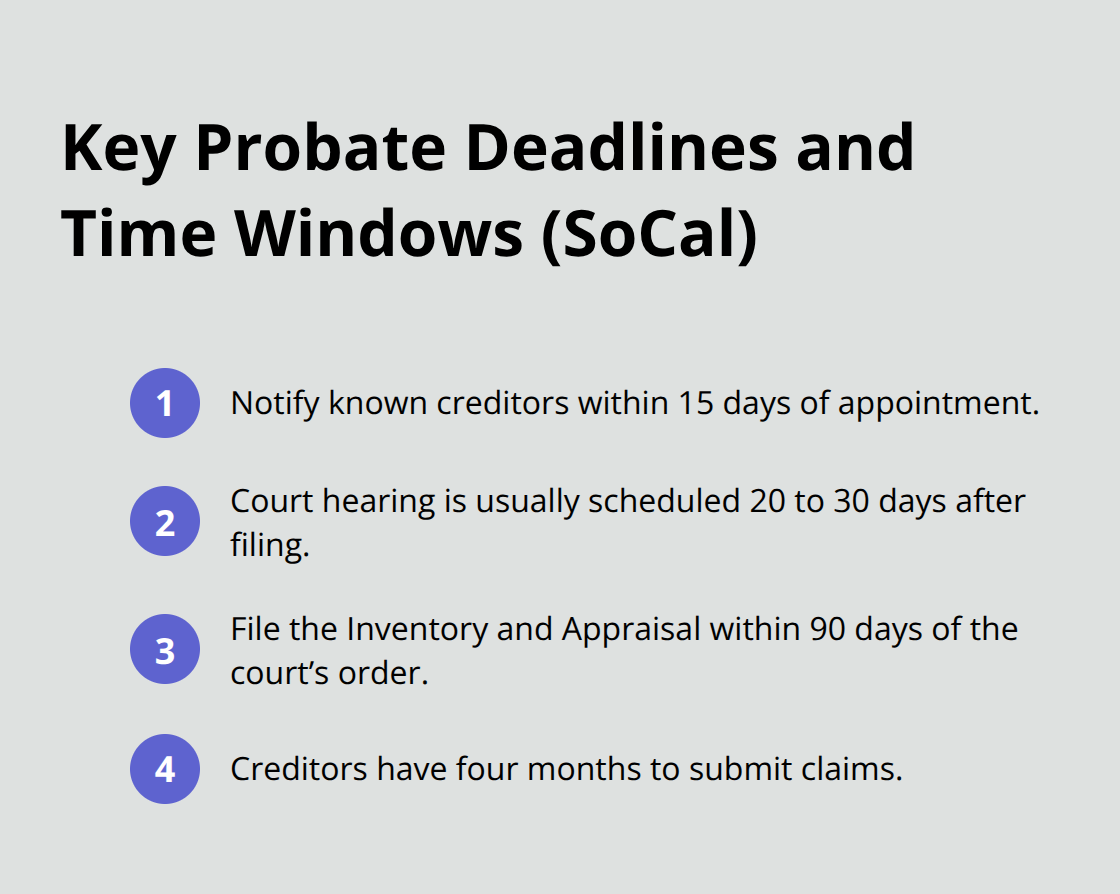
Filing your probate petition marks the official start of the process, and this step determines whether you’re headed toward formal or informal probate. In Southern California, you file with the superior court in the county where the deceased person lived. The petition itself lists the will, names the proposed executor or administrator, identifies heirs and beneficiaries, and estimates the estate’s total value. California courts require you to file specific forms-the Petition for Probate is typically Form DE-111 for formal probate or Form DE-285 for informal succession. Once filed, the court assigns a case number and schedules a hearing, usually 20 to 30 days out. At this hearing, the judge either approves your petition or requests changes. One critical detail many people miss: you must file an Inventory and Appraisal form within 90 days of the court’s order, and failure to do so can result in court penalties or dismissal of your case. The Los Angeles County Superior Court processes roughly 15,000 probate cases annually, so delays happen when paperwork isn’t complete or accurate from the start.
Locating and Valuing Estate Assets
After the petition receives approval, you spend weeks locating and valuing every asset the deceased owned. This includes bank accounts, investment accounts, real estate, vehicles, jewelry, and any business interests. For real estate in SoCal, you need a professional appraisal, which typically costs $500 to $2,000 depending on the property’s complexity. Bank accounts and investments are simpler-you contact each institution and request statements showing the value as of the death date. Once you document everything, you file the Inventory and Appraisal with the court, and this becomes the official record of what the estate contains.
Notifying Creditors and Managing Claims
Simultaneously, you must notify creditors of the death within 15 days if you know who they are, or publish a notice in a local newspaper if you don’t. Creditors then have four months to submit claims against the estate. This structured approach protects everyone involved: creditors cannot pursue heirs personally after this period ends if their claims were not filed. You should keep meticulous records of every notification you send and every response you receive, because the court will want proof that you followed these procedures correctly when you file your final accounting. The next section covers the disputes and tax issues that often arise during this phase, and understanding these challenges now helps you prepare for what comes next.
What Derails Probate Cases in Southern California
Missing Court Deadlines Stops Everything
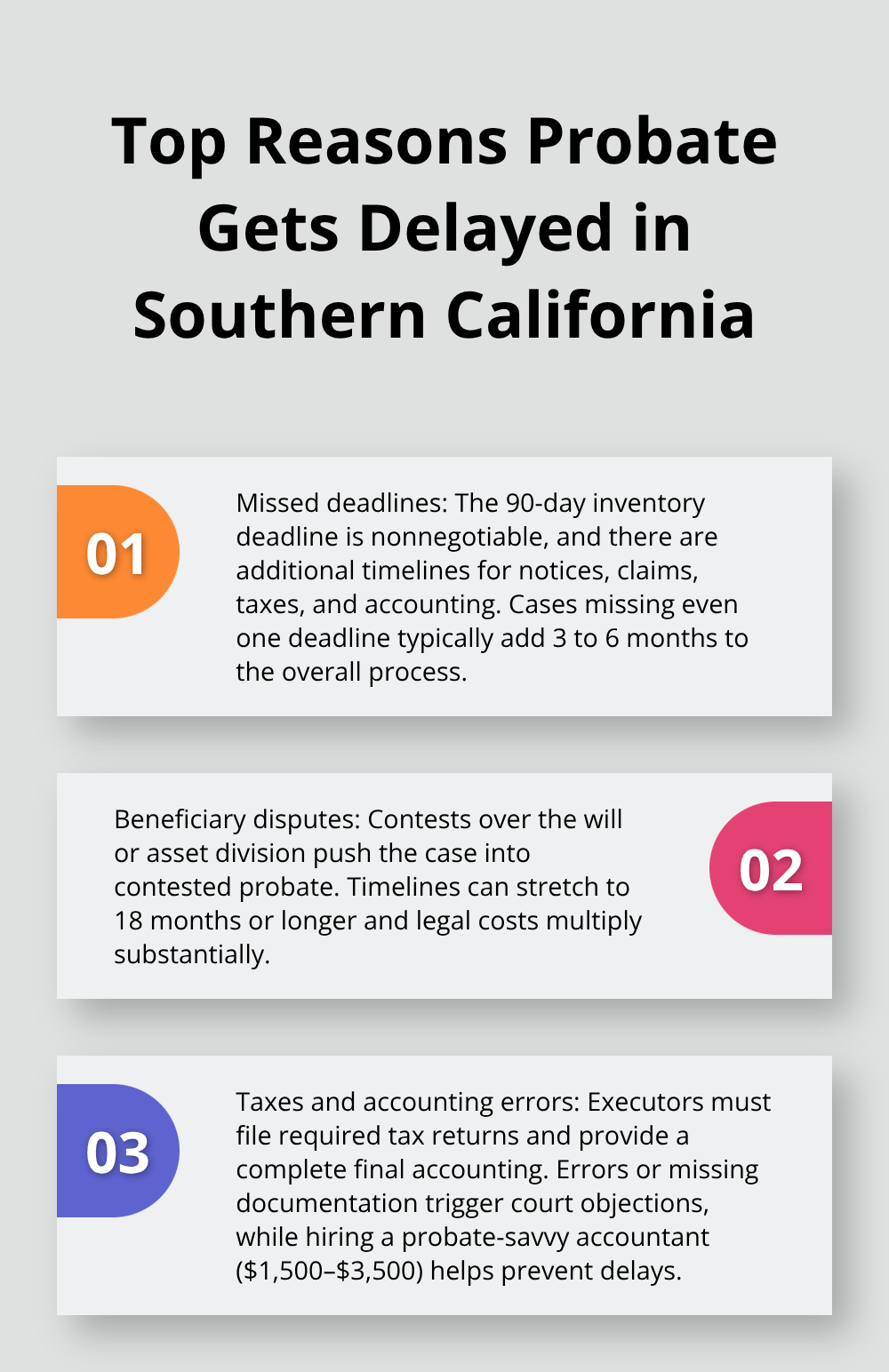
Missing court deadlines ranks as the single most common reason probate cases stall in Southern California. The 90-day inventory deadline is not negotiable-miss it and the court can dismiss your case or impose penalties. Beyond that, you face deadlines for creditor notifications, responses to creditor claims, tax filings, and final accounting submissions. Los Angeles County Superior Court statistics show that cases missing even one deadline add 3 to 6 months to the overall timeline.
Create a master calendar the moment the court approves your petition. Mark every deadline in writing and set reminders 10 days before each one. This simple step prevents the cascading delays that plague many estates.
Beneficiary Disputes Multiply Costs and Time
The second major pitfall involves disputes among beneficiaries over asset distribution or will validity. When one heir contests the will or disagrees about how assets should be divided, the entire process shifts into contested probate territory, which can stretch timelines to 18 months or longer and multiply legal costs substantially.
Many families underestimate how quickly disagreements escalate when money and emotion intersect.
Address tensions early through clear communication rather than letting disagreements fester. If beneficiaries cannot agree on major decisions, that’s the point to consult with someone who understands SoCal probate law rather than hoping the conflict resolves itself. Early intervention prevents small disagreements from becoming expensive litigation.
Taxes and Accounting Errors Trigger Court Objections
A third critical area involves taxes and final accounting. California requires executors to file the decedent’s final income tax return, and if the estate generated income during probate, you must file estate tax returns as well. Federal estate taxes apply only to estates exceeding $13.61 million in 2024, but California has no state estate tax, which simplifies matters somewhat.
What complicates things is the final accounting itself-you must document every penny received and spent during probate administration, and any mathematical errors or missing documentation can trigger court objections that delay distributions by weeks or months. Work with an accountant familiar with probate from the start. The cost of their services (typically $1,500 to $3,500 depending on estate complexity) pays for itself by preventing costly mistakes.
Documentation Protects You Throughout Administration
Keep meticulous records of every action you take, every expense you pay, and every notification you send. Document everything in writing and retain copies of all court filings, bank statements, appraisals, and correspondence. This documentation becomes your protection when the court reviews your final accounting and your evidence that you administered the estate properly. Courts in Southern California expect executors to produce complete records, and gaps in documentation frequently trigger additional hearings or delays in final distributions.
Final Thoughts
Probate administration steps in SoCal follow a predictable path when you understand the process and stay organized from day one. The core takeaway is simple: file your petition correctly, meet every deadline, document everything, and communicate clearly with beneficiaries and creditors. Missing even one deadline or overlooking a notification requirement adds months to your timeline and thousands to your costs.
Many people attempt to navigate Southern California probate without guidance and end up making costly mistakes that could have been prevented. If your estate involves real property, multiple beneficiaries, significant assets, or any family conflict, working with someone who understands probate administration steps in SoCal makes financial sense. The cost of professional guidance typically ranges from $1,500 to $5,000 depending on complexity, but this investment prevents errors that cost far more to fix later.
We at Law Offices of Roshni T. Desai have guided families through probate administration for over 25 years and offer free consultations to discuss your specific situation. Whether you need help filing your initial petition, managing creditor claims, or preparing your final accounting, we can walk you through each step. Visit Law Offices of Roshni T. Desai to schedule your consultation today.