




Probate Asset Inventory: Step-by-Step for Executors
Serving as an executor means managing countless details during an already difficult time. Creating a thorough probate asset inventory is one of your most important responsibilities, yet many executors miss assets or make costly mistakes.
We at Law Offices of Roshni T. Desai have guided hundreds of executors through this process. This guide walks you through each step so you can complete your inventory accurately and on time.
Finding Every Asset the Deceased Left Behind
Start with Financial Documents
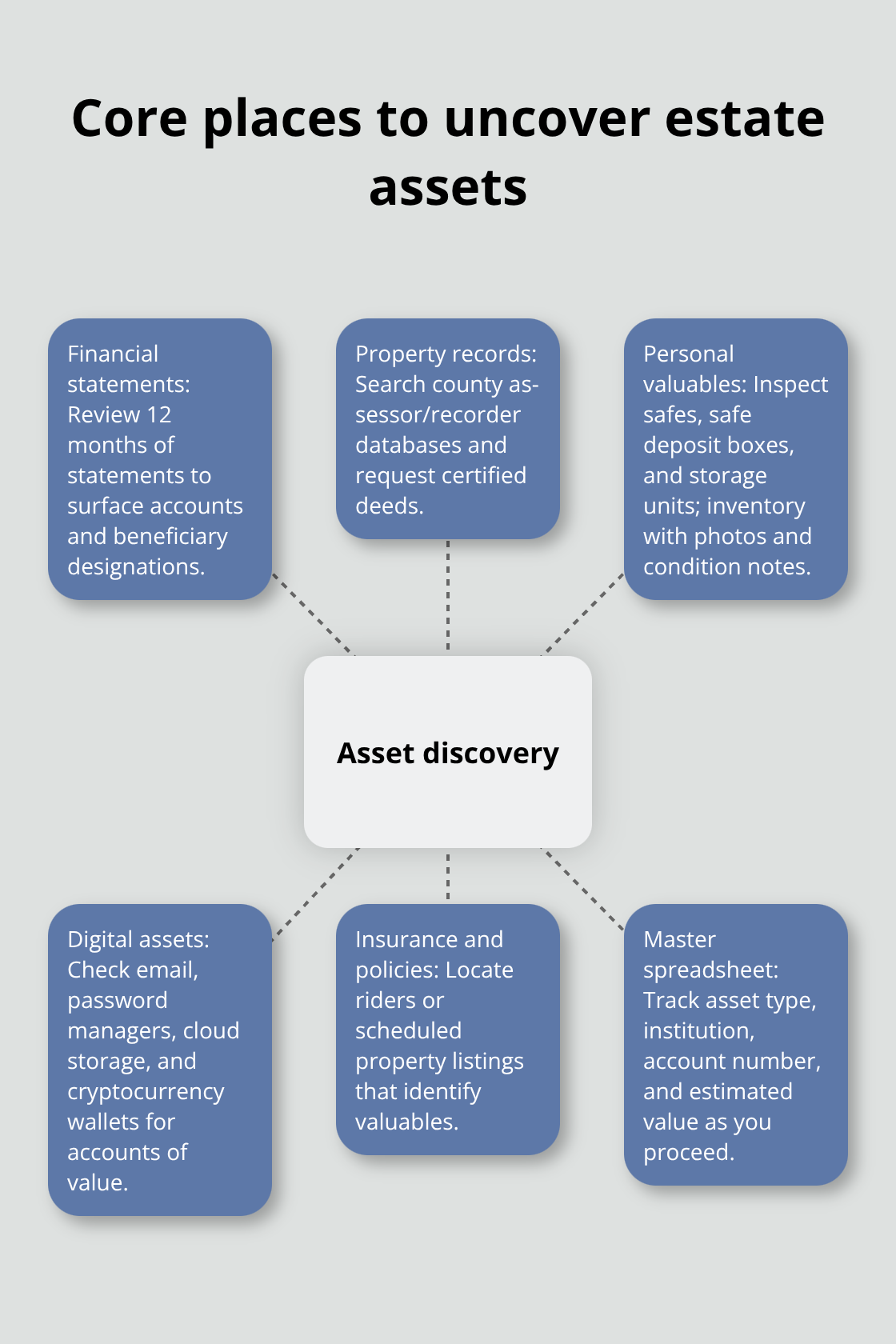
Financial institutions send statements monthly or quarterly, and these reveal bank accounts, investment portfolios, and retirement accounts that many executors overlook. Check the past twelve months of mail for account statements from banks, brokerages, credit unions, and insurance companies. The Social Security Administration reports that over 70 million Americans receive benefits, and many of these accounts require notification during probate. Contact each financial institution directly and request a complete account history. Ask specifically about payable-on-death accounts and transfer-on-death designations, which bypass probate entirely but still need documentation.
Locate Real Property Holdings
Real property ownership shows up in county records, but you must search by the deceased’s name in the assessor’s office or online property databases. Most counties now offer free online searches through their assessor or recorder websites. Many executors discover vacation homes, investment properties, or land holdings they didn’t know existed. Once you locate properties, obtain certified copies of deeds from the county recorder. This step prevents costly oversights that surface months into probate administration.
Catalog Personal Property and Valuables
Check safe deposit boxes, home safes, and storage units for jewelry, artwork, vehicles, and collectibles. These items have real monetary value that affects the estate’s total worth. Create a detailed inventory with photographs and descriptions of condition. Insurance policies often list valuable items covered under homeowner or personal property policies, giving you another source of information about what exists.
Account for Digital Assets
Digital assets present a growing challenge-check email accounts, cloud storage, cryptocurrency wallets, and online banking platforms. Many executors miss thousands of dollars in forgotten online accounts because they never think to search the deceased’s email for account notifications or password manager applications. These accounts hold real value that must be included in your inventory.
Organize Your Findings
Create a master spreadsheet with asset type, account number, institution name, and estimated value (updating it as you discover additional items throughout the probate process). This organized approach prevents duplicate efforts and keeps all information accessible. With your asset inventory complete, you now face the task of determining what each asset is actually worth-a process that directly impacts tax obligations and distribution calculations.
How to Value Estate Assets Correctly
The date of death valuation forms the foundation of probate administration, and getting it wrong costs money. The IRS requires you to establish fair market value for every asset in the estate as of the date the person died, not the date you sell it or the price you paid for it years earlier. This valuation determines both estate taxes and what beneficiaries actually receive. Many executors guess at values or use outdated purchase prices, which triggers IRS audits and penalties that could have been prevented with proper documentation from the start.
Valuing Different Asset Types
Bank accounts and publicly traded stocks present straightforward valuations-use the account statement from the date of death or the closing price from that specific day. Real estate requires a professional appraisal in most cases, particularly when the estate exceeds the federal exemption threshold of 13.61 million dollars as of 2024 according to the IRS.
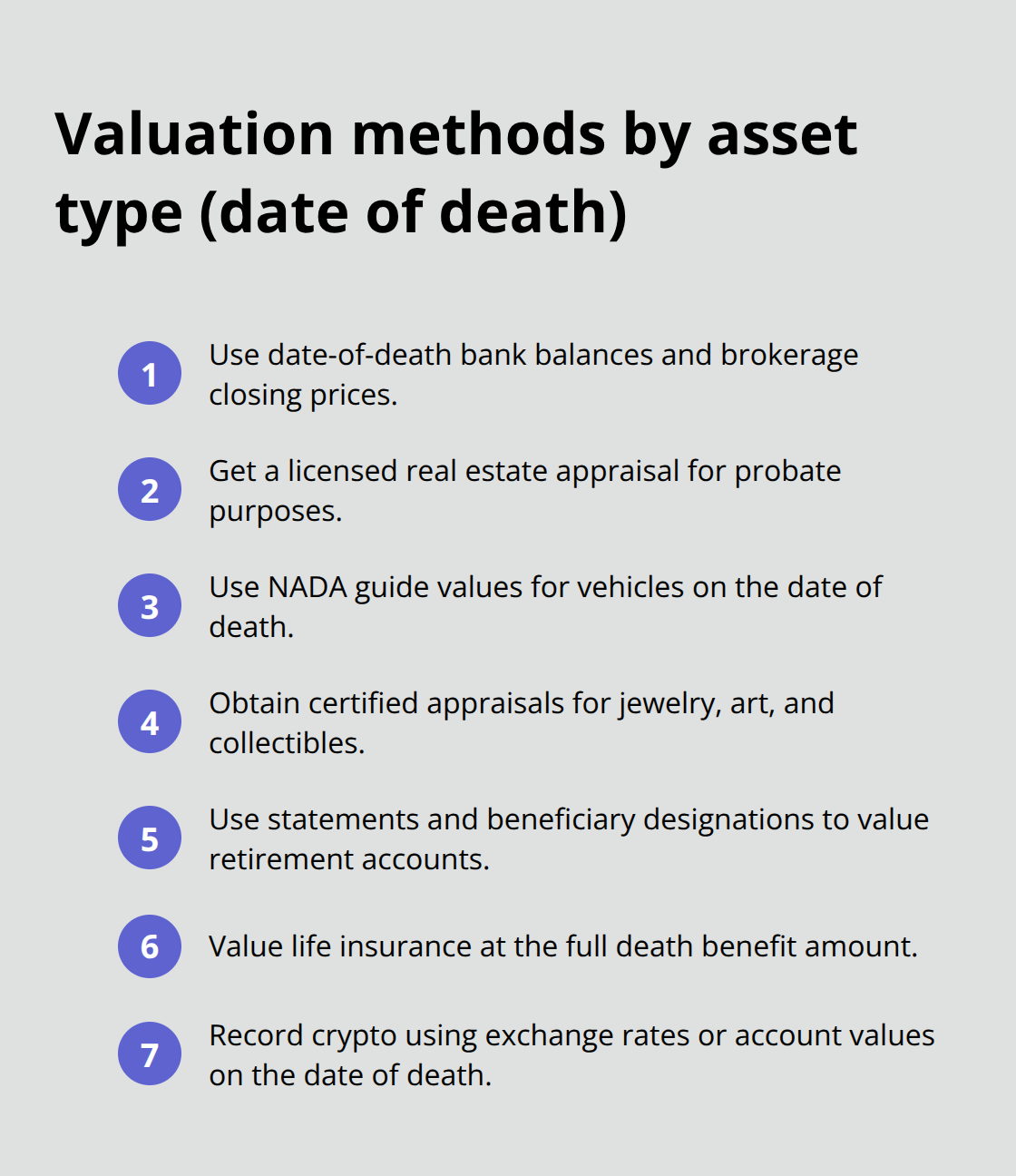
Hire a licensed appraiser who understands probate valuations, not just someone who estimates market value. For vehicles, use the National Automobile Dealers Association guide value for the exact make, model, and condition on the date of death.
Jewelry and collectibles demand certified appraisals from qualified professionals in those specific fields-a general appraiser won’t cut it for artwork or vintage items. Retirement accounts like IRAs and 401ks show their value on statements, but beneficiary designations determine who receives them (which means they may not flow through probate at all). Life insurance proceeds are valued at the full death benefit amount, not the policy’s cash surrender value. Digital assets and cryptocurrency present newer challenges-use the exchange rate or account value from the specific date of death, which you can often find through blockchain records or historical price databases.
Building Documentation the IRS Accepts
The IRS examines valuations closely, and vague estimates invite audit problems. Attach professional appraisals to your probate filings and keep detailed notes about how you determined each value. For assets without professional appraisals, document your reasoning in writing-show the comparable sales you reviewed, the condition of the property, or the market conditions on that date. Take photographs of personal property with descriptions.
If the estate qualifies for the stepped-up basis, accurate valuations become even more critical because beneficiaries use these values as their new cost basis for future sales. Organize all valuations in a single document that lists each asset, its valuation method, the date established, and supporting documentation attached. This organized approach prevents delays when filing estate tax returns and protects you from executor liability claims if beneficiaries later question your work.
Moving Past Valuation to Identify Common Pitfalls
With your valuations documented and filed, you’ve completed one of the most technical aspects of asset inventory. However, many executors still stumble at this stage by overlooking categories of assets entirely or missing critical deadlines tied to tax reporting. The mistakes you make during valuation often compound when you fail to account for digital assets, forget to update property records, or mishandle tax obligations-issues that surface later and become far more expensive to fix.
Common Mistakes Executors Make During Asset Inventory
Digital Assets Slip Through the Cracks
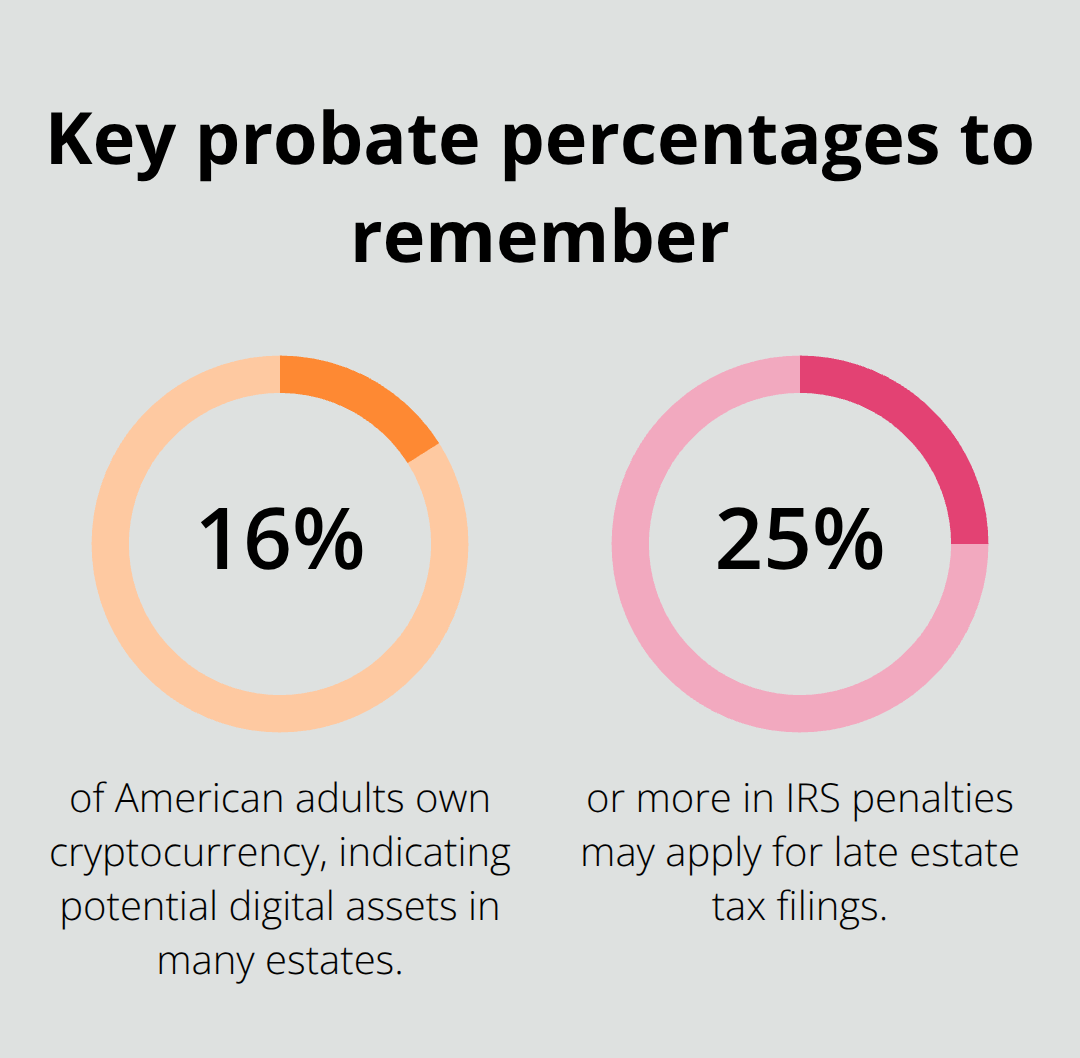
Many executors fail to account for digital assets that hold substantial value. Cryptocurrency holdings, online brokerage accounts, email-based payment systems like PayPal, and cloud storage subscriptions often go unnoticed because they exist outside traditional banking channels. The Federal Reserve found that roughly 16% of American adults own cryptocurrency, yet most executors never search for digital wallets or blockchain records.
Password managers like 1Password or Bitwarden frequently contain login credentials for accounts the deceased maintained, but executors rarely investigate these tools. Start with the deceased’s email account and search for notifications from financial platforms, cryptocurrency exchanges, or subscription services. Check the browser history and saved passwords on their computer. Without this step, you’ll miss assets worth thousands of dollars that beneficiaries never receive.
Property Records Hide Ownership Structures
Property records present another common failure point. Many executors assume they’ve found all real estate when they haven’t. County assessor databases show only properties currently under the deceased’s name, yet some individuals hold property through limited liability companies, trusts, or joint ownership structures that don’t appear in straightforward searches.
You must search the deceased’s name across multiple counties where they may have owned land. Request title reports from title companies that reveal ownership interests spanning decades. Failing to update titles within probate creates serious problems-beneficiaries can’t sell inherited property, refinance, or even verify their ownership without proper documentation.
Tax Deadlines Create the Most Expensive Mistakes
Tax deadlines tied to asset inventory create the most expensive mistakes executors make. Federal estate tax returns must be filed within nine months of death if the estate exceeds the exemption threshold, and state inheritance taxes require timely reporting as well. The IRS assesses penalties of 25% or more for late filings, penalties that compound when valuations are incomplete or inaccurate.
Many executors delay compiling their asset inventory, thinking they have plenty of time, then discover they’ve missed the deadline when penalties become unavoidable. Complete your inventory within 60 days of death, not nine months later. This timeline gives you buffer room to locate missing assets, obtain professional appraisals, and file returns on schedule.
Income Tax Obligations for the Estate Itself
Income tax obligations for the estate depend on accurate asset documentation. Retirement accounts generate income that must be reported on the estate’s final tax return, and failure to report this income triggers additional penalties. Contact the IRS directly at 800-829-1040 if you’re uncertain about reporting requirements for specific asset types.
Establish a master deadline calendar on day one, noting the nine-month estate tax filing deadline, state tax requirements, and any income tax deadlines that apply to the estate itself. This approach prevents the costly oversights that surface when executors scramble to meet multiple deadlines simultaneously.
Final Thoughts
A complete probate asset inventory requires systematic effort across multiple asset categories, but the payoff justifies the work. You’ve learned how to locate financial accounts, real property, personal valuables, and digital assets that many executors miss entirely. You now understand how to value these assets correctly using methods the IRS accepts, and you know which mistakes cost executors thousands in penalties and delays.
The most successful executors treat their probate asset inventory as their first priority, completing it within 60 days of death rather than waiting until tax deadlines loom. This approach gives you time to locate overlooked accounts, obtain professional appraisals, and file returns on schedule. Your organized spreadsheet becomes the foundation for every subsequent probate decision, from tax reporting to beneficiary distributions.
When you encounter complications-properties held through business entities, cryptocurrency wallets without clear ownership, or estates large enough to trigger federal taxes-professional guidance protects you from costly mistakes. Contact Law Offices of Roshni T. Desai for a free consultation to discuss your specific situation, and we offer flexible home or office visits across Southern California to make it convenient for you to get the guidance you need.