




Probate Asset Management SoCal: Safeguarding Your Estate
Probate asset management in Southern California involves complex decisions that many families handle poorly. Disorganized records, missed assets, and delays cost time and money.
We at Law Offices of Roshni T. Desai help families protect what matters most during probate. This guide shows you the mistakes to avoid and the strategies that work.
What Mistakes Derail Probate Asset Management in Southern California
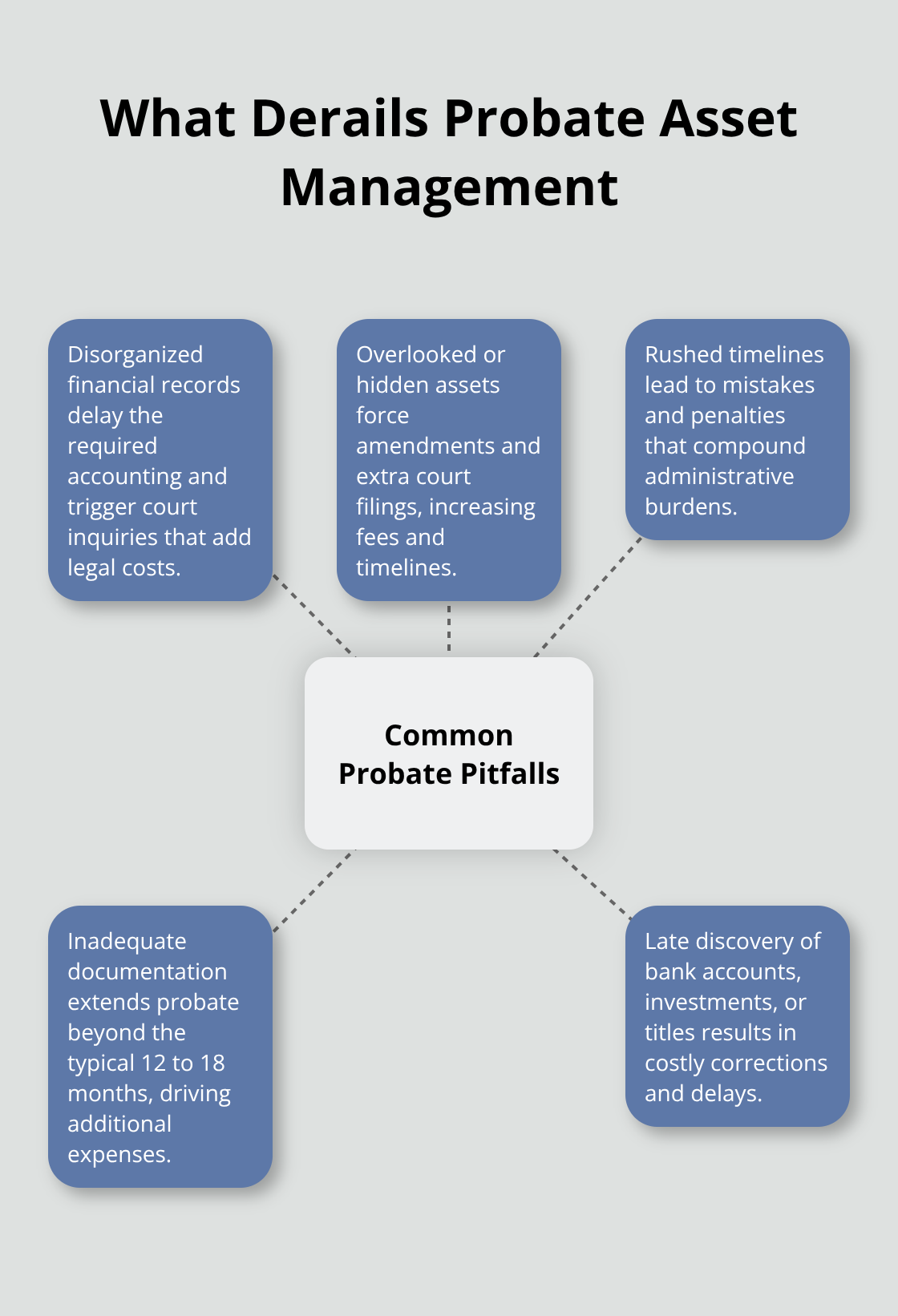
Probate fails most often because families mishandle the foundational work. Missing financial records, overlooked assets, and rushed timelines create cascading problems that cost thousands in additional fees and taxes. Southern California probate courts process over 100,000 cases annually, and a significant portion involve complications that families could have prevented with basic organization upfront. The State Bar of California reports that inadequate asset documentation ranks among the top reasons probate administrations extend beyond the typical 12 to 18 month timeframe. Disorganized executors frequently discover unknown bank accounts, investment portfolios, or property titles months into the process, forcing costly amendments and court filings.
Scattered Financial Records Waste Months of Administration Time
Many families keep financial information scattered across multiple locations and formats. Bank statements sit in one drawer, investment documents in another, and property deeds in a safe deposit box at a different institution. When probate begins, the executor wastes months hunting for these records instead of moving the estate forward. California probate law requires a complete accounting of all assets and liabilities within specific timeframes. Missing documentation delays this accounting and triggers court inquiries that add legal costs.
Gathering all financial statements, account numbers, tax returns from the past three years, property valuations, and insurance policies into one organized file before probate starts solves this problem. Digital copies stored securely online prevent loss and allow quick access. This single step cuts probate administration time by an average of two to three months according to probate professionals handling Southern California estates.
Hidden Assets and Overlooked Liabilities Drain Estate Resources
Executors who fail to identify all assets face serious legal consequences. A forgotten investment account or overlooked property can lead to creditor claims that the estate cannot address properly. Southern California residents often hold assets in multiple counties or states, making comprehensive identification genuinely difficult. Life insurance policies, retirement accounts with named beneficiaries, and digital assets frequently go unnoticed. Liabilities pose equal danger-undisclosed debts, unpaid property taxes, or outstanding loans can drain estate resources if discovered late. The executor bears personal liability for these oversights in many cases.
A methodical approach requires reviewing all mail received by the deceased during the past two years, checking credit reports, contacting financial institutions directly, and examining property tax records. Creating a comprehensive asset list that includes account types, institution names, approximate values, and access information prevents these costly gaps.
These foundational mistakes set the stage for larger problems. The next section shows how to build protective structures that stop these issues before they start.
Protecting Assets Before Probate Drains Them
Start With a Complete Asset Inventory
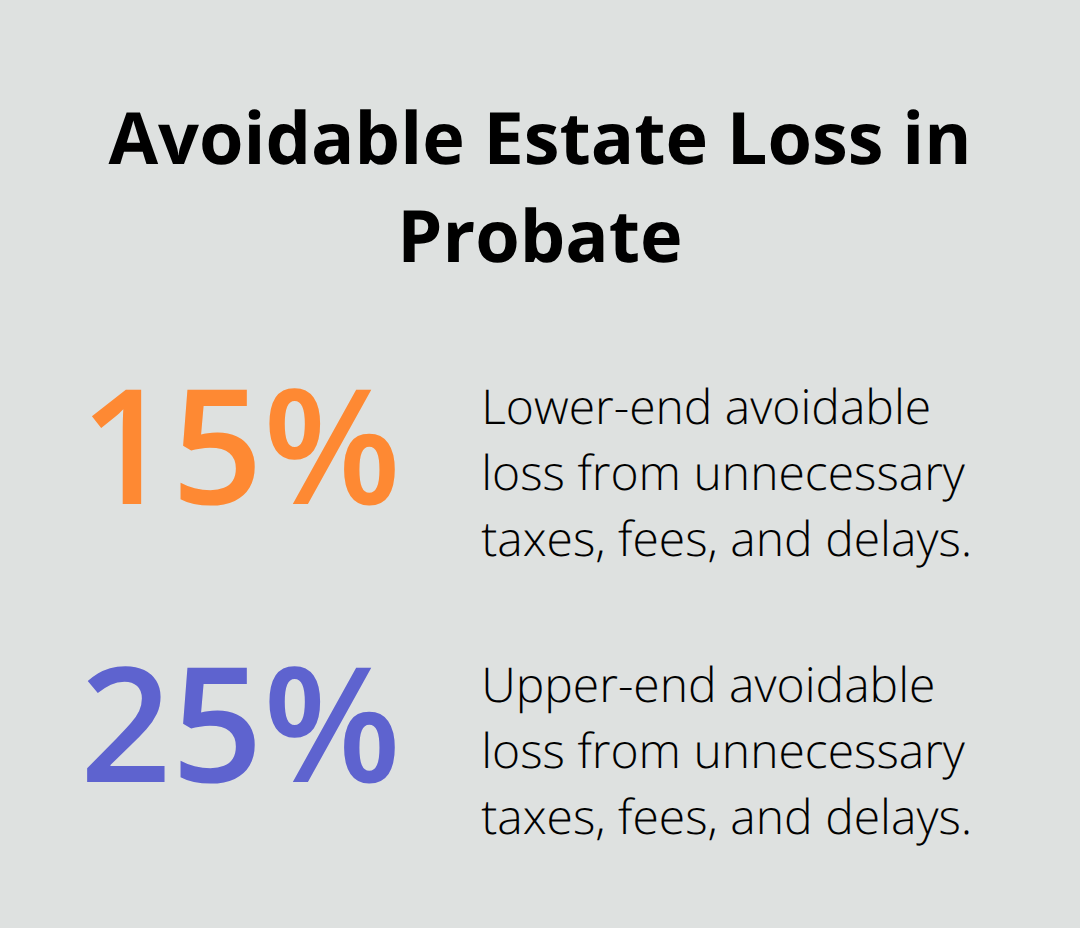
The difference between a $50,000 estate that stays intact and one that shrinks to $35,000 often comes down to decisions made months before probate even begins. Southern California probate courts see estates lose 15 to 25 percent of their value to unnecessary taxes, fees, and delays that proper planning could have prevented entirely. A complete asset inventory forces you to confront what actually exists, not what you assume exists.
This means pulling account statements from every bank, brokerage, and insurance company the deceased held accounts with over the past five years. Contact the Social Security Administration to check for any unclaimed benefits. Search the California State Controller’s Office unclaimed property database, which currently holds over $16 billion in unclaimed assets from deceased Californians. Many families discover forgotten savings bonds, utility deposits, or safety deposit box contents worth thousands through this single step.
Once you have the complete picture, you can make informed decisions about which assets need protection through trusts or other legal structures. This foundation prevents the costly gaps that plague disorganized estates.
Use Living Trusts to Sidestep Probate Entirely
Living trusts remain the most practical tool for Southern California residents because they sidestep probate entirely for assets titled in the trust’s name. When assets pass through probate, the court controls the timeline and fees. California probate fees run approximately 4 percent of the estate’s gross value according to the State Bar of California, meaning a $500,000 estate pays roughly $20,000 in court costs alone. Trusts eliminate this expense entirely. The work happens upfront-retitling property deeds, updating bank account registrations, and naming the trust as beneficiary on insurance policies-but this prevents months of court delays and thousands in additional costs later. Real estate transfers into trusts typically take 30 to 60 days to complete in Southern California counties.
After the transfer, the property remains in your control during your lifetime, but it passes directly to beneficiaries without court involvement upon death. Tax obligations still exist, but they become manageable because the executor or trustee can address them methodically without court oversight slowing every decision.
Retitle Property and Update Beneficiary Designations
The practical work of asset protection requires you to retitle property and update beneficiary designations across all accounts. This step separates estates that flow smoothly to heirs from those that tangle in probate court for years. Insurance policies, retirement accounts, and investment portfolios all need attention. Each institution has its own process, and missing even one account creates complications. Property deeds require formal recording with the county recorder’s office to transfer ownership into the trust’s name. This administrative work takes time but costs far less than probate fees and court delays.
The specific steps vary depending on your asset types and your state’s requirements. Professional guidance at this stage prevents costly mistakes that become expensive to fix later. What you structure now determines whether your beneficiaries inherit smoothly or face months of legal complications.
Strategies That Secure Your Southern California Estate
Living Trusts Transfer Assets Outside Probate Court
Living trusts work because they transfer assets outside probate court’s jurisdiction entirely, but only if you complete the retitling process correctly. Southern California probate courts process estates under the formal probate code, which means every asset titled in the deceased’s individual name passes through court supervision. The moment you transfer property into a living trust during your lifetime, that asset bypasses probate completely upon death. This matters financially because probate administration in California typically costs 4 to 5 percent of gross estate value according to the State Bar of California, plus it consumes 12 to 18 months minimum. A $750,000 estate loses $30,000 to $37,500 in probate fees alone, not counting delays that prevent beneficiaries from accessing funds.
The retitling work takes effort upfront-you contact your bank to change account registrations, record property deeds with the county recorder, and update insurance beneficiary forms-but this single action cuts costs dramatically. Real estate transfers into trusts in Los Angeles County, Orange County, and San Diego County typically complete within 30 to 60 days when handled properly. After transfer, you retain complete control and can sell, refinance, or modify the property as needed. The trust simply sits in the background, quietly protecting assets from probate’s reach.
Detailed Instructions Prevent Family Disputes and Court Intervention
A detailed estate plan with specific instructions prevents the chaos that strikes families when instructions remain vague or missing entirely. Many Southern California residents create documents but fail to specify exactly how assets should transfer, who receives what, and under what conditions. This vagueness forces executors and trustees to interpret your wishes, often incorrectly, leading to family disputes and court interventions. Your plan should name successor trustees explicitly, specify whether distributions happen immediately or over time, designate who handles your business interests, and detail healthcare decisions.
Include specific account numbers and institution names so your executor doesn’t waste months hunting for forgotten assets. The California State Controller’s Office holds over $16 billion in unclaimed property, and many cases involve deceased individuals whose beneficiaries never knew accounts existed.
Beneficiary Designations Require Regular Updates
Retirement accounts, life insurance policies, and investment portfolios transfer directly to named beneficiaries outside your will or trust, making these designations equally important. Many people name spouses as beneficiaries decades earlier, then divorce without updating the designation-resulting in ex-spouses inheriting substantial sums that the deceased never intended. Review these designations every three to five years, particularly after major life changes like marriage, divorce, or the birth of children.
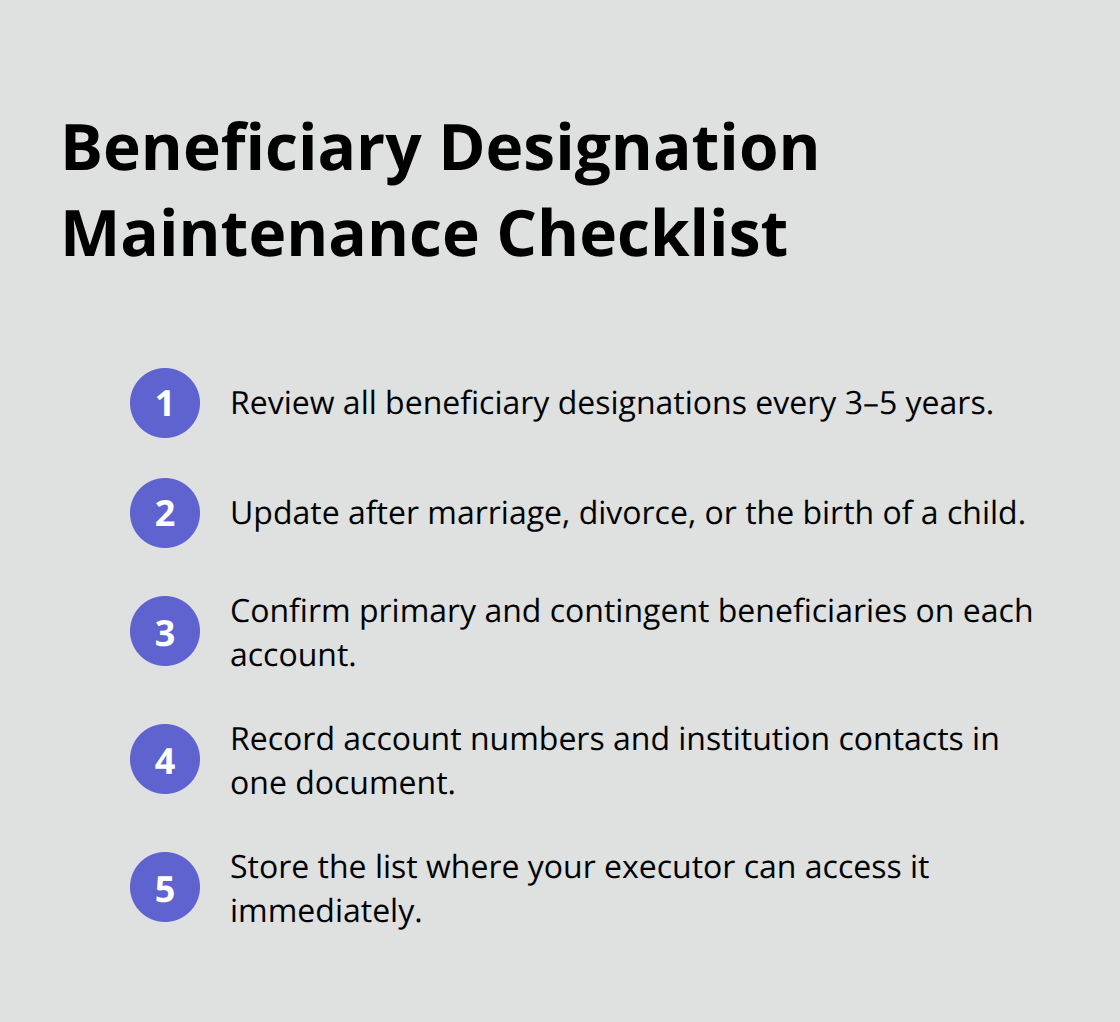
Maintain a comprehensive list of all accounts with current beneficiary names and contact information, stored where your executor can access it immediately after your death. This single document prevents months of confusion and ensures your assets reach the people you actually want to benefit.
Final Thoughts
Probate asset management in Southern California succeeds when you act before probate begins. Organizing financial records, identifying all assets and liabilities, and establishing protective structures like living trusts prevent the costly mistakes that drain thousands from estates. The strategies outlined here work because they address the real problems that Southern California families face: disorganized documentation, overlooked assets, and unnecessary probate delays that consume 12 to 18 months and cost 4 to 5 percent of your estate’s gross value.
The difference between an estate that transfers smoothly to your beneficiaries and one that tangles in court for years often comes down to decisions you make today. A complete asset inventory, properly retitled property in a living trust, and updated beneficiary designations create a foundation that protects what matters most. These steps take effort upfront but eliminate the complications that force families into expensive legal battles and months of uncertainty.
Your next step is straightforward: gather your financial documents, list your assets, and schedule a consultation to review your current plan. We at Law Offices of Roshni T. Desai provide personalized estate planning and probate services across Southern California, offering free consultations with flexible home or office visits so you can discuss your specific situation without pressure or expense. Visit Law Offices of Roshni T. Desai to start protecting your probate asset management strategy in SoCal today.