




Probate Assets Management SoCal: Organize and Maximize Value
Managing probate assets in Southern California requires a clear strategy from day one. Without proper organization, families often miss opportunities to protect value and reduce unnecessary costs during an already complex process.
We at Law Offices of Roshni T. Desai help families navigate probate assets management in SoCal by breaking down what counts as an asset, how to organize everything efficiently, and where real savings happen. This guide walks you through each step.
What Counts as a Probate Asset in Southern California
A probate asset is anything of value that the deceased person owned at the time of death and that passes through the probate process. In Southern California, this includes far more than just a house or a savings account.
Real Estate Drives Most Estate Value
Real estate holdings form the largest category of probate assets in most SoCal estates. This includes primary residences, rental properties, vacant land, and commercial buildings. As of 2024, median home prices in Orange County remain above $800,000, which means a single property often represents the majority of an estate’s value. A property in Irvine or Newport Beach can easily represent 70% to 90% of an entire estate’s net worth. This concentration creates both opportunity and risk.
If a property sits vacant or unmaintained during probate, its value deteriorates quickly. Property taxes, insurance, and utilities continue to accrue whether the home is occupied or not. Securing and maintaining the property from day one directly impacts the final distribution to beneficiaries.
Financial Accounts Require Swift Action
Bank and investment accounts demand immediate attention because creditors can file claims against liquid assets. California law gives creditors four months from the probate petition date to submit claims. If accounts remain unaddressed during this window, funds may become frozen or subject to claims that reduce distributions.
Setting up a dedicated estate account consolidates cash flow and prevents commingling of funds with personal accounts-a critical distinction for avoiding tax complications and protecting the estate’s transparency during court review. Brokerage portfolios, stocks, bonds, mutual funds, and retirement accounts that lack named beneficiaries all flow through probate and require proper documentation.
Digital Assets Create Hidden Costs
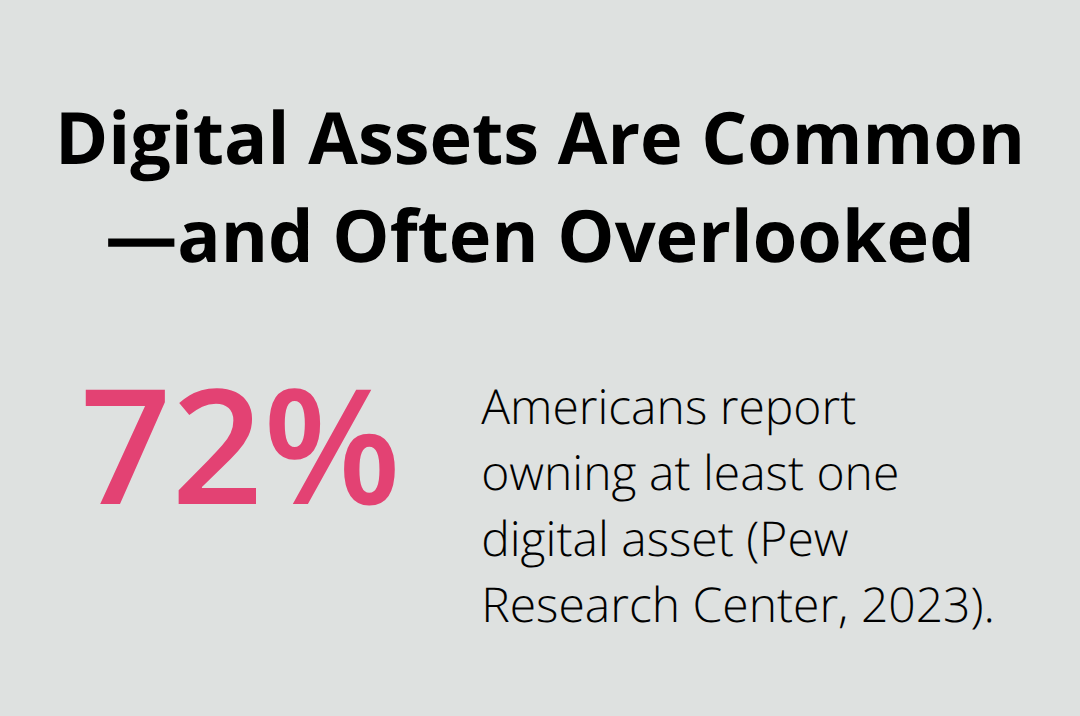
Many families miss digital assets entirely, which cost executors time and heirs money when accounts cannot be accessed or transferred. Cryptocurrency, online banking, PayPal balances, and cloud storage subscriptions all count as probate assets. A 2023 survey by the Pew Research Center found that 72% of Americans own some form of digital asset, yet fewer than half had documented where those assets exist.
Without documented passwords or account information, families often hire digital asset recovery services at costs between $500 and $2,000 per account. Starting with a complete asset inventory that includes digital holdings (along with vehicles, jewelry, artwork, collectibles, and furniture) prevents this unnecessary expense and accelerates the entire probate timeline. The scope of what counts as a probate asset extends far beyond what most families initially recognize, which is why organizing everything efficiently from the start makes all the difference in protecting value.
How to Organize Probate Assets Efficiently
Create a Comprehensive Asset Inventory
A complete asset inventory is non-negotiable. You must gather every document that proves ownership: property deeds, bank statements, investment account statements, vehicle titles, insurance policies, and any account information related to digital assets. Many families discover assets months into probate because they failed to check safe deposit boxes, email accounts, or old filing cabinets.
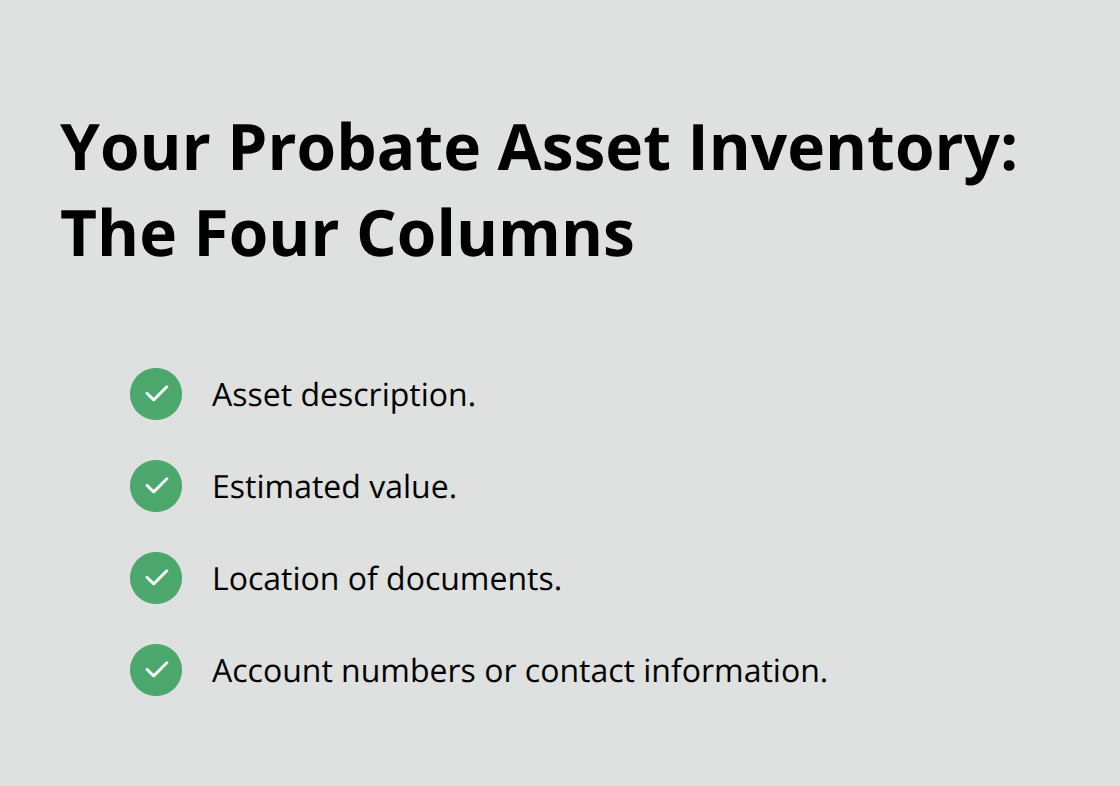
Create a spreadsheet with four columns: asset description, estimated value, location of documents, and account numbers or contact information. Include real estate addresses, bank account numbers, investment account details, cryptocurrency wallets, and even subscription services that auto-renew.
This single document becomes your roadmap for the entire probate process and prevents costly oversights.
California probate referees must appraise non-cash assets, so organized documentation reduces their time and your costs. A disorganized inventory forces appraisers to spend extra hours tracking down information, which translates directly to higher professional fees paid from the estate.
Secure and Protect Assets Immediately
Property must be locked, insured, and maintained immediately-every month of deferred maintenance costs money. You should transfer utility bills to the estate’s name, ensure property insurance covers the full replacement value, and address any code violations or obvious repairs. Neglecting these steps allows value to deteriorate rapidly during probate.
For financial accounts, contact each institution within two weeks of death to notify them of the probate and freeze transfers until the court approves distributions. You must set up a dedicated estate bank account and move liquid assets there, keeping funds separate from personal money. This prevents commingling, which creates tax headaches and triggers probate court scrutiny.
Digital assets demand password documentation and account access within the first 30 days while recovery is still possible; after 90 days, many platforms permanently lock accounts. You should document all ownership proof in a central location-photographs of jewelry and artwork, appraisal reports for collectibles, and screenshots of online account login pages.
Locate Important Records and Demonstrate Control
You must organize ownership documentation to demonstrate to the probate court that assets are protected and accounted for. Judges view this organization favorably when approving distributions and executor actions. This documentation accelerates every subsequent step and reduces the risk of disputes among beneficiaries.
Consolidating records in one accessible location (whether physical or digital) allows you to respond quickly to court requests and creditor inquiries. The probate process moves faster when you can produce proof of ownership and asset location within days rather than weeks. This efficiency directly protects the estate’s value and reduces administrative costs that would otherwise drain funds from distributions.
With your assets organized and secured, the next critical step involves deciding which assets to retain, maintain, or sell-and when to take those actions to maximize their value.
Strategies to Maximize the Value of Probate Assets
Address Property Maintenance and Timing
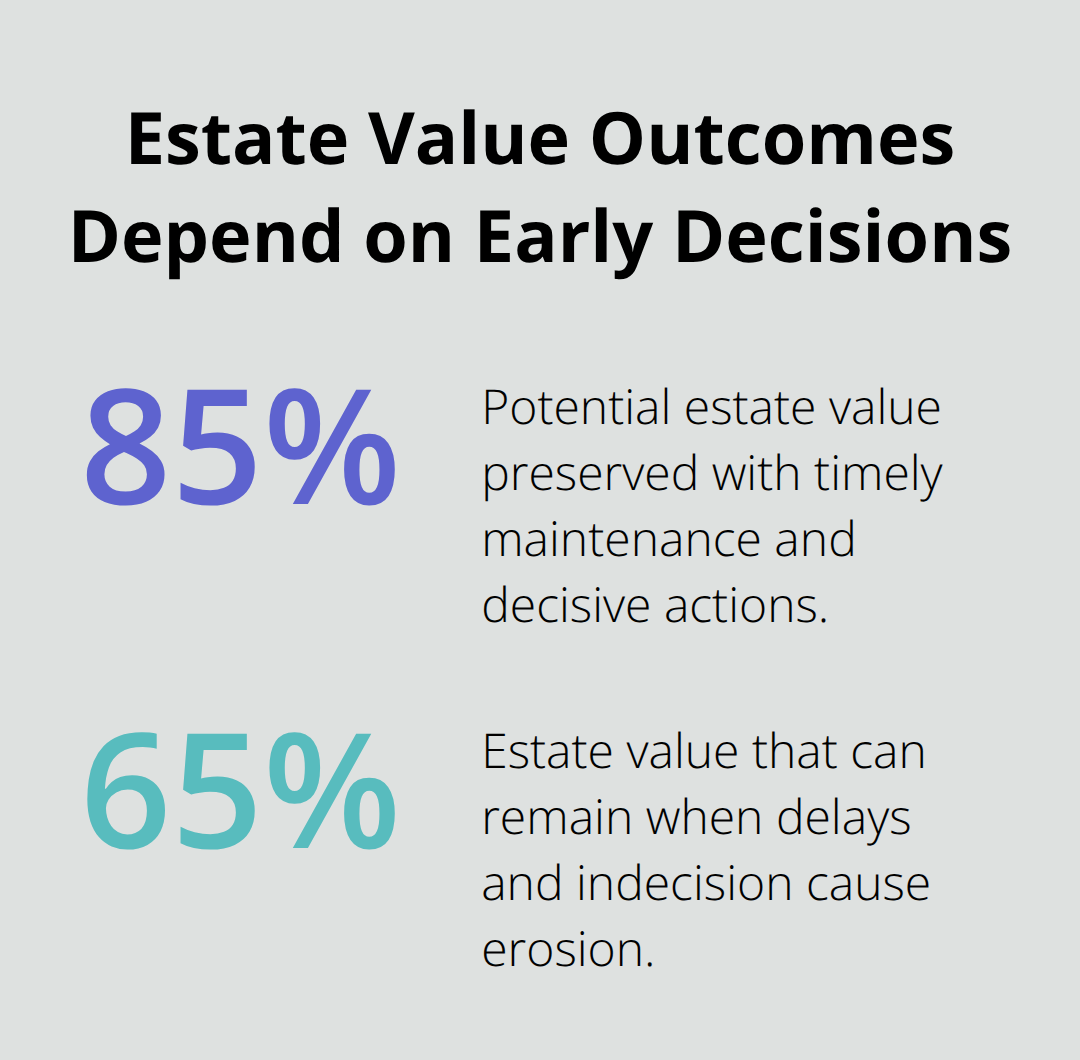
Organized assets mean nothing if you fail to act on timing and cost control. The difference between a probate that preserves 85% of estate value and one that erodes to 65% often comes down to three specific decisions made in the first six months. Property maintenance costs escalate exponentially the longer you delay-a roof that needs $8,000 in repairs today costs $15,000 after twelve months of water damage. Similarly, holding onto underperforming assets while paying carrying costs (property taxes, insurance, utilities, HOA fees) drains the estate monthly.
In Southern California, property taxes alone run between 0.75% and 1% of assessed value annually, meaning a $1 million estate property costs $7,500 to $10,000 per year just to hold. If that property generates no income and sits vacant, you burn beneficiary money. The real question is not whether to act, but when.
Leverage Seasonal Market Conditions
Real estate in Orange County and Los Angeles County moves fastest in spring and early summer-inventory peaks in May through July according to local market data. List a probate property in February or March to position it for maximum buyer competition and bidding activity. Wait until September and you cut your buyer pool significantly, which often forces price reductions of 5% to 12%.
A $900,000 property delayed six months can easily sell for $50,000 to $100,000 less, which far exceeds any costs of staging or minor repairs made upfront. The market window closes quickly, and hesitation costs real money that comes directly from distributions to heirs.
Manage Tax Obligations and Asset Valuations
Tax obligations demand attention immediately because missing deadlines creates penalties that compound. The decedent’s final income tax return must file by April 15 of the following year, and the estate itself owes income taxes on any earnings generated during probate administration. Many executors overlook that selling appreciated assets (like stocks or real estate) triggers capital gains taxes that must be paid from estate funds before distributions.
California has no state-level estate tax, but federal estate taxes apply to estates exceeding $13.61 million as of 2024, according to IRS guidelines. More critically, improper asset valuations at death create ripple effects-undervaluing property to reduce taxes invites IRS scrutiny and penalties, while overvaluing assets increases unnecessary capital gains taxes on sale. A qualified probate referee provides the official valuation that the court accepts, and this appraisal locks in your cost basis for tax purposes.
Hire a CPA or tax attorney to coordinate with your probate referee (costs between $1,500 and $3,500) to prevent far costlier mistakes. This investment protects the estate from penalties and ensures accurate tax filings that preserve maximum value for beneficiaries.
Control Administrative Costs Through Decisive Action
Administrative costs spiral when you mismanage the probate timeline-court filing fees, publication notices, and referee appraisals all have fixed costs, but attorney time balloons when assets remain unsecured, disputes arise, or documentation falls apart. Executors who make decisive moves in months one through four rather than drifting through nine months of indecision and deterioration save 15% to 25% in total probate costs.
Speed and organization work together. When you secure assets immediately, maintain properties consistently, and act on market timing, you protect the estate’s value and reduce the professional fees that drain distributions. The cost of waiting always exceeds the cost of acting.
Final Thoughts
Probate assets management in SoCal succeeds when you organize everything from day one, secure assets immediately, and act decisively on timing and costs. Families who follow this approach preserve significantly more value for beneficiaries than those who drift through probate without a clear strategy. The real savings come from preventing deterioration rather than recovering lost value later.
A property maintained consistently costs far less than one that requires emergency repairs after months of neglect, and a real estate sale timed to spring market conditions generates tens of thousands more than a rushed fall listing. Tax filings completed on schedule avoid penalties that compound monthly. These decisions made early in probate compound into substantial differences in final distributions.
Professional guidance transforms probate from an overwhelming burden into a manageable process with clear milestones and accountability. We at Law Offices of Roshni T. Desai coordinate with appraisers, tax professionals, and real estate specialists to help you protect what matters most-contact us for a consultation to begin organizing your probate assets management in SoCal today.