



Probate Attorney Consultations: Getting Clarity Before You Proceed
Probate attorney consultations help you understand what lies ahead when managing an estate. Many people enter these meetings uncertain about timelines, costs, and their options for avoiding probate entirely.
We at Law Offices of Roshni T. Desai know that clarity makes all the difference. This guide walks you through what to expect, how to prepare, and how we can support your next steps.
What Happens During Your First Probate Consultation
Your first meeting with a probate attorney serves one purpose: building a roadmap from confusion to clarity. The attorney will start by understanding your exact situation, which means discussing whether a will exists, who you are in relation to the estate, and what assets need attention. This isn’t about having all the answers-it’s about identifying what’s missing. You’ll talk through known debts, potential family disputes, and whether the estate is simple or complex.
Timeline and Costs Explained Upfront
California probate typically takes 9 to 18 months, so the attorney will explain your state’s specific timeline, key tasks like filing the will with the probate court, and how long each phase realistically takes. Costs matter, and the attorney will discuss fee structures upfront: flat fees, hourly rates, or a percentage of the estate value. You’ll receive an initial cost estimate based on your case’s complexity. This conversation removes surprises later and helps you plan financially for the process ahead.
Assets, Debts, and Multi-State Complications
The consultation covers what assets exist and their approximate values. Real estate, investment accounts, retirement funds, business interests, and life insurance all require identification and valuation. The attorney will explain that debts and taxes must be paid before any distribution happens to beneficiaries. If the estate owns property in multiple states, the attorney will flag ancillary probate requirements-additional filings that prevent duplication and asset loss. You’ll discuss creditor notification timelines and how to distinguish valid claims from invalid ones.
Documents to Bring and How to Organize Them
Bring a death certificate, the will or trust documents, a list of assets and debts, recent bank statements, property deeds, and contact information for heirs and beneficiaries. Even partial information helps the attorney create a plan for gathering the rest. Organize documents chronologically and create a timeline of significant events before your meeting. Draft a list of specific concerns-undue influence allegations, executor mismanagement, beneficiary disputes, or capacity questions all require different evidence and strategies.
Family Conflict and Legal Safeguards
If family conflict is likely, the attorney will address how tensions affect the process and what legal safeguards exist. Bring bank statements showing concerning transactions, medical records if capacity is in question, and any correspondence revealing conflict. A trusted family member can attend to help you stay organized and provide support during the discussion. If you’re uncertain whether litigation is necessary, know that the consultation is non-binding and clarifies your rights and options without commitment.
Understanding what happens in your first consultation removes anxiety and positions you to ask the right questions. With this foundation in place, you’re ready to explore the specific questions that probate attorneys address most often-and the answers that shape your path forward.
Probate Timeline, Costs, and Your Options
How Long California Probate Actually Takes
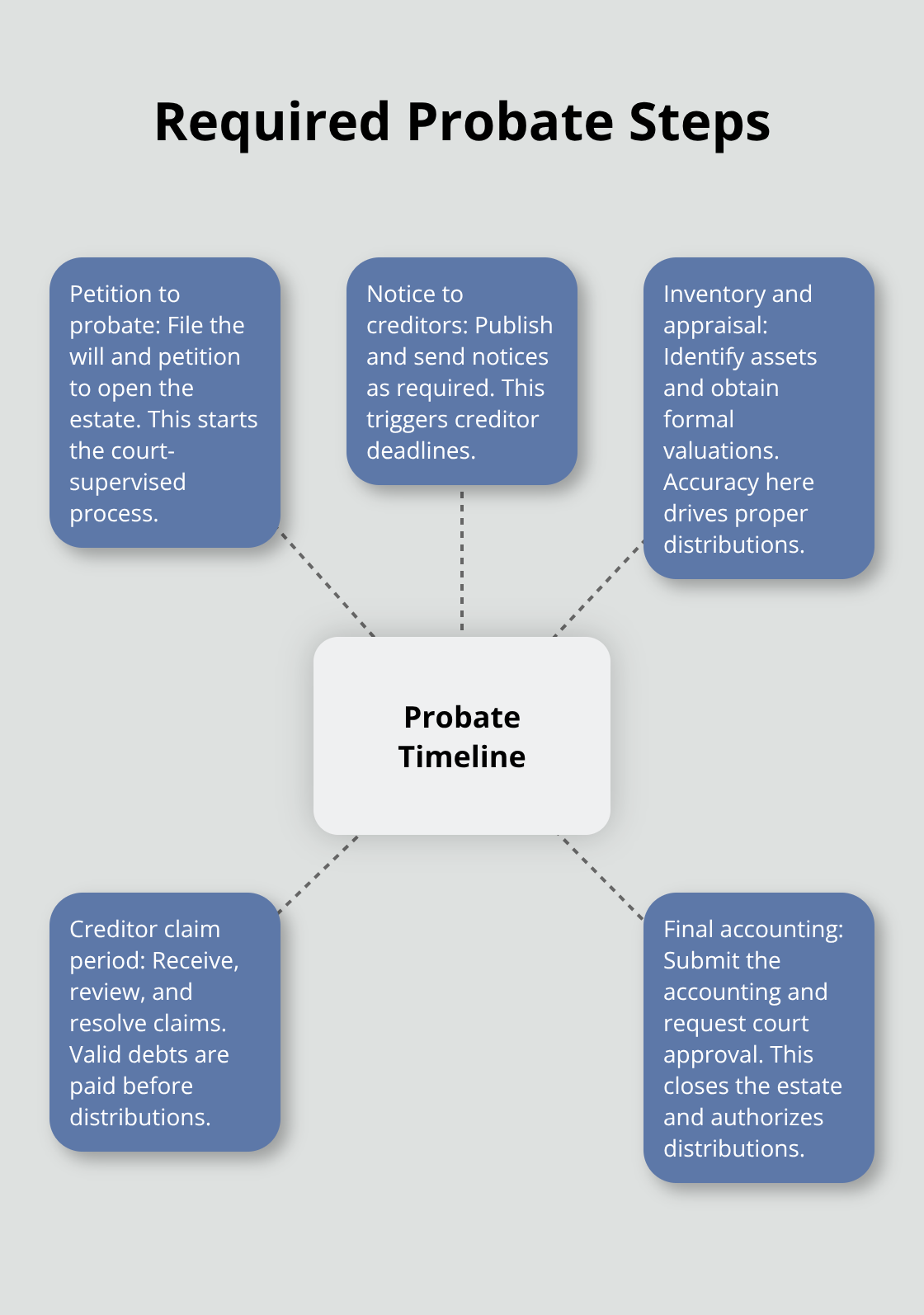
California probate takes 9 to 18 months on average, but estate complexity and court backlog in your county heavily influence this timeline. A straightforward estate with minimal assets and no disputes may wrap up closer to 9 months, while estates involving real property in multiple states, business interests, or contested beneficiary claims regularly stretch toward 18 months or longer. The probate court requires specific filings at set intervals-petition to probate, notice to creditors, inventory and appraisal, creditor claim periods, and final accounting-and you cannot skip or compress these steps. If your estate involves ancillary probate for out-of-state property, you face additional months for separate court filings in each jurisdiction.
Why Early Action Reduces Overall Costs
Delays cost money. Every additional month means ongoing attorney fees, court costs, and expenses for asset management. Starting the probate process immediately after the death actually accelerates resolution because creditor claim deadlines begin running once notice is published, and early action prevents claims from lingering indefinitely. This timing matters significantly when you calculate the true cost of waiting.
Breaking Down Probate Expenses
Probate costs typically fall into three categories: court filing fees, attorney fees, and miscellaneous expenses like appraisals and title transfers. Court filing fees in California range from roughly $300 to $500 depending on the county and estate value. Attorney fees vary widely-some firms charge flat rates for simple estates around $2,000 to $5,000, while others bill hourly at $200 to $400 per hour, and larger estates may be handled on a percentage basis, typically 3 to 5 percent of the estate value.
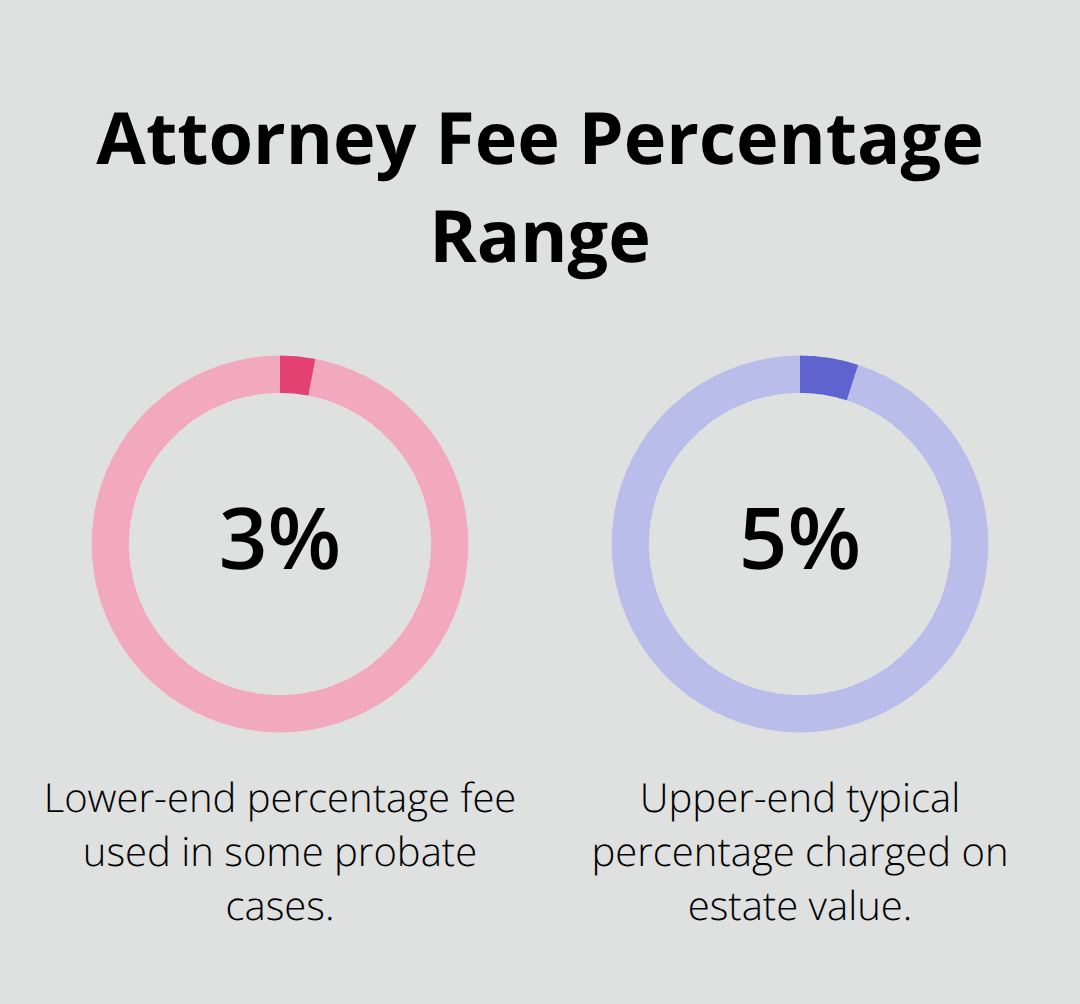
A $500,000 estate on a percentage fee structure could cost $15,000 to $25,000 in attorney fees alone. Additional expenses include probate referee fees for asset appraisal, title company fees for property transfers, and certified death certificate copies.
Strategies to Avoid or Minimize Probate
Many people assume they can avoid probate through trusts or other mechanisms, but the reality is more nuanced. A revocable living trust does bypass probate if properly funded before death, but it requires careful preparation and ongoing maintenance. If assets remain in the decedent’s name outside a trust, those assets still enter probate regardless of other planning. Small estates under $166,250 in California may qualify for simplified succession procedures that avoid full probate, but you must meet specific criteria and follow statutory timelines. Life insurance with named beneficiaries and retirement accounts with designated beneficiaries pass outside probate entirely, which is why coordinating beneficiary designations with your overall estate plan matters significantly.
What Your Consultation Reveals About Your Specific Situation
Your probate attorney will review your specific situation during a consultation and determine whether probate is actually necessary or whether alternative strategies better serve your estate and family circumstances. This assessment depends on what assets you hold, how you titled them, and what planning documents exist. The answers shape whether you face a full probate process or a streamlined alternative-and that distinction affects both your timeline and your costs. With this understanding of probate’s financial and temporal realities, you’re ready to prepare for your consultation and ask the questions that matter most.
How to Prepare for Your Probate Consultation
Organize Your Documents Before You Arrive
Organization matters more than completeness. Collect a death certificate, the original will if one exists, trust documents, and recent bank and investment statements showing account balances as of the date of death. Property deeds, titles, and any documentation of real estate ownership across multiple states belong in your pile. Include mortgage statements, loan documents, and credit card bills to establish debts accurately. Life insurance policies, retirement account statements, and beneficiary designations reveal assets that may bypass probate entirely. The attorney needs contact information for all heirs, beneficiaries, and named executors or trustees so they can assess notification requirements and potential conflict points.
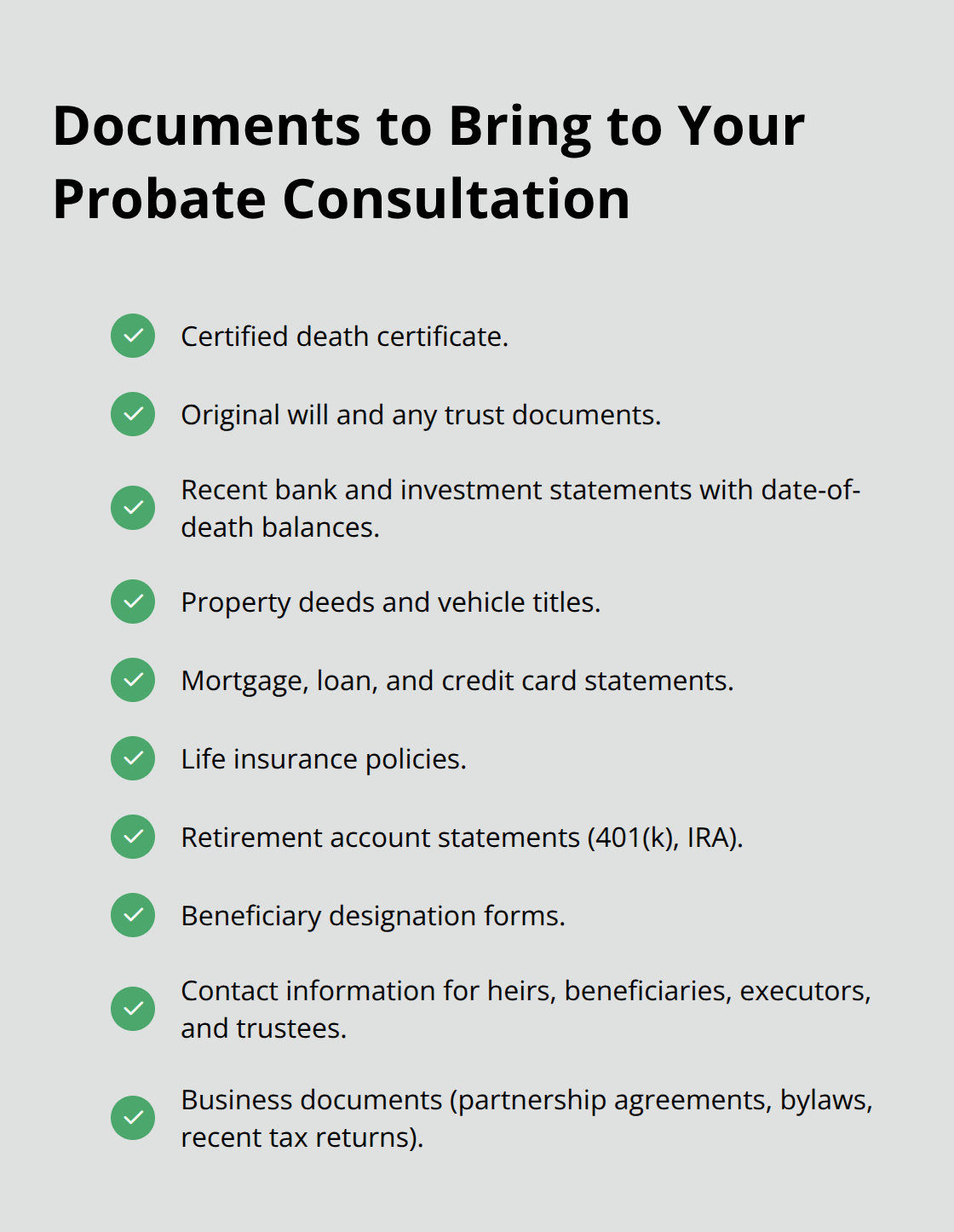
If the estate involves a business, bring partnership agreements, corporate bylaws, and recent tax returns showing the business value. You don’t need perfect documentation-partial information helps the attorney identify gaps and create a plan to fill them.
Create a Timeline and Structure Your Materials
Organize everything chronologically and create a one-page timeline of key dates: death date, will execution date, any prior trust amendments, and significant events leading up to the death. This structure lets the attorney work efficiently rather than hunting through disorganized papers. A clear timeline accelerates the consultation and ensures you cover all relevant ground without wasting time on unnecessary details.
Document Your Specific Concerns with Concrete Details
Write down specific concerns before your meeting, not vague worries. Instead of saying you’re concerned about conflict, note exactly which family members disagree about asset distribution, what they’ve said, and whether disputes involve the will’s validity or just disagreement about fairness. If you suspect executor mismanagement, document specific transactions that trouble you with dates and amounts. If capacity or undue influence is a question, gather medical records from the relevant time period and note any suspicious late-life changes to the will or trust. Bring bank statements showing unusual transfers or spending patterns.
Prepare Your Questions in Advance
List your actual questions: What happens if someone contests the will? Can we sell the family home quickly if needed? Does the estate owe federal taxes? Are there strategies to reduce what beneficiaries owe in taxes? These concrete specifics help the attorney assess your real risks and options rather than addressing hypothetical scenarios. Bring a notepad to capture the attorney’s answers and next steps so you retain information after an emotionally charged meeting.
Bring Support and Stay Organized During the Meeting
Consider bringing a trusted family member or close friend who can help you stay organized and provide support-probate discussions involve financial details and family dynamics that benefit from a second set of ears. This person can take notes while you focus on listening and asking follow-up questions, ensuring you capture all the information the attorney provides.
Conclusion
After your probate attorney consultation, the attorney reviews your documents thoroughly, requests any missing probate court records, and researches the specific laws governing your case. They prepare a fee agreement, draft urgent court filings if needed, and begin gathering additional evidence or contacting interested parties. Your role is to follow through on action items the attorney identified, gather remaining documents, and stay in communication as the process unfolds.
Probate attorney consultations transform confusion into a concrete action plan that positions you to make informed decisions about your estate. Whether litigation around the estate becomes necessary or probate administration is the path forward, you’ll receive a clear timeline for each phase and specific expectations about your responsibilities as executor or beneficiary. This clarity removes the weight of uncertainty and allows you to move forward with confidence.
We at Law Offices of Roshni T. Desai understand that probate matters demand personalized, compassionate guidance through every stage of estate planning and administration. Our dual licensure as an attorney and real estate professional streamlines property-related transactions, reducing costs and delays that often complicate estates. Contact Law Offices of Roshni T. Desai to schedule your free consultation and begin protecting your family’s future.