




Probate Attorney for Executors: Your Partner in Probate
Being named executor is an honor that comes with real responsibility. You’re managing someone’s life’s work, handling finances, navigating court systems, and managing family expectations all at once.
At Law Offices of Roshni T. Desai, we know that executors often feel overwhelmed by the legal requirements and emotional weight of the role. A probate attorney for executors can transform this burden into a manageable process.
What Executors Must Handle
Locating and Inventorying Every Asset
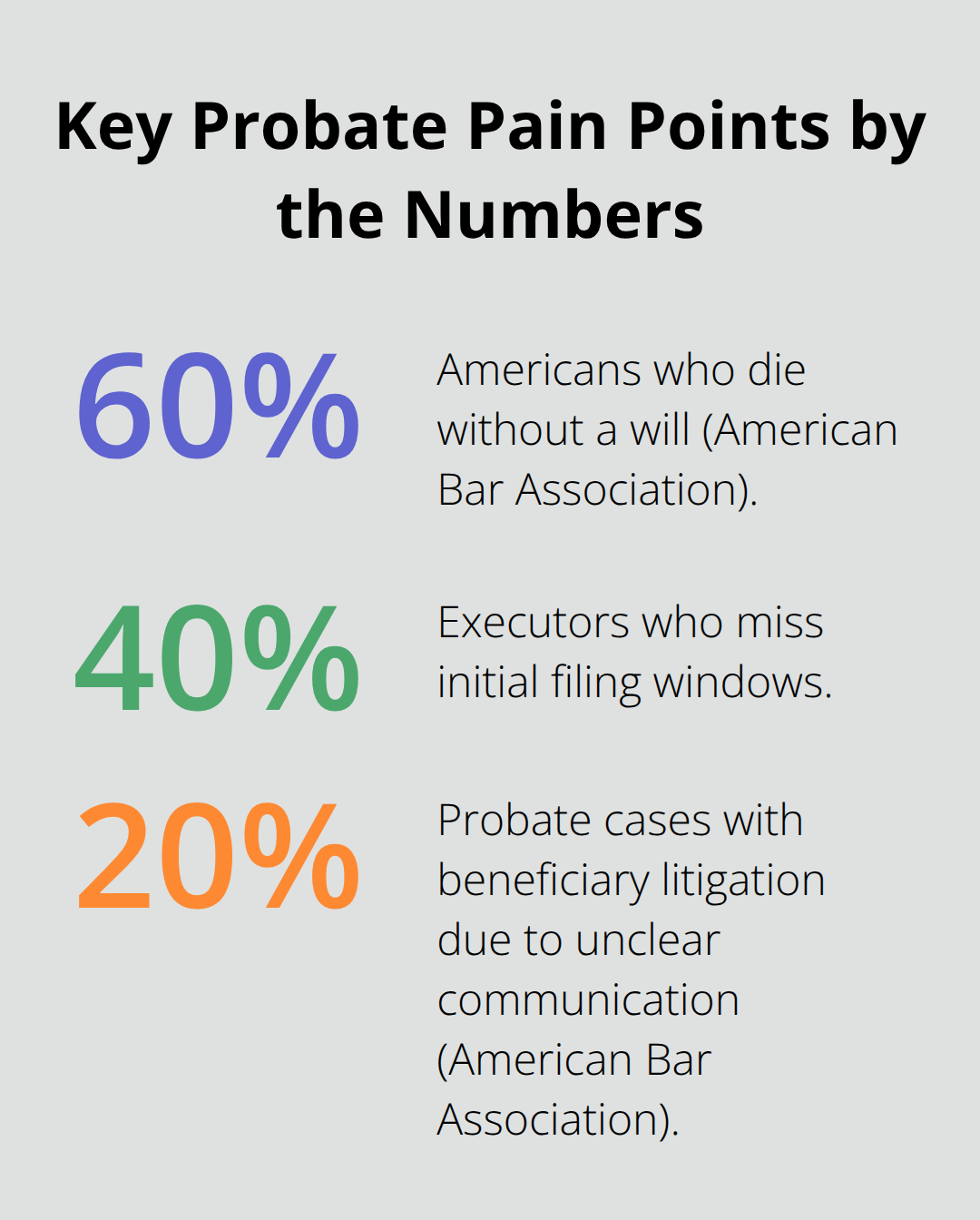
Executors face three interconnected responsibilities that rarely happen in sequence-they overlap, conflict, and demand attention simultaneously. The first task involves identifying every asset the deceased owned. This means locating bank accounts, investment portfolios, real estate, vehicles, business interests, and personal property. Many executors underestimate this step. According to the American Bar Association, approximately 60% of Americans die without a will, and even those with wills often own assets in places their families never knew existed.
You’ll need to contact financial institutions, review tax returns from prior years, and search property records. Real estate typically requires professional valuation, particularly if the market has shifted since the deceased acquired it. Life insurance policies often sit undiscovered for months because beneficiaries don’t know they exist. Once you’ve inventoried everything, you must determine the estate’s total value-this figure drives tax obligations and informs what you can actually distribute.
Managing Taxes and Outstanding Debts
Simultaneously, you’re responsible for paying what the deceased owed. Federal estate taxes apply to estates exceeding $13.61 million in 2024, but state-level probate taxes hit much smaller estates in California and other states. Beyond taxes, you’ll pay funeral expenses (averaging $7,000 to $12,000 according to the National Funeral Directors Association), outstanding debts, and administrative costs like court filing fees and appraiser charges.
This creates a critical timing problem: you cannot distribute assets to beneficiaries until you’ve paid everything owed, yet some creditors have limited windows to submit claims. Most states require you to publish notice to creditors, typically in a newspaper, which starts a clock-usually four months-for claims to arrive. Managing this requires careful cash flow planning. If the estate lacks liquid funds, you might need to sell assets at unfavorable times or take loans against the estate.
Distributing Assets According to the Will
Only after all debts, taxes, and expenses are settled can you distribute remaining assets according to the will’s instructions. This final distribution must match exactly what the will specifies, and you must maintain detailed records proving every transaction occurred correctly. The complexity of these three overlapping tasks-asset identification, debt management, and precise distribution-explains why many executors make costly mistakes that create legal and financial problems.
Where Executors Go Wrong
Missing Court Deadlines Creates Cascading Delays
The overlap between asset identification, debt management, and distribution creates a perfect storm for mistakes. Filing deadlines slip because executors don’t realize that probate courts impose strict timelines-missing a single deadline can delay the entire process by months or trigger court sanctions. The Judicial Council of California requires executors to file an inventory and appraisal within four months of appointment in many cases, yet nearly 40% of executors miss initial filing windows according to probate court administrators’ observations. When you fail to file on time, the court can remove you as executor, forcing beneficiaries to hire a successor and restart portions of the process.
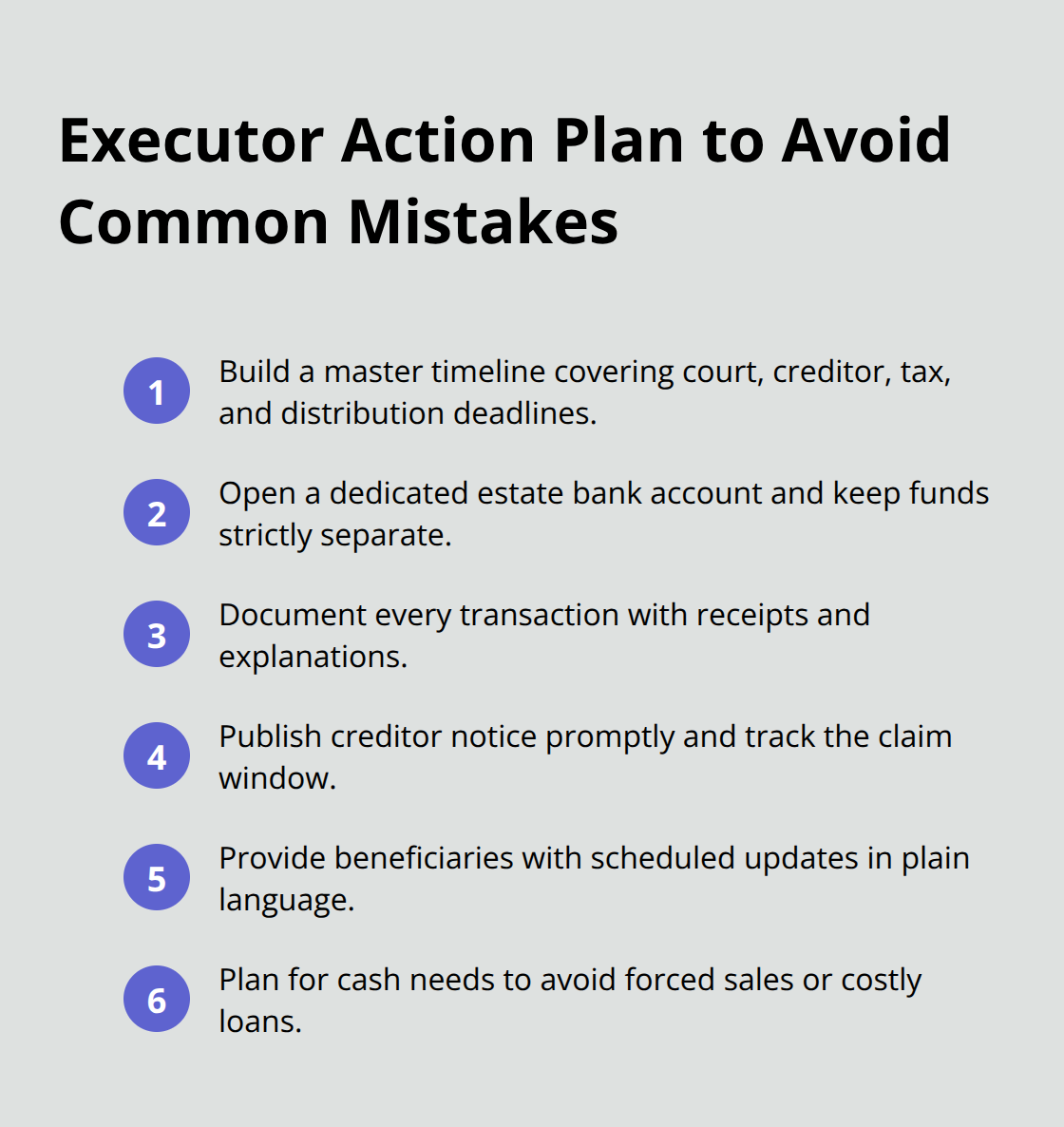
Create a master timeline on day one that lists every court deadline, every creditor claim deadline, every tax filing deadline, and every distribution milestone. Print this timeline and post it where you’ll see it daily. This single step prevents most filing failures.
Mishandling Estate Funds Triggers Tax Problems
Many executors mix estate funds with personal accounts or make informal loans to beneficiaries before final distribution. This creates immediate tax problems-the IRS views improperly distributed funds as taxable income to beneficiaries, and you personally become liable for taxes owed plus penalties. The National Association of Estate Planners reports that improper fund management triggers IRS audits in approximately 35% of contested estates.
Estate funds must sit in a separate account opened specifically for probate, and every withdrawal requires documentation showing it paid legitimate estate expenses. Even small transfers to beneficiaries before final accounting can spiral into disputes about whether those amounts count toward their inheritance shares. Keep meticulous records of every transaction.
Poor Communication Transforms Beneficiaries Into Adversaries
Communication failures generate the most destructive conflicts. Beneficiaries who don’t understand why distributions take time, why assets must be sold, or why certain debts get priority become suspicious and hostile. The American Bar Association found that unclear communication during probate leads to beneficiary litigation in roughly 20% of cases-expenses that come directly from estate assets and reduce what everyone receives.
Establish a communication schedule from the start: send beneficiaries a written summary of the estate inventory within 30 days of appointment, provide quarterly updates on asset sales and debt payments, and explain every major decision in plain language before acting. Document every conversation and decision in writing, even brief emails confirming what you discussed. This protects you from later claims that you acted without consent or mishandled funds.
These three mistakes compound quickly. Missed filings create court involvement, mismanaged funds trigger tax audits, and poor communication turns beneficiaries into adversaries. The solution isn’t perfection-it’s systems, documentation, and professional guidance before problems emerge. Understanding where executors stumble reveals why having the right support matters when navigating probate’s complex requirements.
How a Probate Attorney Handles the Work
Countless executors attempt probate alone and quickly realize they lack the knowledge to manage it properly. A probate attorney doesn’t just offer advice-they actively manage the process so you’re not personally responsible for every decision. This transforms probate from an overwhelming burden into a structured, predictable timeline.
Court Filings and Legal Deadlines
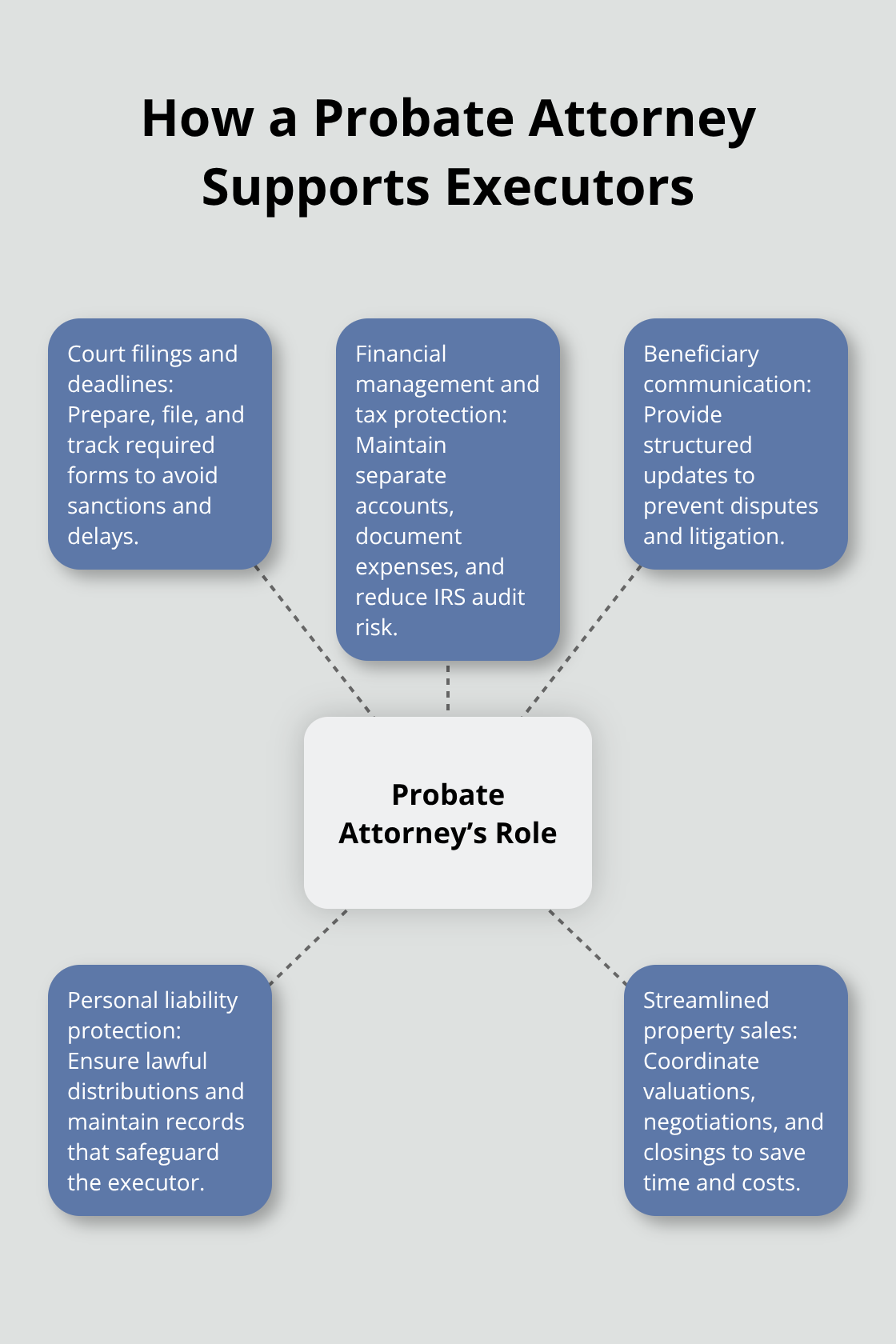
California probate courts require specific forms filed in exact sequences with precise timing. Missing even one deadline can trigger court orders requiring you to show cause for the delay. A probate attorney prepares and files your inventory and appraisal within the required four-month window, submits the final accounting, and handles all creditor claim procedures so you don’t miss state-mandated deadlines.
This alone saves executors months of stress and prevents the cascading delays that turn a straightforward probate into a two-year ordeal. Court systems move slowly when deadlines slip, and each missed filing compounds the problem. An attorney tracks every deadline and files documents before problems arise.
Financial Management and Tax Protection
Probate attorneys manage the financial mechanics that create tax disasters for unprepared executors. They establish the separate estate account, track every withdrawal, and document which expenses qualify as estate costs versus personal distributions. This protects you from IRS scrutiny-the National Association of Estate Planners reports that improper fund management triggers audits in approximately 35% of contested estates, and those audits generate penalties that come directly from beneficiary distributions.
Executors who mix estate funds with personal accounts or make informal loans to beneficiaries face immediate tax consequences. An attorney prevents these mistakes through systematic documentation and proper account management.
Beneficiary Communication and Conflict Resolution
An attorney communicates with beneficiaries on your behalf, which eliminates the most destructive probate conflicts. Beneficiaries who hear updates directly from an attorney-not from a grieving family member trying to explain complex tax rules-accept delays and asset sales far more readily. The American Bar Association found that unclear communication leads to beneficiary litigation in roughly 20% of cases, but structured attorney communication dramatically reduces that risk.
Personal Liability Protection
As executor, you’re personally liable for taxes owed, debts paid incorrectly, and distributions made prematurely. Many executors don’t realize this until they’ve already made mistakes. When an attorney manages the probate process, they’re responsible for following the law correctly, which transfers the liability risk from you to professional oversight. An attorney reviews every decision, verifies that distributions match the will exactly, and maintains the documentation that protects you if beneficiaries later claim mishandling.
Streamlined Property Sales
Probate often requires property sales, and these transactions typically create communication delays and unnecessary costs. An attorney with dual licensure as both attorney and real estate professional (as we at Law Offices of Roshni T. Desai offer) streamlines property valuations, negotiations, and closings without the typical delays that plague these transactions. This reduces costs and accelerates the timeline significantly.
The fee for professional probate management typically ranges from 3% to 7% of the estate value, depending on complexity, but this cost is paid from estate assets before distribution, not from your personal pocket. Most executors find this investment returns itself by preventing costly mistakes, accelerating distributions by months, and eliminating the emotional burden of managing family conflict during an already difficult time.
Final Thoughts
Probate administration demands precision, timing, and emotional resilience while you manage legal deadlines, financial complexity, and family dynamics simultaneously. The mistakes executors make don’t stem from carelessness-they emerge from attempting tasks that require specialized knowledge without proper support. A probate attorney for executors transforms this reality by handling court filings, tax documentation, and beneficiary communication systematically, which eliminates the stress that comes from uncertainty about whether you’re following the law correctly.
Executors who attempt probate alone often make costly mistakes that trigger IRS audits, court sanctions, and beneficiary litigation, draining estate assets far more than professional fees would cost. An attorney’s involvement prevents these expensive problems before they occur and accelerates distributions by months. We at Law Offices of Roshni T. Desai understand that executors need active management and clear communication throughout the entire process, and our dual licensure as both attorney and real estate professional means we streamline property sales that typically create delays and unnecessary costs.
If you’re serving as executor or anticipating this responsibility, contact us for a free consultation to discuss your specific situation and learn how professional probate administration protects you and reduces the burden on your family. We offer flexible home or office visits and can explain exactly how we handle the legal and financial mechanics that create problems for unprepared executors. Visit our probate services page to schedule your consultation today.