



Probate Case Evaluation: Is Your Case a Strong Candidate?
Not every probate case is equally strong. Some estates sail through the process smoothly, while others face significant obstacles that drain time and money.
At Law Offices of Roshni T. Desai, we help families understand whether their probate case evaluation reveals a straightforward path forward or hidden complications. This guide walks you through the red flags that weaken cases, the strengths that support them, and how we assess your specific situation.
What Weakens a Probate Case
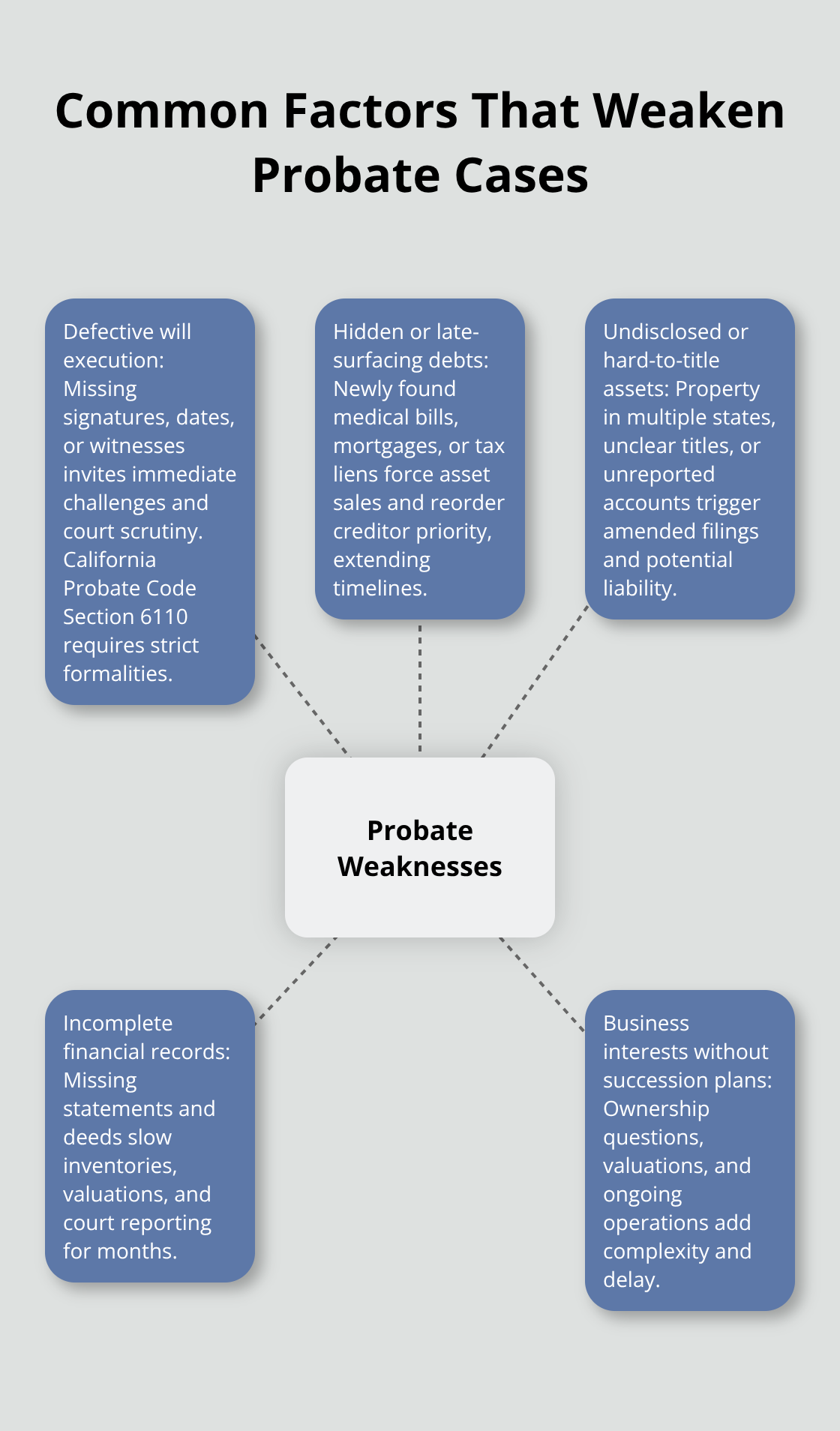
Weak probate cases share predictable patterns. A will that lacks clear signatures, dates, or witness statements creates immediate vulnerability. California courts require strict compliance with execution formalities under Probate Code Section 6110, and deviation from these rules invites challenges. Handwritten wills without proper attestation face heightened scrutiny, especially when family members dispute the decedent’s mental capacity at the time of signing.
Hidden debts discovered after probate begins force the estate to liquidate assets unexpectedly, reducing what beneficiaries receive and extending the timeline significantly. Medical bills, mortgages, and tax liens that surface late in the process create cascading delays and force difficult decisions about which creditors get paid first. Asset titles held in unclear names, property in multiple states, or business interests without succession plans compound these problems substantially. Estates with incomplete financial records-missing bank statements, investment account documentation, or property deeds-take months longer to resolve than organized estates.
Disputed Will Validity Stops Everything
When beneficiaries question whether the will reflects the decedent’s true wishes, probate stalls immediately. Undue influence claims, where someone allegedly pressured the decedent into unfavorable terms, require extensive investigation and often professional testimony. Lack of capacity arguments-claiming the decedent lacked mental competence at signing-demand medical records, witness testimony, and sometimes litigation. These contests drain the estate’s resources through attorney fees and court costs that easily reach tens of thousands of dollars. Family conflict over will validity transforms a straightforward probate into an adversarial proceeding that damages relationships permanently.
Undisclosed Assets and Creditor Claims Create Chaos
Probate requires full disclosure of all estate assets to the court and beneficiaries, but discovering omitted property after the process begins reopens proceedings and triggers creditor claims. A decedent’s forgotten investment account or rental property discovered months later forces amended filings and potential liability for the executor. Known creditors who weren’t notified during the probate window can file claims outside normal deadlines, creating legal exposure. Beneficiaries who received distributions before all debts were identified may face demands to return portions of their inheritance (a scenario that occurs frequently when decedents maintain multiple financial accounts or when families lack complete visibility into the decedent’s financial life).
How These Weaknesses Compound
Each weakness alone creates obstacles, but multiple weaknesses together can derail probate entirely. A disputed will combined with hidden debts and incomplete records transforms the process into a prolonged legal battle. The executor faces mounting pressure from beneficiaries, creditors, and the court simultaneously. These complications demand careful navigation and strategic planning to protect the estate and preserve family relationships.
What Makes a Probate Case Strong
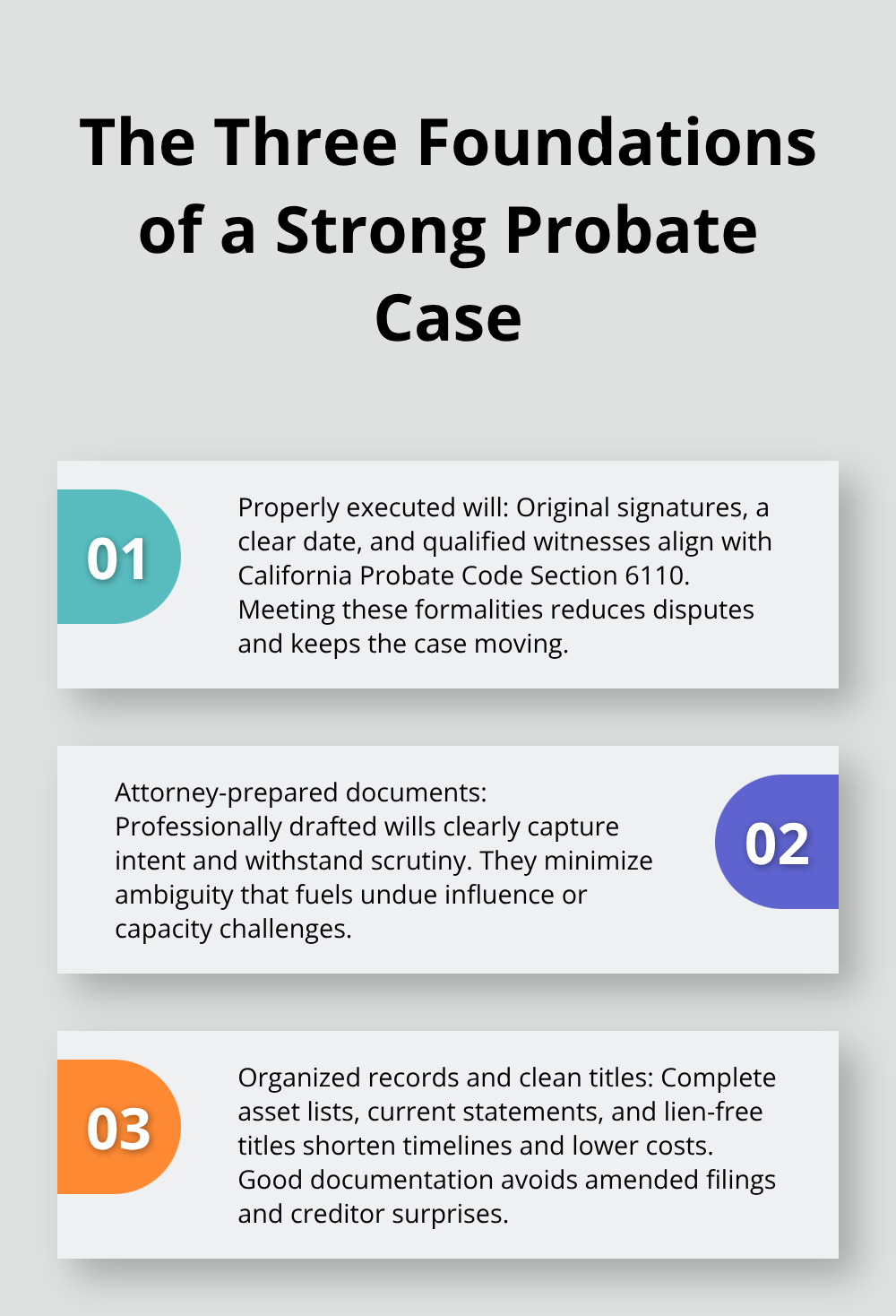
Strong probate cases rest on three concrete foundations that eliminate the obstacles we discussed earlier. When the decedent’s will follows California Probate Code Section 6110 precisely-with original signatures, dated execution, and proper witness attestation-courts move forward without hesitation. An attorney-prepared will carries substantially more weight than a handwritten document because it documents the decedent’s intent clearly and withstands scrutiny from competing claims. Executors who inherit organized financial records, complete asset inventories, and clear property titles face dramatically shorter timelines and lower legal costs. Estates with comprehensive documentation close in months rather than years, saving tens of thousands in professional fees.
Complete Records Accelerate the Process
Estates with complete records move through probate predictably. When a decedent maintains current bank statements, investment account summaries, property deeds, and mortgage documents in one accessible location, the executor’s job becomes manageable. Families who know exactly what assets exist-down to the last savings account or rental property-prevent the creditor claims and amended filings that plague disorganized estates. Request a comprehensive financial summary from the decedent’s accountant or financial advisor immediately after death; this single step often shaves months from probate timelines. Properties held in clear titles without liens or competing claims transfer without court delays. Debts identified upfront allow executors to plan distributions strategically, ensuring beneficiaries receive funds without later demands for reimbursement.
Beneficiary Cooperation Eliminates Litigation
Beneficiaries who accept the will’s terms and cooperate with the executor eliminate the litigation that drains estates. When adult children, spouses, and other beneficiaries agree the decedent’s wishes are clear and fair, probate becomes administrative rather than adversarial. Families that communicate openly about expectations before death-discussing the will’s terms, the executor’s role, and the timeline-prevent misunderstandings that spark disputes. Executors with beneficiary support make decisions quickly without fear of challenges. The absence of undue influence claims, capacity disputes, or contested distributions means the estate avoids the medical evaluations, depositions, and expert testimony that cost $20,000 to $100,000 or more in contested cases.
Clear Execution and Professional Preparation Matter
An attorney-drafted will demonstrates testamentary intent far more effectively than informal documents. Courts recognize professionally prepared wills as evidence that the decedent understood the document’s significance and executed it deliberately. Handwritten wills, by contrast, invite scrutiny about whether the decedent truly intended the terms or whether someone influenced the document’s language. Professional preparation also addresses technical requirements that informal documents often miss-witness qualifications, notarization standards, and state-specific formalities that California courts demand. When a will meets all statutory requirements without question, probate judges approve it immediately and move to asset administration.
Understanding your case’s actual strength determines whether probate will proceed smoothly or face extended complications. The next section explains how we evaluate your specific situation to identify which obstacles you’ll face and which strengths you can leverage.
How We Evaluate Your Probate Situation
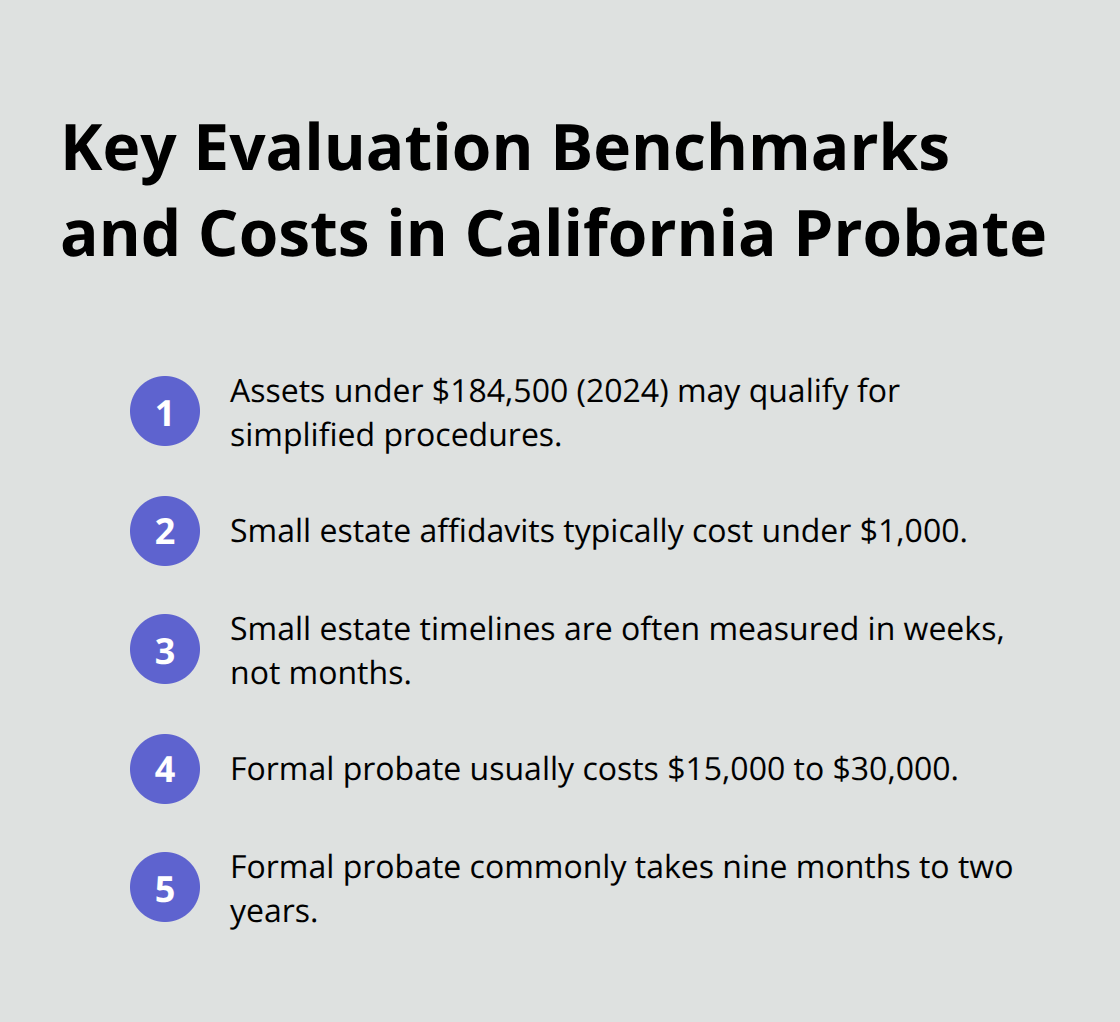
Probate evaluation starts with a complete document review that identifies exactly where your case stands. We request the original will, death certificate, bank statements from the past twelve months, property deeds, mortgage documents, investment account statements, and any correspondence about the decedent’s debts. This single step reveals whether you face a straightforward administration or hidden complications that will extend your timeline and costs significantly. Many families arrive at their first meeting with scattered documents in shoeboxes or incomplete financial records, which immediately signals that probate will take longer and cost more than anticipated. We organize these materials systematically to spot the red flags discussed earlier-unclear will execution, undisclosed assets, or conflicting beneficiary interests. The probate evaluation process includes assessing whether your estate qualifies for California’s simplified procedures, which can avoid formal probate entirely if assets fall below the $184,500 threshold for 2024. This distinction matters enormously because simplified probate through a small estate affidavit costs under $1,000 and takes weeks, while formal probate typically costs $15,000 to $30,000 and takes nine months to two years.
What Contested Cases Actually Cost
Contested probate cases drain estates far more severely than most families anticipate. When beneficiaries dispute will validity or challenge the executor’s decisions, your estate pays for depositions, medical evaluations to assess capacity, expert testimony on undue influence, and potentially trial costs that reach $50,000 to $150,000 or higher depending on complexity. We evaluate whether your beneficiaries show signs of contention early-disagreement over the will’s fairness, questions about the decedent’s mental state, or suspicion that someone influenced the document. These warning signs during our initial consultation predict litigation that will drain your estate’s assets before beneficiaries receive anything. We also assess whether creditor claims loom as a problem by requesting the decedent’s tax returns and checking for liens or judgments against property. A single overlooked creditor claim can reopen probate months after you thought it was closed, forcing amended filings and potential liability for the executor personally. Our evaluation determines whether you need a probate bond to protect against executor misconduct and whether your case requires a court-appointed appraiser to value complex assets like family businesses or real estate in multiple counties.
Building Your Custom Strategy
Once we understand your case’s actual strength, we develop a strategy tailored to your specific circumstances rather than applying a generic approach. If your case is straightforward with complete records and cooperative beneficiaries, we recommend the most efficient path that minimizes court involvement and legal fees. If complications exist, we identify which obstacles demand immediate attention and which can be managed during the probate process itself. We explain estimated timelines based on your county’s probate court schedule-some California counties process routine probate within six months, while others routinely take eighteen months for identical cases. We provide realistic cost estimates broken down by category: court filing fees, appraiser costs, bond premiums if required, and our attorney time. Families deserve to know upfront whether your probate will cost $8,000 or $40,000, and our evaluation determines this range with reasonable accuracy. We also identify opportunities to reduce costs through strategic planning-for example, whether selling property before probate closes rather than after can save thousands in capital gains taxes, or whether distributing certain assets to beneficiaries before final accounting closes will accelerate the process. Our dual experience as both probate attorneys and as a real estate professional means we spot property-related opportunities that many probate practitioners miss, which often saves clients thousands in unnecessary transaction costs and delays.
Final Thoughts
Your probate case evaluation reveals whether you’ll navigate a straightforward process or face years of complications and mounting costs. The red flags we discussed-unclear will execution, hidden debts, and family conflict-create predictable obstacles that drain estates and damage relationships, while complete records, clear documentation, and beneficiary cooperation eliminate the litigation that transforms probate into a financial and emotional burden. Understanding where your case stands right now matters more than hoping everything will work out smoothly, since many families discover too late that their probate will cost $50,000 more than anticipated or take an additional year to close.
Our evaluation process catches these issues during your initial consultation, when you still have time to implement strategies that reduce costs and accelerate timelines. We assess your will’s execution quality, your estate’s documentation completeness, your beneficiaries’ likelihood of cooperation, and your creditor exposure-then we explain exactly what these findings mean for your specific situation. Moving forward with confidence requires knowing what to expect and having a clear roadmap based on your actual circumstances.
We at Law Offices of Roshni T. Desai provide personalized guidance based on over 25 years of handling probate across Southern California, with a dual background as both attorneys and real estate professionals that helps us identify cost-saving opportunities in property transactions. Contact Law Offices of Roshni T. Desai today to schedule your free consultation and receive a clear evaluation of your probate case’s actual strength.