




Probate Court Filing Tips for Executors and Loved Ones
Serving as an executor brings real responsibilities, and filing probate documents correctly is one of the most important ones. Missing deadlines or submitting incomplete paperwork can delay the entire process and create unnecessary stress for your family.
We at Law Offices of Roshni T. Desai have seen how probate court filing tips make the difference between a smooth process and costly mistakes. This guide walks you through the requirements, common pitfalls, and practical steps to get it right.
What You Need to Know Before Filing
Probate timelines vary dramatically by state, and missing your jurisdiction’s deadlines can derail the entire process. Maryland, for example, requires the personal representative to file the will with the Register of Wills within a specific timeframe after the death certificate is obtained. Some states impose strict deadlines for notifying creditors and beneficiaries, while others allow more flexibility. The probate court will not extend deadlines simply because you were unaware of them. Contact your county probate court or the Register of Wills office to confirm exact filing windows for your location. Court staff can provide you with a checklist of required documents and timeline expectations. Many courts now offer online filing systems, which can actually speed up your submissions if you understand the technical requirements upfront.
Gather Your Essential Documents Now
The difference between a fast probate and a delayed one often comes down to how organized you are before you walk into court. Collect the original will, multiple certified copies of the death certificate (order at least 10 to 15 copies since various institutions will request them), recent tax returns, bank statements, property deeds, investment account statements, and insurance policies immediately. Forward the decedent’s mail to your address so you catch creditor notices and locate overlooked assets. Create a spreadsheet listing every asset with estimated values and ownership details, noting which ones pass through probate and which bypass it entirely through joint ownership or beneficiary designations. This inventory becomes your official court filing and protects you from missing assets later. Without this groundwork, you will spend weeks scrambling for documents while the clock ticks on court deadlines.
Understand Your Court Costs
Filing fees in probate court typically range from $300 to $1,000 depending on your state and the estate size, but costs extend far beyond the initial court filing. You will also need to budget for certified mail, publication notices if required by your state, document recording fees if property transfers occur, and professional appraisals for real estate and high-value personal property. Many executors underestimate these expenses and end up scrambling to cover them from their own pockets.
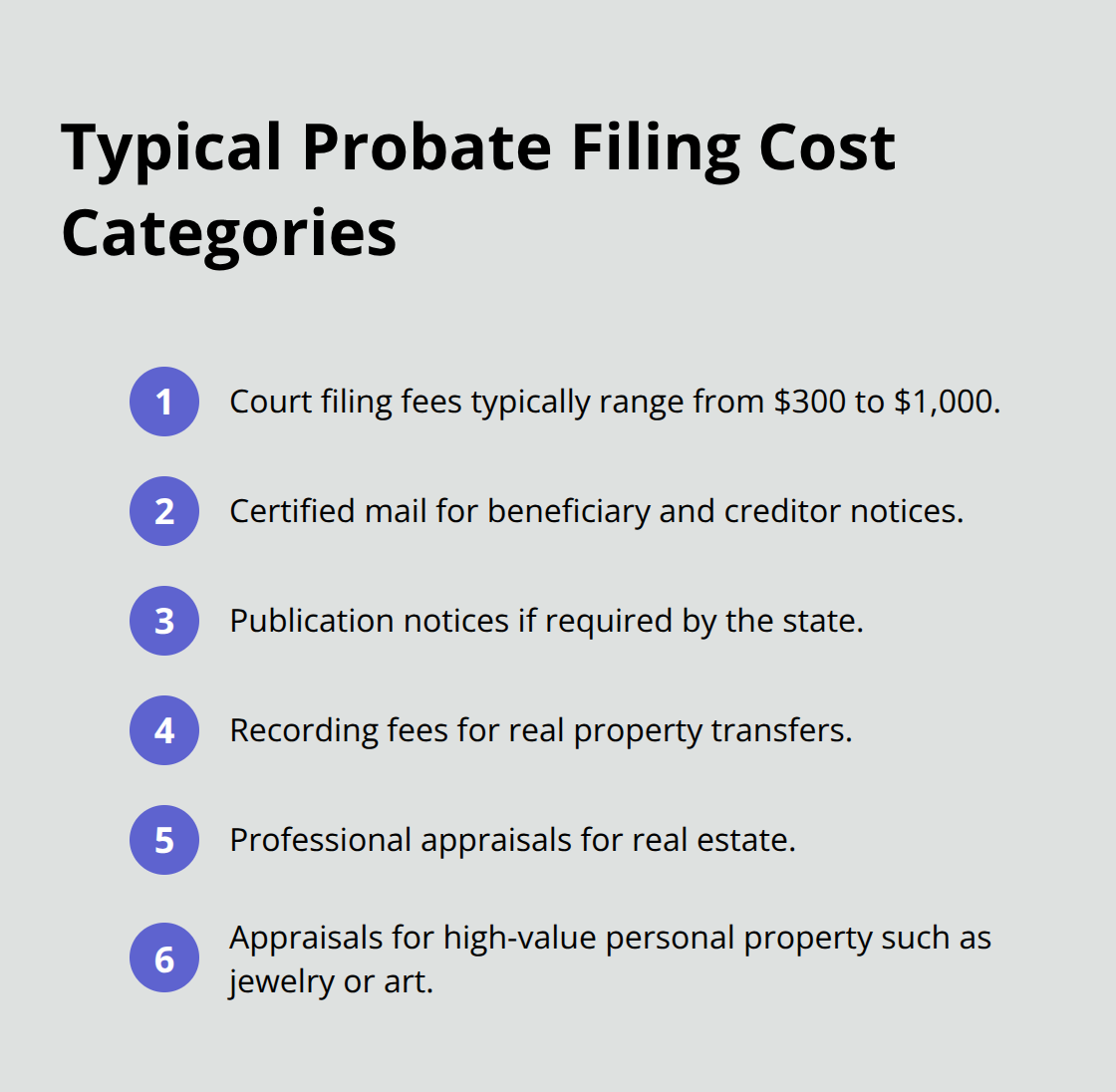
Request a complete fee schedule from your probate court in writing so you know exactly what to expect. Some courts waive certain fees for small estates or allow payment plans, so ask directly rather than assuming you must pay everything upfront. Understanding your total financial obligation prevents surprises that derail your filing timeline.
Know What Mistakes Cost You
Incomplete paperwork submissions, missed deadlines, and failure to notify beneficiaries and creditors create cascading problems that multiply costs and extend timelines significantly. A single missing document forces the court to reject your filing, which means you start over and lose weeks in the process. Incorrect asset valuations or incomplete inventories can trigger disputes with beneficiaries and creditor claims that should have been caught earlier. Missed notification deadlines expose you to personal liability and can result in removal as executor. These errors are not minor inconveniences-they transform a straightforward probate into a complex, expensive ordeal that strains family relationships and depletes estate funds unnecessarily.
Take Action on Your Filing Strategy
Your next move determines whether probate moves forward smoothly or stalls at the courthouse. Contact your probate court this week to obtain the official filing checklist and deadline schedule for your jurisdiction. Organize all documents in a single location (a folder or digital system) and cross-reference them against the court’s requirements. If your estate involves real property, multiple beneficiaries, or significant assets, consider working with a probate attorney who can review your documents before submission and catch errors that would otherwise delay the process. The cost of professional review upfront is far less than the cost of correcting mistakes after filing.
What Executors Get Wrong at the Filing Stage
Missing Deadlines Creates Immediate Problems
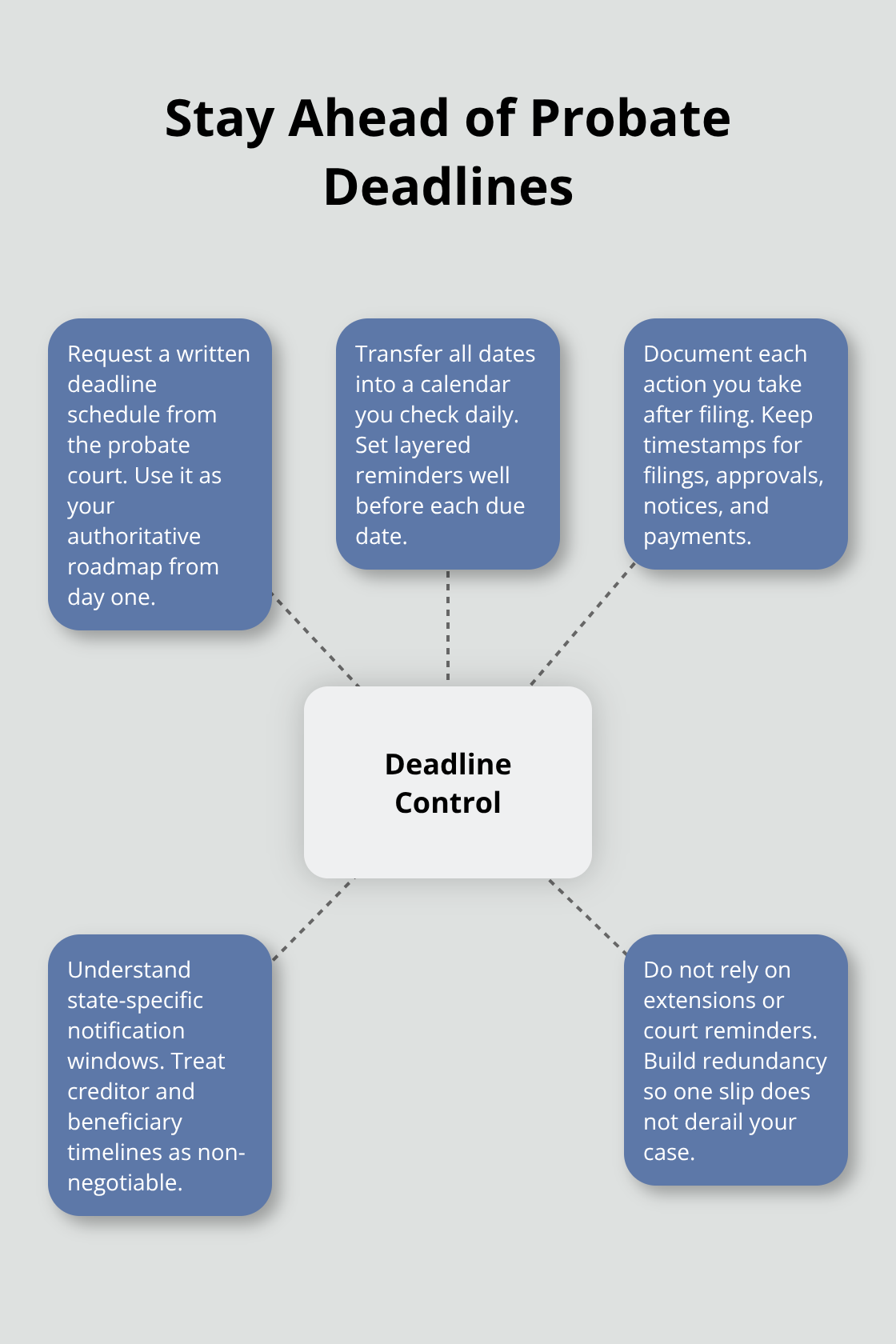
Probate court deadlines operate on a fixed calendar that does not bend for personal circumstances or oversights. Maryland requires the personal representative to file the will with the Register of Wills within a specific window after obtaining the death certificate, and missing that window forces you to petition the court for permission to file late, which adds cost and delays everything downstream. Courts in other states impose strict notification deadlines for creditors and beneficiaries, often ranging from 30 to 60 days from the date you file, and failure to meet these dates exposes you to personal liability claims from creditors or beneficiaries who argue they suffered harm from the delay. Many executors mistakenly believe that court staff will remind them of upcoming deadlines or that extensions are automatically granted if circumstances change. That assumption is wrong. The probate court will not extend deadlines simply because you were unaware of them or because your family situation became complicated.
You are responsible for tracking every single deadline yourself, and the best way to protect yourself is to request a written deadline schedule from your probate court on your first contact with them, then transfer those dates into a calendar system you check daily. One missed deadline triggers a cascade of problems: creditors file claims you did not properly notice, beneficiaries file removal petitions against you, or the court rejects your entire filing and forces you to start over.
Incomplete Paperwork Submissions Derail Your Filing
Courts reject filings that lack required signatures, missing death certificates, unsigned inventory forms, or asset valuations that fall short of court standards for accuracy. A single missing document forces you to resubmit everything, which costs you two to three weeks minimum while the court processes the corrected filing. Asset valuations matter more than most executors realize because inaccurate numbers trigger disputes with beneficiaries and create tax complications later.
Real property requires a professional appraisal in most cases, not a casual estimate or online search result. High-value personal property like jewelry, art, or collectibles also needs documented appraisals from qualified professionals. These valuations form the foundation of your official court filing and protect you from challenges that arise months or years later.
Notification Failures Create Long-Term Exposure
Failing to notify all required beneficiaries and creditors creates the most serious long-term exposure. State law requires that you notify specific people within defined timeframes, and incomplete notification means creditors can file claims years later or beneficiaries can challenge your administration in court. Create a notification checklist that includes the decedent’s spouse, children, parents, all named beneficiaries in the will, known creditors identified from mail and financial statements, and the state tax board if applicable to your jurisdiction.
Send these notifications via certified mail and keep proof of delivery for every single person on your list. Disorganized notification records are evidence of negligence that beneficiaries will use against you if disputes arise. The effort you invest in meticulous notification documentation now prevents costly litigation later.
What Comes Next in Your Filing Process
These three categories of mistakes-missed deadlines, incomplete paperwork, and failed notifications-account for the vast majority of probate delays and disputes. Understanding where executors stumble positions you to avoid the same pitfalls. The next section walks you through the practical steps that prevent these errors and move your filing forward on schedule.
How to Organize and Track Your Probate Filing System
The difference between executors who file successfully and those who face delays comes down to how they organize their documents and track court communications. Create a master filing system before you submit anything to the court, using either a physical folder structure or a digital system like Google Drive or Dropbox. Divide your files into five core categories: the original will and death certificates, asset documentation (bank statements, deeds, investment accounts), liability records (credit card statements, loan documents, medical bills), court filings and correspondence, and notification records. Within each category, label files with consistent naming conventions like YYYY-MM-DD-DocumentType so you can locate any document in seconds when the court requests it. This system prevents the chaos that derails most executors-searching frantically through stacks of paper while a court deadline approaches.
Document Your Notifications With Proof
Your notification records deserve special attention because they become evidence of your compliance with state law. Create a spreadsheet listing every person you notified (spouse, children, beneficiaries, creditors), the date you sent notification, the delivery method, and proof of receipt. Many executors send notifications but fail to document them, which creates liability exposure if disputes arise later. Use certified mail for all beneficiary and creditor notifications, and photograph or scan the green return cards as proof that each person received notice within the required timeframe.
Track Court Deadlines With Precision
Your probate court will provide a written deadline schedule when you file your initial petition, but most executors treat this as a casual reference document rather than a binding legal requirement. Transfer every single deadline into a calendar system that sends you alerts at least two weeks before each date. Set phone reminders for critical deadlines like creditor notification windows, final accounting filing dates, and asset distribution deadlines.
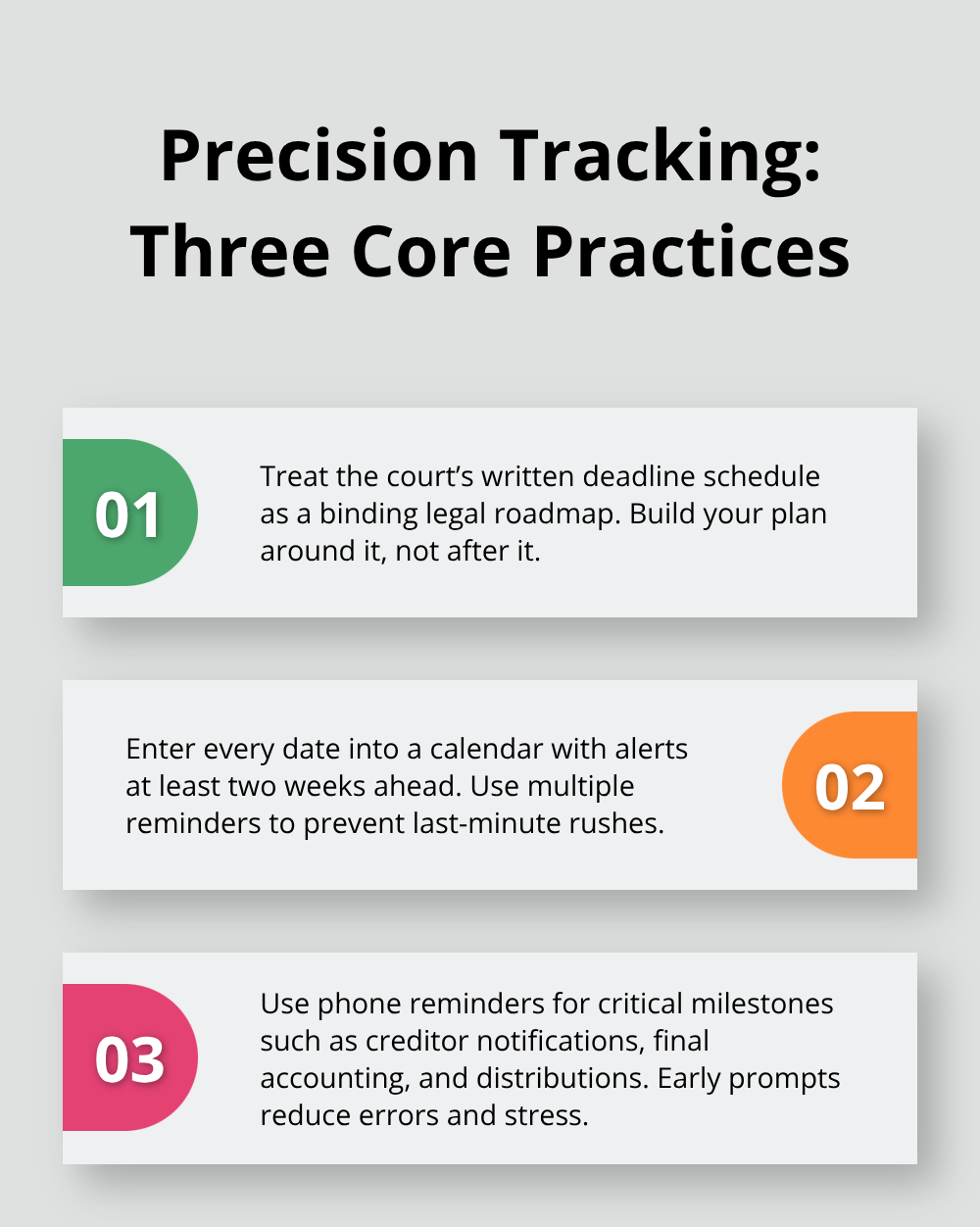
Maryland requires the personal representative to file the will within a specific window after obtaining the death certificate, and missing that window forces you to petition for late filing, which adds weeks and court costs. Create a secondary tracking system that documents each action you complete: when you filed documents, when you received court approvals, when you notified beneficiaries, and when you paid creditors. This documentation protects you from claims that you neglected your duties and provides clear evidence of your timeline if disputes arise. Most executors assume they can handle all this mentally or on scraps of paper-this assumption causes most probate delays and professional liability claims.
Validate Your Documents Before Court Submission
Submitting documents to court without a qualified review is like driving without checking your mirrors-you will miss critical errors that cost weeks and money to correct. A probate attorney will catch missing signatures, incomplete asset valuations, incorrect beneficiary information, and documentation gaps that the court will reject. This pre-filing review typically costs between $500 and $1,500, which sounds expensive until you compare it to the cost of resubmitting rejected filings, paying extension fees, or dealing with creditor claims that could have been prevented. Your documents must include certified death certificates, the original will, a completed inventory of assets with professional appraisals for real property and high-value items, a list of all known creditors, and proof that you have notified all required beneficiaries. Courts reject filings that lack any of these elements, so having an attorney validate your paperwork before submission eliminates the guesswork and prevents costly delays.
Final Thoughts
Probate court filing tips come down to three core requirements: you must meet your state’s deadlines, submit complete and accurate paperwork, and notify all required beneficiaries and creditors on time. Missing even one of these elements transforms a straightforward probate into a prolonged, expensive ordeal that strains family relationships and depletes estate funds. The executors who navigate probate successfully are not those with the most time or patience-they are the ones who organize their documents upfront, track deadlines with precision, and validate their filings before court submission.
Professional guidance matters because probate courts operate under strict procedural rules that vary by state, and one overlooked requirement can force you to restart your entire filing. A probate attorney catches errors that would otherwise cost you weeks and thousands of dollars in corrected filings and extension fees. The pre-filing review typically costs far less than the cost of resubmitting rejected documents or dealing with creditor claims that could have been prevented through proper notification.
If you serve as executor or manage a family member’s estate, contact your probate court this week and request a written deadline schedule and filing checklist for your jurisdiction. Organize all documents into a master system before you submit anything, and consider having an attorney review your paperwork before court submission. We at Law Offices of Roshni T. Desai provide personalized probate services across Southern California, including trust and probate administration, estate planning, and property-related transactions that streamline the entire process-visit us at our website to schedule your free consultation and take control of your probate filing process today.