




Probate Court Tips That Save Time and Money
Probate court tips can mean the difference between a smooth process and years of unnecessary complications. Most people don’t realize how much time and money they lose by missing deadlines or overlooking key requirements.
We at Law Offices of Roshni T. Desai have seen firsthand how proper planning prevents costly mistakes. This guide walks you through the strategies that actually work.
Understand Probate Court Requirements and Deadlines
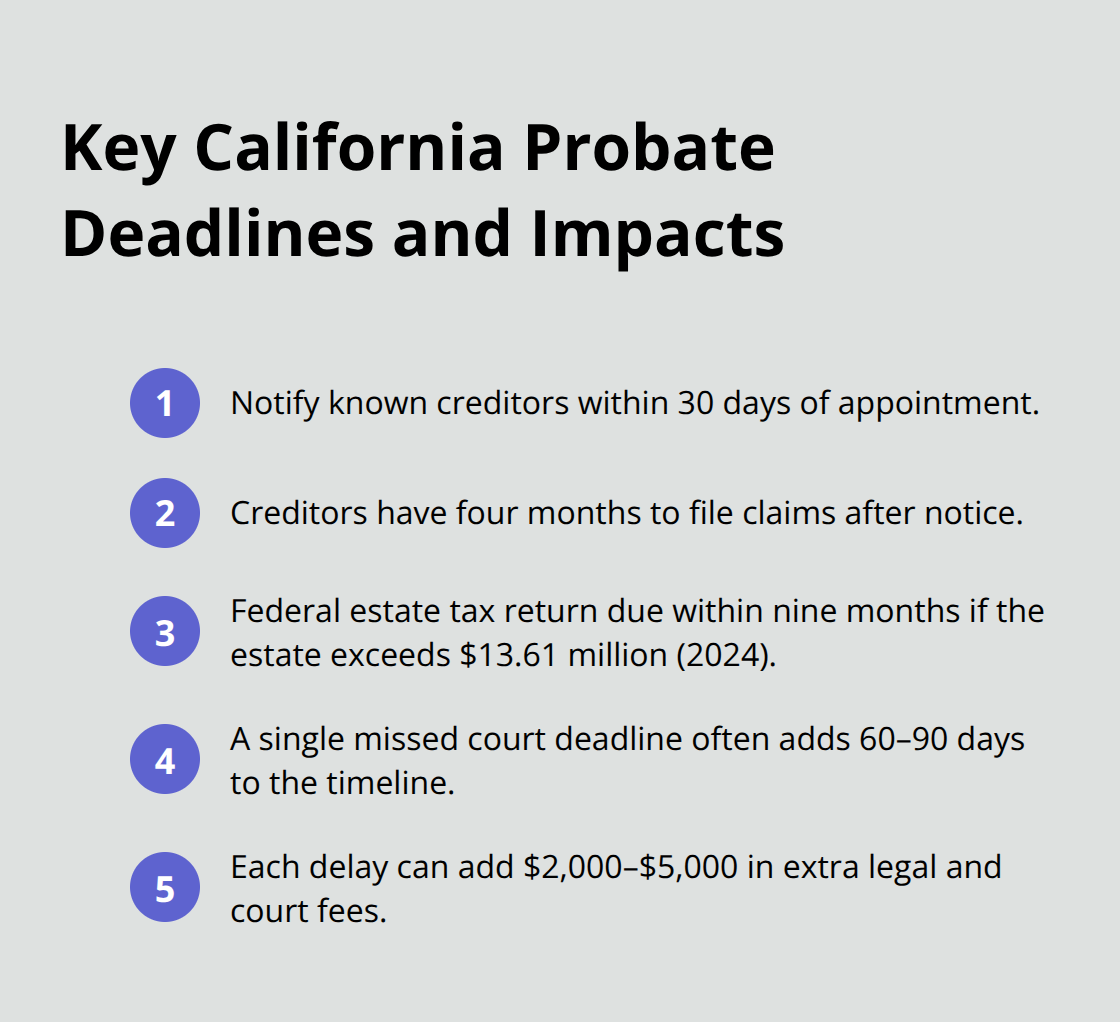
California probate operates on strict timelines that directly impact how fast an estate closes and how much it costs. The initial petition must be filed within a reasonable time after death, and California courts expect movement through the process. Most estates take 9 to 18 months to complete, according to the State Bar of California, though complexity and creditor claims affect this timeline. Missing even a single deadline extends the timeline by months and triggers additional court fees. The personal representative has 30 days from appointment to notify creditors, and creditors then have four months to file claims against the estate. If you miss these windows, the court may reject filings or require costly amendments.
Simplified vs. Full Probate
California law distinguishes between simplified probate and full probate based on estate value. Simplified probate applies to estates under $166,250 in gross value as of 2024, allowing for faster processing without full court supervision. Full probate involves greater court oversight and more extensive documentation, which explains why many families prefer streamlined approaches when possible. Understanding which path applies to your situation determines how many steps you’ll navigate and how long the process takes.
Documents You Must Gather First
Gathering the right documents upfront prevents delays that cost thousands in extended legal fees and court costs. You need the original death certificate, the will if one exists, recent bank and investment statements, property deeds, titles to vehicles, and any trust documents. The IRS Form 706 or 1040 filing from the deceased’s final tax return helps establish the estate’s value and tax obligations.
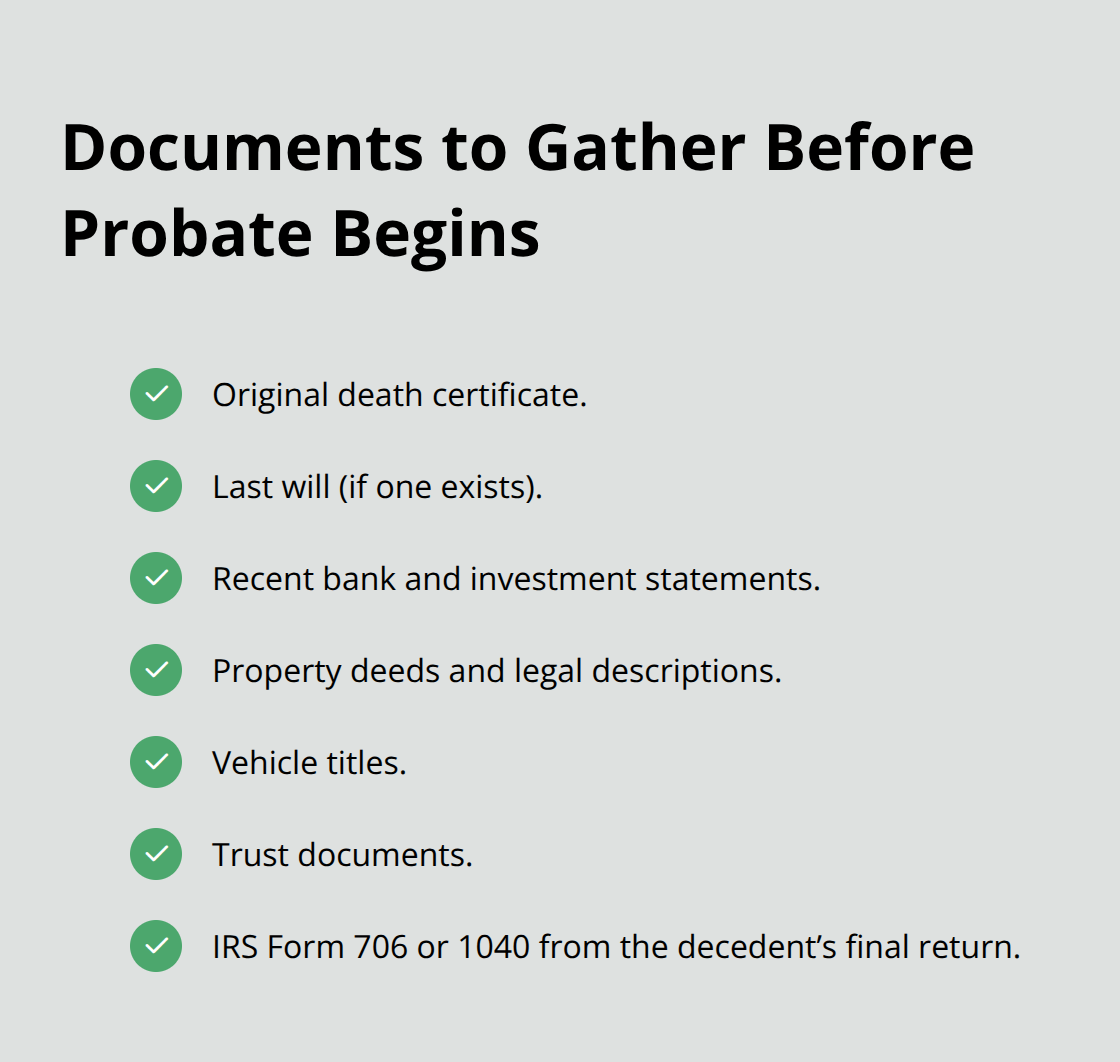
Many families waste weeks searching for documents after probate begins, so creating a complete inventory before meeting with a probate professional saves significant time. If the deceased left a trust, you may avoid probate entirely, which eliminates many of these filing requirements altogether.
How Missing Documents Derail Your Timeline
Incomplete paperwork forces courts to issue orders for missing information, which adds months to your case. Property titles that lack clear ownership documentation (especially real estate held in multiple names) create particular problems. Tax records and creditor notifications require accuracy-errors in these areas prompt the court to halt proceedings until you correct them. Organizing everything before you start positions you to move forward without interruption.
The mistakes families make during this preparation phase often determine whether probate runs smoothly or becomes a prolonged financial drain. Understanding what goes wrong helps you avoid the pitfalls that derail countless estates each year.
Common Probate Mistakes That Cost Time and Money
Disorganization at the start of probate creates a domino effect that extends timelines and inflates costs dramatically. The State Bar of California reports that incomplete asset documentation ranks among the top reasons estates remain in probate beyond 18 months. Personal representatives who fail to create a complete inventory of bank accounts, investment holdings, real property, and personal property waste weeks tracking down information that should have been compiled immediately after death. This delay alone stretches legal fees by thousands of dollars since attorneys charge hourly rates for time spent hunting down basic information.
Failing to Organize Assets and Beneficiary Information Upfront
Tax obligations compound the problem when you don’t identify all accounts and assets within the first 90 days. Missing critical filing deadlines triggers penalties and interest charges from the IRS that reduce what beneficiaries ultimately receive. Creditors also exploit disorganization; if notification goes out late or contains inaccurate estate valuations, creditors file claims that block distributions to beneficiaries for months. Personal representatives who don’t gather beneficiary contact information upfront force multiple rounds of court-ordered notifications, extending the timeline unnecessarily.
Missing Court Deadlines and Filing Requirements
California probate courts operate on unforgiving timelines that accumulate penalties with each missed filing. The 30-day creditor notification window after appointment is absolute-missing it means the court may reject your petition for distribution and demand you restart the notification process. Property sale deadlines, tax return filing dates, and final accounting submissions each carry consequences that range from extended court supervision to personal liability for the representative. Courts charge filing fees for amended petitions, continuances, and corrective orders (these fees stack rapidly when deadlines slip). A single missed deadline typically adds 60 to 90 days to the probate timeline, translating to additional attorney fees and court costs that easily exceed $2,000 to $5,000 per delay.
Overlooking Tax Obligations and Creditor Claims
Overlooking tax obligations creates liability that follows the personal representative personally, not just the estate. Federal estate tax returns must be filed within nine months of death if the estate exceeds $13.61 million as of 2024, according to the IRS. State income tax returns for the deceased and the estate itself require filing within standard deadlines, and delays trigger penalties that reduce distributions to beneficiaries. Creditor claims present a separate trap-if you don’t properly notify known creditors or publish notice in newspapers where required, creditors can file claims after the four-month window closes (reopening the estate and forcing additional court involvement). Many personal representatives assume paying bills immediately protects them, but improper payment order violates California probate law and can result in personal liability for unpaid creditors or beneficiaries who should have received distributions first.
These mistakes compound quickly, which is why working with a probate professional from the start prevents costly errors that derail estates for months or years.
How to Avoid Probate’s Most Expensive Traps
Hire a Probate Professional Early
The probate professionals you hire determine whether your family pays thousands in preventable fees or moves through the process efficiently. California probate law is complex enough that personal representatives who attempt to navigate it alone routinely trigger the exact mistakes outlined above. A probate attorney reviews your timeline against court deadlines, verifies notifications go out correctly, and identifies asset documentation gaps before the court does. The cost of hiring someone who knows probate law typically ranges from $3,000 to $7,000 depending on estate complexity, according to data from the American Bar Association. Compare this against a single missed deadline that adds $2,000 to $5,000 in additional fees plus months of delay, and the math becomes obvious. Families who bring in professional guidance immediately save substantially more than they spend on initial consultations and planning.
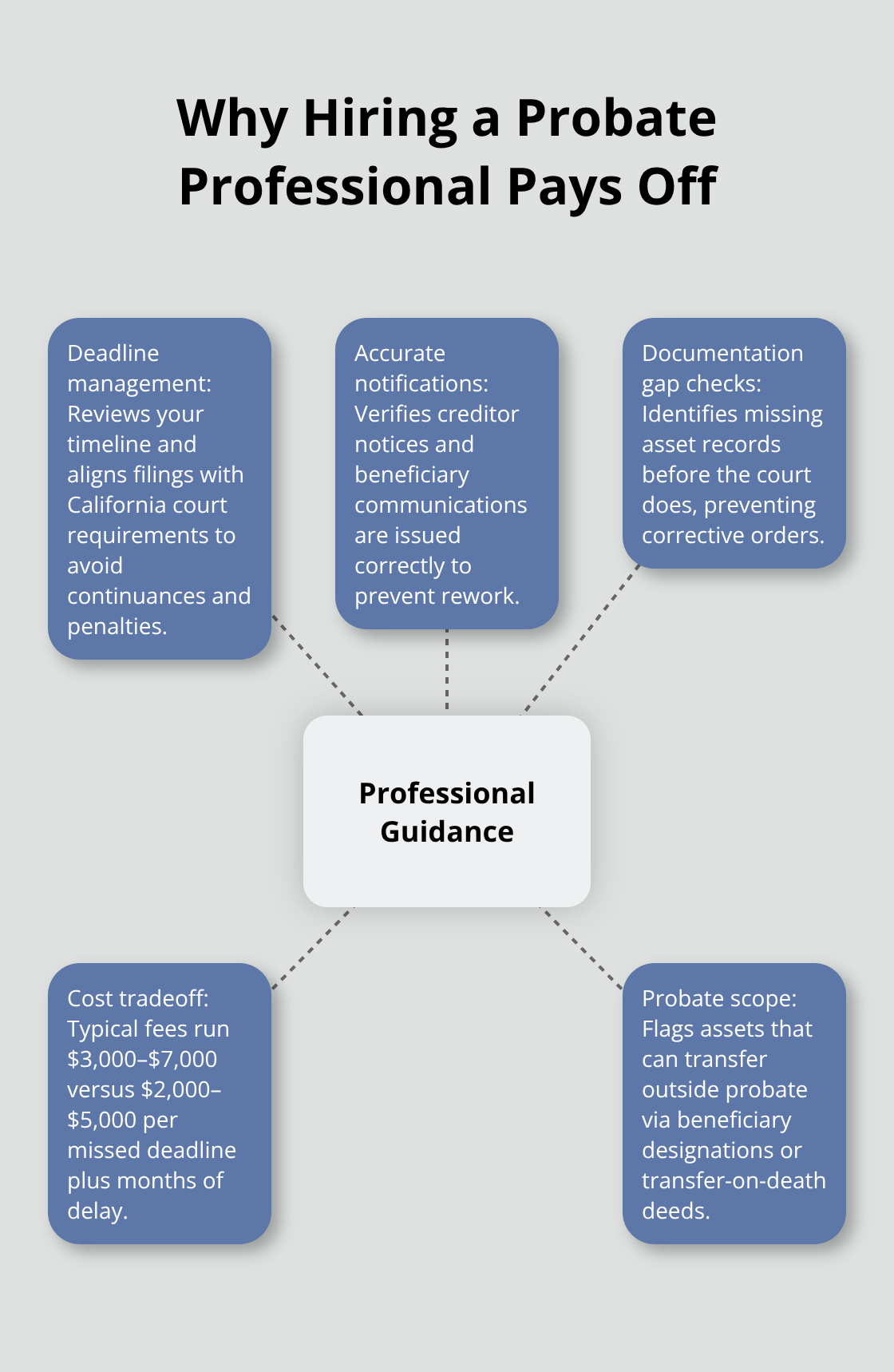
A probate professional identifies which assets actually require court involvement and which can transfer outside probate through beneficiary designations or transfer-on-death deeds.
Consider Trust-Based Planning to Bypass Probate
A revocable living trust holds your assets during your lifetime and transfers them to beneficiaries after your death without court involvement, eliminating the 9 to 18 month timeline entirely. This approach costs more upfront-establishing a comprehensive trust typically ranges from $1,500 to $3,000-but avoids probate court fees, extended legal bills, and public record disclosure of your estate. California residents with significant assets or multiple properties benefit substantially from trust planning since probate costs scale with estate complexity and value. Trusts provide privacy (probate records are public; trust administration is not) and maintain control if you become incapacitated. The key is implementing trust planning while you’re healthy and able to transfer assets into the trust structure. Waiting until illness or decline makes the process more complicated and expensive.
Maintain Detailed Records Throughout Administration
Detailed record-keeping throughout administration-whether probate or trust-prevents disputes among beneficiaries and protects the personal representative from liability. A ledger of all distributions, communications with beneficiaries, and court filings creates a clear audit trail that demonstrates compliance with California law. Communication with all parties reduces misunderstandings that trigger costly disputes; many probate conflicts stem from beneficiaries feeling excluded from decisions rather than disagreeing with actual distributions.
Final Thoughts
Probate doesn’t have to drain your family’s resources or consume years of your life. The probate court tips covered throughout this guide show that most delays and expenses stem from preventable mistakes rather than the process itself. Starting with organized documentation, understanding California’s strict timelines, and recognizing common pitfalls puts you in control from day one.
Taking action now-whether through trust planning or early professional guidance-prevents the complications that turn a manageable process into a financial burden. Families who address these issues before probate starts save thousands in legal fees and months of unnecessary delays. We at Law Offices of Roshni T. Desai bring over 25 years of experience guiding families through probate and estate planning across Southern California, combining personalized guidance with practical solutions tailored to your specific situation.
Whether you face probate now or plan ahead to avoid it entirely, Law Offices of Roshni T. Desai provides the guidance that transforms a complex process into a manageable one. Contact us to discuss your situation and learn how proper planning protects your family’s interests.