



Probate Property Sale SoCal: How to Move Real Estate Efficiently
Probate property sales in Southern California move slowly. Court approvals, appraisals, and title issues create bottlenecks that can stretch timelines for months.
We at Law Offices of Roshni T. Desai have seen how the right approach cuts through these delays. Combining legal knowledge with real estate strategy makes the difference between a stalled sale and a completed transaction.
Why Probate Sales in Southern California Stall
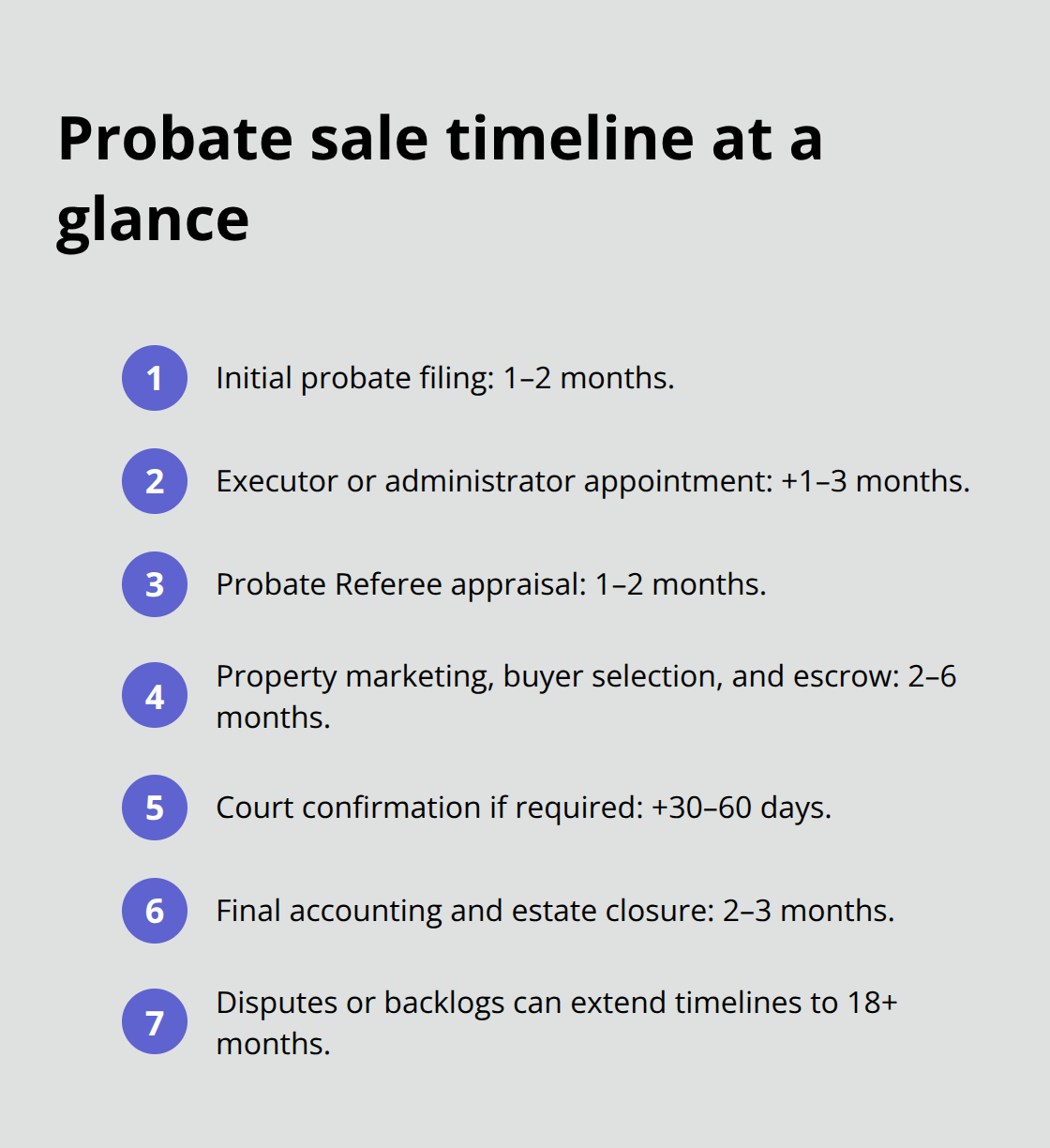
Court approval timelines in Southern California probate vary dramatically by county. Los Angeles County alone processes probate cases with typical real estate timelines of 6 to 12 months from death to final distribution, though disputes or court backlogs can extend this to 18 months or beyond. The initial probate filing takes 1 to 2 months, court appointment of an executor or administrator adds another 1 to 3 months, and the property appraisal by a Probate Referee generally requires 1 to 2 months. The actual property sale process then takes 2 to 6 months, and if court confirmation is required, add another 30 to 60 days. Final accounting and estate closure typically require 2 to 3 months after the sale closes. This sequential, mandatory process means delays compound at every stage. Missing documents, incomplete paperwork, or objections from heirs can push any of these phases backward, creating cascading delays that frustrate families already dealing with loss.
The Real Barrier: Appraisal and Valuation Requirements
California probate law mandates a formal Probate Referee appraisal to establish property value for sale and distribution purposes. This appraisal is not optional and cannot be skipped, even if heirs agree on a price. The referee’s valuation becomes the baseline the court uses to evaluate whether the sale price is fair. If the sale price falls below 90 percent of the appraised value and the executor lacks full authority under the Independent Administration of Estates Act, the court must approve the lower price or the sale stalls entirely. Title issues and liens further complicate this valuation. If the property carries unpaid property taxes, HOA liens, or judgment liens, these claims must be resolved before or at closing, reducing net proceeds and sometimes forcing price negotiations that delay listing or closing. Heirs frequently discover that creditor claims, back taxes, or mortgage balances consume more of the estate than anticipated, forcing difficult conversations about whether the sale price covers all obligations.
Why Heir Disagreements Derail Sales
Heirs who disagree on sale terms create a practical bottleneck that stalls transactions. One heir may want to keep the home and live in it; another may need the cash immediately; a third may question the sale price or the choice of real estate professional. When multiple heirs hold equal interests, any one of them can object to a proposed sale or price reduction, triggering court review and halting momentum. Written Notice of Proposed Action must reach all interested parties, and if objections arrive, the executor cannot proceed without court intervention. This is not a minor inconvenience; it can add months to a sale timeline. Professionals who handle probate sales know to conduct documented conversations with heirs upfront about sale strategy, pricing expectations, and timeline before listing. Transparency about how the property was valued, which professional is handling the sale, and what expenses the estate pays prevents surprises that spawn objections later.
How Dual-Licensed Professionals Accelerate the Process
The Law Offices of Roshni T. Desai combines legal knowledge with real estate credentials to move probate sales forward. Ms. Desai’s dual licensure as an attorney and real estate professional eliminates communication gaps between legal counsel and the agent handling the sale. When one person understands both the court requirements and the market realities, decisions happen faster. Heirs receive clear explanations about appraisal results, title issues, and pricing strategy from someone who speaks both languages. This coordination reduces the back-and-forth that typically delays sales and frustrates families. The firm offers free consultations with flexible home or office visits, making it easier for families to discuss their specific situation without added stress.
How to Speed Up Your Probate Sale
Probate sales move faster when you treat the legal process and the real estate transaction as one coordinated effort, not two separate problems. Most families hire an attorney to handle probate court requirements and a separate real estate agent to list and sell the property. This split creates communication delays, conflicting priorities, and expensive mistakes. The attorney doesn’t know what the agent promised to buyers; the agent doesn’t understand what the court requires. Neither professional coordinates with the other, and the executor translates between two worlds. You avoid this entirely when you work with professionals who understand both the legal requirements and the market realities of probate sales.
Start With Documentation Before You List
Before your property hits the market, pull together everything the court and potential buyers will demand. Locate the original will, death certificate, property deeds, mortgage documents, property tax records, HOA statements, and any title insurance policies. Identify unpaid property taxes, liens, judgment claims, or other encumbrances against the title. Request a preliminary title report from a title company (roughly $50 to $150) to reveal exactly what claims exist.
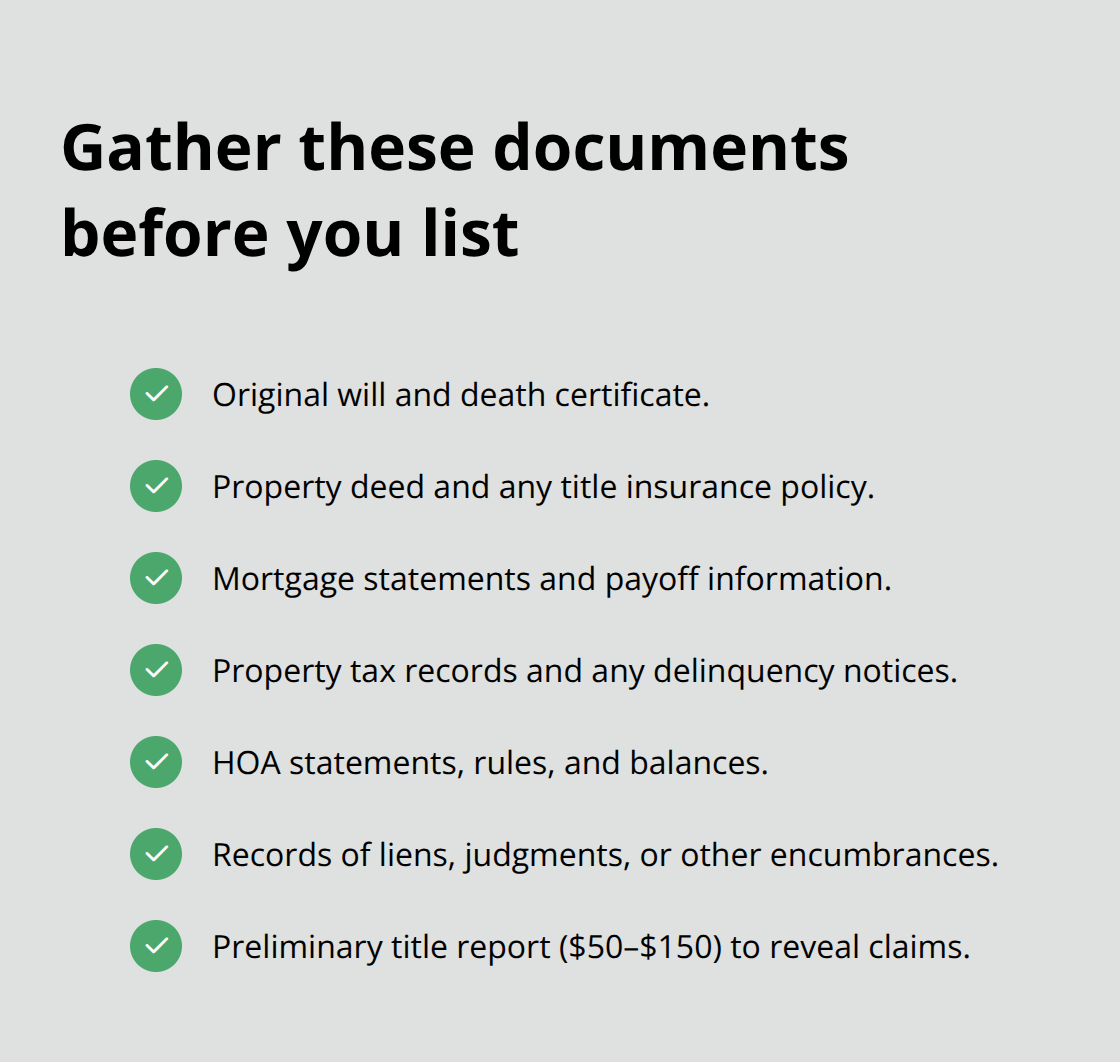
Many probate sales stall because the executor discovers mid-sale that an old judgment lien or unpaid property tax bill consumes thousands in proceeds. Knowing this upfront lets you price realistically and manage heir expectations before objections arrive.
California probate law requires you to file an inventory and appraisal with the court, listing all estate assets and their estimated values. Complete this filing early and accurately. If the Probate Referee’s appraisal later shows the property is worth significantly less than you estimated, heirs lose confidence in your judgment and become more likely to object to sale terms. Courts in Los Angeles and Orange County typically schedule Probate Referee appraisals within 60 to 90 days of the initial probate filing. Prepare the property for this appraisal by removing clutter, addressing obvious safety hazards, and securing the home against weather damage or intrusion. A referee’s appraisal takes 30 minutes to two hours; their assessment becomes the court’s baseline for evaluating whether your eventual sale price is fair. If the property needs significant repairs, disclose this to the referee and let the valuation reflect the condition. Hiding problems only creates surprises when buyers conduct inspections or when the court questions why the sale price fell below the appraised value.
Cash Buyers Close Faster and Reduce Risk
Traditional retail buyers require inspections, financing contingencies, and appraisals that extend timelines by 60 to 90 days. Cash buyers-investors, real estate firms that purchase probate properties, or private parties with liquid funds-close in 2 to 4 weeks. You sacrifice some sale price when you accept a cash offer; expect 5 to 15 percent below market value depending on the property’s condition and local demand. Whether this tradeoff makes sense depends on the estate’s debts and whether heirs need quicker distributions. If the estate owes substantial creditor claims, back taxes, or mortgage debt, the speed of a cash sale often outweighs the price reduction.
A cash sale also eliminates the risk that a traditional buyer’s financing falls through during escrow, forcing you to relist and restart the timeline. Investors and cash buyers know probate procedures; they don’t object to court-confirmed sales or delayed closing dates. They understand that proceeds must sit in the estate account pending final court approval and distribution to heirs. This professional familiarity reduces friction and accelerates closing. The Law Offices of Roshni T. Desai, with over 25 years of experience in probate administration, can connect you with vetted cash buyers and investors who specialize in probate properties across Southern California.
Dual Licensure Eliminates Communication Gaps
When one professional holds both attorney and real estate licenses, decisions happen faster and costs drop. Ms. Desai’s dual licensure streamlines estate-related property sales by removing the back-and-forth that typically delays transactions. Heirs receive clear explanations about appraisal results, title issues, and pricing strategy from someone who understands both court requirements and market conditions. This coordination prevents the miscommunications that frustrate families and extend timelines. The firm offers free consultations with flexible home or office visits, making it easier for families to discuss their specific situation without added stress. With this foundation in place, the next step is understanding how to navigate the specific court procedures and approval requirements that govern your sale.
Why Dual Licensure Matters in Probate Sales
Probate sales fail when lawyers and real estate agents work in separate silos. The attorney focuses on court deadlines and filings; the agent chases buyers and market timing. Neither professional has full visibility into what the other is doing, and the executor translates between two different worlds. This fragmentation costs time and money.
How Integrated Representation Accelerates Decisions
When one professional holds both attorney and real estate licenses, the entire process tightens. Ms. Desai’s dual licensure means decisions about pricing, court strategy, and buyer negotiations happen in real time without middlemen. If a court deadline conflicts with a buyer’s inspection schedule, the attorney-agent resolves it immediately rather than passing messages back and forth through the executor. If the Probate Referee’s appraisal comes in lower than expected, the real estate professional adjusts the listing price within minutes, not days, while the attorney prepares the court documentation explaining the valuation to heirs.
This integrated approach cuts months from typical timelines. In Los Angeles County, probate property sales typically take 6 to 12 months from death to final distribution. When legal and real estate decisions happen in parallel rather than sequence, families see closings in 4 to 8 months instead.
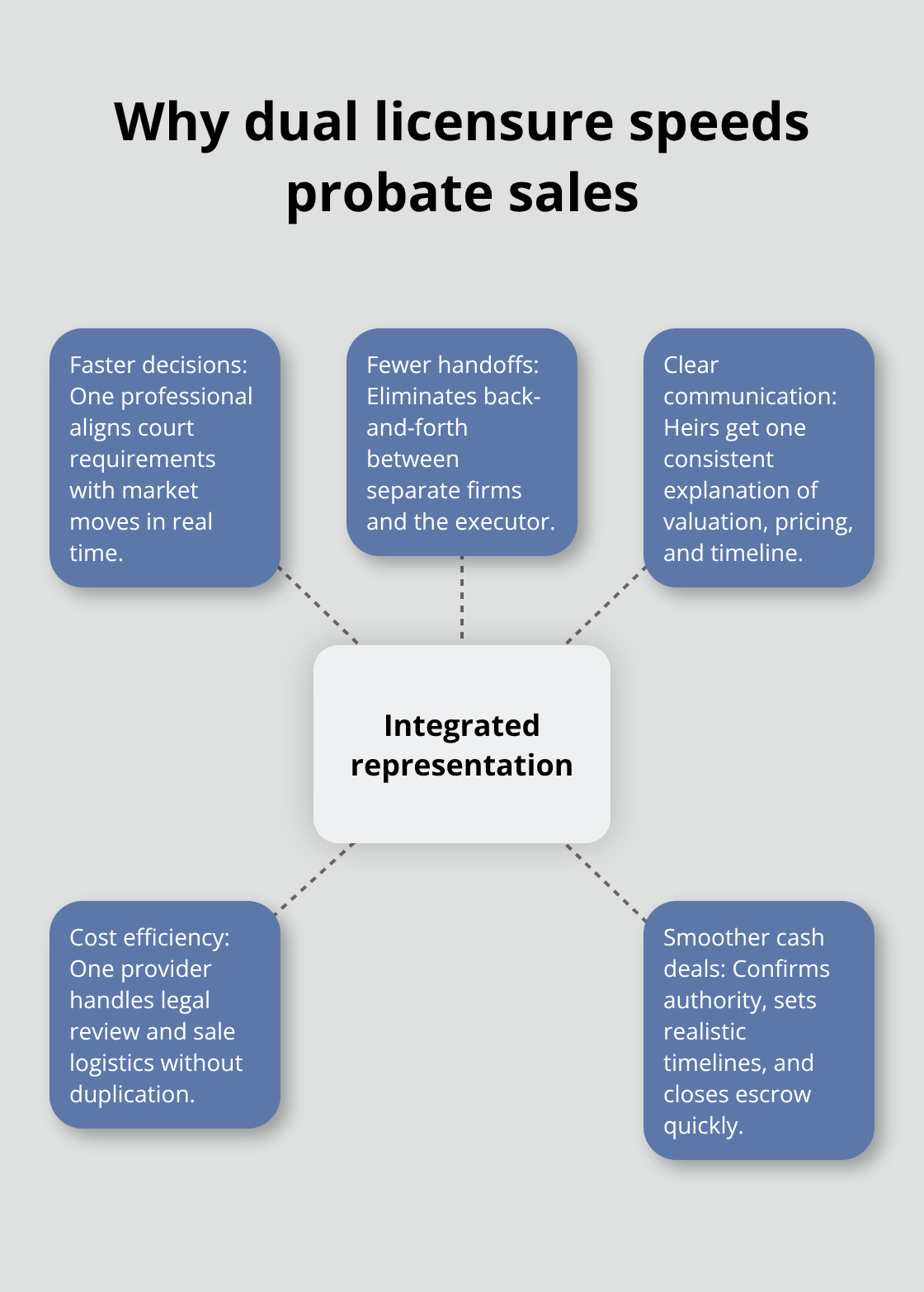
The speed advantage compounds when title issues arise. If a preliminary title report reveals a judgment lien or unpaid property tax claim, an integrated professional immediately calculates how much this reduces net proceeds, adjusts the asking price to reflect the true value available for distribution, and explains the situation to heirs in language both attorneys and agents understand. Traditional split representation requires the attorney to send the title report to the agent, who forwards it to the executor, who consults the attorney again about pricing implications. Each handoff adds days.
Cost Savings From Coordinated Service
Cost savings follow naturally from this coordination. When you hire separate professionals, you pay legal fees for the attorney to review the real estate agreement, title documents, and closing statements, and you pay commission to an agent on top of attorney time. Dual licensure collapses these overlapping fees. The professional handles both the legal review and the market transaction without duplication.
Heirs also benefit from clearer communication. Instead of receiving separate reports from an attorney about court requirements and an agent about market conditions, families receive one consistent narrative about what’s happening, why it’s happening, and what comes next. This transparency prevents the confusion and distrust that trigger objections from co-heirs. When all interested parties understand the appraisal rationale, the pricing strategy, and the court timeline from a single credible source, objections drop dramatically.
Cash Buyers and Integrated Representation
Cash buyer transactions benefit most from this integration. Investors and cash buyers already understand probate procedures, but they move faster when they work with a professional who can confirm court authority, explain timeline constraints, and close escrow without the delays typical of traditional financing. A cash buyer who works with dual-licensed representation knows the legal authority is solid and the timeline is realistic, reducing their risk and accelerating their decision to make an offer.
The Law Offices of Roshni T. Desai offers free consultations with flexible home or office visits, making it easier for families to discuss their specific situation and understand how integrated representation works for their estate.
Final Thoughts
Probate property sales in Southern California demand strategic planning and coordinated professional guidance, not hope and patience. The court timelines, appraisal requirements, title complications, and heir disagreements you face are real obstacles that require action. Families who treat probate sales as a legal problem separate from a real estate problem watch months slip away while attorneys and agents work in isolation.
Speed matters because every month of delay costs the estate money through property taxes, insurance premiums, and maintenance expenses that accumulate while heirs wait for distributions. A probate property sale SoCal that closes in four to eight months instead of twelve preserves thousands in proceeds and prevents the resentment that lingers long after the sale ends. The moment you know a probate property must be sold, gather your documentation, request a preliminary title report, and connect with professionals who understand both the legal and real estate sides of the transaction.
We at Law Offices of Roshni T. Desai have guided families through probate property sales across Southern California for over 25 years. Our dual licensure as an attorney and real estate professional means your sale benefits from integrated legal and market strategy without the communication gaps that slow traditional representation. Contact us for a free consultation to discuss your specific situation and learn how coordinated representation can move your probate sale forward.