



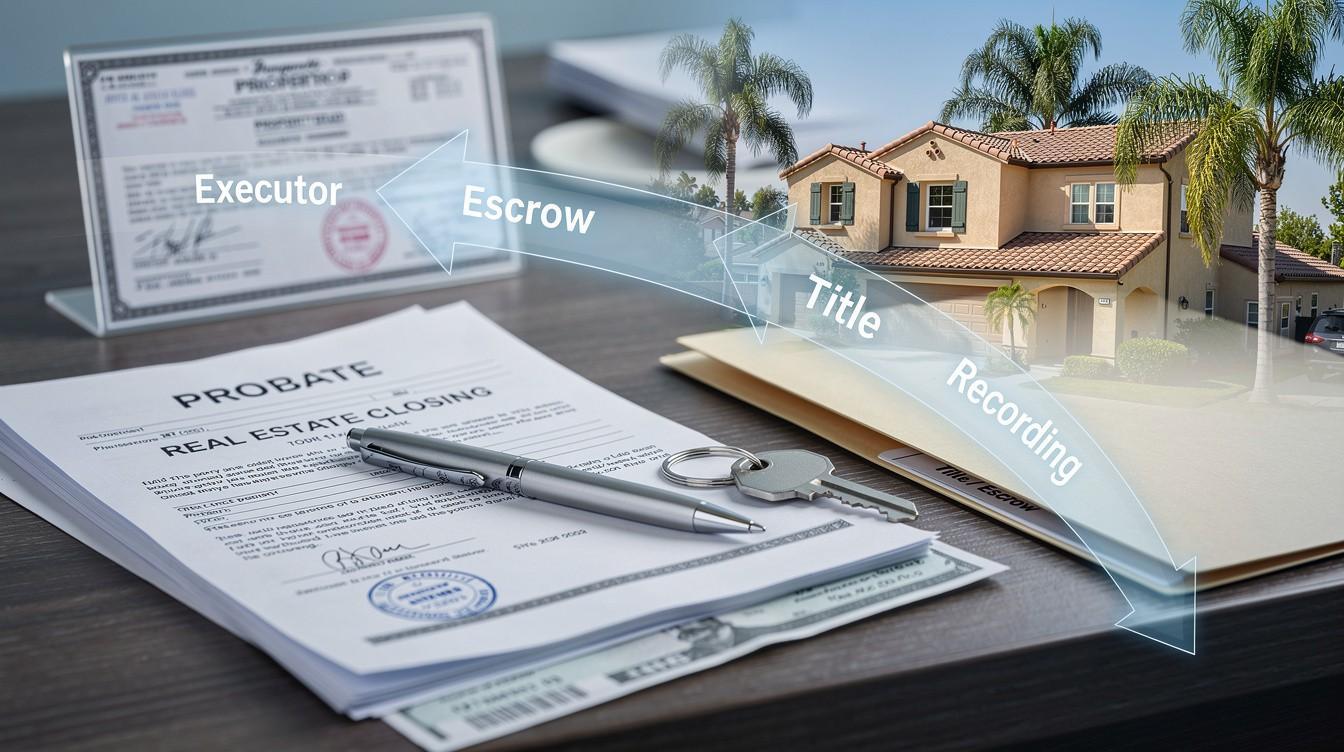
Probate Real Estate Closing SoCal: Key Steps to a Smooth Transaction
Selling a property through probate in Southern California involves more steps and stricter rules than a standard real estate transaction. The court oversees the process, timelines extend longer, and multiple parties must coordinate throughout.
We at Law Offices of Roshni T. Desai help families navigate probate real estate closings in SoCal by breaking down each phase and identifying potential roadblocks before they slow you down.
How Probate Sales Differ from Standard Real Estate Transactions
Court Supervision Changes Everything
Probate real estate sales operate under court supervision from start to finish, which fundamentally changes how you market, price, and close the property. In a standard sale, you list the home, accept an offer, and close in 30–45 days. In probate, the court must approve the sale before it becomes final, adding 30–60 days to the timeline and creating two distinct approval paths. If the executor has Independent Administration of Estates Act authority, the sale can move faster without court confirmation.
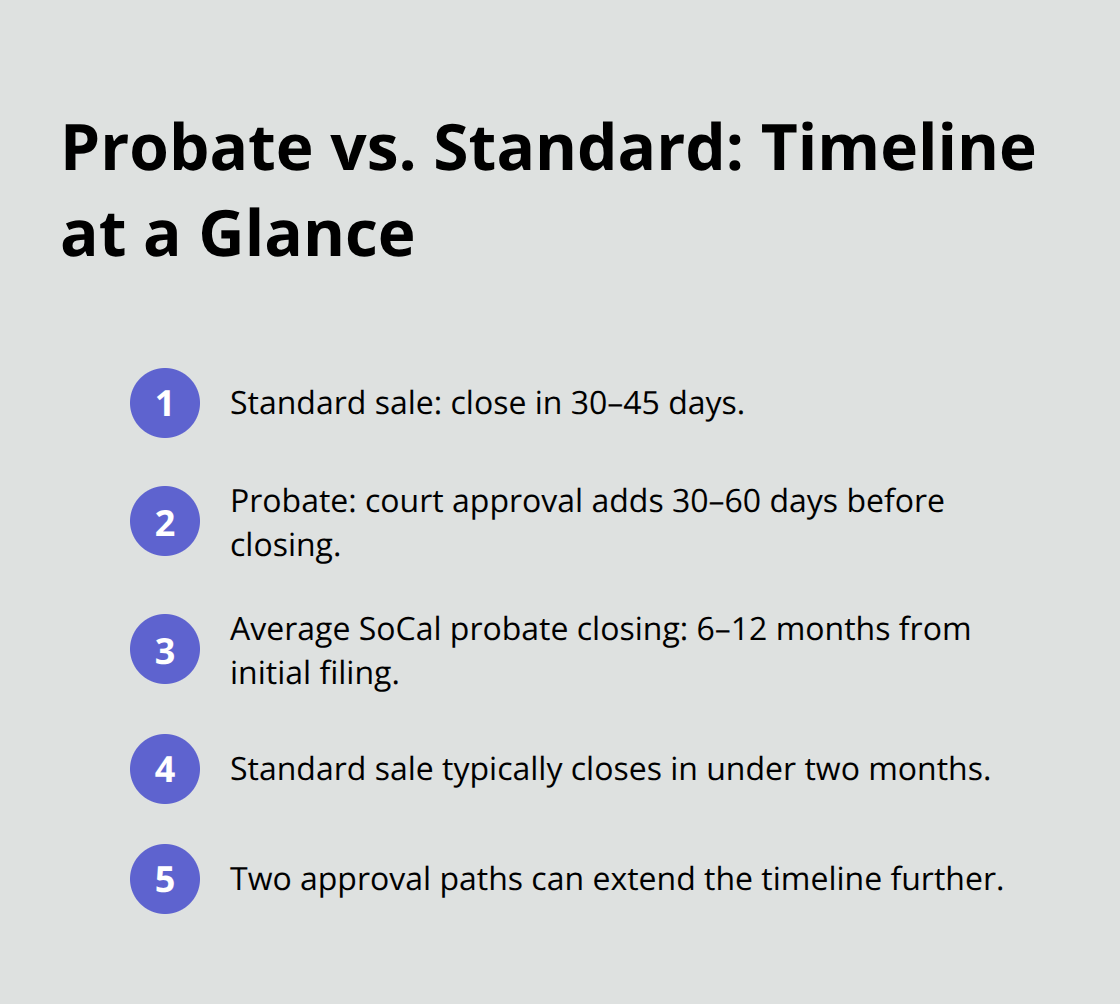
If limited authority applies, the court holds a hearing where other buyers can submit competing bids, potentially driving up the price but also extending the process. The average probate real estate closing in Southern California takes 6–12 months from the initial filing to final distribution, compared to a standard sale that typically closes in under two months.
This longer timeline reflects the court’s duty to protect heirs, creditors, and the integrity of the estate. You cannot simply accept an offer and proceed to escrow as you would in a regular transaction.
The Probate Referee Appraisal Requirement
The executor or administrator must obtain a court-ordered appraisal from a Probate Referee before listing the property, establishing the fair market value on the date of death. This appraisal becomes the baseline for pricing and satisfies the court’s requirement that the property sells for fair market value or better. Standard sales skip this step entirely. Additionally, probate sales require full disclosure of the probate status to all potential buyers, and title companies scrutinize the chain of title more carefully because the property transferred through a court process.
Title Defects and Early Detection
Combining legal guidance with real estate knowledge catches title defects early and prevents delays that can stretch a closing from nine months to 18 months or longer. The dual perspective identifies liens, missing heirs, or conflicting claims before they derail the sale. Creditors have a four-month window to file claims against the estate, which means liquid funds must remain available during this period. Selling the property too early can deplete resources needed to pay valid debts, creating surcharge liability for the executor and potentially invalidating the sale itself.
Because of this complexity, understanding the creditor claims window and coordinating with multiple parties becomes essential to moving forward without costly mistakes.
Moving the Sale Forward Without Court Delays
Securing Court Authorization to Sell
Court authorization to sell represents your first critical gate. The executor or administrator must file a petition with the Superior Court in the decedent’s county, and the judge grants either full Independent Administration of Estates Act authority or limited authority. Full IAEA authority allows you to accept an offer and close without returning to court, cutting 30–60 days from your timeline. Limited authority requires a court confirmation hearing, where competing bids can emerge and potentially raise the price but also delay closing. Most Southern California executors pursue full authority because the speed advantage outweighs the modest cost. Once you receive authorization, file it with your title company immediately so they understand your selling power and can prepare the deed properly. Many closings stall because the title company receives conflicting instructions about authority levels, so written confirmation from the court eliminates confusion.
Pricing and Marketing the Property
The probate referee appraisal you obtained earlier now becomes your marketing tool. Price the property at or slightly above the appraised value to satisfy the court and attract serious offers. Underpricing wastes the estate’s assets and signals weakness to buyers; overpricing invites low offers and prolongs the listing. A probate-experienced real estate agent understands these dynamics and knows how to position the property in Los Angeles, Orange, Riverside, San Bernardino, and San Diego county markets where probate sales carry distinct buyer psychology. Buyers often expect probate homes to be discounted, so professional staging, cleanup, and honest disclosure of the probate status actually increase confidence rather than dampen it.
Handling Inspections and Property Condition
Inspections and contingencies in probate sales operate differently than standard transactions. Most probate properties sell as-is, which means the buyer accepts the home’s current condition and waives the right to demand repairs. This simplifies your process because you avoid contractor delays and cost disputes, but it also requires transparency about defects. Disclose all known issues upfront in your listing and prepare for lower offers on homes needing significant work. Some executors complete repairs before listing to command higher prices, while others offer repair credits at closing to let buyers handle work themselves. The choice depends on the home’s condition, local market demand, and how quickly you need to close.
Clearing Liens and Encumbrances
If the property carries liens or encumbrances, the title company identifies these during title search, and you must clear them before closing or have funds held in escrow to satisfy them from sale proceeds. Coordinating with lienholders takes weeks, so start this process immediately after accepting an offer. California’s Garn-St. Germain Act protects heirs from due-on-sale clauses triggered simply by the owner’s death, meaning you can assume an existing mortgage, refinance, or sell and pay off the loan from proceeds without triggering acceleration.
Combining Legal and Real Estate Oversight
Title defects and authorization gaps can derail your closing if left undetected. A professional who holds both attorney and real estate licenses catches these issues early and prevents delays that stretch a closing from nine months to 18 months or longer. This dual perspective identifies liens, missing heirs, or conflicting claims before they create problems.
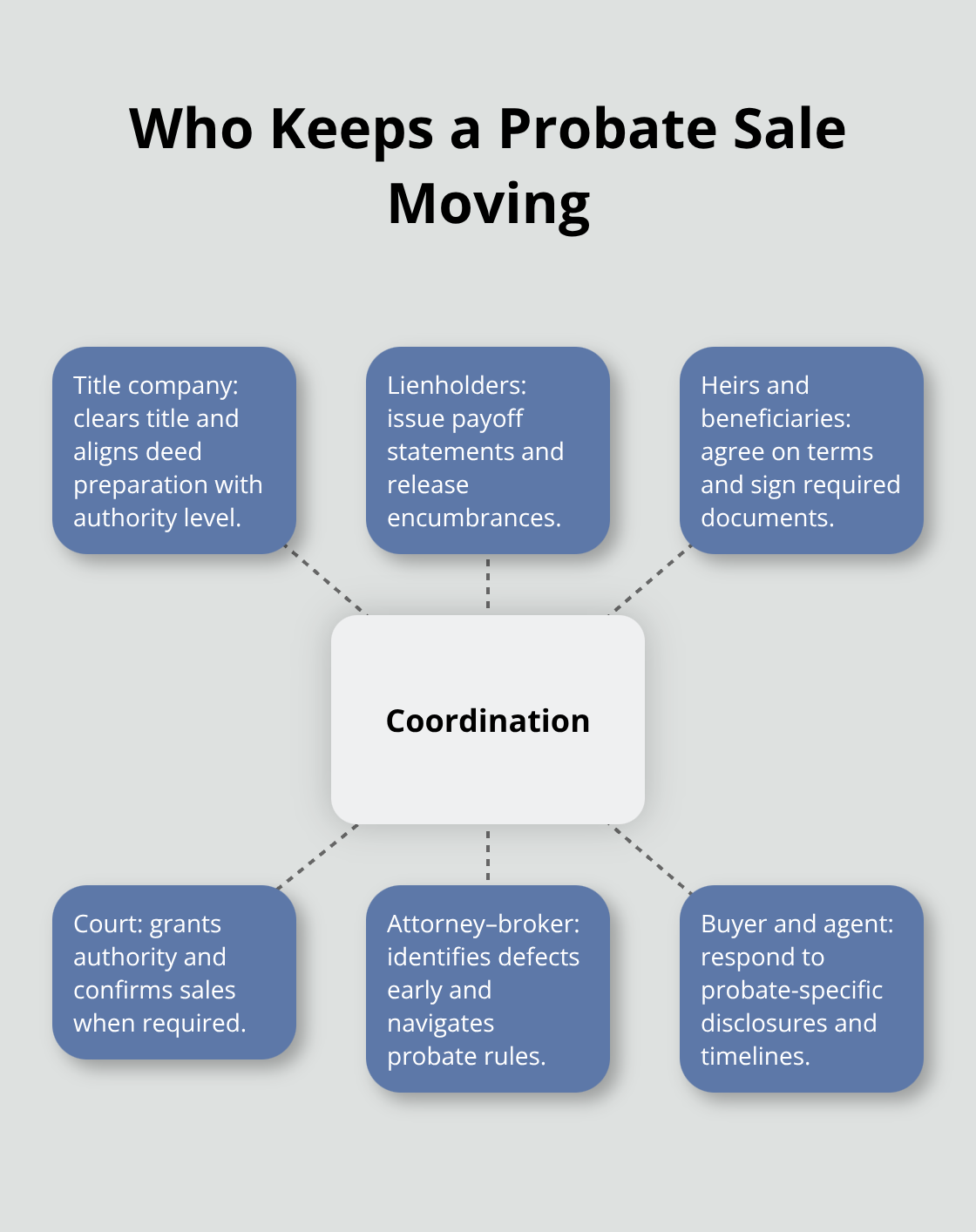
The creditor claims window (four months from the court’s initial order) means liquid funds must remain available during this period. Selling the property too early depletes resources needed to pay valid debts, creating surcharge liability for the executor and potentially invalidating the sale itself. Coordinating with multiple parties-title companies, lienholders, heirs, and the court-requires clear communication and written documentation at each step. As you move toward closing, the final accounting phase begins, where all sale proceeds flow through escrow to pay debts, taxes, court fees, and legal costs before distribution to beneficiaries.
What Slows Down Probate Closings and How to Prevent It
The Four-Month Creditor Claims Window
Probate closings stall when communication breaks down between the executor, title company, lienholders, heirs, and the court. The four-month creditor claims window creates a hard deadline that many executors underestimate, and missing it triggers cascading delays. If you accept an offer and close the sale before creditors file claims, you risk depleting liquid funds needed to pay valid debts. This creates surcharge liability for the executor personally, meaning they must cover the shortfall from their own pocket.
The solution is straightforward but often overlooked: maintain a separate reserve account from the moment the court appoints you. Calculate estimated debts, taxes, and court fees before accepting any offer, then hold that amount in liquid form until the four-month window closes. This protects you from personal liability and ensures the estate has funds available when creditors submit legitimate claims.
Addressing Liens Before You List
Title companies flag liens during the initial search, but many executors wait until an offer arrives to address them. This delays closing by 2–4 weeks because lienholders need time to prepare payoff statements and coordinate with escrow.
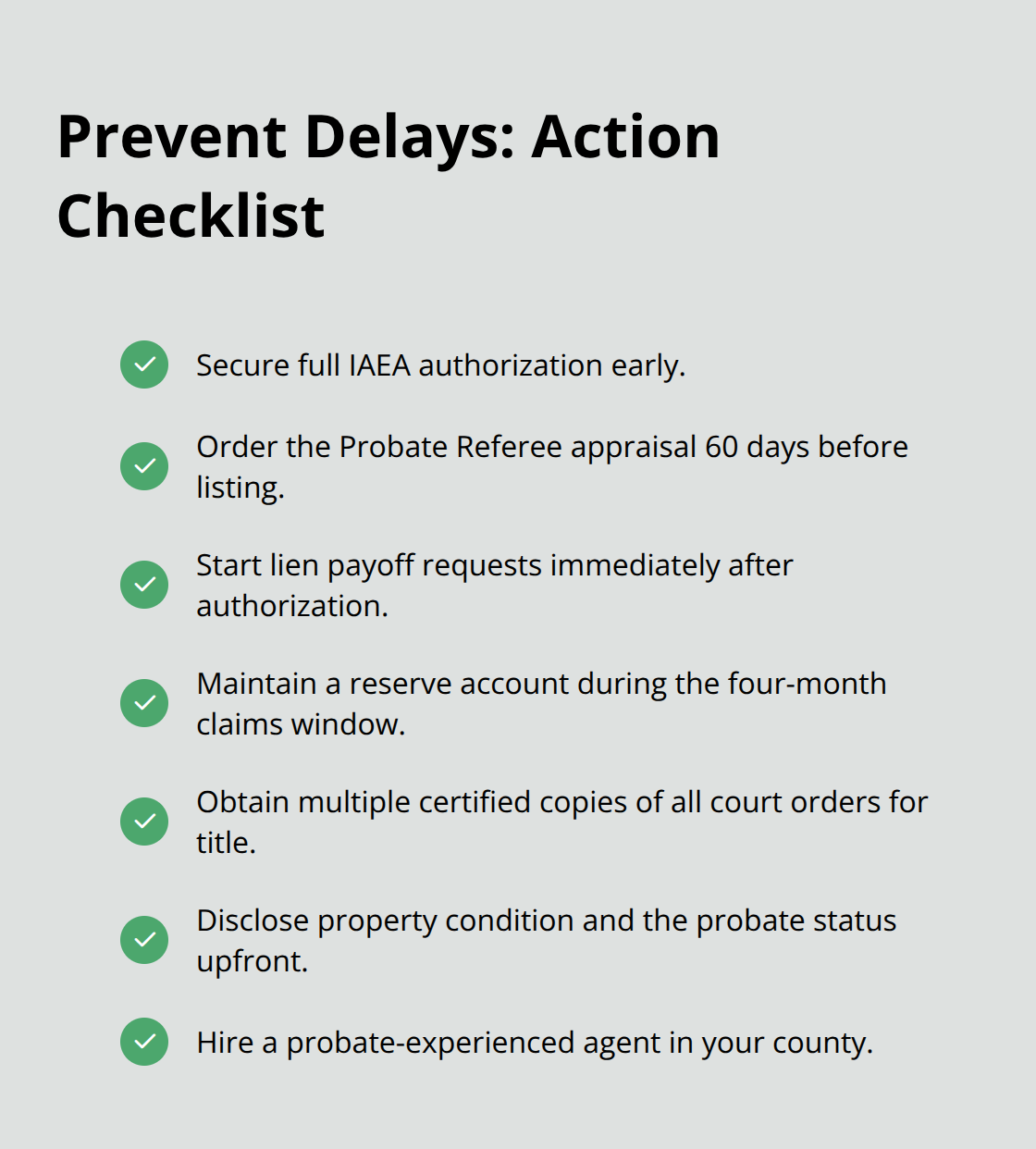
Start the lien clearance process immediately after obtaining court authorization to sell, even before you list the property.
Contact all lienholders in writing and request payoff amounts. Provide the title company with written confirmation that you will satisfy the liens from sale proceeds. California’s Garn-St. Germain Act protects heirs from due-on-sale clauses triggered simply by the owner’s death, so you can assume an existing mortgage, refinance, or sell and pay off the loan from proceeds without triggering acceleration.
Court Authorization and Title Defects
Missing or unclear court authorization creates the most common title defects. If your court order grants full Independent Administration of Estates Act authority, the title company can proceed without court confirmation. If limited authority applies, the title company will require a certified copy of the court confirmation order before recording the deed.
Request multiple certified copies of every court order from the clerk’s office and deliver them to your title company in writing before the buyer’s inspection period ends. Incomplete court orders or failure to provide written confirmation of authority level can delay closings 60+ days or longer.
Coordinating with Multiple Heirs
Coordinating with heirs requires written documentation at every step because verbal agreements disappear when disputes arise. If multiple heirs own the property, all must sign the deed, and any disagreement halts the closing. Establish a written agreement with all heirs before listing that addresses the sale price range, acceptable offers, and how proceeds will be distributed.
If heirs disagree on these points, resolve the conflict through the court before accepting an offer. This careful approach helps prevent last-minute surprises that can stretch a closing from nine months to 18 months or longer.
Uncovering and Addressing Complications Early
Unexpected probate complications like missing heirs, disputed wills, or out-of-state assets surface during title search or creditor notification, and addressing them early prevents delays that stretch closings to 18+ months. Probate referee appraisals sometimes come in lower than expected, forcing you to adjust pricing or accept reduced offers. Request the appraisal 60 days before you plan to list so you have time to adjust strategy.
Property defects discovered during buyer inspection can kill deals or force price reductions, so obtain a professional home inspection before listing and disclose all findings upfront. This transparency attracts serious buyers and prevents last-minute surprises. Real estate agents unfamiliar with probate rules often make costly mistakes, such as accepting contingent offers that the court will not approve or listing the property below appraised value. Hire an agent with documented probate transaction history in your specific county, as Los Angeles, Orange, Riverside, San Bernardino, and San Diego courts have different procedures and backlogs.
Final Thoughts
Probate real estate closing in SoCal demands attention to detail, clear communication, and coordination across multiple parties. The court’s involvement, the four-month creditor claims window, and the requirement for proper authorization create a process fundamentally different from standard home sales. Missing deadlines, underestimating debts, or failing to address liens early transforms a nine-month closing into an 18-month ordeal that drains the estate and frustrates heirs.
The most successful probate closings share common traits: the executor secures full court authorization upfront, obtains the probate referee appraisal before listing, maintains a reserve account for debts and taxes, and hires professionals with documented probate transaction history in their specific county. Title defects surface early when legal and real estate oversight combine, preventing surprises that derail closings. Transparent disclosure of the probate status and honest assessment of property condition attract serious buyers and reduce last-minute negotiations that delay closing.
If you are selling probate property or managing an estate with real estate involved, contact Law Offices of Roshni T. Desai for a free consultation. We offer flexible home or office visits and personalized guidance tailored to your situation. Starting with professional support now prevents costly mistakes and accelerates your path to closing.