




Probate Real Estate Coordination: Streamlining Property Sales in Probate
Selling property during probate feels like navigating a maze with multiple people pulling in different directions. Communication breaks down, timelines stretch, and costs climb.
We at Law Offices of Roshni T. Desai have seen how probate real estate coordination transforms this process. When your attorney, real estate professional, and other key players work as one team, property sales move faster and families face far less stress.
Why Probate Real Estate Sales Stall
Probate property sales stretch on for months longer than standard real estate transactions, and the root cause isn’t paperwork alone. Multiple professionals involved in probate cases rarely communicate on the same schedule or with aligned priorities. Your probate attorney focuses on court compliance and legal deadlines, while the real estate agent prioritizes marketing and buyer negotiations. The appraiser works independently, the tax accountant operates in their own lane, and nobody coordinates these moving parts into a cohesive timeline. This fragmentation creates bottlenecks that add three to six months to a property sale that should close in 60 to 90 days.
Miscommunication multiplies costs
When professionals don’t talk to each other, mistakes pile up fast. A real estate agent might price the property without understanding the tax implications, forcing a price adjustment after legal review. The attorney might approve a purchase agreement that the appraiser later flags as problematic, requiring renegotiation. Each miscommunication triggers another round of back-and-forth, and families end up paying multiple hourly rates while nothing moves forward. The estate also loses money during these delays through property maintenance costs, property taxes, insurance, and lost market opportunities if the real estate market shifts.
Court procedures demand perfect timing
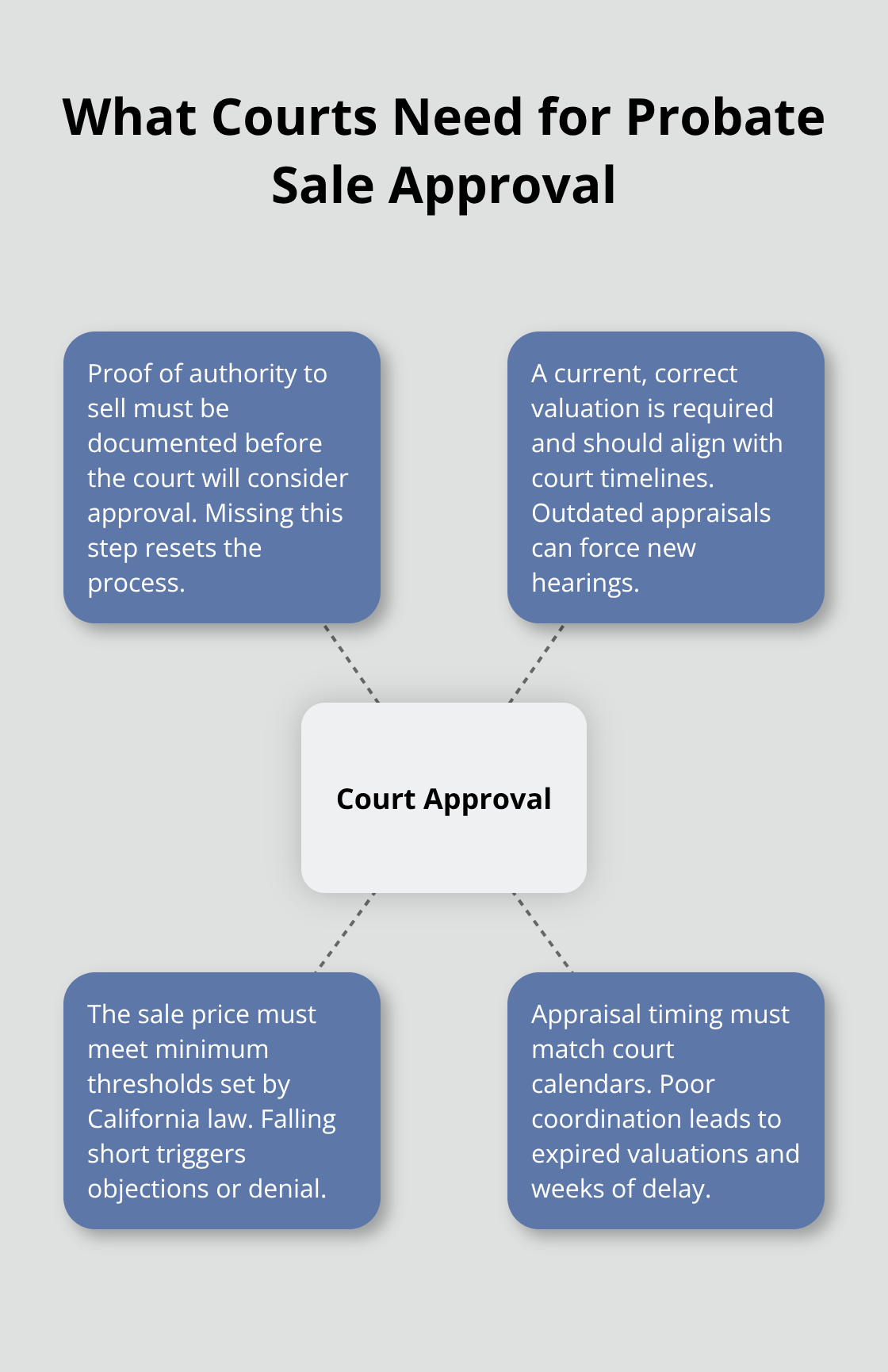
Probate courts require specific documentation before approving property sales, and missing one deadline means starting the approval process over. The court needs proof that the estate has proper authority to sell, that the property has been valued correctly, and that the sale price meets minimum thresholds set by California law. If the real estate professional and attorney don’t coordinate the appraisal timing with court calendars, you’ll wait weeks for a hearing slot only to discover the appraisal is outdated or incomplete.
Family disagreements halt progress
Emotional weight adds another layer to these delays. Family members disagree on selling price, whether to renovate before listing, or which agent to hire. These decisions can’t move forward without consensus, and without a clear coordinated plan, family meetings become circular arguments rather than productive discussions. When one professional (the attorney) handles legal matters while another (the real estate agent) handles the sale separately, family members receive conflicting advice about timing and strategy. This confusion hardens positions instead of moving toward resolution.
How Coordination Cuts Probate Timelines in Half
Place your attorney and real estate professional on the same team
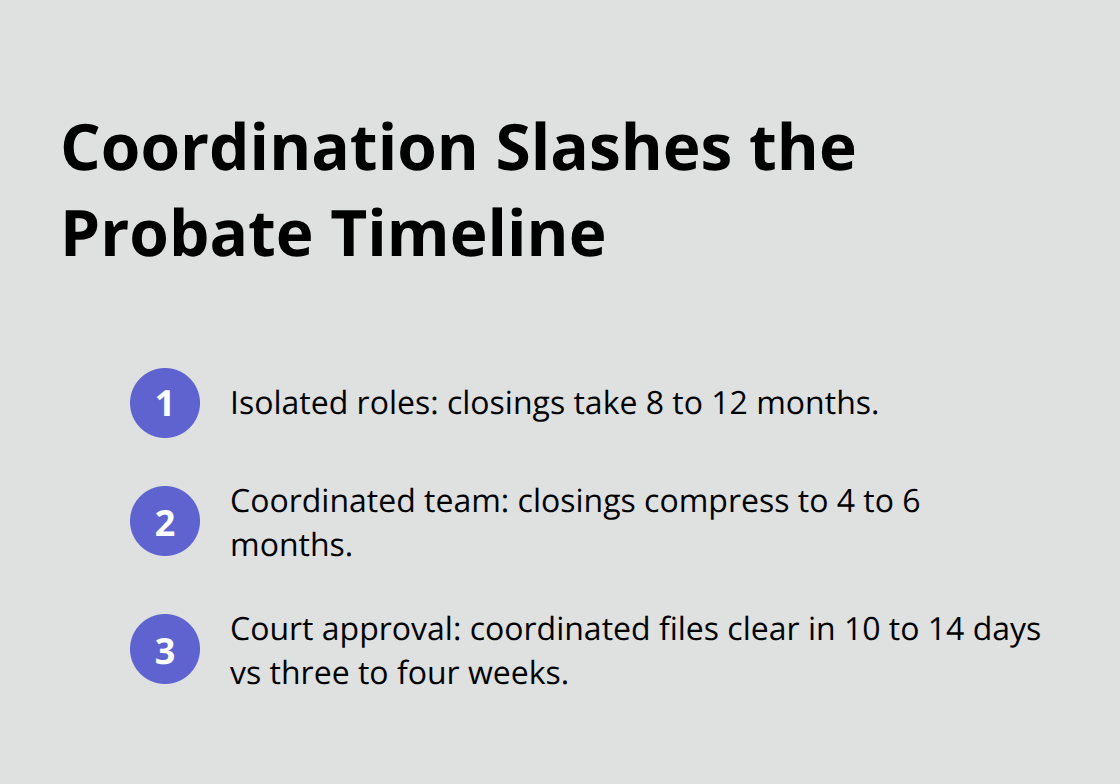
The single most effective way to accelerate probate property sales is to align your attorney and real estate professional from day one. This isn’t about hiring two people who happen to work on the same case-it’s about selecting professionals who actively communicate on shared timelines and aligned goals. When these roles work in isolation, probate sales routinely take 8 to 12 months. When they coordinate, the timeline compresses to 4 to 6 months. Ms. Desai holds both attorney and real estate licenses, which means probate property sales at Law Offices of Roshni T. Desai benefit from integrated legal and market strategy from the start. The appraiser, tax accountant, and other professionals then receive clear direction from a unified source rather than conflicting instructions from separate advisors.
Eliminate pricing delays that derail most probate sales
A real estate agent working without legal input often lists properties above or below market value, triggering court objections or requiring price corrections that restart negotiations. When the attorney and real estate professional work together, the property receives correct valuation the first time, court approval happens faster, and marketing reaches buyers with confidence. The court approval process itself accelerates because one team submits complete, coordinated documentation rather than piecing together materials from multiple sources. Instead of waiting three to four weeks for court review of incomplete or conflicting paperwork, coordinated sales typically clear court approval within 10 to 14 days.
Stop the financial drain of prolonged carrying costs
Families hemorrhage money on prolonged carrying costs-property taxes, insurance, maintenance, and utilities add up to hundreds of dollars monthly. Cutting even two months from the timeline saves thousands of dollars that would otherwise drain the estate. A coordinated team compresses the sale process, which means the property stops consuming resources and the family receives their inheritance faster. This financial impact alone justifies the investment in professional coordination.
Unified direction prevents professional conflicts
When multiple professionals work independently, they often pull in different directions. The attorney prioritizes court compliance while the real estate agent focuses on buyer negotiations. A coordinated approach aligns these priorities so that legal requirements and market strategy reinforce each other rather than compete. This unified direction also simplifies family decision-making because relatives receive consistent advice from professionals who have already aligned their recommendations.
These coordination benefits reveal why the next critical step involves identifying and avoiding the mistakes that still complicate probate property sales even when families think they’ve hired the right professionals.
Common Mistakes That Complicate Probate Property Sales
Hiring separate professionals without coordination
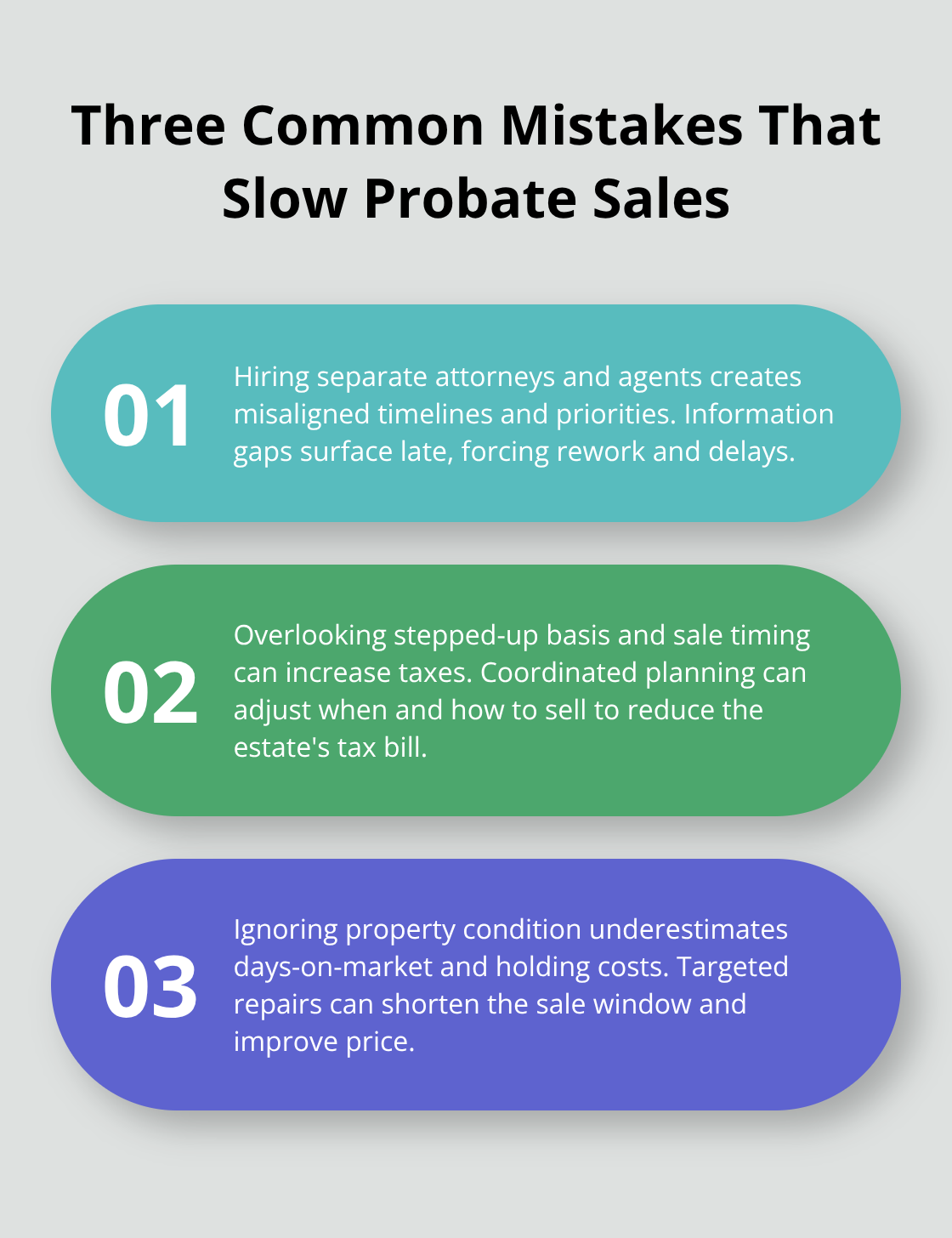
Families often hire separate attorneys and real estate agents, assuming that two independent professionals will deliver better results than one coordinated team. This assumption costs them thousands of dollars and months of unnecessary delays. When your probate attorney operates separately from your real estate agent, they work from different information, different timelines, and different priorities. The attorney reviews contracts for legal compliance while the agent negotiates terms focused on closing speed and buyer satisfaction. Neither professional has visibility into the other’s decisions until problems surface.
A real estate agent might accept a purchase offer that includes contingencies the probate court will later reject, forcing renegotiation that restarts the entire timeline. The attorney might request property repairs for legal liability reasons that the agent never mentioned to potential buyers, changing the property’s marketability and price. These coordination failures add weeks to sales that should close in two to three months.
Overlooking tax opportunities in property sales
Tax implications represent a massive blind spot in probate property sales. Many families focus entirely on selling the property quickly and overlook opportunities to reduce the estate’s tax burden. When a property sells for more than its stepped-up basis value at the time of death, the estate faces capital gains taxes on that difference. An accountant working independently from the real estate professional might miss the opportunity to structure the sale timing to minimize this tax hit.
If the estate sells a property in January versus December, the tax treatment changes based on when the stepped-up basis applies. A coordinated team catches these opportunities because the attorney and real estate professional discuss timing and structure together before listing. The difference translates to thousands of dollars in reduced taxes that families actually keep rather than pay to the IRS.
Underestimating how property condition affects sale speed
Property condition directly impacts sale speed in ways many families underestimate. A property requiring significant repairs might take four months to sell on the market compared to six weeks for a property in move-in condition. Families often assume they should sell properties as-is to avoid spending money on repairs, but this calculation ignores carrying costs.
Property taxes, insurance, and maintenance on a vacant probate property average 300 to 500 dollars monthly depending on the market. Spending 10,000 dollars on targeted repairs that reduce carrying time by two months saves the estate 600 to 1,000 dollars in carrying costs alone, plus the property typically sells for a higher price when presented well. A real estate professional working with an attorney coordinates this repair decision by calculating whether improvement costs are offset by faster sale timing and higher sale price, rather than making the decision based on emotion or assumption.
Final Thoughts
Probate real estate coordination transforms what families experience during property sales. Fragmented professional teams create delays that stretch timelines to 8 to 12 months, while coordinated teams compress sales to 4 to 6 months and eliminate thousands of dollars in carrying costs. The financial impact alone justifies prioritizing coordination, but the real benefit emerges when families stop fighting communication breakdowns and start moving forward together.
We at Law Offices of Roshni T. Desai have handled probate property sales across Southern California for over 25 years, and Ms. Desai’s dual licensure as both attorney and real estate professional means your estate receives integrated legal and market strategy from day one. This unified approach eliminates the coordination gaps that plague families working with separate professionals and consistently delivers faster timelines, lower costs, and smoother family experiences. Your family doesn’t need to accept the standard eight-month timeline as inevitable or navigate probate property sales alone.
Contact Law Offices of Roshni T. Desai for a free consultation to discuss how probate real estate coordination protects your assets and simplifies the probate process. We offer flexible home or office visits across Southern California and handle everything from wills and trusts to probate administration and property sales.