




Probate Real Estate Plan: Aligning Property Transfers With Probate Timelines
Selling property during probate requires careful coordination between real estate transactions and court deadlines. California probate typically takes 12–18 months, and property sales must align with this timeline to avoid costly delays.
We at Law Offices of Roshni T. Desai help families navigate this complex process by developing a probate real estate plan that keeps both timelines on track. This guide walks you through the key steps and documents needed to move your property sale forward efficiently.
How Probate Timelines Create Real Constraints on Property Sales
California probate takes 12 to 18 months from start to finish, according to the State Bar of California. This timeline isn’t flexible, and property sales must fit within it or you’ll face significant complications. The court controls when you can sell, how you can market the property, and when the sale can close. Most families underestimate how strictly these deadlines operate.
The Court Authorization Requirement Comes First
You cannot simply list a probate property whenever you want. The probate court must first authorize the sale through a formal petition, which typically takes 4 to 6 weeks just to get on the court calendar. Once the court approves the sale, you have a limited window to find a buyer, negotiate terms, and complete the transaction before the probate case moves into its final phases. Missing these windows doesn’t just delay the property sale-it extends the entire probate process, which keeps the estate in limbo and prevents beneficiaries from receiving their inheritance.
Why Court Approval Deadlines Matter More Than Market Timing
The real estate market operates on its own schedule, but probate doesn’t care about market conditions. If homes in your area sell quickly in spring but the court doesn’t authorize your sale until summer, you’ve already lost the best selling season. The probate calendar controls your timeline, not the local housing market. Property values shift significantly during the 12 to 18 month probate period. If the market declines and your sale authorization comes late, beneficiaries receive less from the estate. If the market appreciates but you’re locked into an earlier sales price, the estate misses gains.
Court approval deadlines also trigger confirmation hearings, where the judge must confirm the sale is reasonable. If you miss the confirmation hearing window, the sale falls apart and the entire process restarts. This creates a domino effect throughout probate administration.
How Real Estate Delays Ripple Through the Entire Probate Case
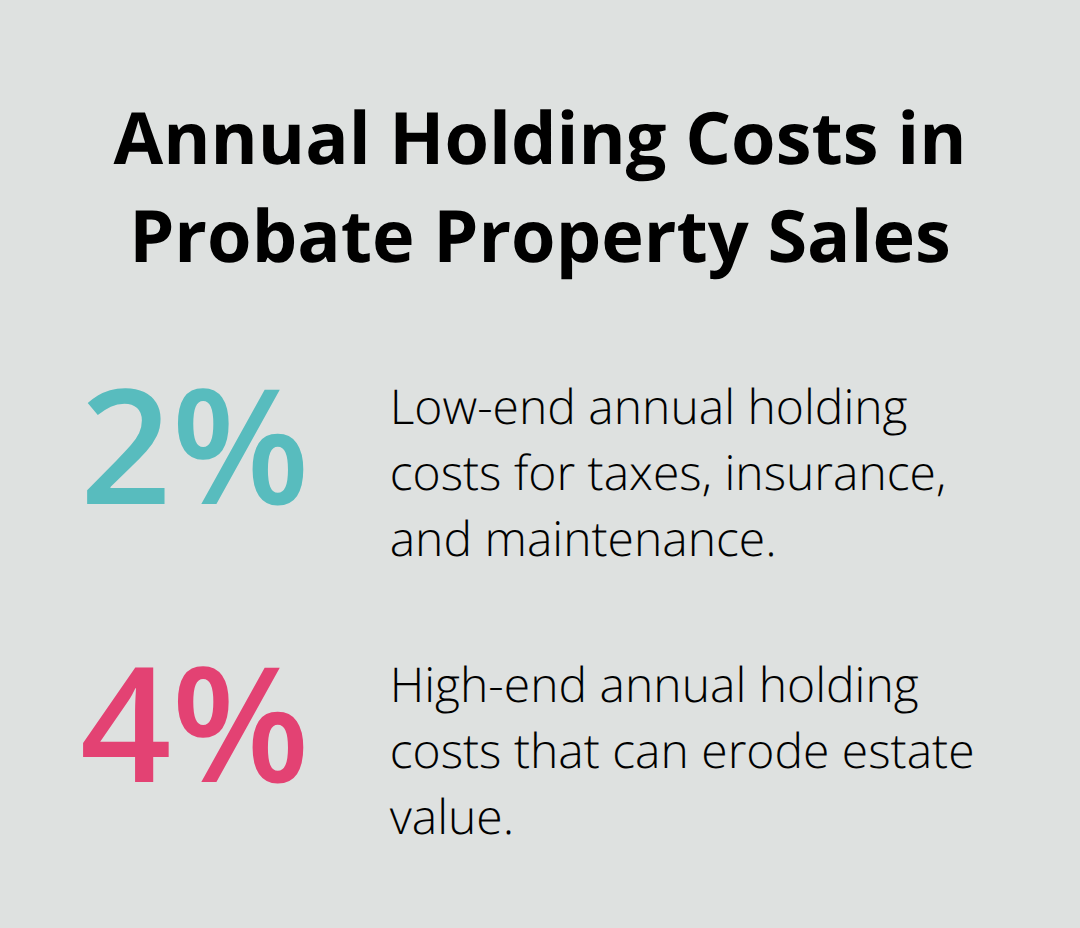
A stalled property sale doesn’t just delay that transaction-it blocks the entire probate process from closing. The court cannot distribute the estate to beneficiaries until all assets are accounted for and sold. If the property sale lingers, beneficiaries wait longer to receive their inheritance, and the estate continues accumulating costs like property taxes, insurance, and maintenance. These holding costs can consume 2 to 4 percent of the property’s value annually.
A delayed sale also prevents the executor from filing the final accounting and closing statement with the court. The estate remains open, which means ongoing legal fees and court filing costs. If disputes arise during a delayed sale-such as disagreements over the sale price or buyer terms-the probate case can extend months beyond the typical timeline. Executors sometimes make the mistake of waiting for the absolute best offer rather than accepting a reasonable offer that keeps the sale on schedule. This strategy usually backfires because holding costs and extended legal fees outweigh any price gain.
Understanding these constraints shapes how you approach the sale itself. The next section covers the specific strategies that keep property transfers aligned with court deadlines and prevent the cascading delays that derail probate administration.
Moving Your Property Sale Forward Before Court Approval
File the Petition Immediately After Probate Opens
Court authorization before listing is non-negotiable, and this step determines whether your sale stays on schedule or derails entirely. The petition for sale authority takes 4 to 6 weeks just to reach the court calendar, which means you cannot afford to wait until the property is market-ready to start the legal process. File the petition immediately after the executor is appointed and the probate case opens. This gives the court time to review your request while you prepare marketing materials and gather property documentation.
Many families make the mistake of thinking they can list the property first and handle court approval later, but this approach violates probate law and can result in the sale being invalidated. The court must authorize the sale before any public marketing occurs. Once authorization is granted, you typically have 90 days to complete the sale, though this window can vary based on local court rules and the judge’s discretion.
Understand the 90-Day Window and Market Conditions
If your area has a hot real estate market, the 90-day window may feel tight, so starting the petition early gives you maximum time to find a qualified buyer without rushing into a bad deal. Property values shift significantly during the 12 to 18 month probate period, and delays in obtaining court approval can cost beneficiaries thousands in lost appreciation or forced discounts.
Hire Professionals Who Know Probate Real Estate Rules
Finding professionals who understand probate real estate requirements separates successful sales from prolonged failures. Not all real estate agents have probate experience, and hiring the wrong agent can cost you months and thousands in unnecessary holding costs.
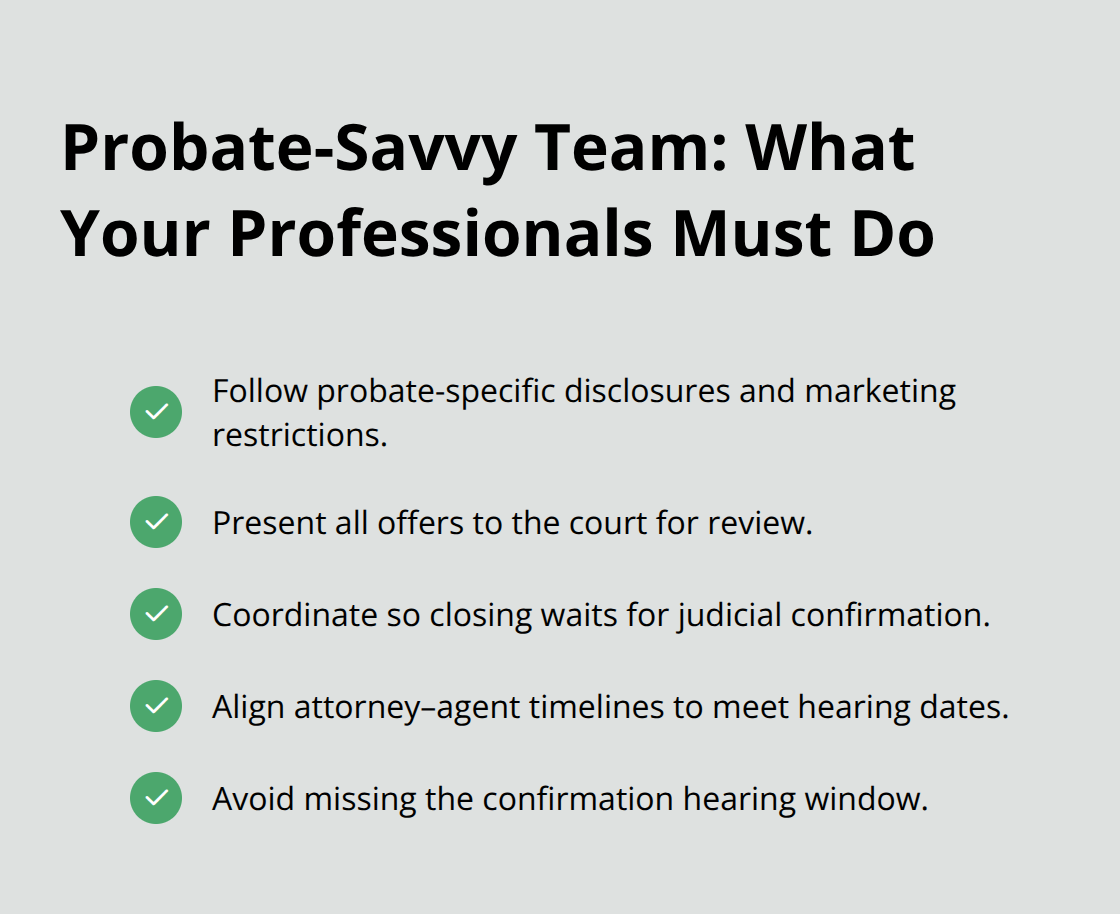
Probate property sales require specific disclosures, marketing restrictions, and offer procedures that differ significantly from standard residential sales.
Your agent must know that probate properties cannot be marketed as aggressively as non-probate homes, that all offers must be presented to the court, and that the sale cannot close until a judge confirms it. An agent unfamiliar with these rules may list the property incorrectly, attract unsuitable buyers, or miss the confirmation hearing deadline. Similarly, your attorney must coordinate closely with the real estate agent to maintain alignment throughout the process.
Price Competitively and Accept Reasonable Offers Promptly
Set realistic timelines by calculating backward from your probate deadlines rather than forward from market conditions. If the court’s confirmation hearing is scheduled for December, your sale must close by early November to allow time for final paperwork and court processing. Work with your agent to determine how long comparable properties take to sell in your market, then add 20 to 30 percent to that timeline as a buffer. If homes typically sell in 45 days, try 55 to 60 days for your probate property.
Price the property competitively from day one rather than starting high and reducing the price gradually. Overpriced properties in probate often languish on the market while holding costs accumulate (property taxes, insurance, and maintenance can consume 2 to 4 percent of the property’s value annually), and price reductions later signal weakness to potential buyers. Accept reasonable offers promptly instead of holding out for top dollar, because the cost of delay almost always exceeds any price premium you might gain.
Coordinate Legal and Real Estate Timelines
The confirmation hearing window creates a hard deadline that cannot be extended. If you miss the confirmation hearing, the sale falls apart and the entire process restarts, which extends probate administration and prevents beneficiaries from receiving their inheritance. This is why coordination between your attorney and real estate agent matters more than finding the absolute highest offer. An agent who understands probate timelines will prioritize closing on schedule over maximizing price, and this discipline keeps the entire estate administration moving forward.
With court authorization in place and realistic timelines established, the next step involves understanding the specific documents and court procedures that move your sale from approval to completion.
Key Documents and Steps Required for Probate Property Sales
The Petition for Sale Authority Sets Your Timeline in Motion
The petition for sale authority is your entry point into the probate court’s control over your property transaction, and filing it correctly determines whether your sale moves forward or stalls. This petition formally requests permission to sell the probate property and must include specific information about the property, its estimated value, the proposed sale terms, and why selling serves the estate’s best interests. California probate courts require detailed property descriptions, recent appraisals or comparable sales data, and documentation of any liens or encumbrances on the title.
The court uses this information to evaluate whether the proposed sale price is reasonable and whether the sale benefits beneficiaries. If your petition lacks required details, the court will reject it and force you to refile, which costs 4 to 6 additional weeks. Include a professional appraisal or a broker’s price opinion in your petition rather than relying on your own estimates, because judges scrutinize property valuations carefully.
Calendar Dates and Filing Deadlines Control Your Court Access
Courts in Los Angeles County, San Diego County, and Orange County process probate petitions on specific calendar dates, usually monthly, so timing your filing to meet the next available hearing date matters significantly. Once the court grants the petition, you receive an order authorizing sale, which gives you the legal right to proceed with marketing and accepting offers. This authorization window typically lasts 90 days, though local court rules and the judge’s discretion can adjust this timeframe.
The Order for Sale and Confirmation of Sale Represent Two Separate Approvals
The order for sale and confirmation of sale represent two separate court approvals that many families confuse, and this confusion causes missed deadlines that derail entire transactions. The order for sale authorizes you to market and negotiate, but the confirmation of sale is the final court approval that allows the transaction to close. After you accept an offer, you must return to court with a confirmation petition that presents the buyer’s terms, proof that the price is reasonable, and documentation that the sale process was conducted fairly.
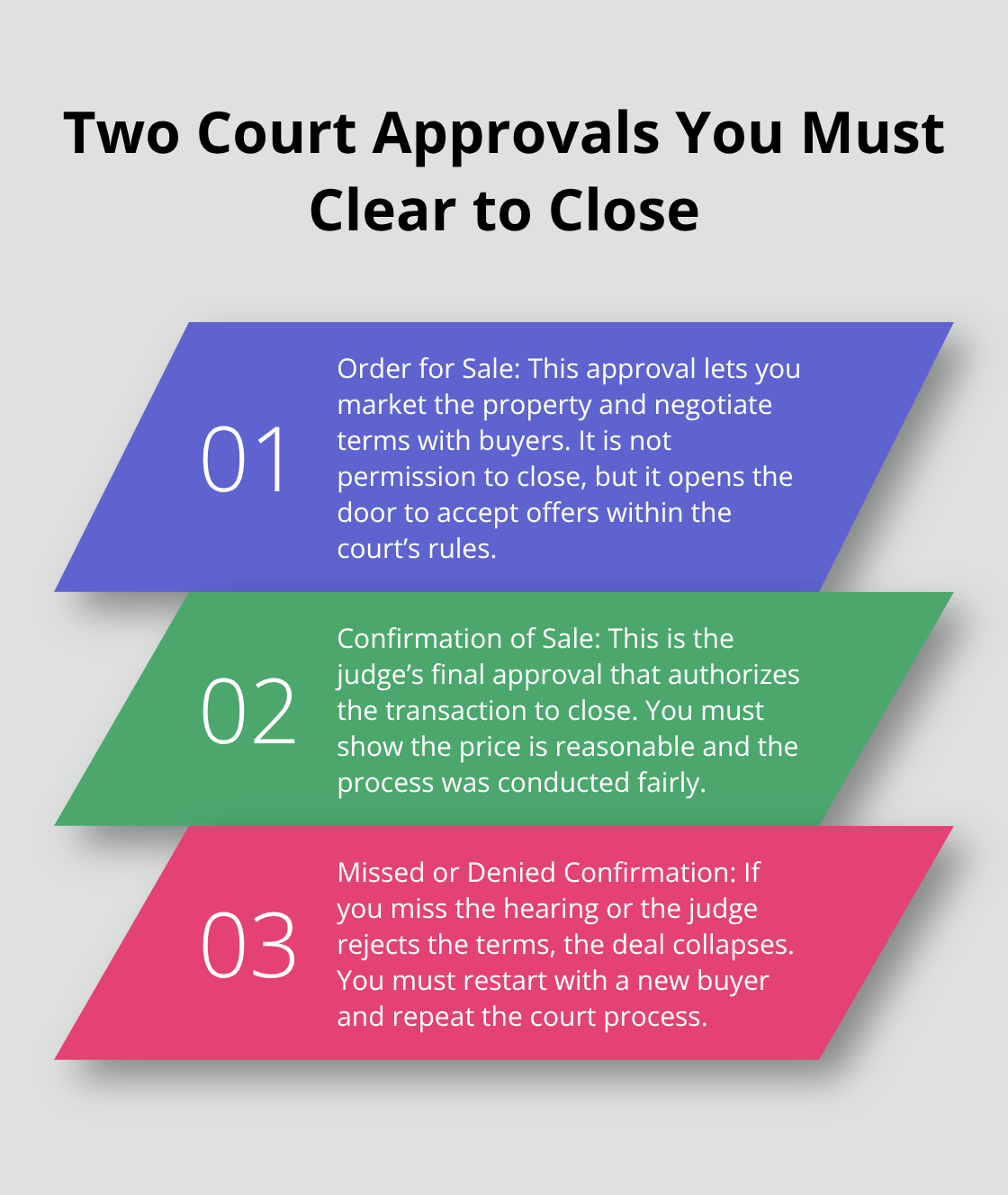
The confirmation hearing typically occurs 20 to 30 days after you file the petition, and this is your only opportunity to obtain judicial approval for those specific sale terms. If you miss the confirmation hearing or the judge rejects your sale terms, the entire transaction collapses and you restart the process with a new buyer.
Title Transfer and Deed Recording Must Follow Court Approval
Title transfer and deed recording must occur within the probate timeline after confirmation, which means your escrow and title company must understand probate requirements and coordinate closely with your attorney. The deed must identify the property correctly, reference the probate case number and court order, and include language confirming the sale was approved by judicial order. Recording delays or incorrect legal descriptions can prevent the sale from closing entirely, so working with professionals who understand probate recording requirements prevents costly errors that extend your timeline.
We at Law Offices of Roshni T. Desai leverage our dual licensure as an attorney and real estate professional to streamline documentation and prevent delays that typically plague probate property closings. This combination of legal and real estate credentials allows us to coordinate between courts, title companies, and buyers without the communication gaps that extend most probate transactions.
Final Thoughts
Selling property during probate demands precision, and misalignment between real estate timelines and court deadlines costs families thousands in holding expenses, extended legal fees, and missed market opportunities. The 12 to 18 month probate process in California operates on a fixed schedule that cannot accommodate delays, which is why you must develop a probate real estate plan before you list the property, not after. Court authorization windows, confirmation hearing deadlines, and title recording requirements create hard stops that derail transactions when missed, and these constraints make professional coordination non-negotiable.
A probate real estate plan that aligns property sales with court deadlines prevents the cascading delays that extend probate administration and keep beneficiaries waiting for their inheritance. This plan starts with filing your petition for sale authority immediately after probate opens, continues through realistic pricing and prompt offer acceptance, and concludes with coordinated legal and real estate execution that meets every court deadline. Holding costs alone (property taxes, insurance, and maintenance consuming 2 to 4 percent of property value annually) make speed a financial priority, not a convenience.
We at Law Offices of Roshni T. Desai coordinate property transfers and probate administration by combining legal knowledge with real estate credentials to eliminate communication gaps that typically extend probate closings. Our dual licensure allows us to work directly with courts, title companies, and buyers while maintaining alignment with probate timelines. Contact us for a free consultation to develop your probate real estate plan and keep your property sale on schedule.