




Probate visits SoCal homes: What to Expect During Property Inspections
Probate visits to Southern California homes often catch property owners off guard. The inspection process can feel overwhelming if you don’t know what to expect.
We at Law Offices of Roshni T. Desai help families navigate probate property inspections from start to finish. This guide walks you through each stage, common problems inspectors find, and how to prepare your home.
What Inspectors Actually Check in Probate Homes
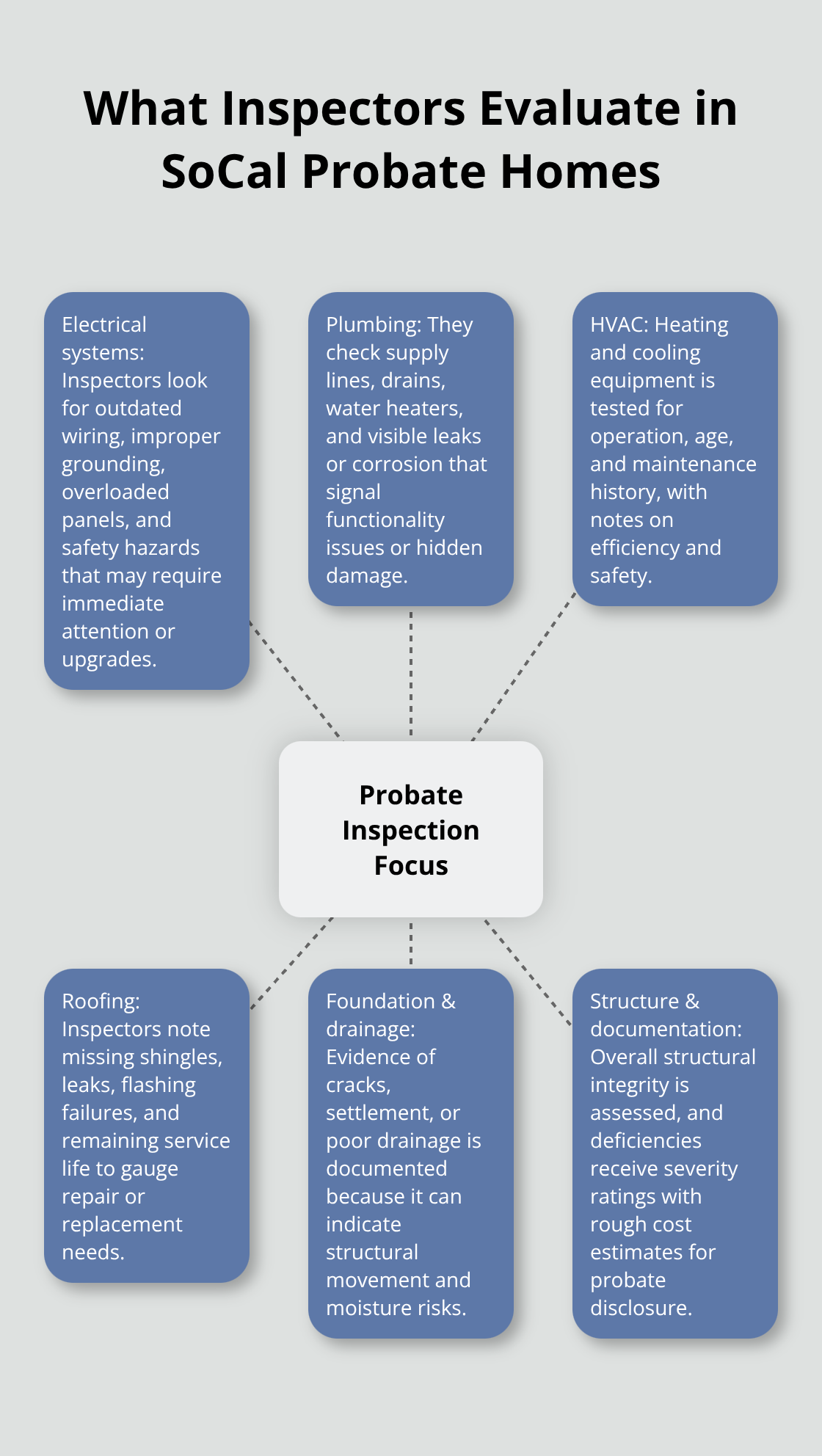
A probate property inspection in Southern California follows the same structural checklist as any standard home inspection, but the context matters more than you might think. The inspector examines electrical systems, plumbing, HVAC, roofing, foundation, drainage, and overall structural integrity while documenting deficiencies with severity ratings and rough cost estimates. What separates probate inspections from typical ones is the urgency and the executor’s responsibility to disclose findings to all interested parties.
How Long Inspections Take and What Access You Need
Most inspections in SoCal probate homes take between three to four hours depending on property size and accessibility. The inspector will need keys to all areas including the attic, crawlspaces, garage, and any locked rooms. If access is blocked or doors are locked, the inspection becomes incomplete, which weakens your position during negotiations or when filing court paperwork. The inspector photographs defects, takes measurements, and notes code compliance issues that could derail escrow later.
What Deficiencies Inspectors Find in SoCal Probate Properties
Common problems inspectors flag in Southern California probate homes include deferred maintenance from years of vacancy, aging electrical and plumbing systems, roof deterioration from weather exposure, foundation cracks, mold or water damage from irrigation or weather patterns, termite or dry rot damage, asbestos in older homes, and missing or non-functional smoke and carbon monoxide detectors. Many older SoCal properties also have unpermitted improvements or outdated electrical grounding that fail to meet current code standards.
Understanding Severity Ratings and What They Mean
Inspectors rate deficiencies as minor, moderate, or major. Minor issues are cosmetic or wear-and-tear items. Moderate issues affect functionality but aren’t immediately dangerous. Major issues pose safety risks or require expensive remediation. A major rating on electrical grounding, structural cracks, or roof leaks will scare off serious buyers unless you price the property accordingly. SoCal probate homes with major ratings on multiple systems often sell as-is at lower prices rather than fund repairs.
How the Inspection Report Functions in Probate Cases
The inspector’s report becomes a legal document in probate cases. It influences how much the estate can ask for the property and what repairs the executor must disclose to potential buyers. If the report uncovers significant issues, you’ll need to decide whether to repair items before sale, offer credits to buyers, or sell the property as-is with full transparency. The executor or administrator must keep this report accessible because California probate law requires disclosure of known defects to buyers. Courts and beneficiaries expect thorough documentation of the property’s condition. Dated photographs showing conditions like water stains, foundation issues, or exterior damage protect the executor from later claims that problems were hidden or ignored. If disputes arise among beneficiaries about property value or repair decisions, the inspection report and photographs provide objective evidence of what was actually wrong with the home. Understanding these findings sets the stage for your next critical decision: how to prepare the property itself for sale.
What Really Goes Wrong in SoCal Probate Properties
Deferred Maintenance Accelerates in Vacant Homes
Vacant Southern California homes deteriorate fast. When a property sits empty for months or years during probate, deferred maintenance transforms into expensive structural problems that tank buyer interest. Inspectors regularly find roofs that leak from missing shingles, foundation cracks that widen without attention, electrical systems with outdated wiring that fails modern code standards, and plumbing corroded from disuse. In SoCal’s dry climate, properties also suffer from irrigation damage that creates water intrusion behind walls and under foundations.
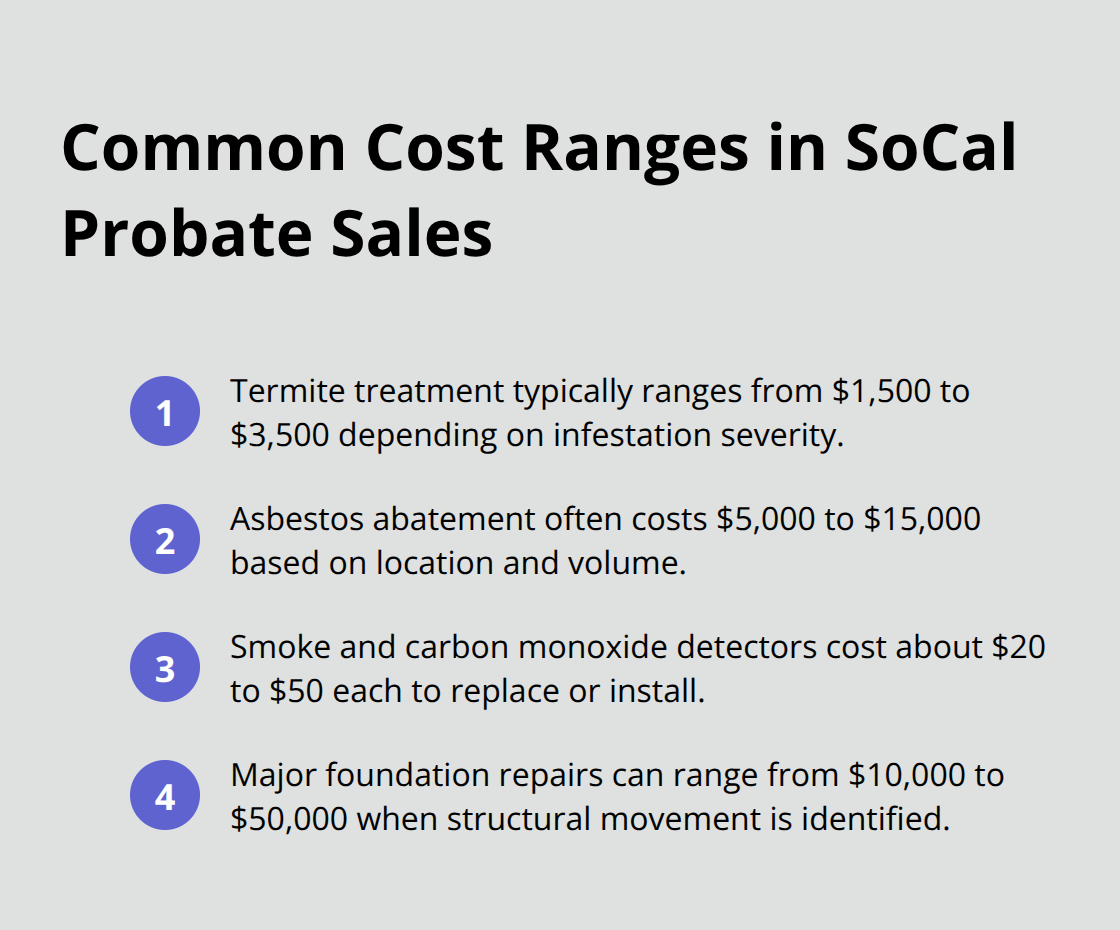
Termite damage appears frequently in older probate homes. California requires termite inspections and clearance certificates before most sales close, and treatment costs range from $1,500 to $3,500 depending on infestation severity. Mold growth thrives in moisture-prone areas even during dry months if drainage or HVAC systems failed. The longer a property remains vacant, the worse these issues become.
A roof that leaks for six months causes interior water damage that spreads to framing, insulation, and drywall. Electrical systems sit unused, and when power is restored, hidden faults emerge. Plumbing freezes or corrodes without water flow. SoCal probate homes with six months or more of vacancy almost always show multiple moderate or major deficiencies that require costly fixes before sale.
Title Problems and Environmental Hazards Complicate Sales
Unpermitted additions or renovations appear in many older SoCal properties. These work around the home without proper permits create code violations that buyers reject unless the executor obtains retroactive permits or offers significant price reductions. Lead paint in homes built before 1978 must be disclosed in California; federal law requires a ten-day inspection period for lead hazards, which delays closing and concerns modern buyers.
Asbestos in insulation, flooring, or roofing materials requires professional abatement before sale, costing $5,000 to $15,000 depending on location and volume. Radon gas, though less common in SoCal than northern regions, still requires testing in some areas and remediation if levels exceed safe thresholds. Missing or non-functional safety devices like smoke detectors and carbon monoxide detectors are code violations that inspectors flag immediately; these are cheap fixes at $20 to $50 each, but their absence signals neglect to buyers.
Foundation Issues Present the Costliest Surprises
Foundation problems present the most expensive challenges. Hairline cracks are cosmetic, but step cracks or horizontal cracks indicate structural movement that requires engineering evaluation and repair costs from $10,000 to $50,000. Drainage problems around the foundation create water pooling that leads to basement moisture and foundation deterioration.
SoCal’s clay soils expand and contract with seasonal water changes, putting stress on foundations that inspectors assess carefully. When the inspection report lists major foundation concerns, the executor faces a choice: fund expensive repairs that may exceed the property’s market value increase, or sell as-is at a significant discount. These decisions shape the entire sales strategy and require careful analysis of what repairs make financial sense versus which ones drain estate resources without proportional returns. Understanding these trade-offs positions executors to make informed decisions about disclosure requirements and sale structure, which directly impacts how buyers respond to the property and what timeline the sale will follow.
Getting Your Probate Property Ready for Inspection
Collect and Organize All Property Documents
The weeks before an inspection determine whether buyers see potential or problems. Start by gathering every document related to the property: permits for any work completed, warranties on appliances or systems, service contracts for HVAC maintenance, HOA documents if applicable, and any prior inspection reports. These materials answer buyer questions immediately and signal that the estate takes transparency seriously. If permits are missing for older improvements, contact the county assessor’s office now-obtaining retroactive permits costs $500 to $2,000 but prevents deal-killing surprises during escrow. California law requires disclosure of known defects, and having documentation proves you disclosed them rather than hiding problems. Store all papers in one folder and provide copies to the inspector and listing agent before the inspection date.
Provide Full Access to Every Area of the Home
Access to every area of the home matters more than cosmetic appearance. Remove obstacles blocking attic access, ensure crawlspace doors open freely, and clear garage areas so the inspector can examine foundations and HVAC equipment without delay. If windows are painted shut or locked, unlock them now-inspectors need to assess frames and operation. Arrange keys for any locked rooms, sheds, or gates and provide them to the listing agent ahead of time.
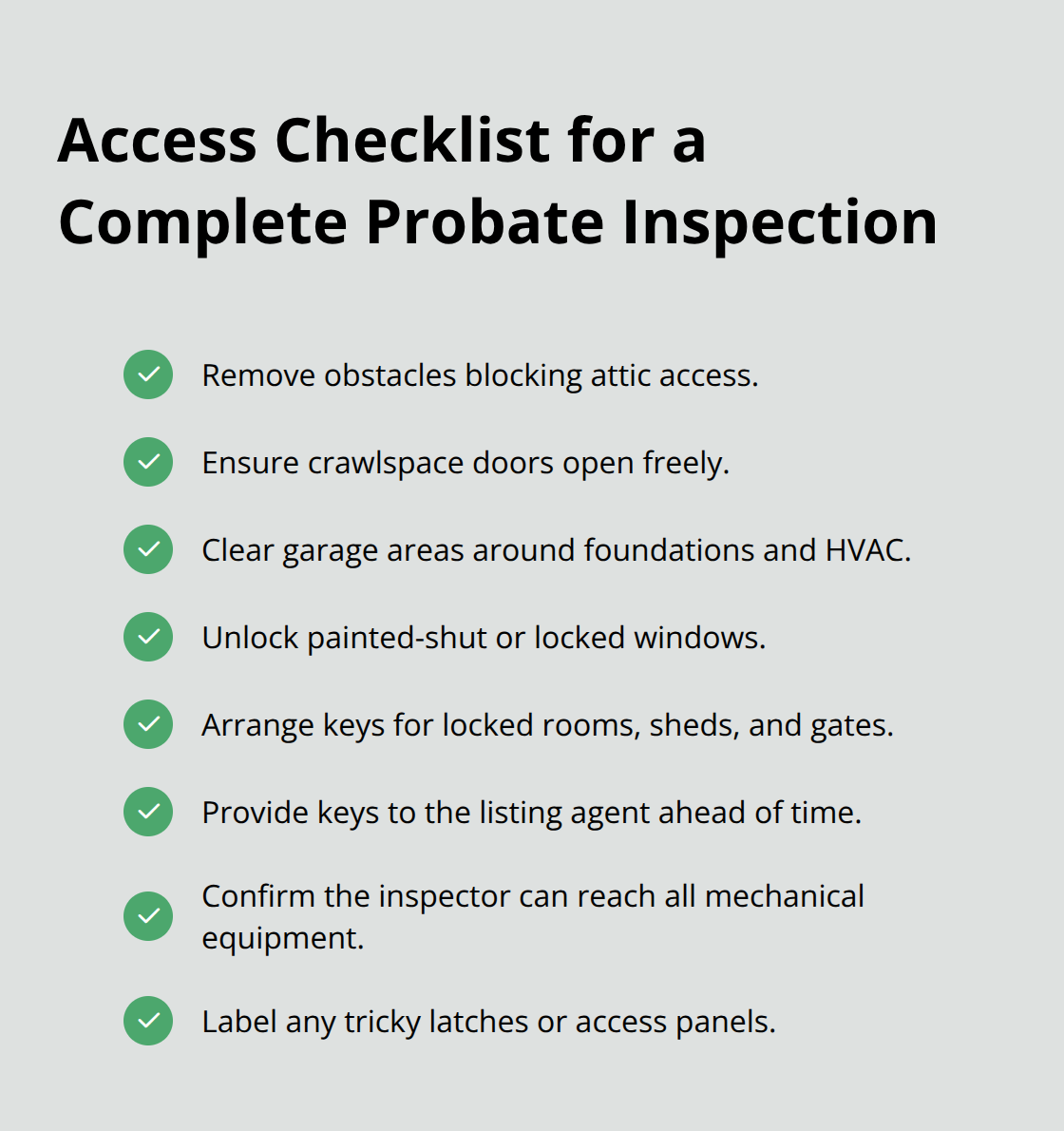
Incomplete inspections weaken your negotiating position because buyers assume you’re hiding something. An inspector who cannot access the attic will note it as a major concern, and buyers will demand price reductions to account for unknown roof or structural issues.
Clear Exterior Obstacles and Address Safety Hazards
SoCal probate homes often sit vacant for months, meaning doors stick, locks jam, and overgrown landscaping blocks access. Spend a Saturday clearing brush from the foundation perimeter, trim tree branches away from the roof, and ensure drainage areas around the property are visible. This takes four to six hours and costs nothing but effort, yet it prevents the inspector from making assumptions about hidden problems. Address obvious safety issues before inspection: replace missing smoke detectors and carbon monoxide detectors at $25 to $50 each, secure loose railings, and fix broken steps. These fixes take a day and cost under $300, but they prevent major severity ratings that scare off serious buyers.
Avoid Premature Repairs That Waste Estate Resources
Do not attempt expensive repairs like foundation work or roof replacement unless the inspection has already been completed and the executor has approved the expense. Repairs before inspection often waste estate money because the inspector will still identify the old damage underneath new work. Focus instead on access, documentation, and obvious safety items that inspectors flag as quick wins. These strategic choices protect the estate’s financial position while presenting the property in its most honest light to potential buyers.
Final Thoughts
Probate visits to SoCal homes reveal structural problems, code violations, and safety hazards that shape pricing and buyer decisions. The inspection report becomes your roadmap, showing which deficiencies demand immediate action for safety and code compliance versus which ones justify price reductions instead of repairs. Foundation cracks, electrical code violations, and missing safety devices require attention, while cosmetic wear and deferred maintenance often sell better as-is with transparent pricing than through expensive repairs that drain estate resources.
After the inspection, your next step depends on what the report reveals. If major issues emerge, consult with your listing agent about pricing strategy and whether an as-is sale makes financial sense. If moderate issues appear, decide which repairs offer the best return on investment. The probate process demands coordination between the executor, inspector, listing agent, potential buyers, and the court, with each step requiring clear communication and careful documentation.
We at Law Offices of Roshni T. Desai help executors navigate probate property inspections and estate administration. If you need guidance on probate property sales or have questions about your responsibilities as an executor, contact us for a free consultation at Law Offices of Roshni T. Desai.