




Real Estate Probate Navigation: Streamlining Property Steps in Probate
Selling inherited property through probate involves multiple steps, legal requirements, and financial considerations that can overwhelm families already dealing with loss.
At Law Offices of Roshni T. Desai, we guide clients through real estate probate navigation with practical strategies that reduce delays and protect your financial interests. This guide covers everything from property classification to tax implications, giving you the information needed to move forward confidently.
How Property Classification and Timeline Shape Your Probate Sale
Two Categories That Change Everything
Property classification during probate determines how quickly you can sell and what legal steps apply. Real estate falls into two categories: probate property and non-probate property. Probate property passes through the estate and requires court approval before sale, while non-probate property transfers directly to beneficiaries through mechanisms like joint tenancy, payable-on-death deeds, or living trusts. Understanding which category your inherited property falls into matters because it directly affects your timeline and costs.
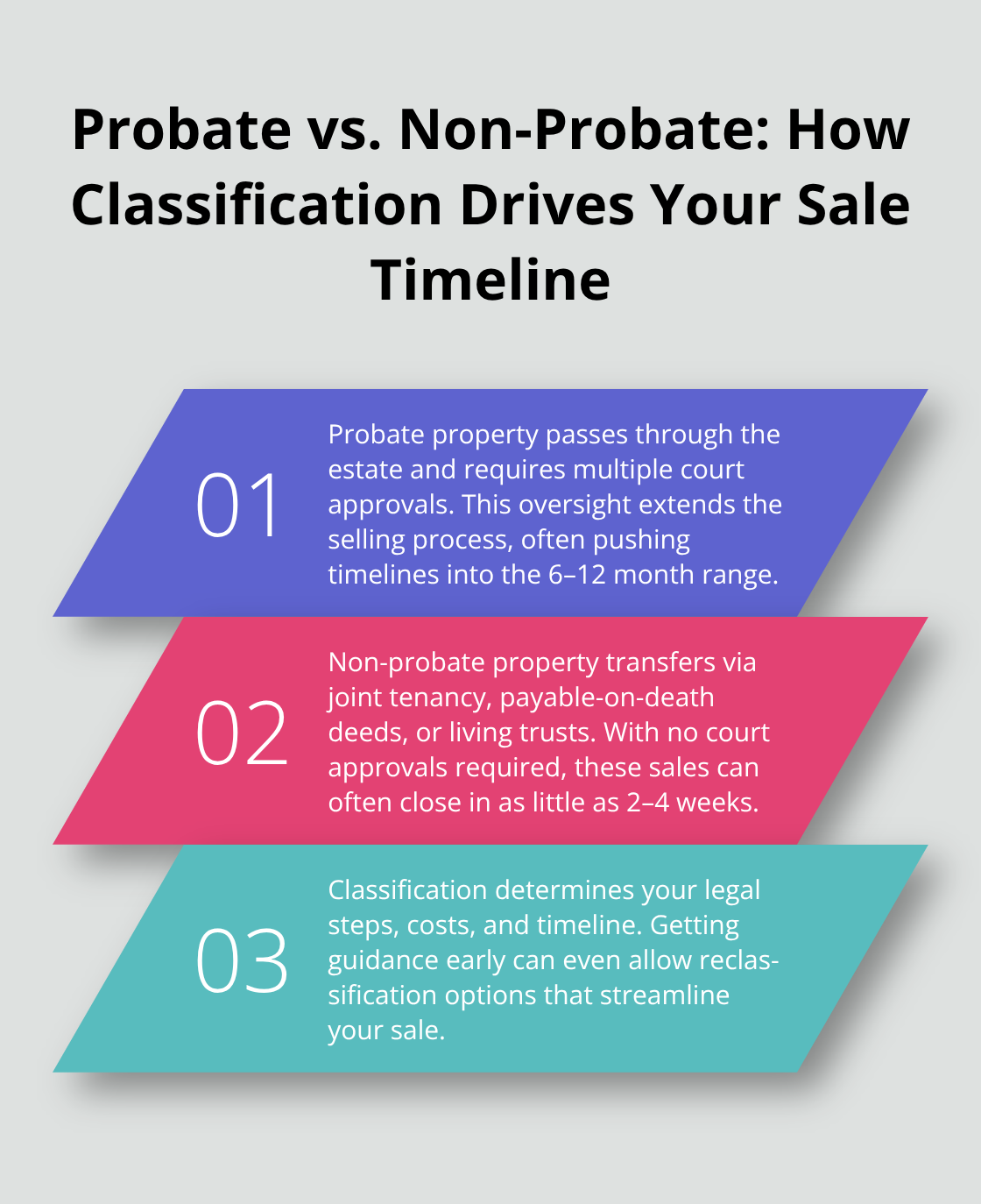
Properties in living trusts can sell within 2-4 weeks, while probate property typically takes 6-12 months from start to finish. The difference comes down to court involvement. Probate property needs a judge’s approval at multiple stages, while trust property bypasses this entirely. Most families don’t realize they have options to reclassify property before probate begins, which is why consulting with someone who understands both estate law and real estate transactions makes a tangible difference.
What the Calendar Actually Looks Like
The actual selling timeline depends heavily on local court backlogs and property condition. California probate courts currently process real estate sales in 6-9 months on average, though some counties move faster. You’ll need court approval to list the property, and another approval after you accept an offer. Between these approvals, inspections, appraisals, and financing contingencies add 30-60 days.
Where Delays Actually Originate
Delays happen frequently because inherited properties often need repairs, title issues require clearing, or multiple heirs disagree on selling strategy. Delays stem most often from incomplete documentation, unclear property titles, or disputes between beneficiaries rather than court schedules. Properties with liens, unpaid taxes, or outstanding mortgages create additional hurdles.
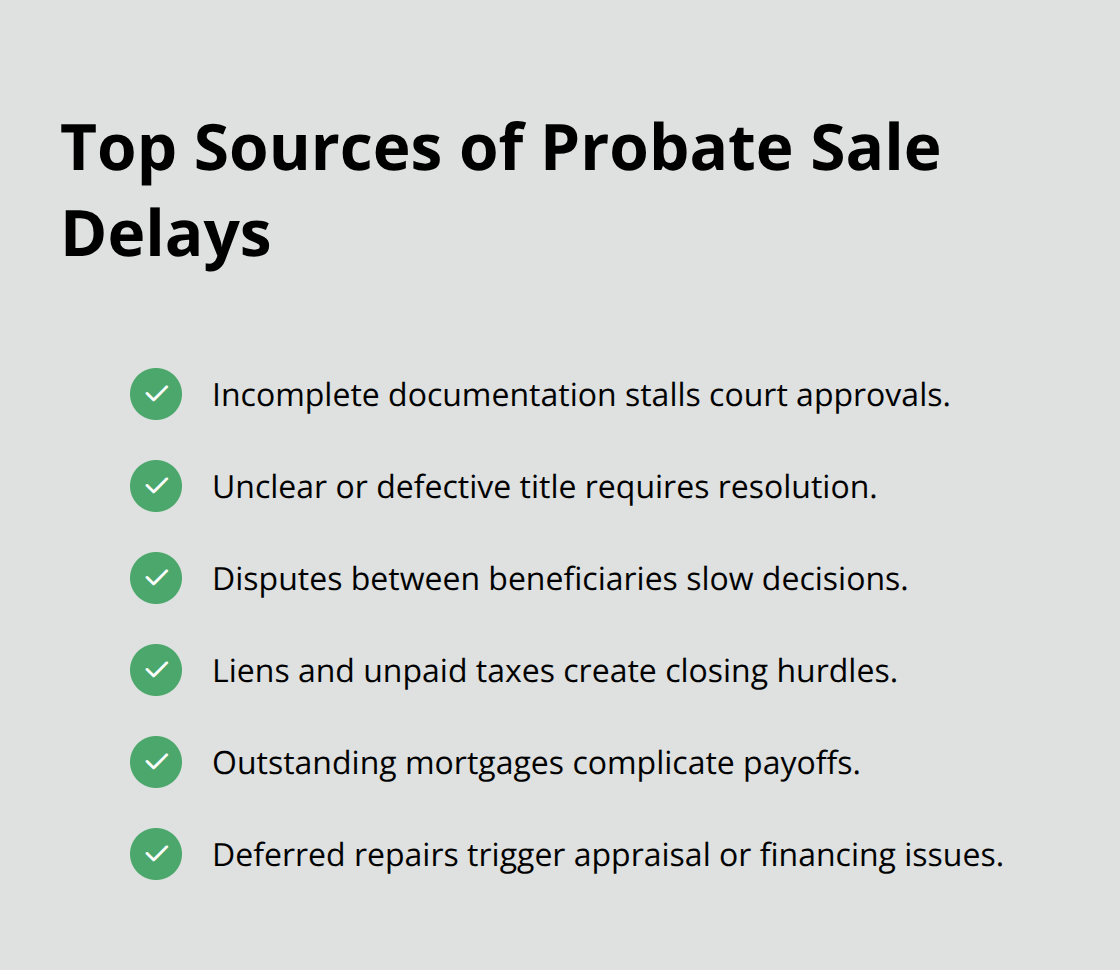
Fixing these problems before listing prevents costly delays later. One practical step is ordering a title search immediately after someone passes away, which costs $200-500 and reveals problems you can address upfront rather than discovering them when you have an offer on the table. Ms. Desai’s dual licensure as an attorney and real estate professional streamlines these property transactions to reduce costs and delays, making this process more manageable during an already difficult time.
Getting Property Sale-Ready Without Wasting Time
Inspection and Title Verification Form Your Foundation
Preparing inherited property for sale requires specific actions that reduce buyer hesitation and court delays. Start with a professional property inspection within two weeks of listing approval, which typically costs $300–500 and identifies structural or mechanical issues upfront. Buyers in probate sales are cautious, and inspection reports demonstrating the property’s actual condition accelerate negotiations. Next, address any outstanding property tax liens or mortgage balances immediately. California requires these debts paid from estate proceeds before distribution, and unresolved liens block title transfer entirely. Order a preliminary title report from a title company, which costs $100–200 and reveals exactly what needs clearing before closing.
These three steps-inspection, lien identification, and title verification-form the foundation for a clean sale without last-minute surprises derailing your transaction.
Cosmetic Work Wastes Money You Don’t Have to Spend
Cosmetic improvements matter less than people think in probate sales. Focus money on items that affect appraisal value: roof repairs, plumbing fixes, electrical updates, and heating system maintenance. Painting and landscaping typically don’t justify their cost during probate sales because buyers expect properties to need work. Instead, price the property competitively based on comparable sales in your area and the property’s actual condition.
Many heirs underprice because they want a quick sale, but this costs tens of thousands in lost equity. Get a professional appraisal before listing, which costs $400–600, and price within 5–10% of that figure. Real estate professionals experienced in probate transactions understand local market conditions and can price accurately without leaving money on the table.
Coordinating Legal and Sales Strategy Prevents Timeline Extensions
Communication gaps between legal and sales teams create unnecessary delays. When attorneys and real estate professionals operate separately, conflicting timelines and missed court deadlines happen frequently. Ms. Desai’s dual licensure as both attorney and real estate professional eliminates these gaps, meaning your property sells faster because legal requirements and market strategy align from day one rather than operating in separate tracks.
We at Law Offices of Roshni T. Desai work with qualified real estate professionals who navigate probate-specific challenges, including coordinating with courts and managing multiple heirs’ interests. This integrated approach reduces timeline extensions caused by miscommunication and keeps your sale moving forward.
With your property prepared and priced correctly, the next step involves understanding the tax consequences of your sale and what costs you’ll actually owe.
Tax Implications and Financial Considerations
The Stepped-Up Basis Advantage Most Heirs Miss
Inherited property carries a significant tax advantage that most families fail to recognize. When someone passes away, their property receives a stepped-up basis, meaning the property’s tax value resets to its fair market value on the date of death rather than the original purchase price. If your parent bought a house for $300,000 in 1995 and it’s worth $800,000 when they pass away in 2026, your cost basis becomes $800,000. You owe capital gains tax only on appreciation after that date, which saves most heirs thousands in taxes. The Internal Revenue Service allows this step-up for all inherited property that passes through probate or revocable trusts, making the timing of your sale less critical from a tax perspective than most people assume. If you sell within months of inheriting, you’ll owe minimal or zero capital gains tax because little appreciation occurs between the death date and sale date.
Direct Costs That Reduce Your Net Proceeds
Your actual costs extend beyond taxes and add up quickly. Probate real estate sales require payment for court filing fees, which typically range from $200–$500 depending on your county, plus attorney fees that average $2,000–$5,000 for handling the legal side of a probate sale in California. Real estate commissions consume 5–6% of the final sale price, meaning a $600,000 property costs $30,000–$36,000 in realtor fees. Property taxes, homeowners insurance, and maintenance costs continue accumulating while the property sits on the market during the 6–12 month probate timeline, adding another $300–$800 monthly depending on location and condition. Title insurance, required for closing, costs $500–$1,200.
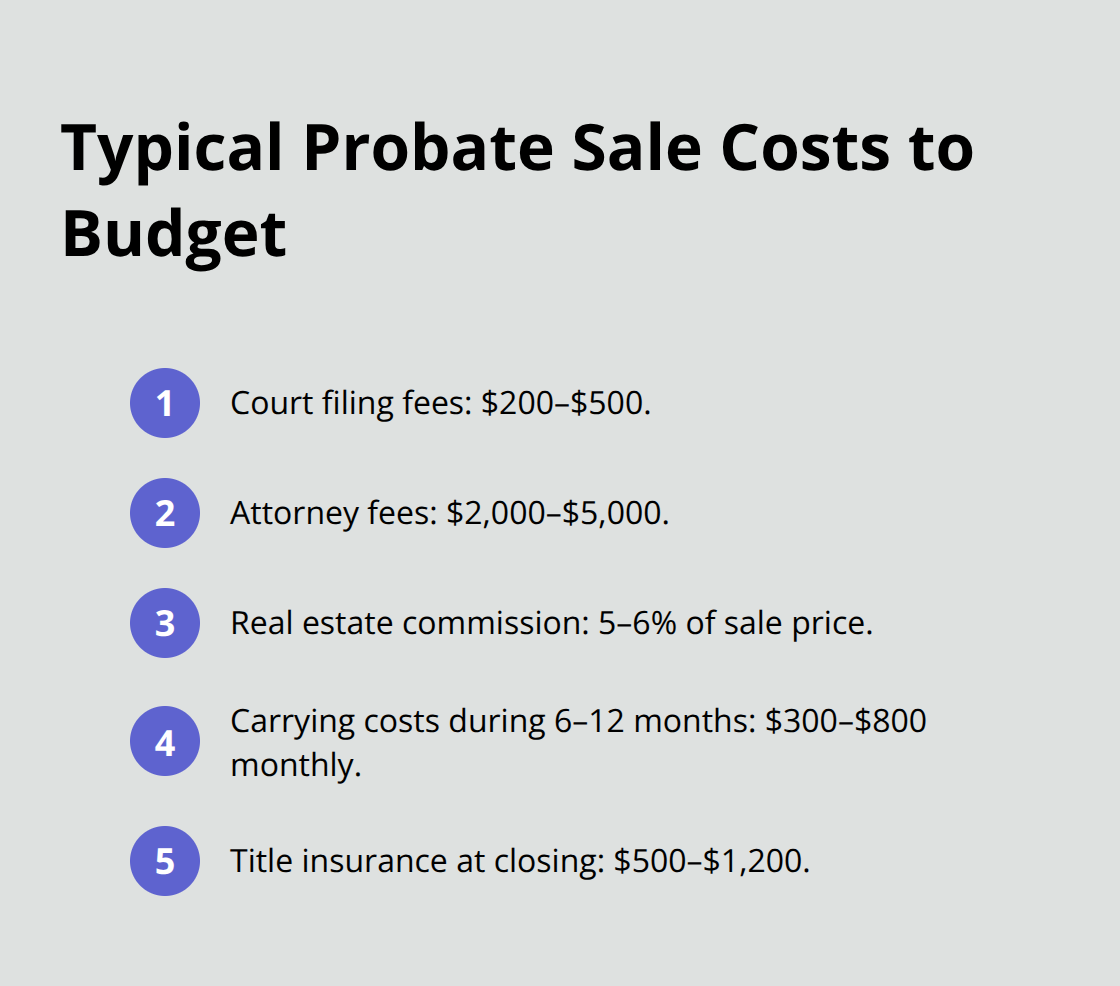
Many heirs overlook these carrying costs, but they significantly impact your net proceeds.
Smart Spending Prevents Costly Mistakes
To minimize expenses, address property problems before listing rather than after receiving an offer, since repairs negotiated post-offer typically cost 20–30% more. Order that title search immediately-the $200–$500 upfront investment prevents discovering a $15,000 lien problem after you’ve already accepted an offer. Skip cosmetic improvements and focus money only on items affecting the appraisal: roof repairs, foundation work, and major system updates. Pricing accurately within 5–10% of a professional appraisal prevents leaving tens of thousands on the table through underpricing, a common mistake when heirs prioritize speed over value. These three decisions-early title verification, strategic repairs, and accurate pricing-protect your equity far more effectively than rushing the process.
Final Thoughts
Real estate probate navigation requires you to balance legal requirements, financial strategy, and practical execution simultaneously. Property classification determines whether your sale takes 2-4 weeks or 6-12 months, making this your first critical decision. Addressing title issues and liens upfront costs $200-500 but prevents discovering $15,000 problems after you accept an offer, and the stepped-up basis advantage means most heirs owe minimal capital gains tax on inherited property.
Your actual costs-court fees, attorney fees, real estate commissions averaging 5-6%, and carrying costs-add up to thousands, which is why accurate pricing and strategic repairs protect far more equity than rushing the process. Professional guidance matters because probate real estate sales involve simultaneous legal and market considerations that operate on different timelines. When attorneys and real estate professionals work separately, communication gaps create delays and missed opportunities.
We at Law Offices of Roshni T. Desai combine legal and real estate knowledge to eliminate these gaps, meaning your property sells faster because court requirements and market strategy align from day one. Schedule a consultation to understand your specific property situation and timeline-we offer free consultations with flexible home or office visits across Southern California, covering wills, trusts, probate administration, and estate-related property sales. Contact Law Offices of Roshni T. Desai to discuss how our dual-licensed approach can streamline your probate real estate transaction and protect your financial interests.