




Revocable Trust Administration Tips: Flexibility with Strong Protections
A revocable trust gives you control over your assets during your lifetime while avoiding probate when you pass away. The flexibility to modify or dissolve your trust makes it a powerful planning tool for most people.
At Law Offices of Roshni T. Desai, we help clients master revocable trust administration tips that protect wealth and simplify estate transitions. This guide covers the practical steps you need to manage your trust effectively and keep your assets secure.
How Revocable Trusts Give You Real Control During Your Lifetime
Complete Command Over Your Assets
A revocable trust operates under your complete command while you’re alive. You create the trust, fund it with your assets, and retain the power to modify, amend, or completely dissolve it at any time. This isn’t theoretical flexibility-it’s practical control that adapts to your changing circumstances. If your financial situation shifts, family dynamics change, or you want to adjust how assets pass to beneficiaries, you can make those changes without court involvement or lengthy legal processes.
The IRS treats you as the owner of trust assets during your lifetime, meaning you report income on your personal tax return and maintain full decision-making authority over every asset inside the trust.
Bypassing Probate Without Losing Control
The real advantage emerges when you compare this to probate. Assets in a revocable trust bypass the probate process entirely when you pass away, which means your beneficiaries receive distributions faster and your family avoids public court proceedings where your financial details become part of the public record.
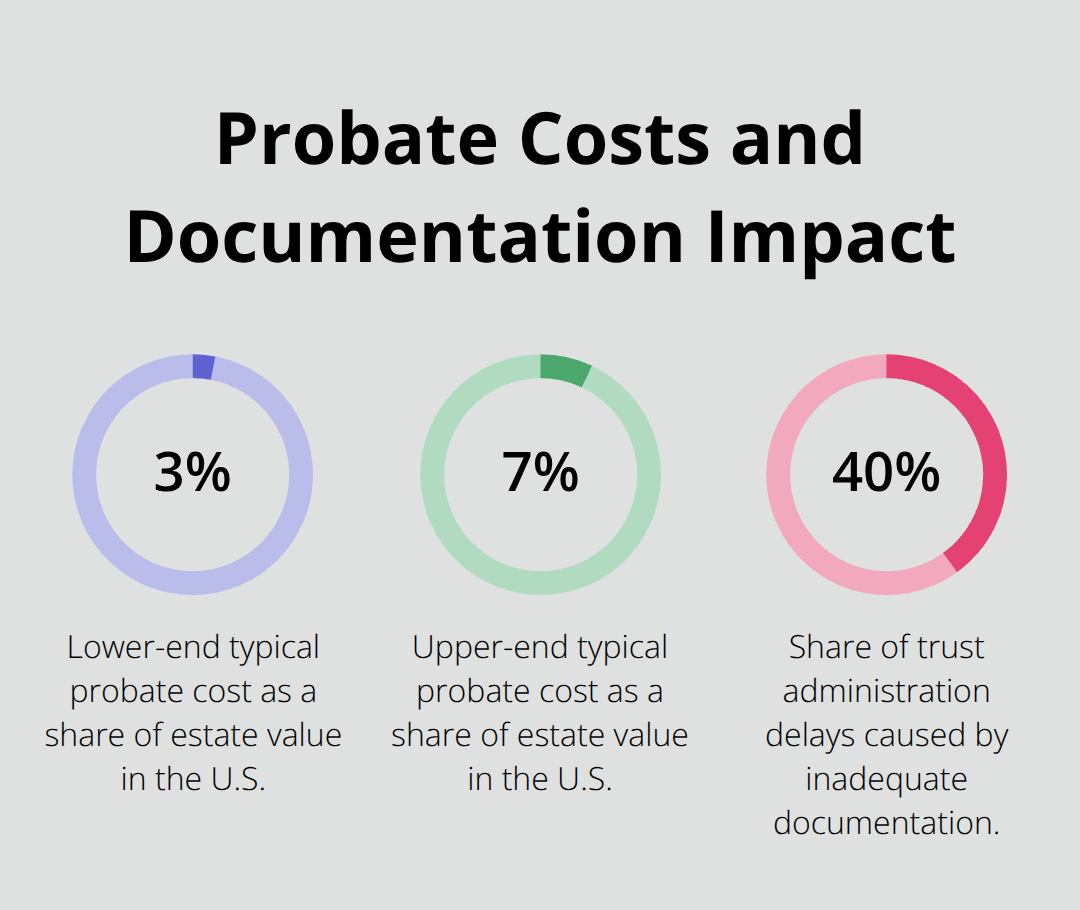
According to the American Bar Association, probate typically takes between 9 to 12 months and can cost 3 to 7 percent of your estate’s value in legal fees and court costs. A properly funded revocable trust eliminates these delays and expenses.
Managing Incapacity Without Court Intervention
You also maintain control without naming a guardian through the court system if you become incapacitated-your successor trustee simply steps in and manages assets according to your instructions. This continuity prevents the costly and time-consuming conservatorship process that would otherwise require court oversight.
The combination of complete lifetime control, probate avoidance, and incapacity planning makes revocable trusts the preferred structure for most people managing substantial assets or property in multiple states. Understanding how to properly fund and administer your trust determines whether you actually receive these protections, which is why the next section covers the specific administrative tasks that keep your trust functioning as intended.
Key Administrative Tasks for Trust Management
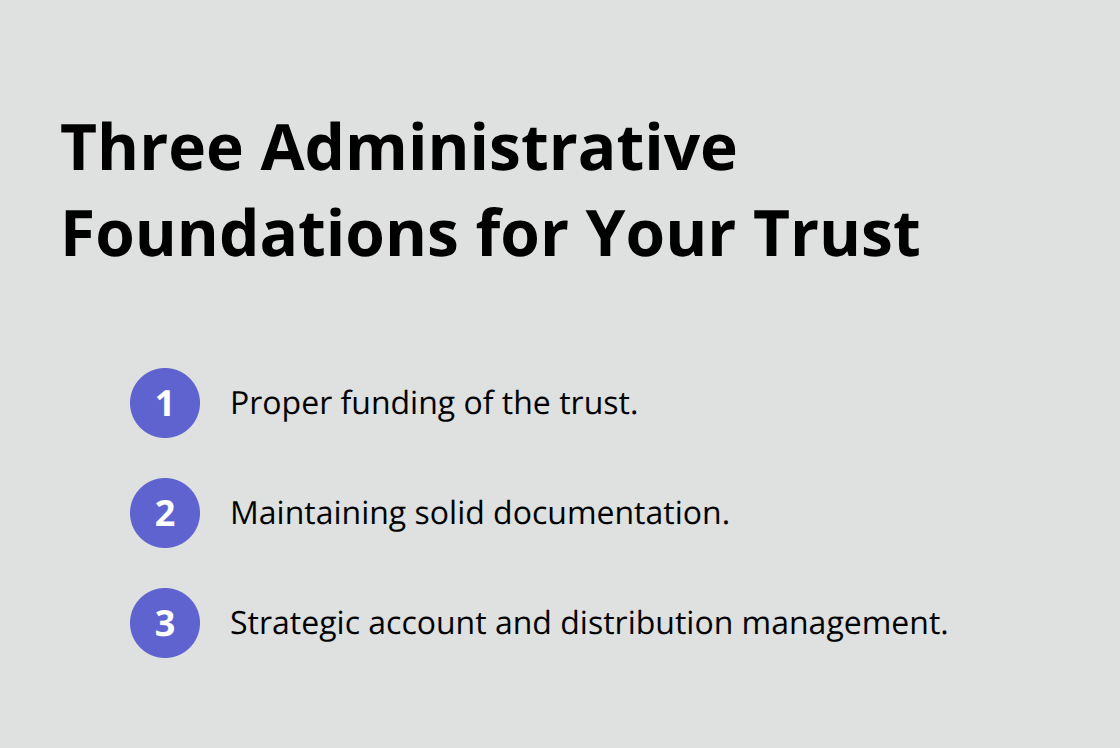
Revocable trusts only deliver their promised benefits when you handle three specific administrative tasks correctly. Most people create a trust but then fail at the execution, which leaves them vulnerable to probate anyway or creates confusion for their successors. We at Law Offices of Roshni T. Desai observe this constantly-clients with solid trust documents that never achieve their intended purpose because the administrative groundwork wasn’t completed. The good news is that these three tasks are straightforward once you understand what matters.
Funding Your Trust with the Right Assets
Funding means transferring ownership of your assets into the trust’s name. This is non-negotiable. A trust sitting empty provides zero protection. You need to retitle bank accounts, investment accounts, and real estate deeds into the trust. Many people skip this step thinking the trust document itself handles everything, then wonder why probate still applies to their property. For real estate specifically, you’ll record a new deed with the county recorder’s office listing the trust as the owner. This typically costs under $200 and takes a few weeks. Bank and investment accounts require you to contact each institution and request a retitling form-most do this for free. The critical detail is using your trust’s exact legal name and trustee designation on every account. A mismatch between your trust document and how accounts are titled creates problems your successors will face later.
Maintaining Documentation That Actually Matters
Track three specific things: what assets sit in the trust, what distributions you’ve made, and what amendments you’ve created. A simple spreadsheet listing each asset with its current value, account number, and institution name takes two hours to create and saves your successor trustee weeks of detective work. When you amend your trust-and most people do over their lifetime-keep the original document plus all amendments together in one folder. Distributions matter less during your lifetime since you control everything, but once you pass away, your successor needs clear records of what came out of the trust and when. A basic notebook or digital file showing dates and amounts prevents disputes among beneficiaries. The National Association of Estate Planners reports that inadequate documentation causes 40 percent of trust administration delays, which directly impacts how quickly your family receives their inheritance.
Managing Accounts and Distributions Strategically
While you’re alive, treat trust accounts like any other account-you deposit income, pay bills, and direct investments as you normally would. The difference emerges when you’re incapacitated or after you pass away. Your successor trustee needs to know which accounts hold liquid funds for immediate expenses versus which accounts contain long-term investments meant for specific beneficiaries. Some people create separate accounts for different purposes (one for income generation, one for emergency reserves, one for specific bequests). This clarity prevents your successor from accidentally depleting funds needed for estate taxes or ongoing household expenses. After your death, distributions follow your trust instructions, but the timing matters. Your successor can begin distributions immediately for some beneficiaries while holding other assets in continued trust if your instructions allow it. This flexibility actually requires detailed documentation so everyone knows what’s happening and why.
These three administrative foundations-proper funding, solid documentation, and strategic account management-transform your trust from a piece of paper into a functioning wealth transfer system. The next section addresses how to protect what you’ve built by minimizing tax obligations and shielding assets from creditors.
Protecting Your Trust and Assets
A funded revocable trust with solid documentation means nothing if taxes consume half your estate or creditors attack your assets after death. These protections require deliberate action during your lifetime, not wishful thinking in your trust document.
Managing Tax Obligations Strategically
Federal estate taxes apply to estates exceeding $13.61 million in 2024 according to the IRS, but state-level taxes hit much lower thresholds. California imposes no state estate tax, which simplifies planning significantly for most clients. The real threat for middle-income families isn’t federal taxes but rather the erosion that happens when your successor trustee lacks clear instructions on which assets to liquidate for taxes versus which to preserve intact.
Your revocable trust itself doesn’t reduce taxes, but it creates the framework for tax-smart distributions. If your trust allows your successor trustee to distribute appreciated assets in-kind rather than forcing liquidation at unfavorable times, you preserve wealth that would otherwise vanish to capital gains taxes. A beneficiary who receives a $500,000 investment portfolio inside the trust avoids the immediate tax hit of selling assets to pay estate obligations.
You can direct your trustee to use specific assets for tax payments, protecting high-growth investments meant for long-term beneficiaries. This flexibility matters enormously when your estate faces substantial tax bills.
Defending Against Creditor Claims
Creditor protection works differently for revocable trusts than irrevocable ones, but the distinction matters practically. During your lifetime, creditors can reach trust assets because you retain full control-your revocable status means you’re still the legal owner. After your death, however, creditors face strict deadlines and procedures to make claims against your estate.
Your successor trustee can reject invalid claims and defend your beneficiaries against aggressive creditors. This protection only works if your trust was properly funded before your death and your trustee understands the probate code timelines. Creditors typically have four months from trust notification to file valid claims. Many families lose this protection accidentally when they fail to notify creditors properly or when they distribute assets before the creditor period expires.
Wait the full creditor period before final distributions, even though it delays your beneficiaries slightly. The cost of defending against a late creditor claim far exceeds the inconvenience of waiting.
Planning for Incapacity and Succession
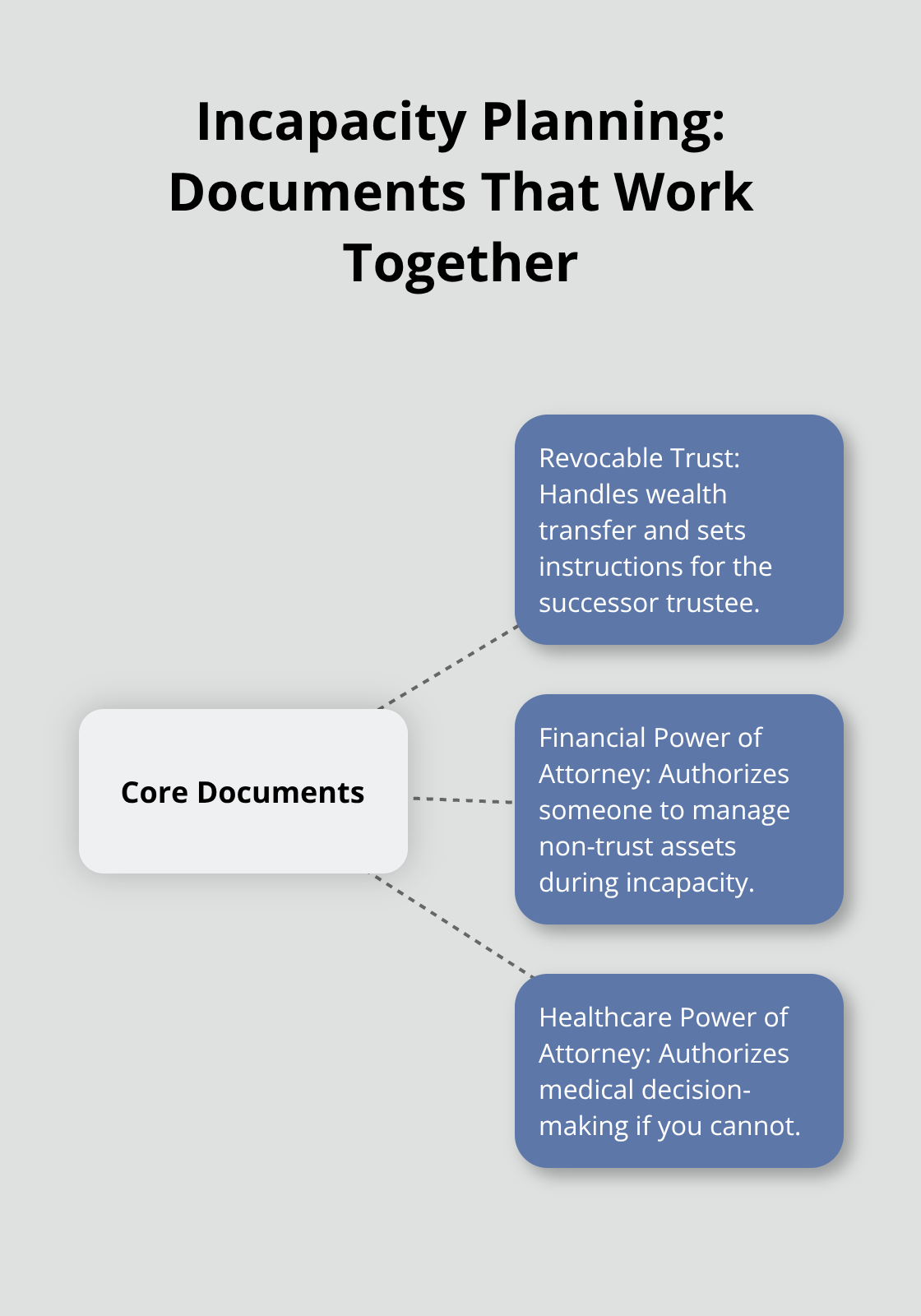
Incapacity planning rounds out your protection strategy, and this is where most people leave dangerous gaps. Your revocable trust names a successor trustee, but what happens during the gap between your incapacity and death? You need a separate power of attorney document that authorizes someone to manage assets outside your trust and to handle affairs your trustee cannot address.
Your healthcare power of attorney is equally critical-it authorizes someone to make medical decisions if you cannot, separate from your financial trustee. These three documents work together: your revocable trust handles wealth transfer, your financial power of attorney covers incapacity management, and your healthcare power of attorney addresses medical decisions. Without all three, your family faces costly conservatorship proceedings that put a judge in charge of your affairs.
The successor trustee you name must understand their specific obligations. They will manage your trust according to your written instructions, not their personal preferences. Some families choose a professional corporate trustee alongside a family member, splitting responsibilities so one person doesn’t carry the entire burden. This costs money upfront but prevents family conflict and protects complex estates.
Customizing Instructions for Your Successor Trustee
Your instructions to your successor trustee should address specific scenarios: what happens if a beneficiary becomes disabled, how to handle a beneficiary’s creditor problems, whether to continue a family business or sell it, and how to handle real estate you own in multiple states. These details transform your trust from a generic document into a personalized roadmap that reflects your values and protects your family’s interests.
Professional guidance helps you anticipate problems your successor trustee will face. Law Offices of Roshni T. Desai provides personalized estate planning services across Southern California that address these complex scenarios, ensuring your trust instructions actually protect your family when they need it most.
Final Thoughts
A revocable trust gives you lifetime control while protecting your family from probate delays and public court proceedings. The flexibility to modify your trust as circumstances change, combined with the ability to bypass probate entirely, makes this structure the foundation of sound estate planning for most people managing substantial assets. Proper revocable trust administration tips transform your trust from a document into a functioning wealth transfer system that actually protects your family when needed.
Life changes demand attention to your trust. Marriage, divorce, significant asset purchases, moves to different states, and changes in your beneficiaries’ circumstances all warrant reviewing your trust instructions and updating your successor trustee’s information about your assets and wishes. The protection you build through proper trust administration extends beyond tax efficiency and creditor defense-it creates a system that functions smoothly during incapacity, transitions seamlessly at your death, and reflects your values in how your wealth passes to the next generation.
We at Law Offices of Roshni T. Desai help Southern California families create personalized estate plans that work when needed. Contact us to discuss how proper trust administration protects your family and secures your estate plan.