




SoCal Probate Real Estate: Coordinating Real Estate Transactions In Probate
Selling property through probate in Southern California involves navigating court approvals, multiple stakeholders, and strict timelines that can stretch the process for months.
At Law Offices of Roshni T. Desai, we’ve seen how coordination gaps between legal and real estate teams create unnecessary delays and frustration for families. This guide shows you how to move SoCal probate real estate sales forward efficiently.
Why Southern California Probate Sales Take So Long
Court Approval Timelines Create Extended Delays
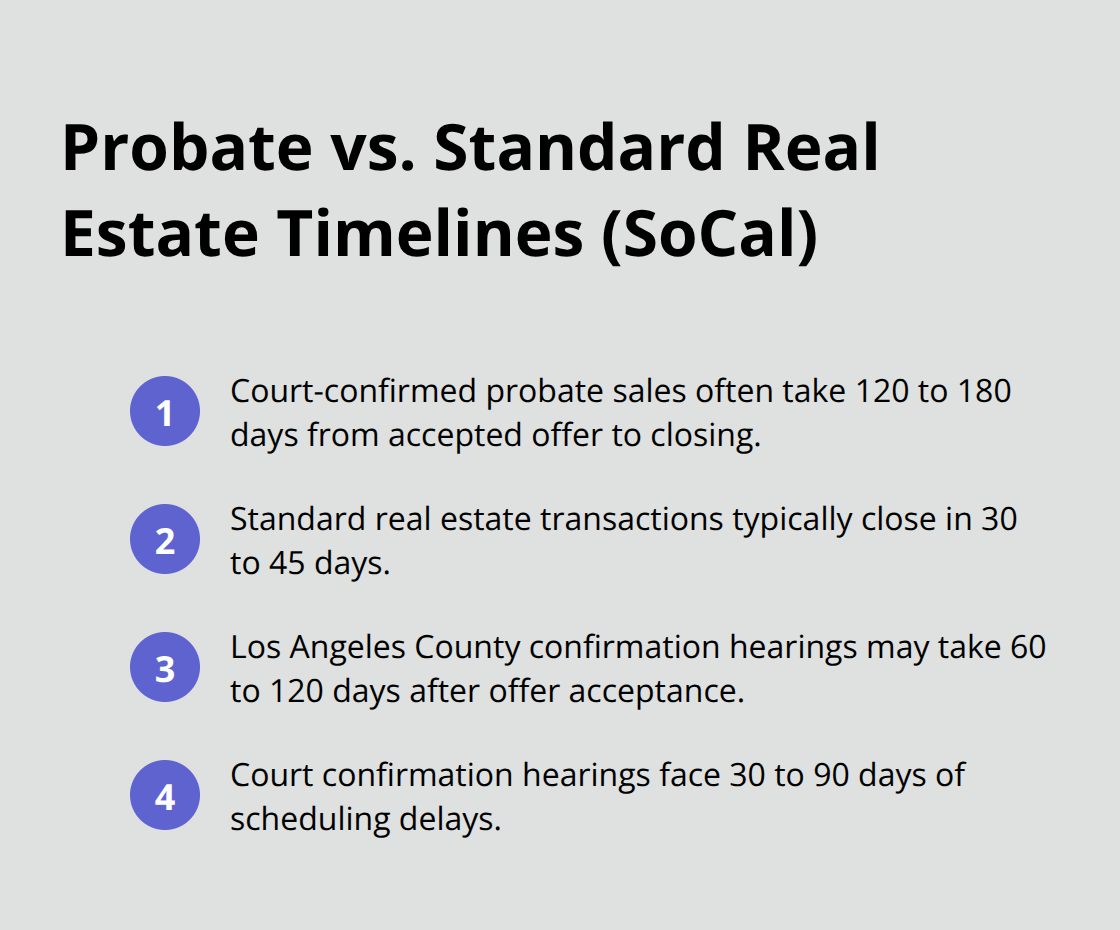
Court approval timelines in Southern California probate stretch far beyond standard real estate transactions. When a property enters probate, the personal representative cannot simply list and sell like a typical homeowner. Under California Probate Code Section 10150(c), the listing period is capped at 90 days, with extensions available only in 90-day increments up to 270 days. However, this is just the listing window. If the sale requires court confirmation-which happens when the personal representative has limited or no independent authority to sell (IAEA)-the process extends significantly. Court confirmation hearings often face scheduling delays of 30 to 90 days depending on the county’s calendar. A property listed in Los Angeles County, for example, may wait 60 to 120 days for a confirmation hearing after an offer is accepted. This means a typical court-confirmed probate sale takes 120 to 180 days from accepted offer to closing, compared to 30 to 45 days in a standard transaction.
Multiple Parties Create Approval Bottlenecks
Multiple parties holding veto power over the sale create bottlenecks that standard transactions never face. The personal representative, beneficiaries, creditors, and the court itself all have input into whether a sale proceeds. Under Probate Code Section 10580, any beneficiary can file a written objection to the proposed sale within 15 days of notice, which forces the transaction through court confirmation even if the personal representative had independent authority. Family disagreements over pricing or timing stall sales for months in many cases. Additionally, if the property has a reverse mortgage, the lender must approve the sale terms, adding another approval layer. Incomplete title clearance can halt everything-a lien, easement, or ownership dispute discovered during escrow can push closing back 60 to 90 days while legal issues resolve.
Deterioration Accelerates During Probate Limbo
Properties sitting in probate limbo deteriorate rapidly. Vacant homes deteriorate faster than occupied ones, and deferred maintenance compounds the problem. A roof leak ignored for months becomes structural damage. Pools fall into disrepair. Landscaping dies back. These conditions drive down buyer interest and sale price, forcing price reductions that could have been avoided with faster coordination. The longer a property remains unsold, the more visible these issues become to potential buyers, who then factor repair costs into their offers. This deterioration cycle makes speed essential-not just for closing timelines, but for preserving the property’s market value and appeal. Understanding these delays helps explain why coordinating your legal and real estate teams from the start matters so much.
How to Move Forward Before Listing Your Probate Property
Obtain Court Authorization and Confirm Your Authority Level
Getting court authorization before listing is non-negotiable in Southern California probate sales, and the timing of this step determines whether your transaction moves at standard speed or crawls. The personal representative must obtain Letters Testamentary or Letters of Administration from the court before any listing activity begins. This document proves the personal representative has the authority to act on behalf of the estate. Once issued, the next critical step is determining whether the personal representative has full Independent Administration with Estate Powers (IAEA) authority. Properties sold under full IAEA authority can list and close faster because the personal representative can accept an offer and proceed without a second court hearing. Under California Probate Code Section 10580, the personal representative simply serves a 15-day Notice of Proposed Action (NOPA) on beneficiaries. If no objections arrive within 15 days, the sale closes. This path typically takes 45 to 75 days from accepted offer to closing. However, if the personal representative has limited or no IAEA authority, court confirmation becomes mandatory, which adds 60 to 90 days or more to the timeline depending on the county court calendar. Knowing which track applies before you list prevents wasted marketing time and sets accurate buyer expectations. The estate attorney determines this from the Order for Probate, so coordinate immediately with your legal team to confirm authority status and understand the specific listing constraints that apply.
Hire Real Estate Professionals Who Understand Probate Mechanics
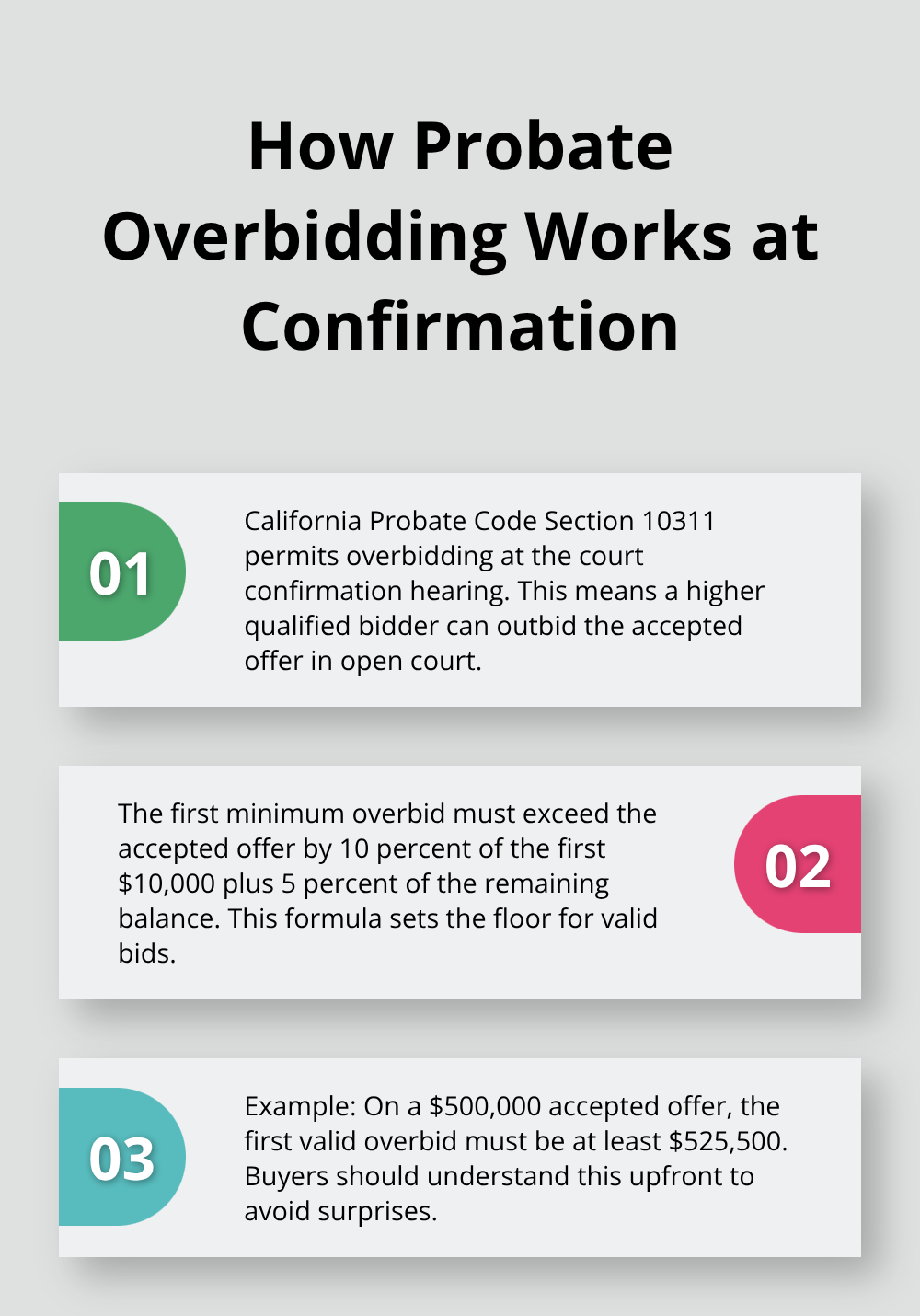
Hiring a real estate professional unfamiliar with probate mechanics guarantees costly mistakes. Standard listing agreements do not work for probate properties because the seller is the estate acting through the personal representative, not an individual homeowner. The listing must clearly identify the seller as Personal Representative of the Estate of [Decedent Name], not the personal representative’s name alone. The listing period itself is governed by Probate Code Section 10150(c), which caps listings at 90 days with extensions only in 90-day increments up to 270 days. A real estate professional who does not know this rule may miss the extension deadline, forcing you to relist and restart the 90-day clock. Marketing disclosures also differ. While the personal representative is generally exempt from the Transfer Disclosure Statement, California Civil Code Section 1102.2 still requires the agent to conduct a visual inspection and disclose known material facts. Use the Representative Capacity Signature Addendum (C.A.R. form RCSA) to document that the personal representative is signing in a fiduciary capacity, not as an individual. Buyers in probate transactions also need clear communication about timelines and potential overbidding rules for court-confirmed sales. In court-confirmed transactions, Probate Code Section 10311 allows overbidding at the confirmation hearing. The first overbid must exceed the accepted offer by 10 percent of the first $10,000 plus 5 percent of the balance. For a $500,000 accepted offer, that means an overbid must reach at least $525,500 to be valid. Buyers who do not understand this rule often withdraw when they learn another party can outbid them at the courthouse.
Set expectations early and in writing so surprises do not derail your sale.
Synchronize Your Attorney and Real Estate Team From the Start
Miscommunication between the estate attorney and real estate professional creates delays that compound throughout the transaction. The attorney handles Letters, NOPA timing, court petitions, and title clearance. The real estate professional handles listing, marketing, and buyer negotiations. These teams must share information constantly. Introduce your real estate professional to the estate attorney before listing. Share the comparative market analysis and marketing plan so the attorney understands your pricing strategy and timeline. Confirm with the attorney whether full or limited IAEA authority applies, and get written clarification on whether the NOPA or court confirmation process governs your sale. Request that the attorney provide the Notice of Proposed Action language or court-ordered Notice of Sale language in advance so escrow instructions can be drafted correctly. Escrow should reference the probate case number and include language about NOPA or court confirmation depending on your track. Title companies unfamiliar with probate transactions sometimes delay orders because they do not understand how probate authority documents integrate into the title chain. Providing the title company with a copy of the Letters and Order for Probate upfront prevents 10 to 15-day delays in issuing preliminary title reports. Many probate sales stall because the attorney and real estate professional operate in separate silos. One waits for the other to move, and weeks pass. We at Law Offices of Roshni T. Desai integrate legal and real estate coordination from the start because Ms. Desai holds both attorney and real estate licenses. This dual background eliminates the coordination gaps that plague probate transactions elsewhere. Whether you work with our firm or another attorney, insist that your legal and real estate teams communicate weekly and share all key documents immediately. Speed in probate depends on synchronized effort, not on either party working alone. With your authority confirmed and your team aligned, the next step is understanding how to price your property competitively while meeting probate-specific valuation requirements.
Why Dual Licensing Cuts Probate Real Estate Delays
Information Gaps Between Separate Teams Create Costly Delays
Probate real estate transactions fail most often because the attorney and real estate agent operate independently, creating information gaps that stretch timelines by weeks or months. When the estate attorney sits in one office handling court filings and title clearance while the real estate agent works from another location managing showings and offers, neither party fully understands the constraints the other faces. The attorney may not realize the agent listed the property before the NOPA window closed. The agent may price the property without knowing the court-ordered valuation floor.
Escrow instructions get drafted without probate-specific language because the title company never received the Letters Testamentary. These gaps accumulate into delays that cost the estate money through property deterioration, carrying costs, and lost buyer interest. A probate sale that stretches 180 days instead of closing in 120 days costs the estate thousands in mortgage interest, property taxes, insurance, and utilities on a property generating no income.
How Integrated Legal and Real Estate Knowledge Eliminates Fragmentation
A single professional who understands both probate law and real estate mechanics handles the full transaction more efficiently than separate teams. This professional knows exactly how court authority levels affect listing strategy. She understands that a 90-day listing cap under Probate Code Section 10150(c) requires extension filings timed precisely with marketing efforts. She knows that court confirmation under Probate Code Section 10311 allows overbidding, so she prices competitively rather than inflating asking prices.
She coordinates with title companies using the correct probate language on the first try, preventing the 10 to 15-day delays that plague transactions where the agent and attorney have never worked together before. With integrated legal and real estate guidance, the timeline stays tight because every decision accounts for both court requirements and market timing simultaneously.
Timeline Improvements From Coordinated Approach
When the personal representative has full IAEA authority under California Probate Code Section 10580, the transaction should close in 45 to 75 days from accepted offer. Miscommunication between separate teams often stretches this to 100 to 120 days. Integrated coordination keeps the timeline tight and prevents the price reductions that result from extended marketing periods and visible property deterioration.
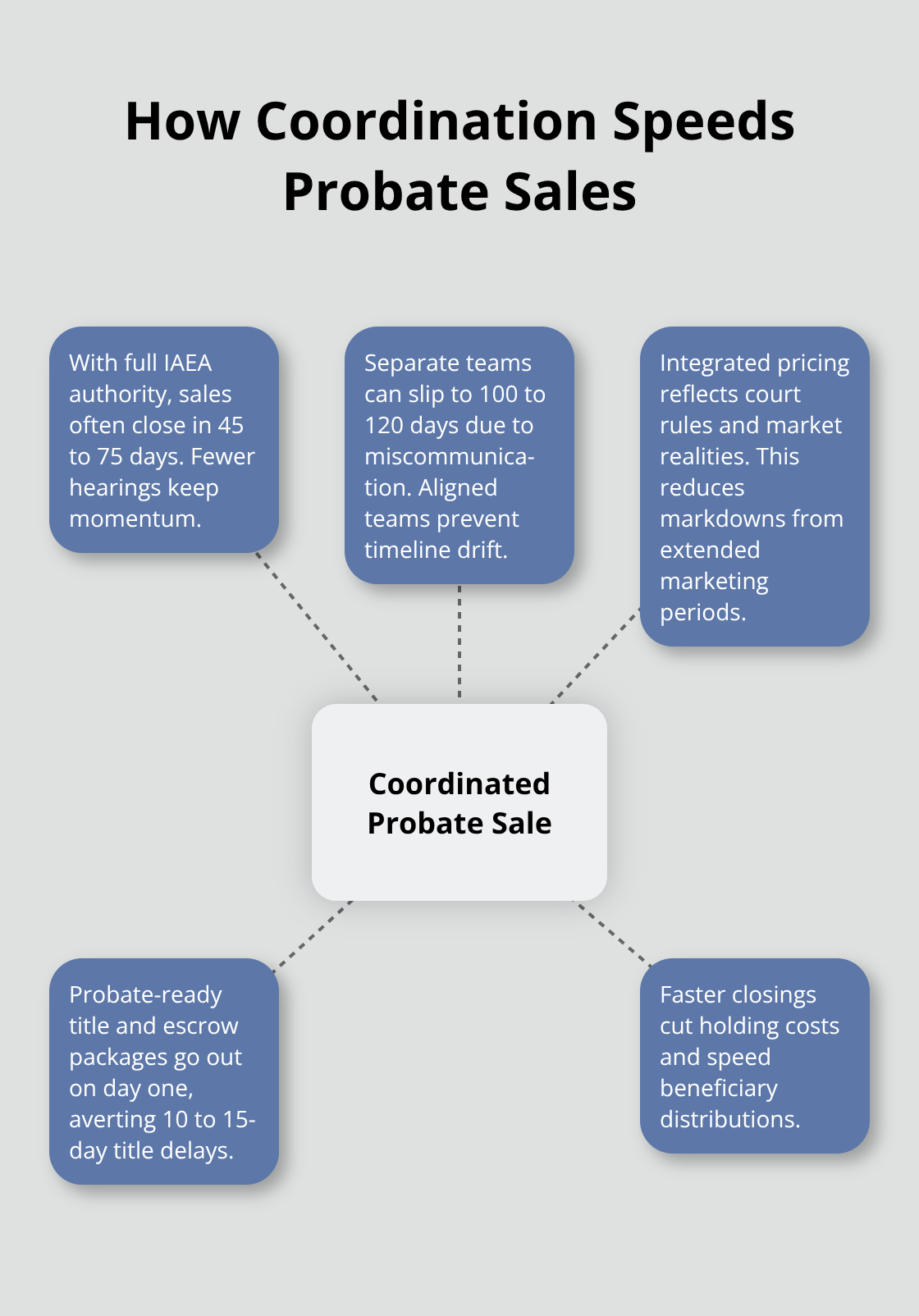
The estate avoids unnecessary holding costs and beneficiaries receive distributions faster because the sale closes on schedule rather than facing repeated delays. Ms. Desai’s dual licensure as both attorney and real estate professional at Law Offices of Roshni T. Desai streamlines estate-related property sales and transactions to reduce costs, delays, and communication hassles. We at Law Offices of Roshni T. Desai offer free consultations with flexible scheduling at your home or office, allowing you to discuss your specific situation and understand how integrated legal and real estate coordination applies to your property.
Final Thoughts
SoCal probate real estate sales demand coordination that standard transactions never require. Court timelines, multiple approval layers, and strict probate rules create complexity that vanishes when legal and real estate guidance work together. The personal representative faces conflicting pressures: move fast enough to prevent property deterioration, yet slow enough to satisfy court requirements and beneficiary concerns. Real estate agents unfamiliar with probate mechanics make costly mistakes like missing the 90-day listing extension deadline or pricing without understanding the court-ordered valuation floor.
The solution is straightforward: coordinate your legal and real estate teams from day one, and ideally, work with a professional who understands both sides. When one person holds both attorney and real estate licenses, the information gaps that plague most probate transactions vanish. Listing strategy aligns with court authority levels, pricing reflects both market conditions and probate valuation requirements, and escrow instructions include probate-specific language on the first draft. Title companies receive the correct documentation immediately, and the timeline stays tight because every decision accounts for both legal constraints and market realities simultaneously.
We at Law Offices of Roshni T. Desai bring this integrated approach to every SoCal probate real estate transaction across Southern California. Contact us to see how coordinated legal and real estate guidance simplifies the process and protects your family’s interests.