




SoCal Trust Attorney: Your Guide to Effective Trust Planning
A solid trust plan protects what matters most to your family and avoids the costly delays of probate. Southern California’s rising property values make this protection even more important today.
We at Law Offices of Roshni T. Desai help families build trusts that work for their specific situation. This guide walks you through the types of trusts available, common mistakes to avoid, and how to move forward with confidence.
Why Trust Planning Matters in Southern California
Southern California’s Rising Property Values Create Real Estate Complexity
Southern California’s median home price exceeds $850,000 in many areas, and when you combine real estate holdings with investment accounts, retirement savings, and business interests, estates become complex fast. This complexity creates a real problem: without a solid trust plan, your family faces probate costs that run approximately 4% of your estate’s gross value according to California probate fee schedules. For a $1 million estate, that means roughly $40,000 in attorney and executor fees alone. Probate also takes 12 to 18 months on average, during which your assets sit frozen and your family waits. Worse, probate is public-anyone can view your will and asset distribution in court records.
How a Living Trust Solves These Problems
A properly funded living trust eliminates probate entirely, distributes assets within weeks instead of months, keeps your financial details private, and costs significantly less to administer. Families lose thousands to unnecessary probate costs every year, and most of those losses were preventable with straightforward trust planning. The difference between a trust-based plan and no plan at all often amounts to tens of thousands of dollars and months of waiting for your loved ones.
Why Timing Matters More Than You Think
Many people delay trust planning because they think it only matters for the wealthy or the elderly. That’s backwards. If you own property in Southern California, have minor children, or want to avoid leaving your family in probate limbo, trust planning is urgent. California’s intestate succession laws determine who inherits if you die without a will or trust, and those laws often don’t match what families actually want. A surviving spouse doesn’t automatically get everything-community property rules and statutory shares mean your assets could be divided in ways you never intended.
Incapacity Planning Protects You and Your Family
Incapacity planning matters just as much as death planning. If you become unable to make medical or financial decisions, your family faces a conservatorship proceeding that costs $5,000 to $15,000 and strips you of control unless you establish a durable power of attorney beforehand. Property tax planning also shifts after Proposition 19 changed California’s transfer rules. Transferring your home to heirs now triggers reassessment and higher property taxes unless you plan strategically.
The Concrete Risks Are Real and Expensive
These aren’t theoretical risks-they’re concrete, expensive problems that hit Southern California families regularly. A trust-based plan with proper funding, clear successor trustee designation, and regular updates (at least every three years) prevents all of this. Understanding what types of trusts exist and how they work is the first step toward building a plan that actually protects your family’s future.
Types of Trusts and How They Work
Living Trusts Give You Control During Your Lifetime
A living trust is the workhorse of Southern California estate planning, and it works well for most families. You keep complete control during your lifetime, act as your own trustee, and change or revoke the trust whenever circumstances shift. The moment you become incapacitated, your successor trustee steps in without court involvement-no conservatorship, no delay, no expense. When you die, assets transfer to beneficiaries in weeks rather than months.
The catch is straightforward: the trust only works if you fund it properly. You must retitle your home, investment accounts, and other assets into the trust’s name. Many people create a trust document and then never transfer their assets into it, which defeats the entire purpose. A revocable living trust costs roughly $1,500 to $3,500 in legal fees depending on complexity, and that investment prevents probate costs of 4% of your estate value-a clear financial win for most Southern California property owners.
Irrevocable Trusts Protect Assets at the Cost of Control
Irrevocable trusts serve a different purpose and demand a different mindset. Once you fund an irrevocable trust, you surrender control and cannot change it without beneficiary consent. That loss of control is intentional: the assets inside an irrevocable trust fall outside your taxable estate, which means they escape federal estate taxes for high-net-worth families. They also shield assets from creditors and divorce claims because you no longer own them legally.
This structure requires careful planning and professional guidance because you cannot reverse the decision later. Choose the wrong structure or fail to fund it correctly, and you lock yourself into a costly mistake.
Specialized Trusts Address Specific Goals
Specialized trusts address particular objectives that standard trusts cannot handle. A supplemental needs trust protects government benefits for a disabled family member while providing financial support without disqualifying them from Medicaid or SSI. A charitable remainder trust lets you donate to causes you care about, receive income for life, and reduce estate taxes simultaneously. An irrevocable life insurance trust removes life insurance death benefits from your taxable estate, which matters when your death benefit alone could trigger federal estate taxes.
Choosing the Right Trust Structure Requires Professional Guidance
The decision between a revocable living trust, an irrevocable trust, or a combination depends entirely on your assets, your tax situation, your family structure, and your long-term goals. Your specific circumstances-not generic online documents-should drive this choice. The Law Offices of Roshni T. Desai provides personalized planning that matches your actual situation rather than forcing you into a one-size-fits-all template. Understanding these distinctions helps you recognize why the next section focuses on the mistakes that derail even well-intentioned trust plans.
Common Trust Planning Mistakes to Avoid
Failing to Fund Your Trust Properly
The gap between a trust document and a working trust is where most plans collapse. Creating a trust on paper means nothing if the assets you own never transfer into it-this is the single biggest mistake we see. A study from the Consumer Financial Protection Bureau found that improperly funded trusts fail to accomplish their core purpose, leaving families to navigate probate anyway despite having spent money on a trust document.
Your home, bank accounts, investment portfolios, and retirement assets must be retitled into the trust’s name for the trust to own them. Many people complete the trust document and stop there, treating it as a finished project when it’s actually just the beginning. The funding process requires detailed asset inventory and step-by-step transfers-this takes time and attention, which is why people skip it. You cannot shortcut this step. A trust that sits unfunded is useless and creates false confidence that your family is protected when they actually are not.
Neglecting to Update Your Trust After Major Life Changes
Life changes demand immediate trust updates, yet most people treat their trust like a static document that never needs revision. You marry, divorce, have children, acquire property, sell a business, or experience significant wealth changes-any of these events can render your trust outdated or ineffective.
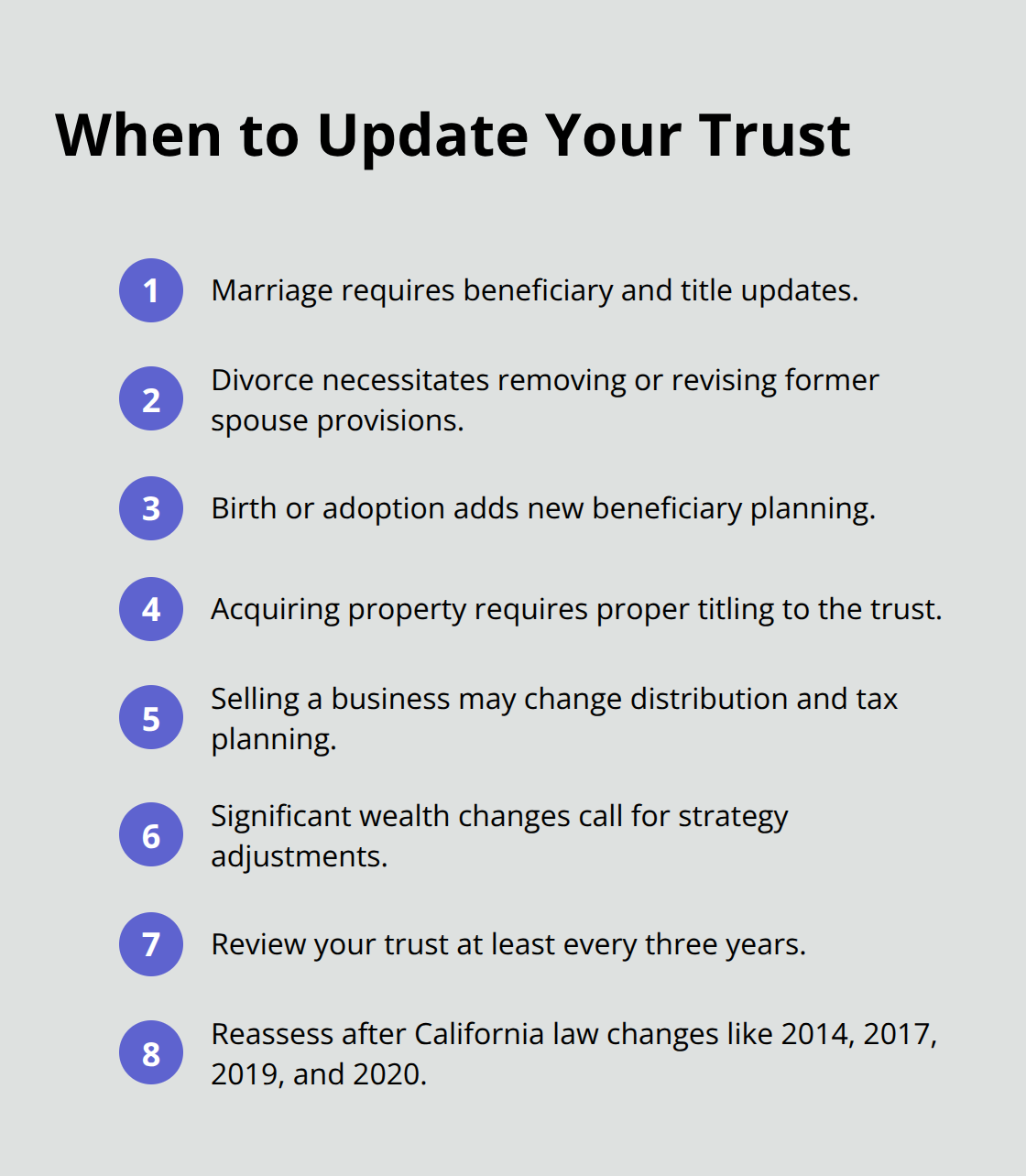
California law changed substantially in 2014, 2017, 2019, and 2020 regarding property transfers and taxation, which means older trusts may not reflect current rules.
Review your trust at minimum every three years, and immediately after major life events. Outdated trusts create tax inefficiencies, miss opportunities to protect assets, and sometimes distribute wealth in ways you no longer intend. The cost of a trust review pales in comparison to the cost of fixing a broken plan after death.
Choosing the Wrong Trustee for Your Situation
The wrong trustee selection creates a different kind of disaster. Many people name a child, spouse, or family member without considering whether that person has the financial capability, emotional detachment, or willingness to manage an estate during grief. A trustee must handle tax filings, asset valuations, distributions to multiple beneficiaries, and potentially difficult decisions about contested claims-this requires competence and neutrality.
Naming someone out of sentiment rather than capability leads to family conflict, missed deadlines, tax penalties, and beneficiaries questioning whether distributions were handled fairly. Professional guidance during trust creation prevents this failure from taking root in your plan. The Law Offices of Roshni T. Desai helps you identify trustee candidates who possess both the skills and temperament your family needs.
Final Thoughts
A solid trust plan stops probate, protects your family from costly delays, and gives you peace of mind that your wishes will be carried out. The mistakes outlined above-unfunded trusts, outdated documents, and poor trustee selection-are entirely preventable with the right guidance from the start. We at Law Offices of Roshni T. Desai bring over 25 years of experience to Southern California families and business owners who want trusts that actually work.
Our approach is straightforward: we listen to your specific situation, explain your options in plain language, and build a plan tailored to your assets, family structure, and goals. A SoCal trust attorney with dual licensure as both an attorney and real estate professional can streamline property transfers and estate-related transactions in ways most firms cannot, reducing costs and communication delays that typically slow down trust administration. We handle everything from initial trust creation through probate administration, including wills, powers of attorney, elder law planning, and small business succession.
The next step is simple: schedule a free consultation with Law Offices of Roshni T. Desai to discuss your situation. We offer flexible home or office visits across Southern California, so you can meet with us on your terms. During that conversation, we’ll identify the gaps in your current plan, explain which trust structures make sense for you, and outline the funding and update process that keeps your plan working for years to come.