




Special Needs Trust California: Protecting a Loved One’s Benefits
A special needs trust in California can be the difference between a gift that helps a loved one with a disability and a gift that accidentally disrupts the public benefits they rely on every day. Parents, grandparents, and other relatives often want to leave something meaningful behind, but many programs that support people with disabilities look closely at what a person owns and receives. A carefully drafted trust lets you add comfort, opportunity, and security to a loved one’s life while keeping that support in place.
At Law Offices of Roshni T. Desai, we help families throughout Orange County and Southern California plan for children and adults with disabilities, so you can move forward with confidence. This guide explains what a special needs trust actually does, how the main types of trusts are set up and managed, and the mistakes that most often undo a family’s careful planning.
What a Special Needs Trust Actually Does in California
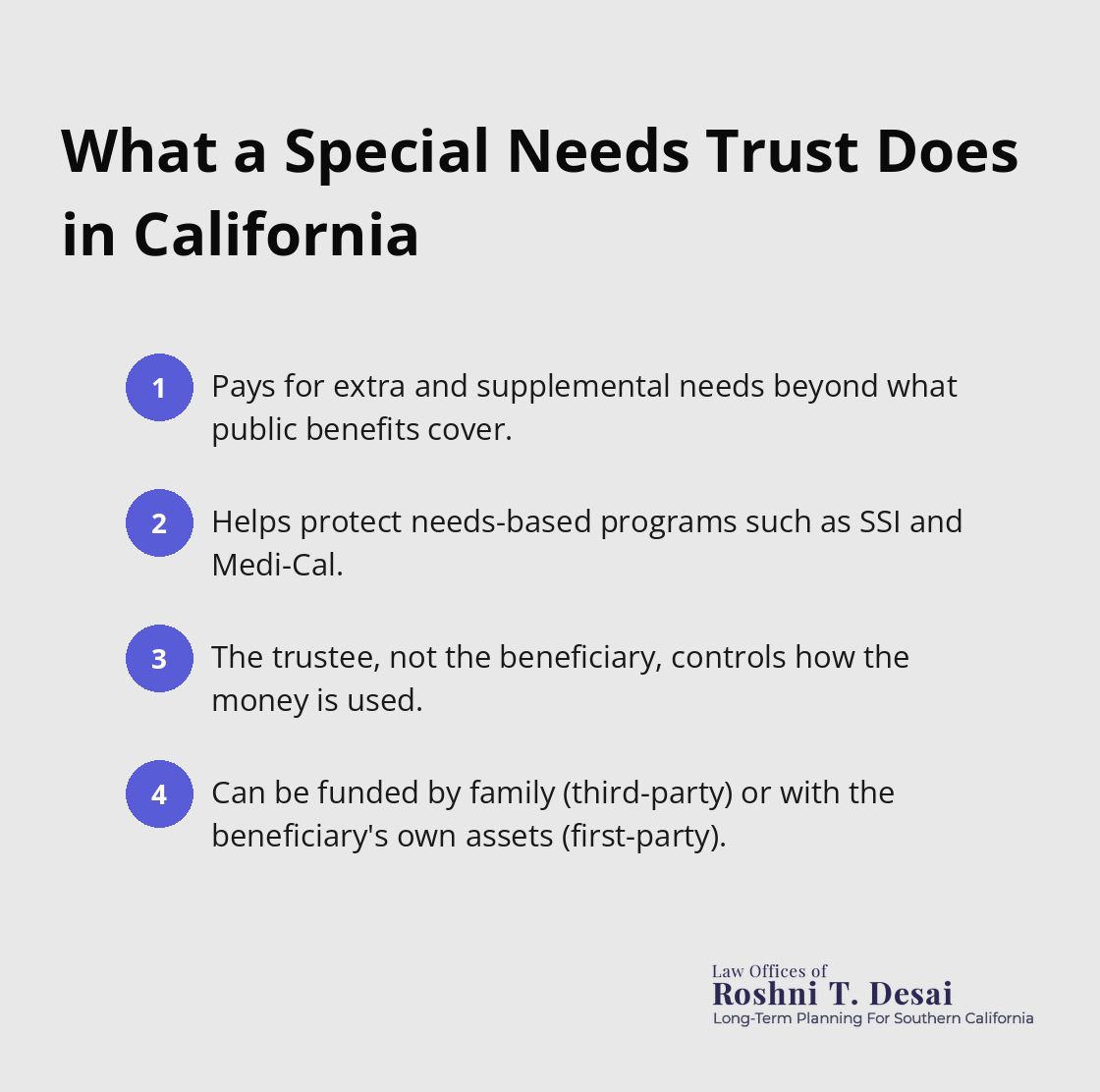
A special needs trust, sometimes called a supplemental needs trust, holds money or property for a person with a disability and pays for things that make life better without handing the beneficiary cash they control. The Social Security Administration describes this kind of trust as one set up to provide for a disabled individual’s extra and supplemental needs, other than the food, shelter, and health care that public assistance programs may already cover. In other words, the trust is designed to add to benefits, not replace them.
That distinction matters because two of the most important programs for people with disabilities are needs-based. Supplemental Security Income, or SSI, is administered by the Social Security Administration, and Medi-Cal is California’s version of the federal Medicaid program, overseen by the Department of Health Care Services. The state’s own Medi-Cal guidance notes that for some types of Medi-Cal, people may need to give information about their assets and property. A trust that is structured correctly keeps the trust property from being treated as the beneficiary’s own resource.
Why Control Over the Money Matters
The central idea is control. According to the Social Security Administration’s program rules, if a person does not have the legal authority to revoke or terminate a trust, or to direct the use of the trust assets for their own support and maintenance, the trust principal is not that person’s resource for SSI purposes. The reverse is also true. When a beneficiary can revoke the trust or direct how the principal is used for their support, the trust can be counted. That is why the trustee, not the beneficiary, holds the decision-making power in a well-drafted special needs trust.
Third-Party Trusts Funded by Family
A third-party special needs trust is established with the assets of someone other than the beneficiary. A common example is a parent or grandparent who creates the trust inside a living trust or will and names a child or grandchild with a disability as the beneficiary. Because the money never belonged to the beneficiary, these trusts give families a great deal of flexibility in deciding who receives what remains after the beneficiary’s lifetime. Many families choose to leave the remainder to siblings, other relatives, or a charity that mattered to the family.
First-Party Trusts Funded With the Beneficiary’s Own Assets
Sometimes the money already belongs to the person with a disability, such as an inheritance that was left outright or the proceeds of an injury case. Federal law allows a special type of trust for these situations. Under the rules Social Security applies, the exception covers a trust that contains the assets of an individual who is under age 65 and disabled, that is established through the actions of the individual, a parent, a grandparent, a legal guardian, or a court, and that provides the state will receive the amounts remaining at the individual’s death, up to the total medical assistance paid on the individual’s behalf under the state Medicaid plan. The option for individuals to set up their own trust was added by the 21st Century Cures Act, signed on December 13, 2016.
How California Special Needs Trusts Are Created and Managed
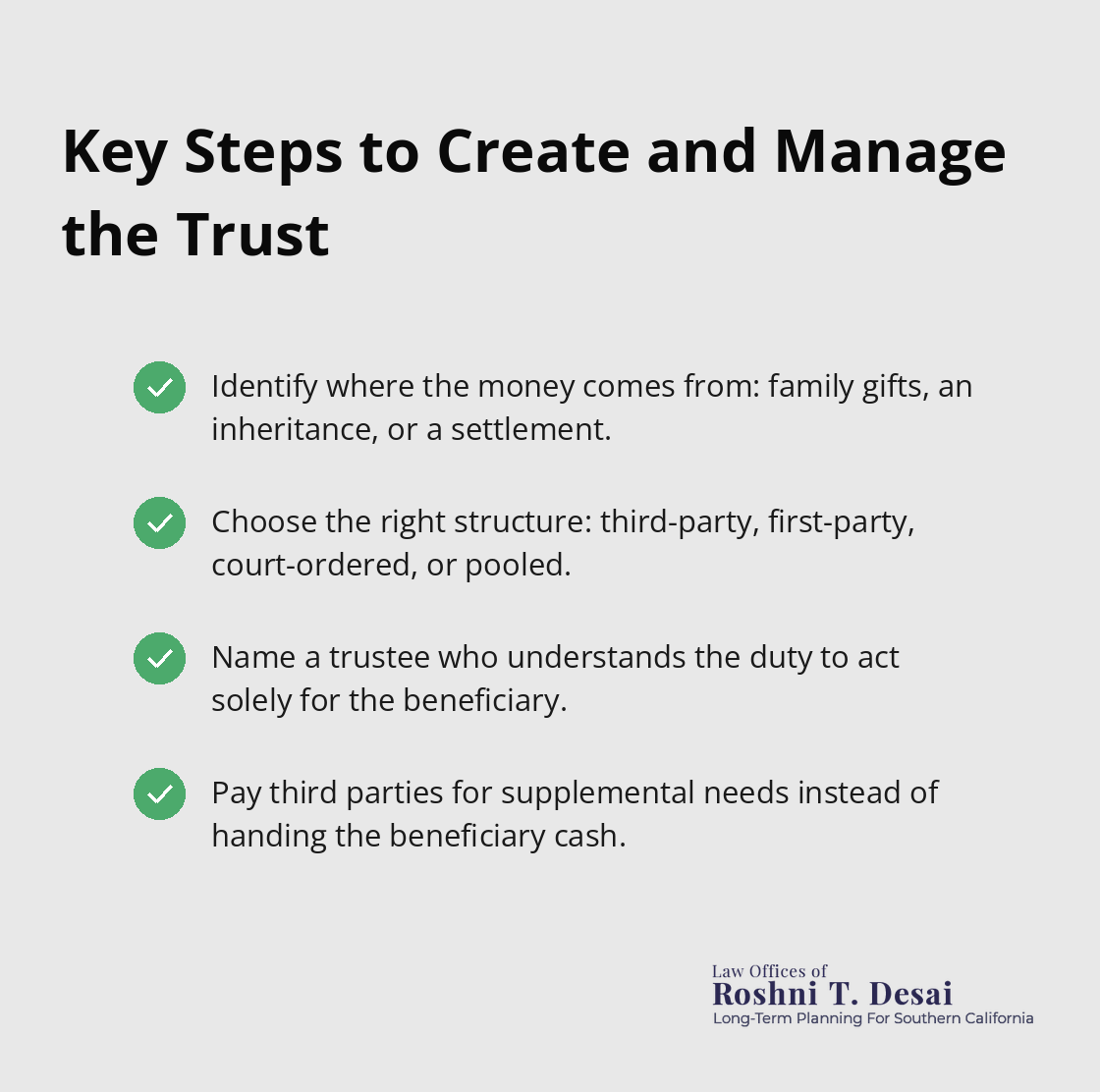
Creating a special needs trust is only the beginning. The way the trust is funded, who serves as trustee, and how distributions are made all determine whether the plan works as intended. Families who think through these questions early tend to avoid emergency fixes later, when a benefits review or a sudden change in circumstances forces the issue.
Court-Ordered Trusts for Settlements and Judgments
When a minor or a person with a disability receives money through a settlement or judgment, a California court can order that money paid into a special needs trust. Probate Code section 3604 requires the court to review and approve the trust terms, and the trust remains subject to the court’s continuing jurisdiction. The court must find that the person has a disability that substantially impairs the individual’s ability to provide for their own care or custody, that the person is likely to have special needs that will not be met without the trust, and that the money placed in the trust does not exceed what appears reasonably necessary to meet those needs. The court’s order must also provide that statutory liens in favor of the State Department of Health Care Services and certain other state departments and local agencies are satisfied first.
Pooled Trusts as an Alternative
Not every family wants to set up and manage an individual trust. A pooled trust is established and managed by an organization and combines the assets of many beneficiaries, while keeping a separate account for each person for investment and management purposes. For a beneficiary with a modest sum, or for a family without a trusted relative willing to serve as trustee, a pooled trust can provide professional management. Each pooled trust has its own rules, so it is important to read the joinder agreement carefully before signing.
Choosing and Guiding the Trustee
The trustee is the person or institution that manages the trust and decides when and how to spend money for the beneficiary. Under Probate Code section 16002, a trustee has a duty to administer the trust solely in the interest of the beneficiaries. In a special needs trust, that duty includes understanding how each distribution may affect the beneficiary’s benefits. Social Security’s rules explain that cash paid directly from a trust to the beneficiary is generally counted as unearned income, while payments made to third parties for things like education, therapy, transportation, recreation, and medical services not covered by Medicaid generally are not income. Payments for shelter, such as rent, can be treated as in-kind support and maintenance and may reduce SSI. A thoughtful trustee keeps records, plans ahead, and asks questions before making unusual purchases.
Common Mistakes That Undermine a Special Needs Trust
Most problems with special needs planning do not come from bad intentions. They come from well-meaning gifts made without a plan, or from trusts that were drafted correctly but managed without attention to the rules. Knowing where families typically go wrong makes it much easier to protect a loved one.
Leaving an Inheritance Outright
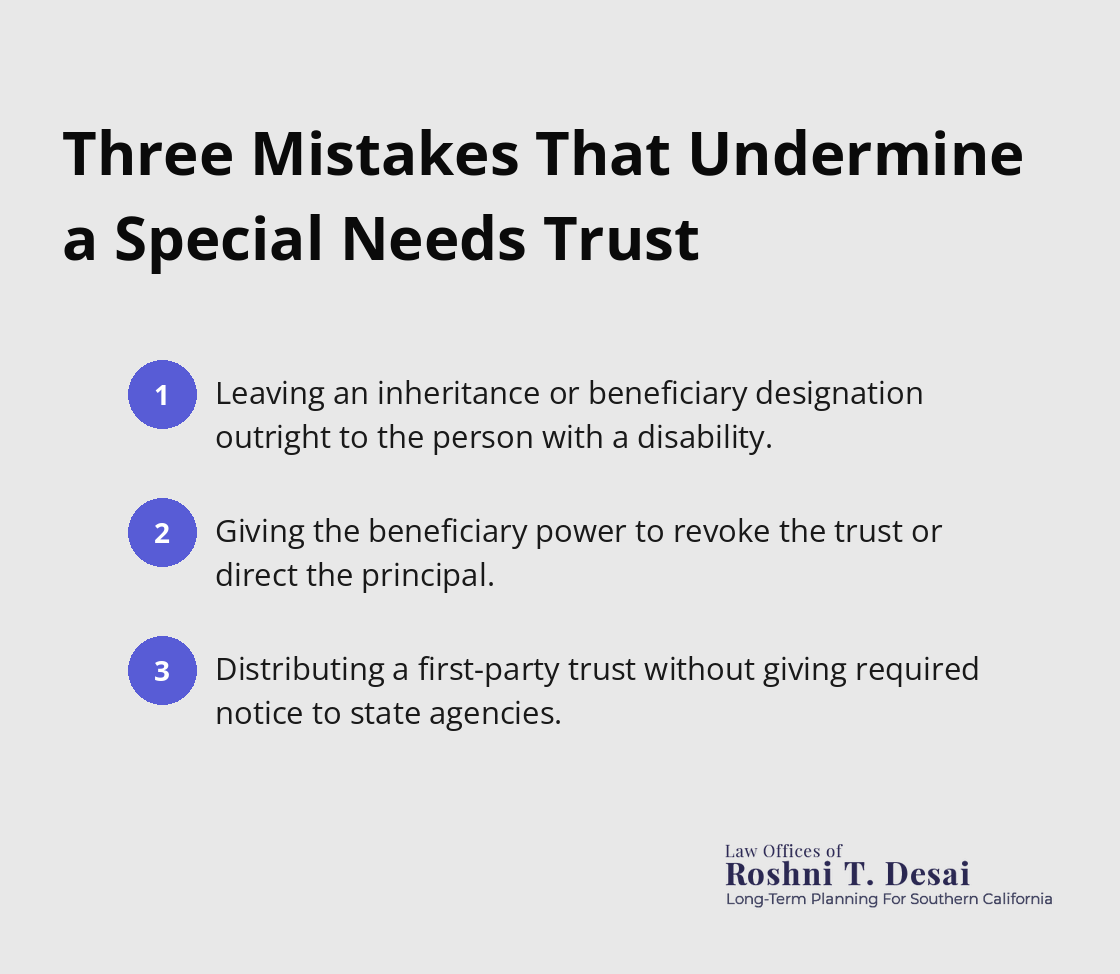
One of the most common mistakes is leaving money directly to a person with a disability in a will, a living trust, or a beneficiary designation. An outright gift belongs to the beneficiary, and it may be counted when needs-based benefits are reviewed. Relatives who do not know about the family’s plan can create the same problem, so it helps to let grandparents, aunts, uncles, and others know that gifts should be directed to the special needs trust instead. Life insurance policies and retirement accounts deserve the same attention, since their beneficiary forms often control where that money goes separately from your will.
Giving the Beneficiary Too Much Control
A trust that allows the beneficiary to revoke it, end it, or direct how the principal is spent for their own support and maintenance can be treated as a resource. For that reason, naming the beneficiary as their own trustee, or adding broad withdrawal rights, can defeat the purpose of the trust. Families sometimes want to give an adult child as much independence as possible, which is a worthy goal. The better approach is usually to name a trustee who will listen closely to the beneficiary’s wishes while keeping legal control of the trust.
Overlooking Notice and Repayment Rules
First-party and court-ordered trusts come with obligations that continue after the beneficiary’s lifetime. Under Probate Code section 3605, when the beneficiary of a court-established special needs trust dies or the trust ends, the trustee must give notice to the State Department of Health Care Services, the State Department of State Hospitals, and the State Department of Developmental Services. Those agencies then have four months after notice is given to make a claim with the trustee, and a valid claim is paid as a preferred claim before any other distribution. Trustees who distribute property without giving this notice can create serious problems for themselves and for the family members who receive it.
Final Thoughts
A special needs trust in California gives families a way to provide for a loved one with a disability without putting essential benefits at risk. Whether you are planning ahead with a third-party trust, protecting an inheritance or settlement with a first-party trust, or considering a pooled trust, the right structure depends on where the money comes from and who will manage it. Careful drafting and steady administration are what make the plan work for years to come.
Planning for a child or adult with a disability is deeply personal, and no two families have the same needs. Taking time now to choose the right trust, the right trustee, and the right funding strategy can spare your loved one stressful benefit reviews later. You can learn more about how we approach this work with our special needs trust attorney in Orange County page.
If you are planning for a loved one with a disability, contact Law Offices of Roshni T. Desai to speak with our team about a special needs trust that fits your family. We’ll explain your options clearly and help you build a plan that protects both your loved one’s benefits and your legacy.