



Streamline Your Trust With A Comprehensive Trust Paperwork Checklist
A disorganized trust can create confusion and costly mistakes for your family. Without a clear trust paperwork checklist, important documents get lost, assets remain unfunded, and beneficiaries face unnecessary delays.
We at Law Offices of Roshni T. Desai have seen firsthand how proper organization prevents these problems. This guide walks you through the essential documents you need, common pitfalls to avoid, and how to maintain your checklist so your trust actually works when your family needs it.
What Documents Must You Actually Have in Your Trust
Your trust document itself is only the beginning. The real work involves gathering and organizing the papers that prove what assets belong in the trust and who receives them. Without these supporting documents, your trustee cannot execute the trust effectively, and beneficiaries may face unnecessary disputes. The core paperwork falls into three categories that work together to make your trust functional.
The Foundation: Your Trust Declaration
The Declaration of Trust or Deed of Trust creates your trust legally. This contract binds you as the grantor, your trustee, and your beneficiaries together. It spells out exactly how assets will transfer, when distributions happen, and what conditions apply. Signing this document marks only the starting point. You need the original signed and notarized copy stored securely, plus certified copies for your trustee and major beneficiaries. If your trust is revocable, you must document any amendments you make over time. Each change requires formal recording so no confusion arises about which version controls your wishes. Without clear amendment records, trustees and beneficiaries may disagree about your actual intentions.
Proving What You Own: Your Asset Inventory
This is where most people fall short. You need a complete schedule of assets and property that documents everything going into the trust. This includes real estate deeds, bank account numbers and statements, investment account details, life insurance policy numbers, vehicle titles, and any business interests. The Federal Reserve’s Survey of Consumer Finances from November 2023 found that the average trust fund contains around $285,000 in assets. That amount is significant enough that tracking everything matters. For real estate, you need the current deed showing your ownership. For bank and investment accounts, gather recent statements with account numbers and institution contact information. For life insurance, collect policy documents and confirm the trust is named as owner or beneficiary where appropriate. Without this inventory, your trustee won’t know what assets exist or where to find them. Assets you intended to transfer but never formally moved into the trust stay outside it and may go through probate anyway, defeating the entire purpose.
Naming Who Gets What: Beneficiary Documentation
Your beneficiary designation forms provide the instructions for distribution. These forms must list every beneficiary by full legal name, relationship to you, date of birth, and address. If beneficiaries receive assets at different times or in different amounts, your documentation must show exactly how those decisions work. Some trusts specify that a surviving spouse receives income first, with children receiving principal assets later. Others distribute equally to all beneficiaries immediately. Your paperwork must reflect these decisions clearly. If you have a beneficiary with special needs, your documentation should reference any special needs trust provisions that protect their eligibility for government benefits. This level of detail prevents misunderstandings and reduces the chance that beneficiaries challenge the trustee’s decisions later.
Why Organization Matters Now
The three document categories above work only when you connect them properly. Your Declaration of Trust outlines the rules, your Asset Inventory shows what you own, and your Beneficiary Documentation explains who receives what. When these three pieces align, your trustee has everything needed to act.
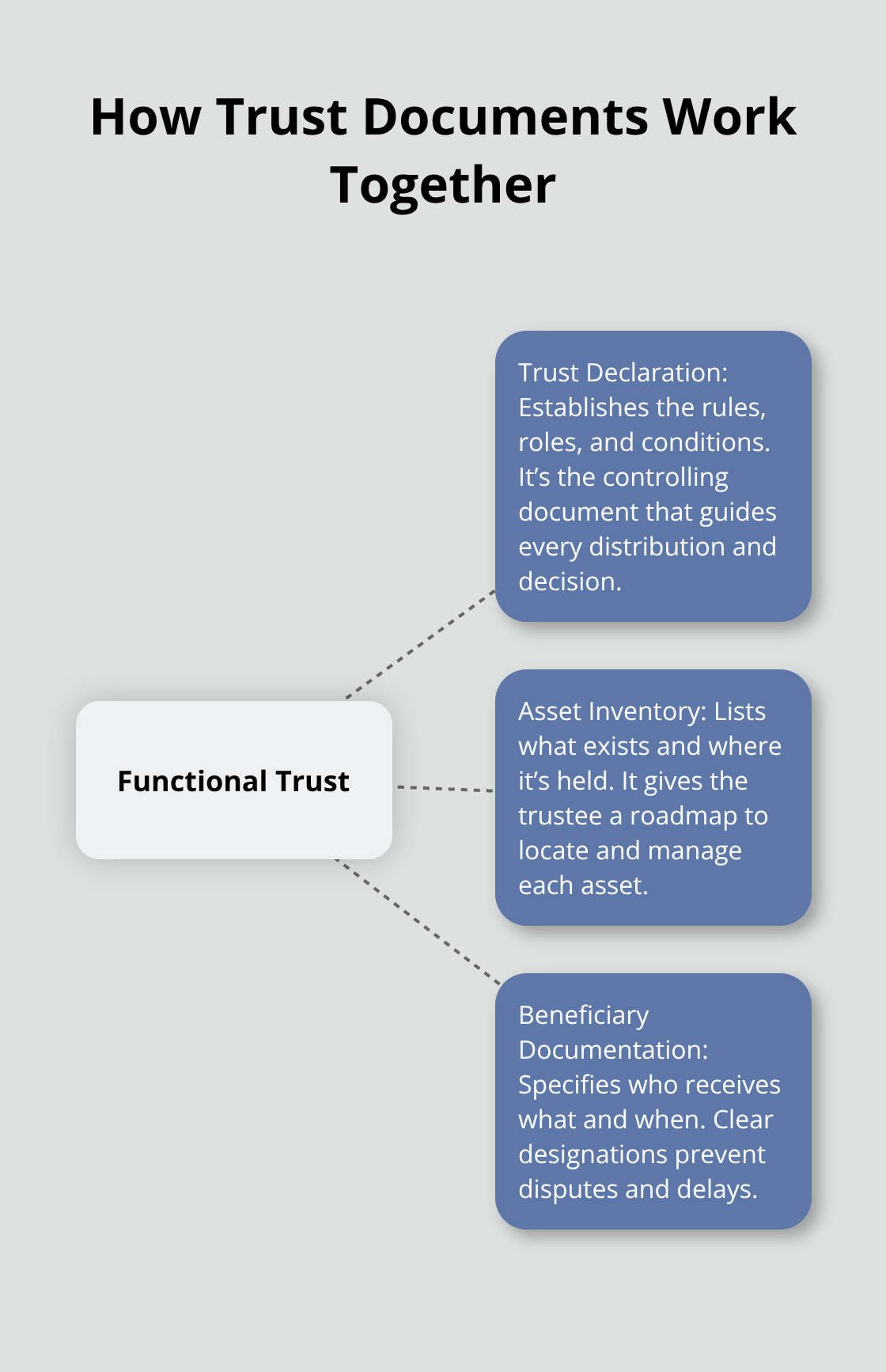
When they don’t align-or when documents go missing-your family faces delays, confusion, and potential legal costs. The next section covers the mistakes that break this system and how to avoid them.
Common Mistakes When Organizing Trust Paperwork
Your trust document sits in a drawer, unchanged for seven years. Meanwhile, you got married, had children, bought investment property, and shifted your entire financial picture. Your trust still names your ex-partner as trustee and lists assets you no longer own. This scenario happens constantly, and it renders your trust partially or completely useless when your family needs it most.
Failing to Update Documents After Life Changes
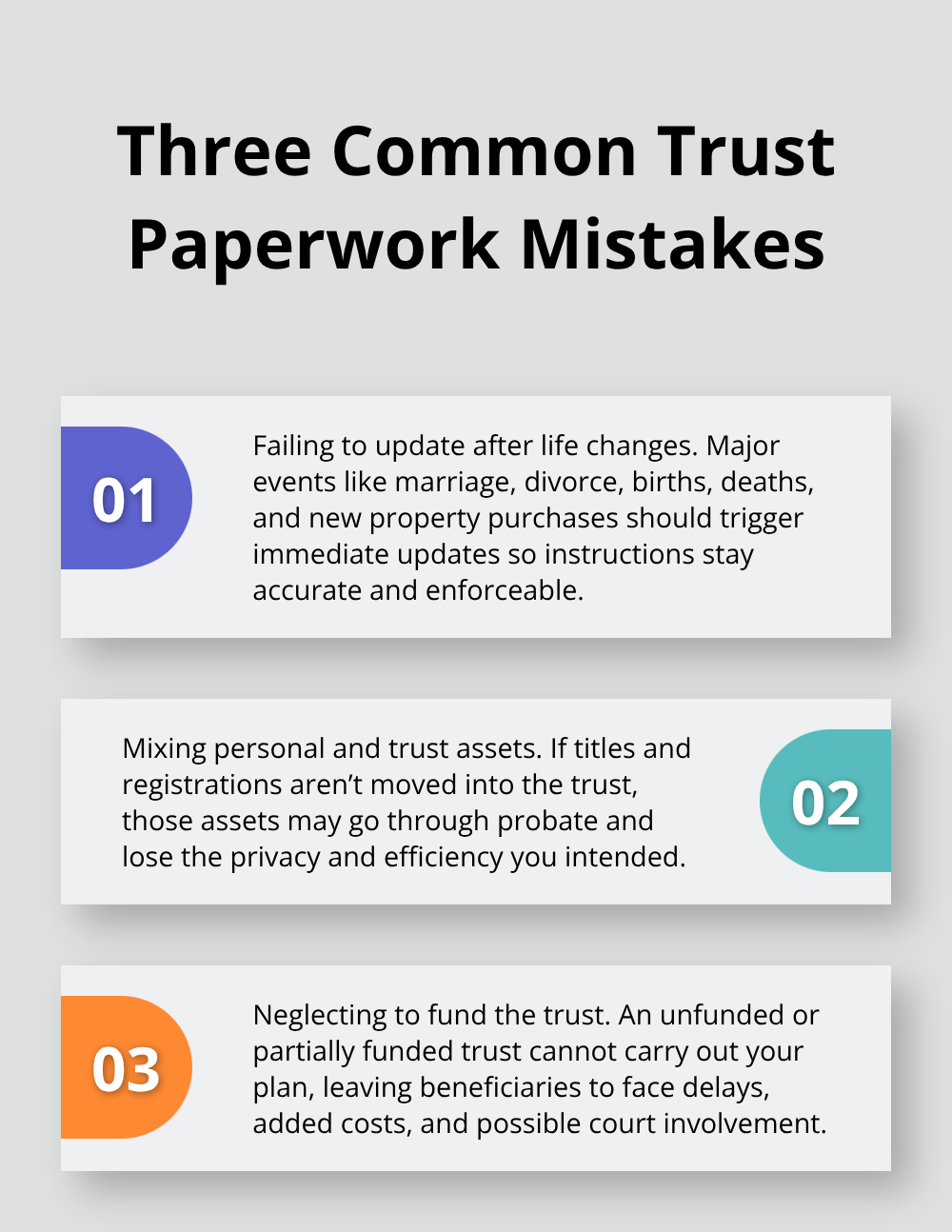
Life changes demand trust updates. A marriage, divorce, birth, death, significant asset purchase, or major financial shift should trigger a document review within weeks, not years. Most people treat their trust like a one-time project completed and forgotten. Courts see the consequences regularly. When a trustee tries to follow outdated instructions, beneficiaries challenge the decisions, litigation erupts, and your family spends thousands on legal fees that could have been prevented with a simple amendment.
The American College of Trusts and Estate Counsel emphasizes that regular reviews every few years or after major life events keep trusts aligned with current wishes and applicable law. Your trust must evolve with your life. You cannot set your trust and ignore it.
Mixing Personal and Trust Assets
Mixing personal and trust assets creates a second critical problem that undermines everything your trust accomplishes. You retitle your house into the trust, but you keep your investment accounts in your personal name. You transfer your primary residence but forget about the rental property. Assets that remain in your personal name go through probate anyway, defeating the privacy and speed benefits your trust was designed to provide.
Your trustee cannot distribute assets that were never formally transferred into the trust’s name. Beneficiaries must wait for probate court to resolve these assets separately, and the probate process becomes public record for everyone to see. Some families discover too late that half their estate avoided probate while the other half went through the full court process.
Neglecting to Fund Your Trust Properly
The funding step requires real work. You need to retitle real estate deeds, change bank account registrations, transfer investment account ownership, update life insurance beneficiary designations to name the trust, and move vehicle titles. This is not optional paperwork that can wait. Without complete funding, your trust remains incomplete.
You create a beautiful trust document with clear instructions and thoughtful provisions, but you never actually move your assets into it. Your trust sits empty or partially funded while your assets remain scattered across personal accounts and titles. An empty trust cannot protect your family or accomplish any of its intended purposes. The consequences of these three mistakes compound quickly, which is why the next section walks you through how to organize your documents systematically and maintain them over time.
How to Create and Maintain Your Trust Checklist
Sort Your Documents Into Clear Categories
Start by gathering every document related to your trust in one physical location. Pull your signed trust declaration, all amendments, asset deeds and titles, bank statements, investment account records, insurance policies, and beneficiary forms. Spread them across a table and sort them into piles by document type. Real estate documents go together, financial accounts together, insurance together, beneficiary forms together. This sorting reveals what you have and what you’re missing immediately. You’ll notice gaps that need filling before your trustee ever needs to act.
Create a Master Document Index
Once sorted, create a master document index that lists every piece of paper by category, location, and the date you last reviewed it. This index becomes your checklist. Write it in a simple spreadsheet or notebook-nothing fancy required. Include columns for document type, account or property name, account number if applicable, institution or location, and last review date. When your trustee eventually takes over, this index becomes their roadmap. They won’t waste weeks hunting for documents or guessing what assets exist.
Store Originals in Secure Locations
Your signed, notarized trust declaration must live in a fireproof safe or safe deposit box at your bank. Keep certified copies with your trustee and primary beneficiaries so they have access immediately after your death without waiting for anyone to retrieve originals. Store your asset inventory and beneficiary documentation in the same secure location. Digital backups matter too-scan everything and store encrypted copies in cloud storage separate from your physical location.
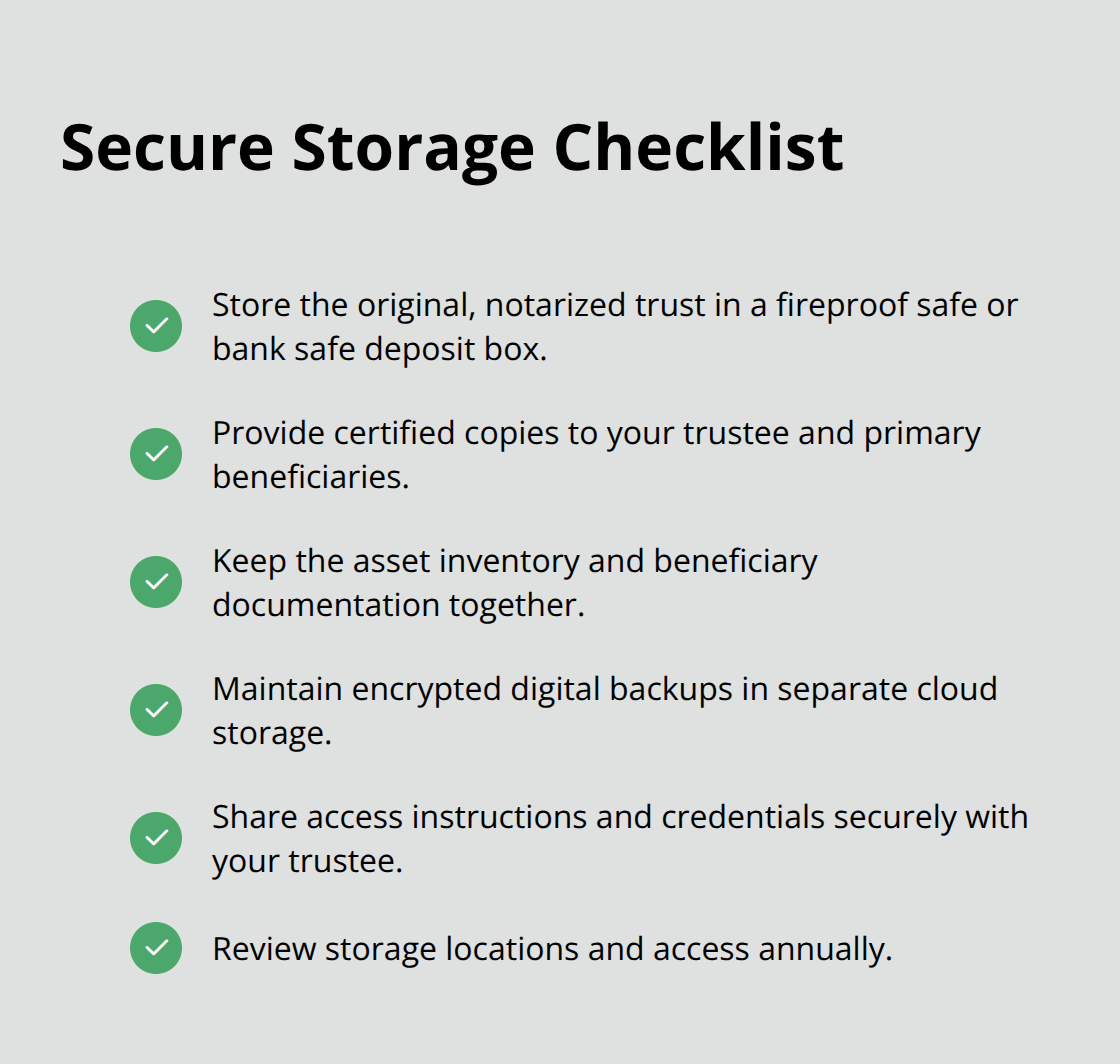
If a fire destroys your home, digital backups prevent total loss.
Review Your Checklist Every Year
Set a calendar reminder to review your entire checklist every 12 months, or immediately after any major life event. Pull out your master index and check the last review date on each document. Open your most recent bank and investment statements to confirm accounts still exist and balances are current. Review your beneficiary designations to confirm they still reflect your wishes. If you married, divorced, had children, bought property, or experienced significant financial changes since your last review, your trust likely needs amendments. Learning how to manage trusts with practical steps helps you handle these updates smoothly. Don’t wait until your health declines or a crisis hits. Annual reviews catch problems while you can still fix them easily.
Final Thoughts
A comprehensive trust paperwork checklist protects your family by eliminating confusion when they need clarity most. When your trustee has a clear index of documents, knows where originals are stored, and understands which assets belong in the trust, they can act quickly and confidently. Your beneficiaries receive their inheritance without unnecessary delays or disputes.
Getting your paperwork in order starts with gathering everything you have and sorting it by category. Create that master document index listing every asset, account number, and location. Store originals securely and keep copies accessible to your trustee, then commit to reviewing your trust paperwork checklist annually and updating it whenever your life changes.
We at Law Offices of Roshni T. Desai help families across Southern California build and maintain trusts that actually work when needed. We understand the specific documents your situation requires and how to organize them properly, and we offer free consultations with flexible scheduling at your home or office so you can discuss your trust paperwork needs without traveling to meet us. Visit Law Offices of Roshni T. Desai to schedule your consultation and take the next step toward protecting your family with a properly organized trust.