




Trust Administration Attorney in Orange County, California: Local Expertise for Your Estate
When a loved one passes away, managing their trust becomes your responsibility. This process involves handling assets, communicating with beneficiaries, and navigating California’s legal requirements.
A California trust administration attorney helps you avoid costly mistakes and delays. We at Law Offices of Roshni T. Desai understand Orange County’s unique property laws and can guide you through every step.
What Trust Administration Actually Requires
Identifying and Securing Trust Assets
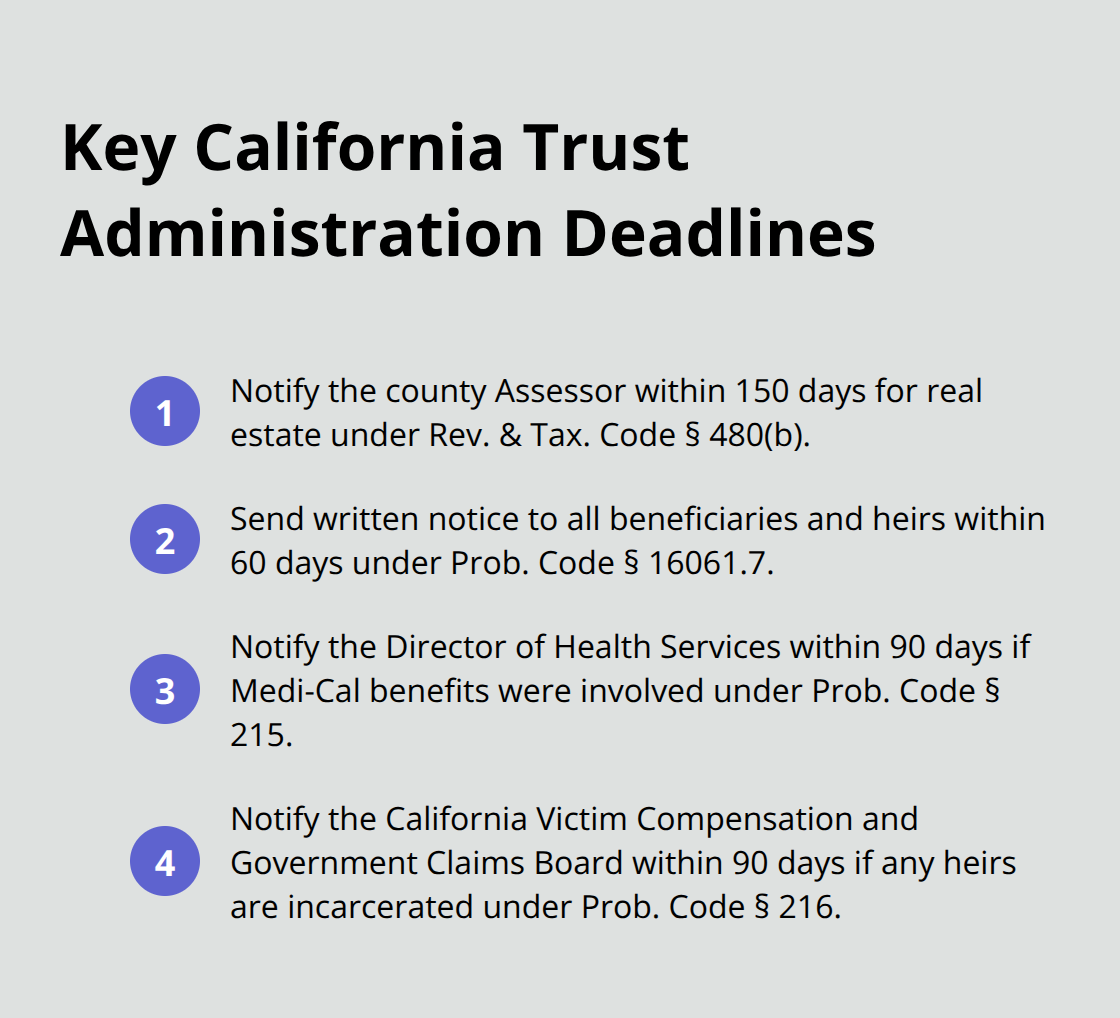
Trust administration after someone’s death demands three interconnected responsibilities that require attention to detail and strict compliance with California timelines. First, you must identify and secure all trust assets-bank accounts, investment portfolios, real estate, vehicles, and personal property. California law requires you to inventory and value these assets at the time of death. For real estate, you must notify the county Assessor within 150 days under Revenue and Taxation Code Section 480(b). This notification affects property tax treatment and prevents administrative complications later.
Meeting Beneficiary and Creditor Notification Deadlines
Second, you need to handle communications with beneficiaries and creditors within specific windows. California Probate Code Section 16061.7 requires written notice to all beneficiaries and heirs within 60 days of becoming trustee. This notice must include the settlor’s name and date of death, your contact information, the location where administration occurs, beneficiaries’ right to obtain a copy of the trust document, and the deadline to challenge the trust. Missing this 60-day requirement exposes you to personal liability and triggers disputes that spiral into costly litigation.
Completing Tax and Legal Paperwork
Third, tax and legal paperwork cannot be delayed or overlooked. You must determine whether federal or state estate tax returns apply, obtain a new tax identification number for the trust, file the settlor’s final income tax return for the year of death, and handle property-related filings with state agencies. If Medi-Cal benefits were involved, notify the Director of Health Services within 90 days under Probate Code Section 215. If any heirs are incarcerated, notify the California Victim Compensation and Government Claims Board within 90 days under Probate Code Section 216. These administrative steps carry serious consequences if missed.
Many trustees underestimate the complexity and attempt to manage administration alone, which frequently results in missed deadlines, incomplete disclosures, and disputes with beneficiaries who feel excluded from the process. The specific challenges that arise during trust administration-from beneficiary conflicts to complex asset valuations-require careful navigation to protect both the estate and your personal interests.
Why Local Knowledge Matters in Trust Administration
Understanding Orange County’s Probate Rules and Timelines
California probate law shifts regularly, and Orange County applies specific property tax and real estate rules that differ from other counties. When you file trust paperwork, the county Assessor, probate courts, and financial institutions in Orange County follow local procedures and timelines that a general attorney may not understand well. Notifying the county Assessor within 150 days of death under Revenue and Taxation Code Section 480(b) requires knowledge of how Orange County’s Assessor’s Office processes these notices and what documentation they accept.
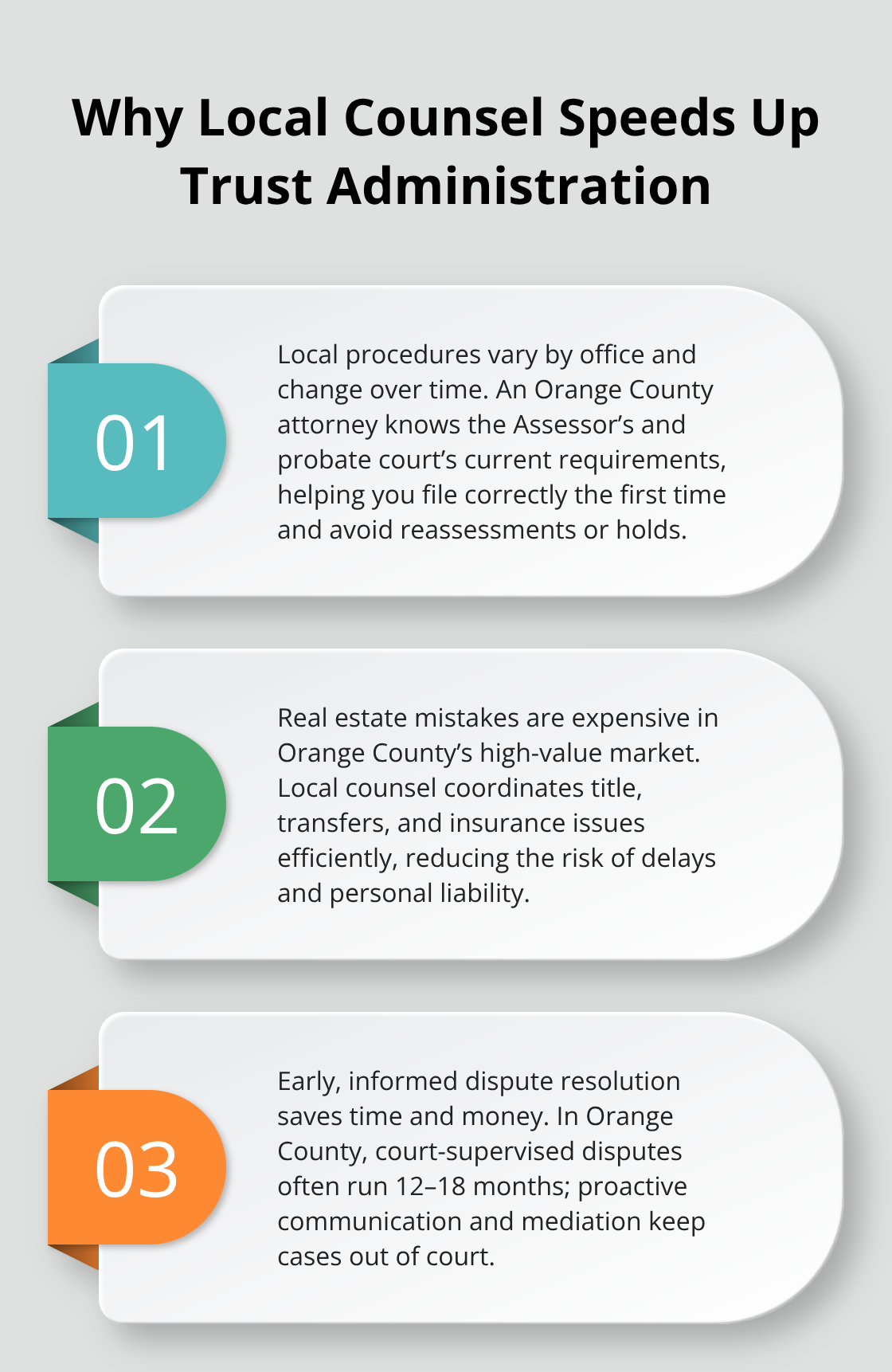
A local attorney knows which forms work, which offices to contact, and how to handle follow-ups when processing delays occur. Missing this step or filing incorrectly triggers property tax reassessments or administrative holds that delay distributions to beneficiaries by months.
Handling Real Estate Transactions in Orange County’s Market
Real estate transactions during trust administration demand particular attention in Orange County’s competitive market. When you sell trust property or transfer it to beneficiaries, you must comply with California’s probate code, handle title transfers correctly, and manage any title insurance issues. Orange County property values mean mistakes carry high costs-a misfiled deed or missed deadline delays a sale, triggers title problems, or exposes you to personal liability. Ms. Desai’s dual licensure as an attorney and real estate professional streamlines property-related trust matters and reduces the costs and delays that typically arise when attorneys and real estate agents work separately.
Resolving Beneficiary Disputes Before They Escalate
Beneficiary disputes escalate faster when communication breaks down or deadlines slip. A local attorney familiar with Orange County probate judges and dispute resolution practices can mediate conflicts before they reach court, saving thousands in litigation costs. Court-supervised disputes in Orange County probate court average 12 to 18 months and consume substantial legal fees, whereas early intervention and clear communication prevent most conflicts from reaching that stage. Understanding Orange County’s probate environment, property landscape, and local court processes protects your administration timeline and keeps costs predictable instead of watching them grow as problems accumulate.
What Causes Trust Administration to Fail
Poor Communication Breaks Down Beneficiary Trust
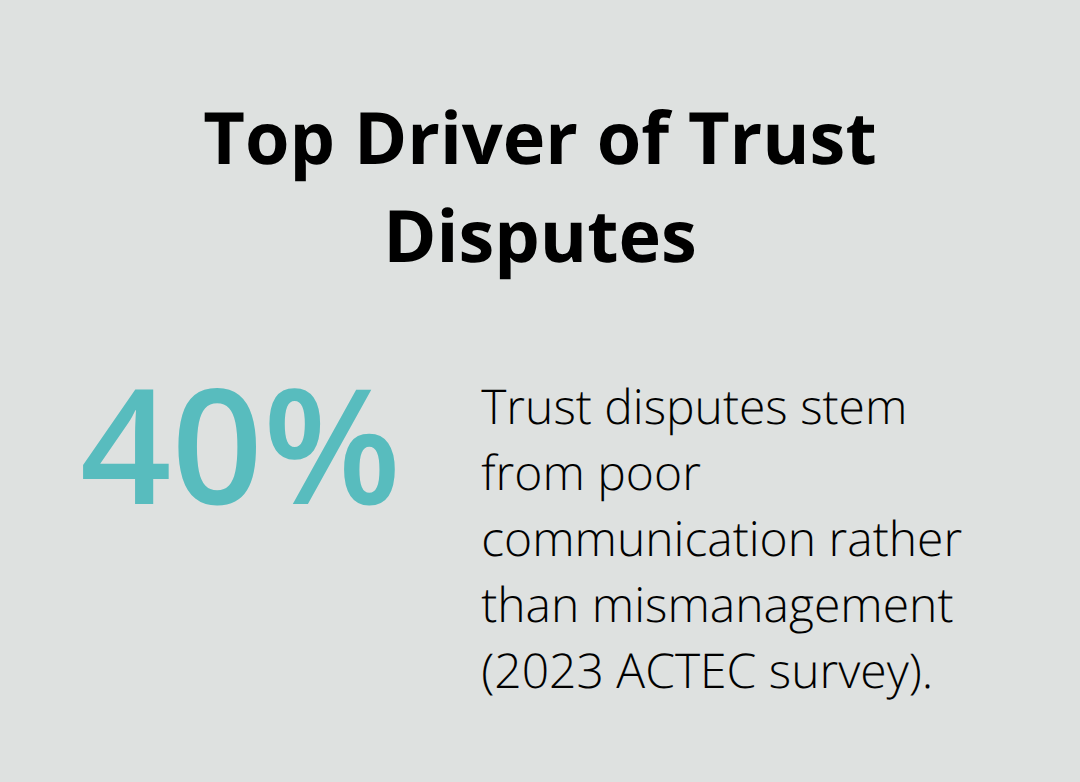
Trust administration fails most often when trustees and beneficiaries lack clear communication from the start. Disputes emerge not because people are difficult, but because beneficiaries feel uninformed and trustees feel overwhelmed by conflicting demands. California Probate Code Section 16061.7 requires you to notify beneficiaries within 60 days of becoming trustee, yet many trustees skip this step or provide incomplete information. When beneficiaries discover they were excluded from notices or left wondering about asset values, they lose confidence in the process and turn to litigation. A 2023 survey by the American College of Trust and Estate Counsel found that 40 percent of trust disputes stem from poor communication rather than actual mismanagement.
The fix is straightforward: send detailed written notice immediately, explain what assets exist, describe your timeline for distributions, and invite questions. If beneficiaries understand what is happening and why, disputes rarely escalate.
Real Estate Complications Demand Coordinated Expertise
Real estate complicates administration because property valuation, title transfers, and tax implications require coordination across multiple parties. When you inherit a home in Orange County worth $1.2 million, determining its fair market value at death affects both income tax basis and distribution fairness to other beneficiaries. Appraisers cost $1,500 to $3,000 per property, yet skipping this step invites beneficiaries to challenge your valuations later in court. Title transfer mistakes are equally costly-a misfiled deed delays probate court clearance by months, and title insurance companies may refuse to insure the property if the chain of ownership contains gaps.
Trust administration in Orange County demands expertise that coordinates legal and real estate considerations to prevent the communication breakdowns that typically occur when attorneys and real estate professionals work separately.
Asset Distribution Timing Creates Resentment Among Beneficiaries
Asset distribution disputes intensify when beneficiaries inherit different asset types and feel disadvantaged by timing. If one beneficiary receives cash immediately while another waits for a home sale to complete, resentment builds fast. Complex estates with retirement accounts, investment portfolios, and real property demand careful sequencing of distributions to honor the trust document while managing tax consequences. The trustee’s duty under California Probate Code Sections 16060-16069 requires you to invest trust assets with reasonable care, maintain detailed records, and provide accounting to beneficiaries upon request. Missing even one accounting deadline gives beneficiaries legal grounds to petition the court for removal of the trustee and personal damages.
The practical solution is to prepare a written distribution timeline at the start of administration, showing which assets go to whom and when, then stick to that schedule religiously. If circumstances change (a property fails to sell on schedule or a creditor claim arrives), communicate the delay immediately with documentation of the reason. Beneficiaries accept delays far better than surprises.
Final Thoughts
Trust administration in Orange County demands attention to detail, strict adherence to California timelines, and knowledge of local property rules that affect both the process and costs. A California trust administration attorney protects you from missed deadlines, beneficiary disputes, and costly mistakes that accumulate when you navigate this process alone. We at Law Offices of Roshni T. Desai bring over 25 years of experience handling trust and probate administration across Southern California, with Ms. Desai’s dual licensure as an attorney and real estate professional streamlining property-related matters that typically require separate professionals.
We handle the full scope of trust administration-from notifying beneficiaries and creditors within required timelines to managing real estate transactions, filing tax returns, and preparing accountings that satisfy California law. Our approach emphasizes clear communication with beneficiaries from day one, preventing the misunderstandings that fuel conflicts later. The sooner you address trust administration with professional support, the sooner beneficiaries receive their distributions and the process closes without unnecessary expense or delay.
Contact Law Offices of Roshni T. Desai for a free consultation if you are managing a trust or facing questions about your responsibilities as trustee. We offer flexible home or office visits and personalized guidance tailored to your situation.