




Trust Administration Attorney Tips: Practical Advice for Trustees
Being named a trustee is a significant responsibility that many people underestimate. You’re legally required to manage assets, communicate with beneficiaries, and handle complex tax obligations-all while avoiding costly mistakes.
At Law Offices of Roshni T. Desai, we’ve seen trustees struggle without proper guidance. This guide provides trust administration attorney tips to help you navigate your duties confidently and protect yourself from disputes.
Understanding Your Role as Trustee
Legal Duties and Responsibilities You Cannot Ignore
As a trustee, you have legal duties that extend far beyond simply holding onto assets. State law imposes fiduciary obligations on you, meaning you must act in the beneficiaries’ best interests rather than your own. The Uniform Trust Code, adopted across most states, requires you to know the terms of the trust document, understand beneficiary identities and interests, and manage trust property with reasonable care. You must also keep detailed records of all transactions, provide accountings to beneficiaries, and file required tax returns.
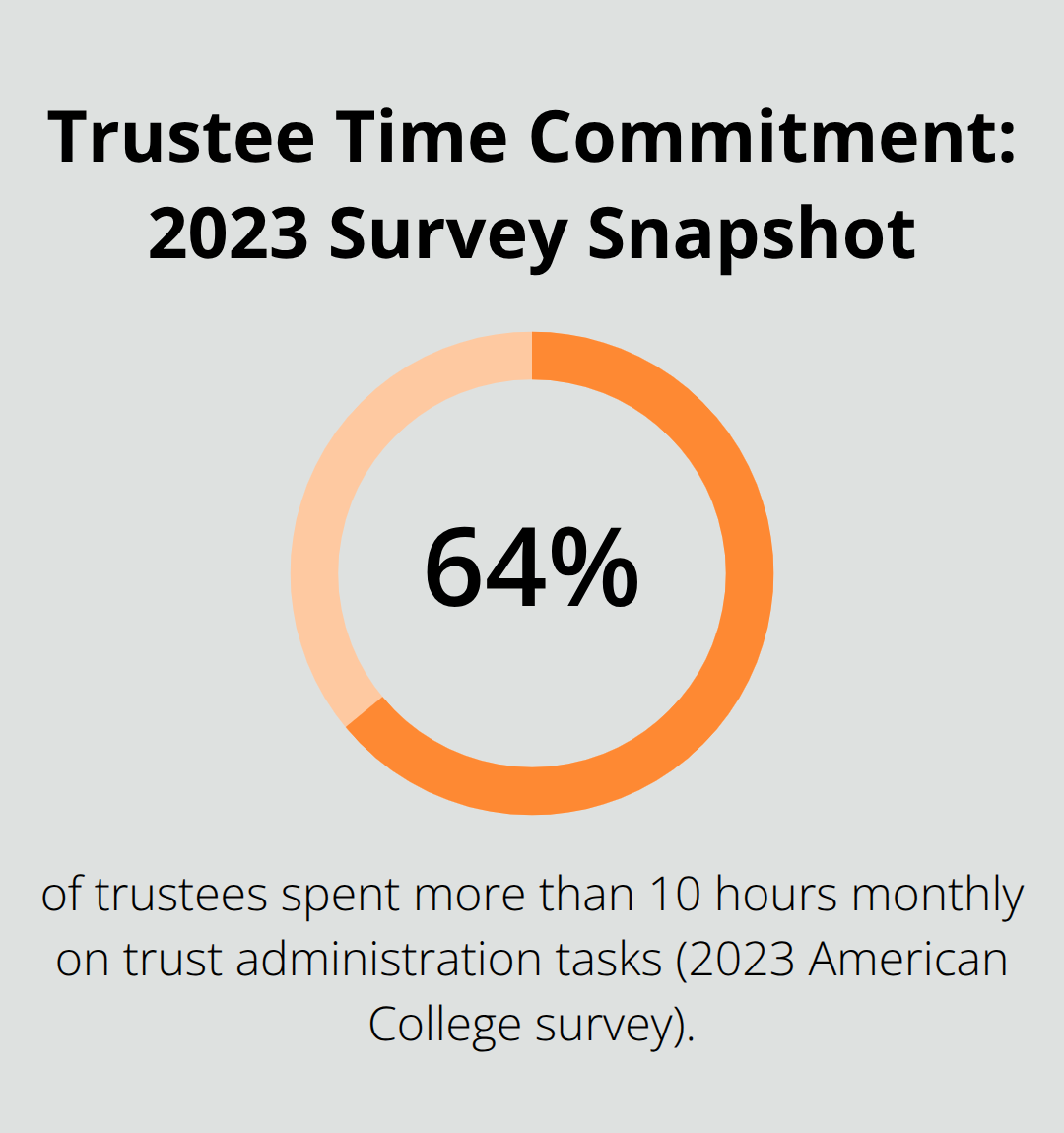
Many trustees underestimate the time commitment involved. A 2023 survey by the American College found that 64% of trustees spent more than 10 hours monthly on trust administration tasks, yet nearly half felt unprepared for the role. This gap between expectations and reality creates serious exposure to liability and beneficiary disputes.
Common Mistakes Trustees Make and How to Avoid Them
One common mistake is failing to separate personal funds from trust assets. When trust money mixes with your own accounts, you lose liability protection and invite beneficiary challenges. Another frequent error involves making distributions without understanding the trust’s specific language about when and how money should be paid out. Some trustees distribute everything immediately, only to discover the document required staggered payments or directed specific amounts to different beneficiaries.
Communication failures rank equally high on the mistake list. Beneficiaries who feel ignored become suspicious and litigious. You should provide written accountings at least annually, explain investment decisions, and respond promptly to reasonable requests for information. This transparency prevents misunderstandings before they escalate into conflicts.
When to Hire a Trust Administration Attorney
Hiring a trust administration attorney becomes necessary when the trust is complex, assets exceed $1 million, beneficiaries disagree on distributions, or you face tax complications. Getting professional guidance early rather than waiting until problems escalate makes financial sense, as preventive legal work costs significantly less than resolving disputes after they arise. The specific circumstances of your trust will determine whether you need immediate assistance or can proceed with periodic consultations.
Managing Trust Assets and Distributions
How to Inventory and Protect Trust Property
Create a complete inventory within 30 days of your appointment as trustee. Document every asset, including real estate with current appraisals, bank accounts with balances, investment portfolios, business interests, and personal property of significant value. Take photographs of valuable items, obtain property tax records, and list all account numbers and institutions. This inventory becomes your baseline for tracking whether the trust’s value increased or decreased during your administration.
Once documented, separate all trust assets from your personal accounts immediately. Mixing funds creates liability exposure and gives beneficiaries legitimate grounds to challenge your management, even if you eventually account for everything correctly. Open a dedicated trust bank account at a reputable institution and transfer all liquid assets there within the first month. Maintain meticulous records of every transaction, including dates, amounts, and purposes. Many trustees delay this work and regret it later when beneficiaries question whether assets disappeared or were mismanaged.
Navigating Beneficiary Requests and Communication
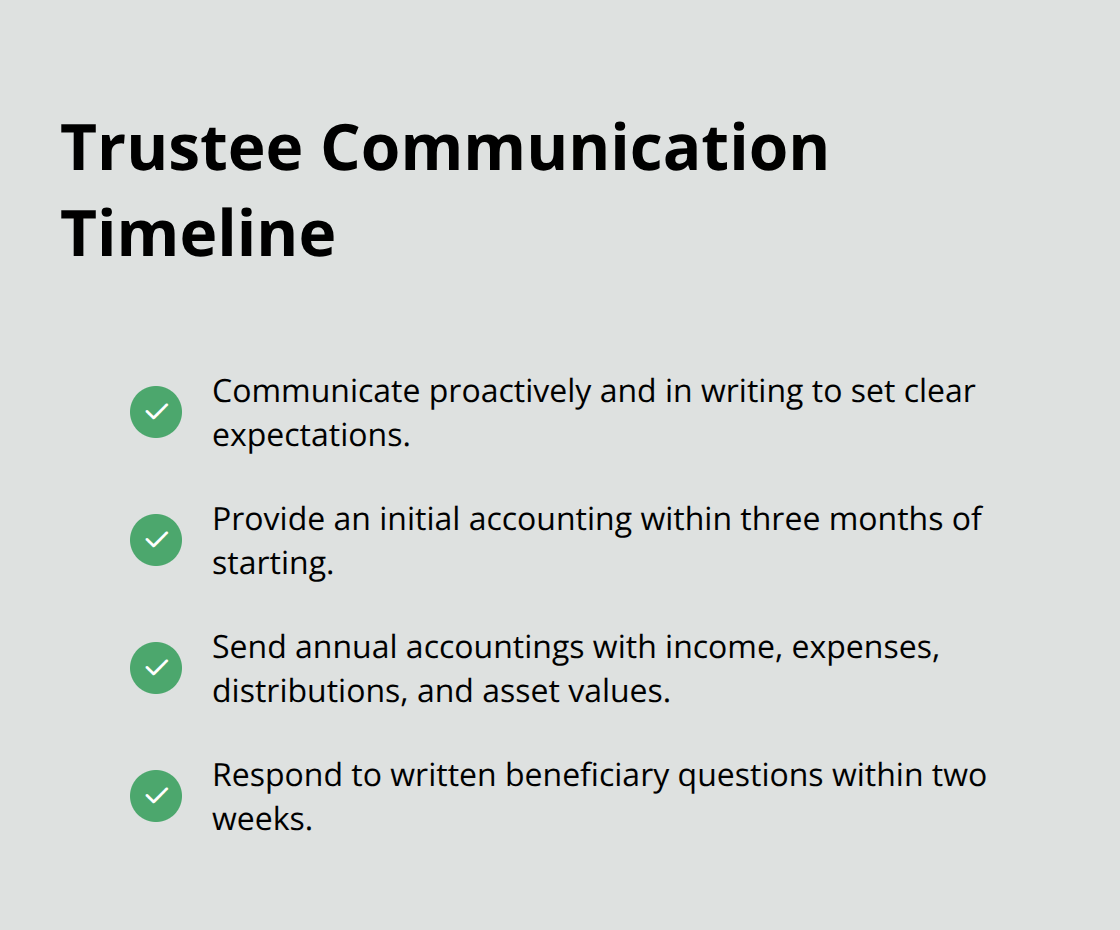
Communicate with beneficiaries proactively and in writing. Provide an initial accounting within three months showing all assets, liabilities, and your administration plan. Then send annual accountings detailing income received, expenses paid, distributions made, and current asset values. Answer written questions within two weeks, even if the answer is simply that you need more time to investigate.
Beneficiary disputes arise most frequently when trustees fail to communicate about investment decisions or delay responses to reasonable information requests. Address each request promptly and explain your reasoning for decisions affecting the trust. This transparency prevents misunderstandings before they escalate into conflicts that drain trust resources.
Tax Obligations and Deadlines You Need to Know
Address tax obligations immediately because missed deadlines carry penalties and interest that reduce trust assets available for distribution. The IRS expects trustees to file Form 1041 annually for trusts with income over $600, and state authorities require detailed accountings to beneficiaries. File federal income tax returns by April 15 each year, state income tax returns according to your state’s schedule, and property tax returns if real estate is involved.
Trust administration typically takes one to three years, and you cannot close the trust or distribute final assets until all tax returns are filed and any liabilities paid. If the trust holds complex assets like business interests or rental properties, consult with a tax professional within the first month (this prevents costly mistakes that multiply throughout administration). Without organized records, you cannot fulfill these obligations or defend yourself against disputes. When conflicts emerge over distributions or asset management, professional guidance becomes essential to protect both the trust and your personal liability.
Trust Administration Disputes and Solutions
Beneficiary challenges happen more often than trustees expect, and they escalate quickly when communication breaks down or asset management becomes unclear. The American Bar Association reports that approximately 30% of trust administrations result in some form of beneficiary dispute, yet most conflicts could have been prevented with proper documentation and transparent decision-making from the start. Disputes typically emerge when beneficiaries question distributions, suspect mismanagement of assets, or feel excluded from important decisions. You cannot eliminate all disagreements, but you can minimize their severity and cost through deliberate actions taken early in the administration process.
Recognizing Red Flags Before Conflicts Escalate
Certain warning signs indicate that a beneficiary may pursue legal action against you. Beneficiaries who request the same information repeatedly, ask hostile questions about your fees or compensation, or suddenly retain an attorney should trigger immediate concern. If a beneficiary demands distributions that conflict with the trust document’s language, threatens to sue, or accuses you of self-dealing, the situation has moved beyond normal administration. At this stage, your instinct to handle everything yourself becomes dangerous.
Consult with a trust administration attorney before the conflict crystallizes into a formal claim. The cost of defending a trust dispute in court ranges from $10,000 to $50,000 or more, depending on complexity and duration, while preventive legal guidance typically costs a fraction of that amount. Do not wait for formal notice of a lawsuit to seek help. If you sense hostility or detect signs that a beneficiary is building a case against you, contact an attorney immediately to assess your exposure and develop a response strategy.
Taking Action When Conflicts Arise
If a beneficiary formally challenges your actions or the trust itself, your first step is to gather all documentation supporting your decisions. Compile every accounting you provided, every communication with beneficiaries, every investment decision with supporting analysis, and every distribution made according to the trust document. This evidence proves you acted reasonably and in accordance with your fiduciary duties.
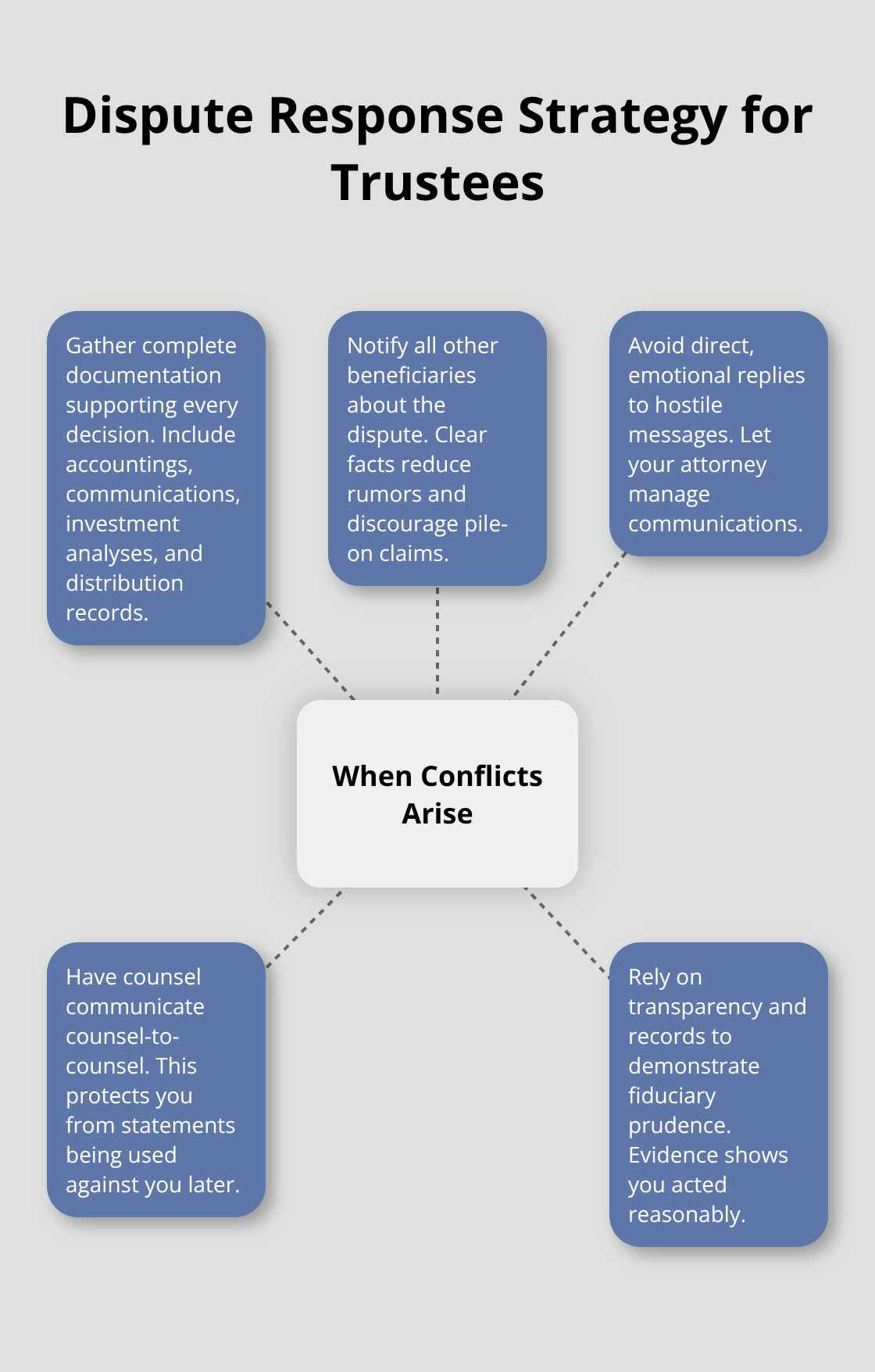
Next, notify all other beneficiaries in writing that a dispute has been raised and explain the nature of the challenge. Beneficiaries who understand the facts are less likely to join the challenging party, and transparency prevents rumors from fueling additional conflicts. Do not respond to hostile communications directly or emotionally. Instead, have your attorney communicate with the challenging beneficiary’s counsel, which establishes a professional boundary and prevents statements you make from being used against you later.
Resolving Disputes Before Litigation
Many trustees make the mistake of trying to resolve disputes through direct negotiation, which often intensifies conflict because beneficiaries interpret personal communication as an opportunity to pressure you. Professional dispute resolution, managed through your attorney, often resolves disputes before litigation becomes necessary and costs significantly less than courtroom battles. If mediation fails and litigation appears inevitable, your attorney will guide you through discovery, depositions, and trial preparation while protecting your personal assets and reputation.
Final Thoughts
Trust administration demands attention to detail, consistent communication, and a willingness to seek professional guidance when complexity arises. The responsibilities you carry as trustee directly impact whether beneficiaries receive their inheritance smoothly or become entangled in costly disputes. Your fiduciary duty requires you to manage assets carefully, maintain transparent records, meet tax deadlines, and keep beneficiaries informed throughout the process.
Working with a trust administration attorney transforms how you approach these responsibilities. Rather than navigating tax requirements, beneficiary conflicts, and asset management decisions alone, you gain access to someone who understands state law, recognizes problems before they escalate, and protects both the trust and your personal interests. Trust administration attorney tips consistently emphasize that preventive legal guidance costs far less than defending disputes after they arise.
If you’re managing a trust and feel uncertain about your next steps, contact us for a free consultation. We at Law Offices of Roshni T. Desai offer flexible home or office visits to discuss your specific situation and explain how professional guidance can simplify your administration process. Reach out to our team today to get the support you need.