




Trust Administration Timeline SoCal
Trust administration in Southern California typically takes 9 to 18 months, but many families face unexpected delays that extend this timeline significantly. Understanding what happens after a trust settlor passes away helps beneficiaries prepare for the road ahead.
At Law Offices of Roshni T. Desai, we’ve guided countless families through this process and seen firsthand how proper planning prevents costly setbacks. This guide walks you through the trust administration timeline in SoCal and shows you where bottlenecks commonly occur.
Understanding the Trust Administration Process
What Happens Immediately After the Settlor’s Death
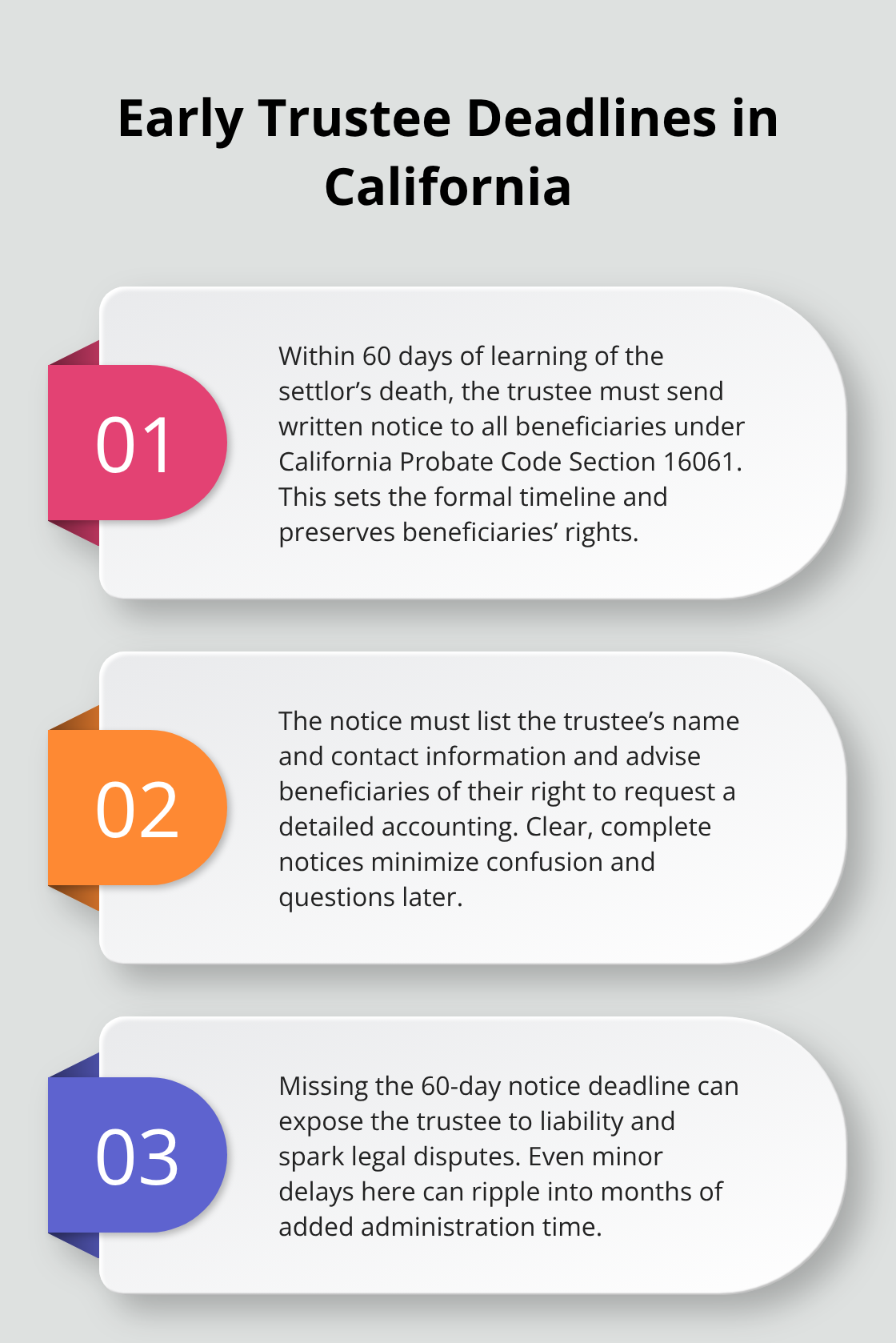
When a trust settlor passes away, the trustee must act within specific timeframes set by California law. California Probate Code Section 16061 requires trustees to provide notice to beneficiaries within 60 days of learning about the settlor’s death. This notification must include the trustee’s name, contact information, and a statement that beneficiaries have the right to request a detailed accounting. Missing this deadline creates liability for the trustee and can trigger legal disputes that delay the entire process by months.
The trustee’s first 90 days are critical. During this window, they must locate the original trust document, identify all assets, notify financial institutions, and begin the inventory process. Many trustees underestimate this workload, which is why families in Southern California often experience their first major delays during this initial phase.
How Trust Complexity Shapes the Timeline
The trustee’s actual responsibilities depend heavily on the trust’s complexity. A simple trust with one primary residence and modest bank accounts might require just basic asset transfers and final tax filings, typically completed within 12 months. Complex trusts involving multiple properties, business interests, or significant real estate holdings demand comprehensive appraisals, potential probate court involvement, and coordination with multiple professionals.
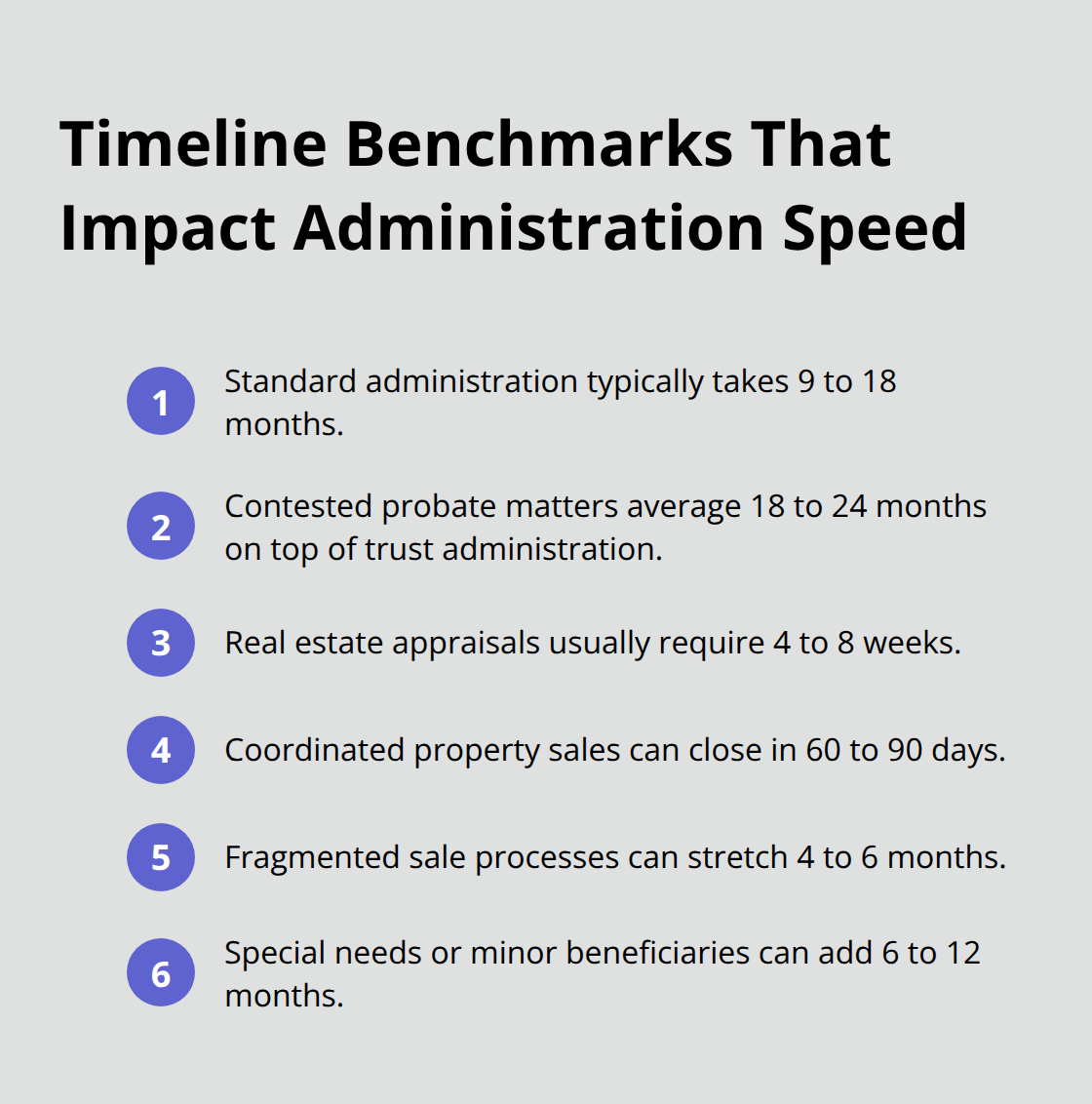
California requires appraisals for real estate valued over $10,000, and in Southern California’s competitive market, getting accurate valuations often takes 4 to 8 weeks. If the trust includes rental properties or commercial assets, the trustee must maintain operations, manage tenant relationships, and maintain insurance coverage throughout administration. Trusts with minor beneficiaries or special needs provisions add another 6 to 12 months because California law mandates different handling and reporting requirements.
Moving Forward With Professional Guidance
Trustees who understand these variations upfront avoid panic-driven decisions that later cause complications with beneficiaries. The next section examines where delays most commonly occur in Southern California trust administration and what causes them.
What Causes Trust Administration to Stall in Southern California
Probate Court Involvement Extends Timelines Dramatically
Probate court involvement stands as the single largest cause of extended timelines in Southern California trust administration. When a trust contains assets that require court intervention-typically real property with title defects, disputes over asset ownership, or situations where the trust document itself faces legal challenges-the process shifts from private administration to the public court system. Los Angeles County Superior Court currently reports average probate case resolution times of 18 to 24 months for contested matters, and this timeline exists on top of the 9 to 18 months already required for standard trust administration. A single problematic asset can force the entire administration into probate court, essentially resetting the clock and adding substantial court fees and attorney costs to the overall expense.
Asset Identification and Valuation Create Unexpected Bottlenecks
Asset identification and valuation creates another significant bottleneck that families rarely anticipate. Southern California’s real estate market requires current appraisals for any property exceeding $10,000, and obtaining these appraisals typically consumes 4 to 8 weeks. When a trust holds multiple properties across different counties, coordinating appraisals becomes exponentially more complex. If the trust includes business interests, retirement accounts with named beneficiaries, or assets held in other states, the trustee must verify ownership documentation, obtain transfer valuations, and resolve any title or beneficiary designation conflicts. Trustees often spend months simply locating all assets because the settlor failed to maintain a current inventory-a preventable delay that proper estate planning eliminates entirely.
Beneficiary Disputes Trigger Prolonged Litigation
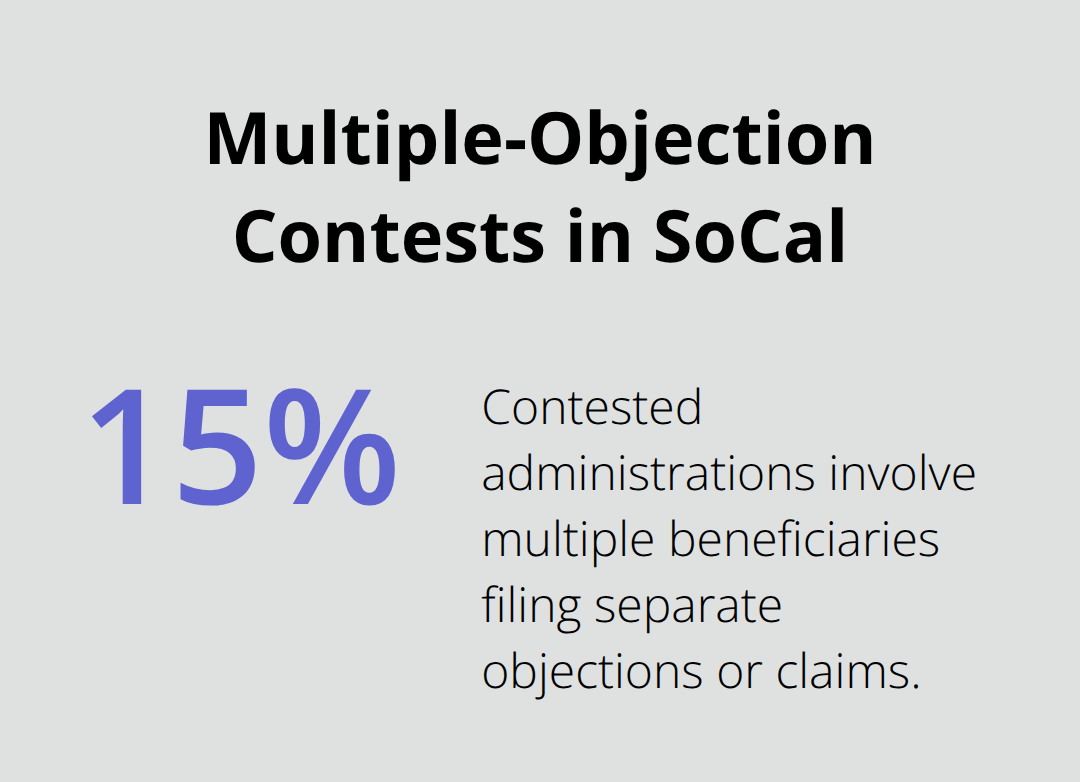
Beneficiary disputes and contests represent the most emotionally charged delays and often the most destructive to administration timelines. California law allows beneficiaries to contest trust validity, challenge trustee decisions, or dispute asset distributions, and these disputes frequently trigger litigation that extends administration by 12 to 36 months. According to data from trust litigation cases in Southern California courts, approximately 15 percent of contested trust administrations involve multiple beneficiaries filing separate objections or claims. When beneficiaries lack clear understanding of the trust terms, the trustee’s duties, or their own rights, suspicion and conflict escalate quickly.
Transparent Communication Prevents Conflict
Establishing transparent communication protocols from day one substantially reduces the likelihood that beneficiaries will challenge the administration later. Detailed accounting statements, regular updates on asset sales or transfers, and clear explanations of trustee decisions all work together to build confidence among beneficiaries. This foundation of openness transforms the administration from a source of family tension into a manageable process. With these common delays identified, the next section shows how proper planning and coordinated action can prevent many of these obstacles from materializing in the first place.
How Proper Planning Prevents Months of Delays
Draft Trusts With Complete Asset Information
The most effective way to prevent trust administration delays happens years before the trustee takes action. Trusts drafted without attention to Southern California’s specific requirements create problems that surface only after the settlor dies, when correction becomes exponentially more expensive and time-consuming. A trust that fails to clearly identify all assets, lacks proper property descriptions, or contains conflicting beneficiary language forces the trustee into months of detective work and potential court involvement. Detailed asset schedules, clear instructions about property titles, and explicit trustee powers eliminate most of the guesswork that typically delays administration. When a trust document explicitly authorizes the trustee to sell real property, manage business interests, and make distribution decisions without court approval, the entire process accelerates significantly.
Southern California families who invest in comprehensive estate planning see administration timelines compress from 18 months down to 9 to 12 months because the trustee operates from day one with clear authority and complete information. The settlor’s responsibility to maintain an accurate inventory of all assets-including real estate, financial accounts, business interests, and personal property-removes the detective work that consumes months during administration.
Coordinate Property Sales as a Unified Process
Property sales represent another major delay point that proper planning addresses directly. Many Southern California trusts hold real estate that must be sold during administration, and the typical process involves hiring a real estate agent, listing the property, managing showings, and coordinating the sale through a separate closing attorney. This fragmented approach introduces communication gaps, conflicting timelines, and unnecessary transaction costs.
Dual licensure as both attorney and real estate professional streamlines property sales as a unified process. Rather than coordinating between separate professionals, the trustee works with one point of contact who understands both the legal requirements and the market realities. This approach eliminates delays caused by miscommunication between agents and attorneys, reduces transaction costs by consolidating professional fees, and completes sales within 60 to 90 days rather than stretching across 4 to 6 months.
Establish Transparent Communication From Day One
Transparent communication with all beneficiaries throughout administration prevents the disputes that cause the longest delays. Trustees who send detailed accounting statements quarterly, explain every major decision in writing, and respond promptly to beneficiary questions establish trust that prevents litigation. Beneficiaries who understand what the trustee does and why rarely challenge the administration later. This foundation of openness transforms the administration from a source of family tension into a manageable process that moves forward without unnecessary conflict or legal obstacles.
Final Thoughts
Trust administration in Southern California typically spans 9 to 18 months when the trust is well-drafted and administration proceeds without major obstacles. Beneficiaries who understand the trust administration timeline in SoCal can prepare financially and emotionally for the process ahead. The timeline compresses significantly when the trustee has clear authority, complete asset information, and transparent communication channels with all beneficiaries from day one.
Beneficiaries play an active role in supporting efficient administration by responding promptly to trustee requests for information, providing documentation about assets or debts, and asking clarifying questions about distributions. When beneficiaries understand their rights and the trustee’s responsibilities, suspicion and conflict diminish substantially. Beneficiaries should request regular accounting statements, ask for written explanations of major decisions like property sales or asset transfers, and raise concerns immediately rather than allowing frustration to build into formal disputes.
Trustees who lack experience managing complex estates or navigating California’s specific legal requirements benefit enormously from working with professionals who understand both the legal framework and the practical realities of Southern California administration. We at Law Offices of Roshni T. Desai guide families through trust administration with personalized attention and practical solutions, offering free consultations with flexible scheduling to discuss your specific situation and answer questions about what to expect during administration.