




Trust Administration Workflows: Streamlining Your Trust Operations
Trust administration workflows often become bogged down by disorganized documents, communication gaps, and complex tax issues. These bottlenecks delay distributions to beneficiaries and create unnecessary stress for trustees.
We at Law Offices of Roshni T. Desai have seen firsthand how the right systems and processes transform trust administration from a painful ordeal into a manageable operation. This guide walks you through proven strategies to streamline every phase of trust management.
The Essential Trust Administration Roadmap
Phase One: Locating and Cataloging Trust Assets
Trust administration requires three sequential phases that trustees must complete with precision. The first phase involves locating and cataloging every trust asset, from bank accounts to real estate holdings. According to the American Bar Association, incomplete asset identification ranks among the top reasons trust administration extends beyond necessary timelines.
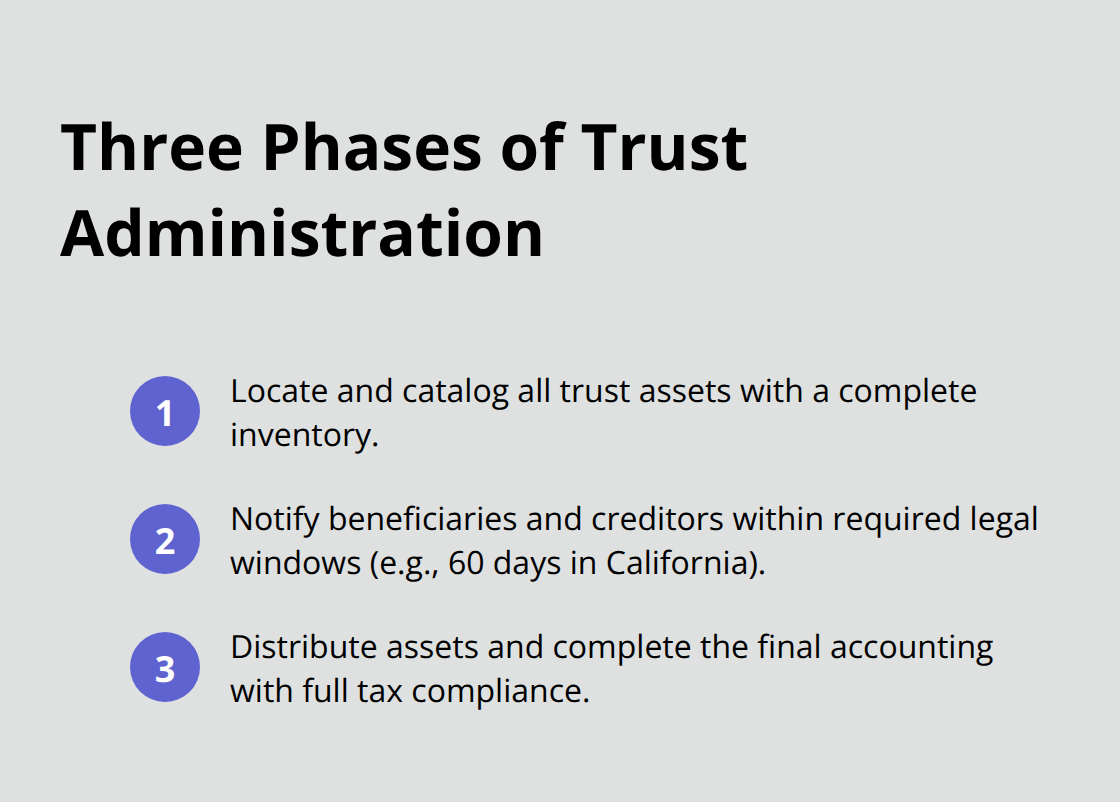
Trustees should request certified copies of the trust document, death certificate, and any amendments, then systematically contact financial institutions, title companies, and insurance providers to compile a comprehensive inventory. Create a master spreadsheet listing each asset’s location, current value, account numbers, and any outstanding liens or obligations. This foundational work prevents costly mistakes later and establishes the factual basis for all subsequent decisions.
Phase Two: Notifying Beneficiaries and Creditors
The second phase demands immediate notification to beneficiaries and creditors within strict legal windows. California law requires trustees to provide beneficiaries with notice of their rights and the trust’s existence, typically within 60 days of the settlor’s death. Creditors have a limited period to file claims against the estate, and proper notification protects the trust from surprise liabilities surfacing years later.
Document every notification with dated delivery receipts and maintain copies of all correspondence. Missing these deadlines creates legal exposure and complicates the entire administration process.
Phase Three: Distributions and Final Accounting
The third phase-distributing assets and preparing final accounting-represents the most legally sensitive work. Trustees must calculate tax liabilities, resolve any contested claims, and prepare a detailed accounting showing all receipts, disbursements, and distributions. This accounting must be submitted to beneficiaries and often requires court approval.
Tax compliance alone can involve federal estate taxes, state inheritance taxes, and income tax filings that demand specialized knowledge. Trustee liability for errors can be substantial and personal, making professional guidance essential rather than optional during this phase.
When Bottlenecks Emerge
Many trustees underestimate the complexity of distribution and accounting work, particularly when multiple asset types or beneficiaries complicate the picture. The coordination required across tax professionals, financial institutions, and beneficiaries often reveals gaps in your initial systems-which is precisely where streamlined workflows become invaluable.
Where Trust Administration Falls Apart
Disorganized Records Halt Progress
The transition from asset inventory to distributions exposes trustees to three distinct failure points that derail timelines and escalate costs. Disorganized record-keeping starts the cascade-trustees who lack a centralized system for documents, valuations, and correspondence waste hours searching for information instead of completing substantive work. The National Law Journal reports that trustees spend an average of 40 hours per month on administrative tasks during the first year of administration, with poor documentation systems extending this to 60 hours or more.
A single missing bank statement or unclear asset valuation stops the entire process while you locate supporting documents or request replacements from financial institutions. This delay compounds when multiple assets require verification simultaneously.
Communication Breakdowns Create Conflict
Beneficiaries expect regular updates on administration progress, but many trustees communicate sporadically or only when forced to by legal deadlines. This creates frustration and misunderstandings that sometimes escalate into disputes. When beneficiaries don’t know why distributions are delayed or what work remains, they assume incompetence or misconduct rather than understanding the legitimate complexity involved.
Trustees who establish clear communication schedules from the start prevent most beneficiary conflicts. Regular updates-even when progress seems minimal-build trust and manage expectations effectively.
Complex Valuations and Tax Compliance Demand Expertise
The third bottleneck involves complex asset valuation and tax compliance, which demands specialized expertise that most individual trustees lack. Real estate requires professional appraisals, closely held business interests need formal valuations, and retirement accounts involve intricate tax rules that differ from standard assets. Federal estate tax filings alone contain over 80 lines of detailed calculations, and errors trigger IRS audits that extend administration by months or years.
State-specific taxes compound the problem further; California trustees must navigate state inheritance taxes, community property rules, and local requirements that vary by county. These complexities (particularly when combined with multiple asset types) make professional guidance invaluable.
How These Problems Interact
These three issues interact destructively-poor records make tax compliance impossible to verify, communication delays prevent beneficiaries from understanding why valuations take time, and complex asset situations demand the documentation systems that disorganized trustees lack. The solution requires simultaneous attention to all three areas rather than fixing them sequentially.
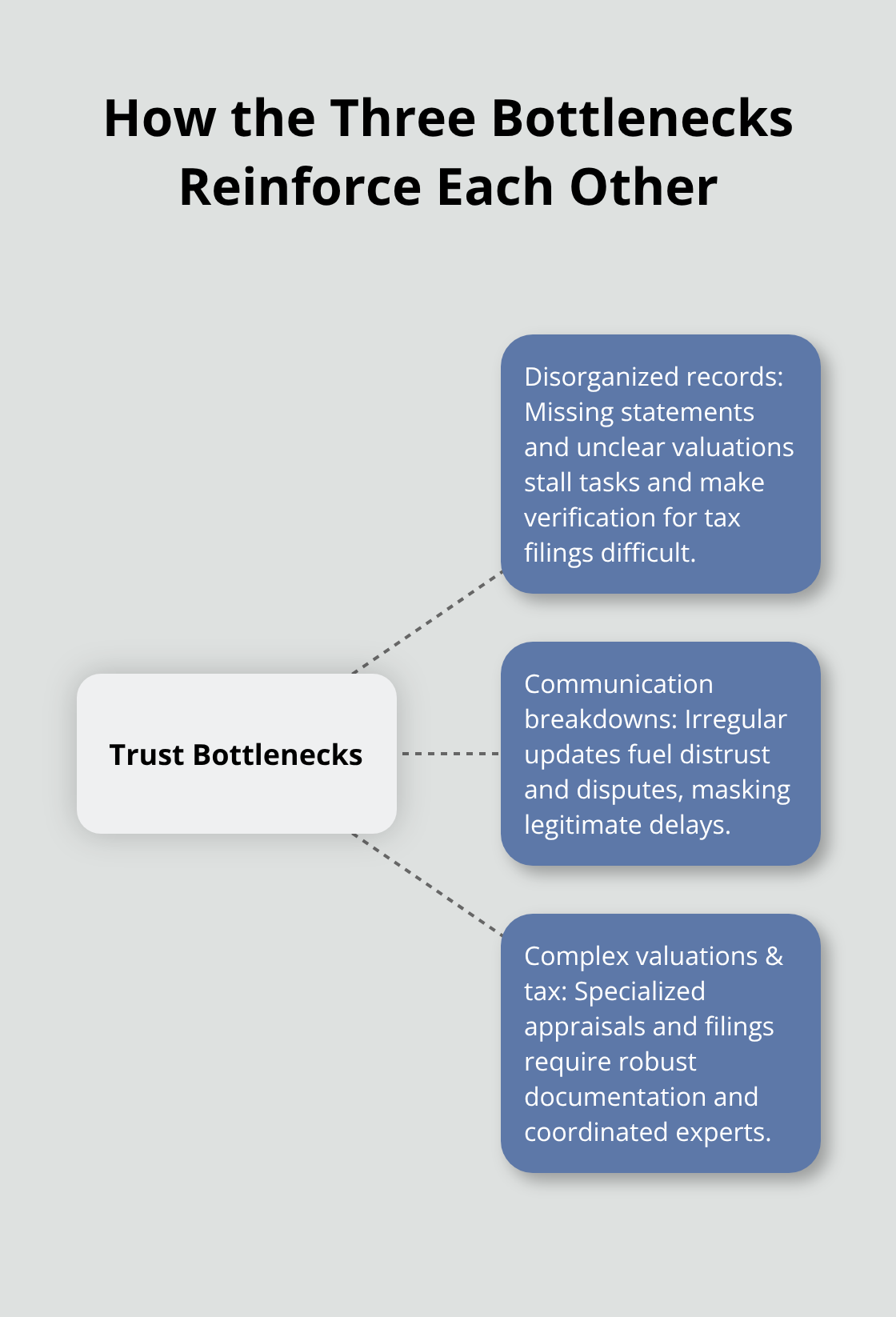
Trustees who address record-keeping, communication, and specialized expertise together move administration forward efficiently. The next section outlines specific systems that accomplish this integration.
Building Systems That Work
Fixing trust administration requires replacing reactive scrambling with deliberate systems that handle documents, timelines, and expertise simultaneously. Individual trustees often attempt to manage everything through email folders and handwritten notes, which guarantees delays and errors once administration extends beyond three or four months. Implement a centralized digital system as your first priority-not eventually, but before you start any other administration work. Services like Canopy or LawLobby create dedicated platforms where trustees upload documents, track asset values, log beneficiary communications, and maintain compliance checklists in one location. This eliminates the scattered approach where tax documents live in email, asset valuations sit in bank statements, and beneficiary contact information exists on paper notes. A single source of truth reduces the time spent locating information from an average of 40 hours monthly to roughly 25 hours, according to research from the American College of Trust and Estate Counsel.
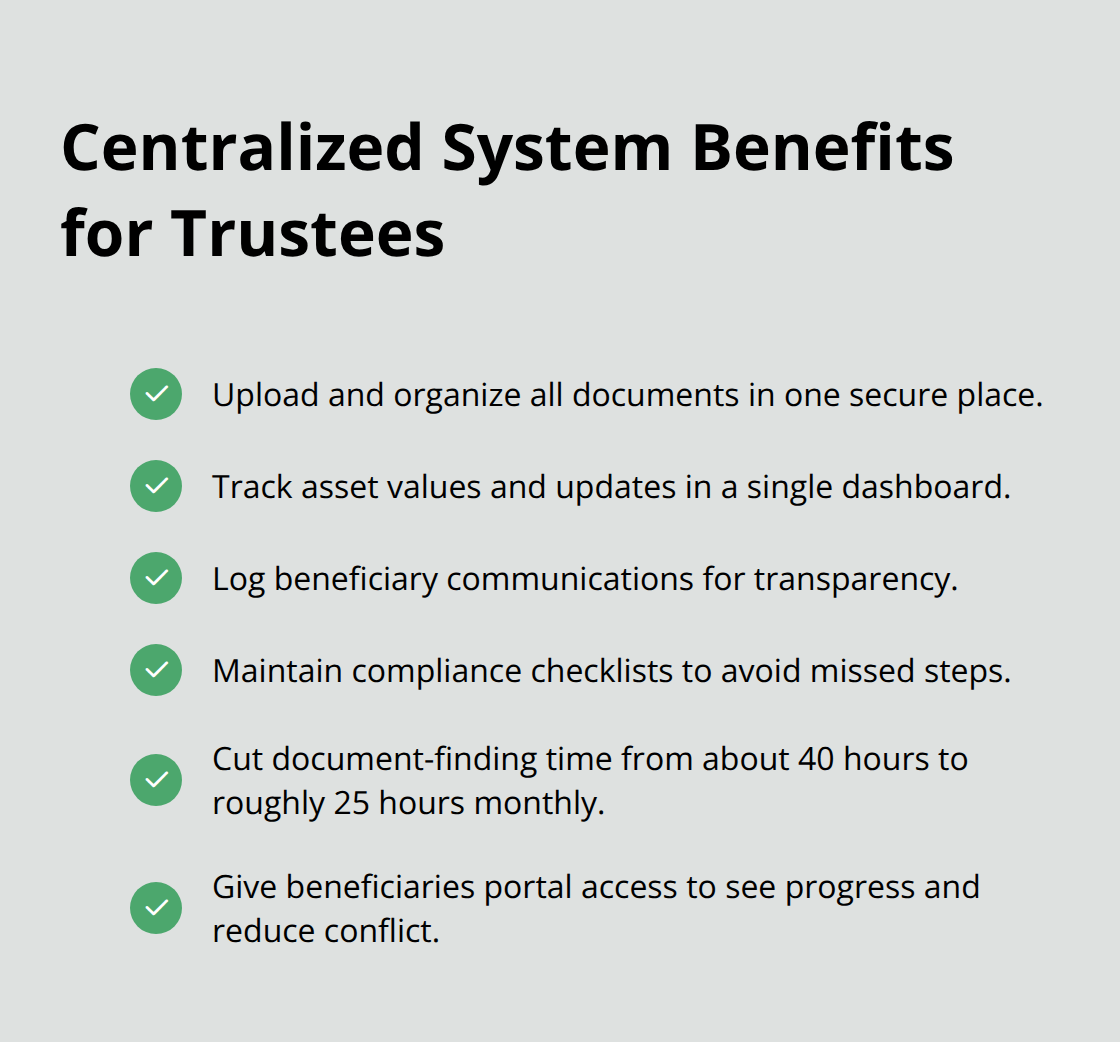
More importantly, centralized systems prevent the communication failures that create beneficiary conflict-when beneficiaries access a portal to see which documents have been received and what stage administration has reached, they stop assuming incompetence and start understanding legitimate complexity.
Establish Clear Timelines and Communication Protocols
Setting specific communication and distribution timelines transforms administration from vague and frustrating into predictable and manageable. Many trustees communicate only when forced by legal deadlines, leaving beneficiaries in the dark for months. Instead, establish a written timeline at the start stating when beneficiaries will receive the first progress update (within 30 days), when preliminary valuations will be complete (typically 60–90 days), and when they can expect distribution dates (usually 6–12 months depending on asset complexity). This framework prevents the constant beneficiary questions that interrupt your work and allows you to focus on substantive tasks.
Engage Professional Advisors Early
Attempting administration solo and calling specialists only when problems emerge wastes time and money. Trust administration requires expertise across tax law, real estate valuation, retirement account rules, and beneficiary rights-areas where individual trustees almost never possess adequate knowledge. Trustees who work with experienced trust administration professionals from month one complete administration faster and avoid costly errors; the expense of professional guidance typically costs 2–4% of estate value but saves substantially more by preventing tax penalties, beneficiary disputes, and missed deadlines. Professionals coordinate valuations, manage tax filings, and handle beneficiary communications, allowing you to focus on the personal and emotional aspects of settling an estate rather than drowning in technical details.
Final Thoughts
Streamlined trust administration workflows eliminate the chaos that typically defines estate settlement. Trustees who implement centralized document systems, establish clear communication timelines, and engage professional advisors from the start reduce administration time from 12-18 months to 6-9 months while cutting unnecessary costs and preventing beneficiary disputes. The efficiency gains benefit everyone involved-trustees spend less time searching for documents and managing frustrated beneficiary calls, beneficiaries receive distributions faster and understand exactly where their inheritance stands at every stage, and families can focus on grieving rather than fighting over unclear timelines.
The systems outlined in this guide work because they address the root causes of administration delays simultaneously rather than treating problems one at a time. Poor record-keeping, communication gaps, and complex tax issues reinforce each other and compound delays, so fixing one without the others leaves you vulnerable to the same bottlenecks that plague disorganized trustees. Your next step depends on your current situation-if you’re just beginning trust administration, start by selecting a centralized document platform and writing out your communication timeline before you do anything else, and if you’re already months into administration and feeling overwhelmed, this is the moment to bring in professional guidance rather than pushing forward alone.
We at Law Offices of Roshni T. Desai work with trustees throughout Southern California to transform chaotic administrations into smooth operations. Schedule a free consultation with us to discuss your specific trust administration situation and discover how professional guidance can accelerate your timeline and reduce your stress.