




Trust Contest California: The 120-Day Deadline After a Trustee Notification
A trust contest in California is subject to a strict time limit, and for many beneficiaries and heirs the clock starts running before they realize it. When someone who created a revocable living trust dies, the trust usually becomes irrevocable and the successor trustee must send formal notice to the people affected. That notice does more than announce the trust. It can start a deadline that limits when a person may bring an action to contest the trust.
At the Law Offices of Roshni T. Desai, we help California families through trust and estate matters so you can move forward with confidence. This guide explains the contest deadline in the California Probate Code, who receives the trustee’s notification, what the notification must contain, how a request for the trust terms can affect the timing, and the practical steps worth taking when you receive one.
How the Trust Contest Deadline Works in California
California law gives people who receive a trustee’s notification a defined window to bring a contest. The purpose is to bring certainty to trust administration, so that a trustee and beneficiaries are not left wondering indefinitely whether the trust will be challenged.
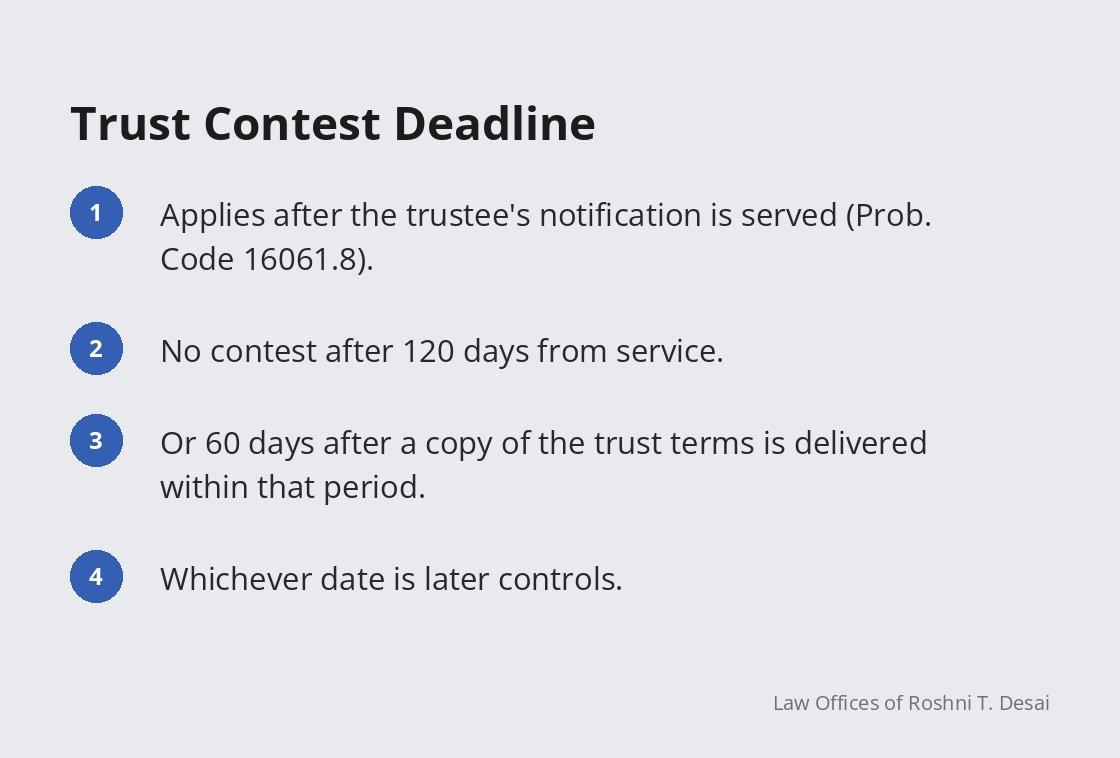
The 120-Day Rule in Section 16061.8
Probate Code section 16061.8 provides that a person upon whom the trustee’s notification is served shall not bring an action to contest the trust more than 120 days from the date the notification is served on the person, or 60 days from the date on which a copy of the terms of the trust is delivered to the person during that 120-day period, whichever is later. The statute applies whether the notice is served within or after the time period set out in section 16061.7. In other words, a late notice from the trustee does not remove the deadline for the person who receives it.
When the Trustee Must Send the Notification
Under Probate Code section 16061.7(a)(1), a trustee must serve a notification when a revocable trust, or any portion of it, becomes irrevocable because of the death of one or more of the settlors. The same paragraph covers a trust that becomes irrevocable within one year of a settlor’s death because of a contingency related to the death by the express terms of the trust. The duty belongs to the continuing or successor trustee, and any one co-trustee may serve the notification.
The Timing Rule for the Trustee
Section 16061.7(f) states that the notification must be served not later than 60 days following the event requiring it, or 60 days after the trustee became aware of the existence of a person entitled to receive it, if that person was not known on the date of the event. These are the trustee’s deadlines. The contest deadline for the recipient is a separate matter and begins when that person is served.
Who Receives the Notification and What It Says
Understanding who is entitled to notice helps people recognize when the contest clock may be running for them. It also helps trustees follow the process correctly.
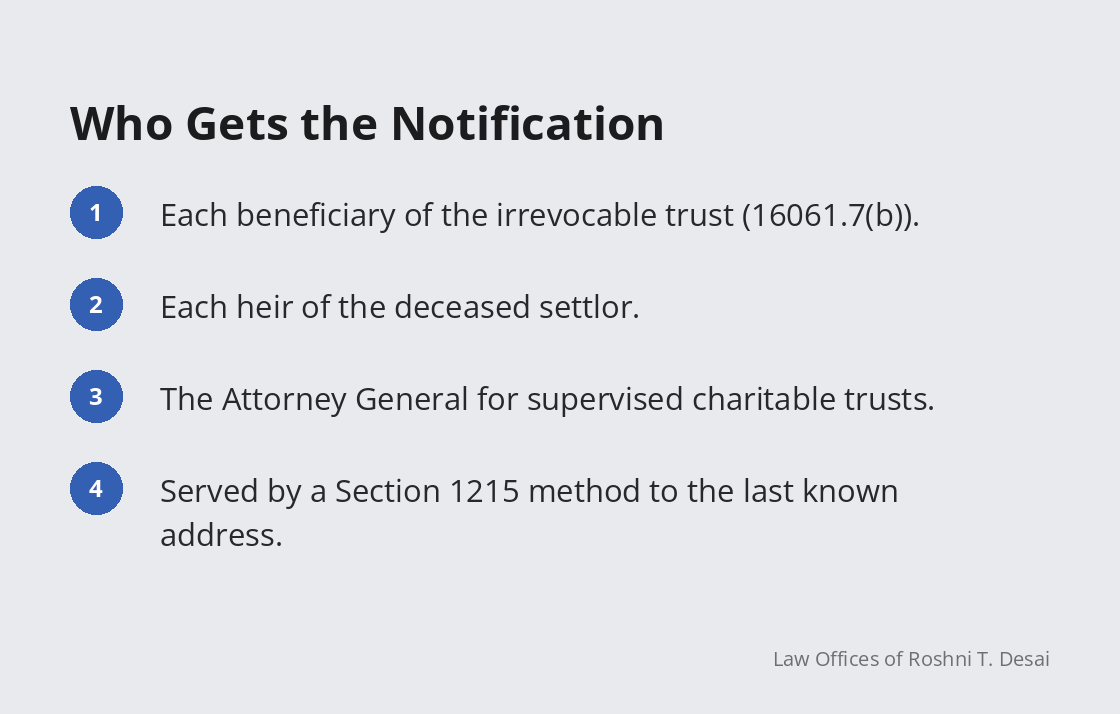
Beneficiaries and Heirs
Section 16061.7(b) requires that the notification be served on each beneficiary of the irrevocable trust or irrevocable portion of the trust, subject to the limitations of section 15804, and on each heir of the deceased settlor when the triggering event is the settlor’s death or a related contingency. If the trust is a charitable trust subject to the supervision of the Attorney General, the Attorney General must also be served. Heirs who are not named in the trust can therefore receive a notification and face the same deadline as named beneficiaries.
How the Notification Is Served
The statute provides that the notification is served by any of the methods described in Probate Code section 1215, to the last known address. Section 16061.7(d) adds that the trustee need not provide a copy to a beneficiary or heir known to the trustee but who cannot be located after reasonable diligence, or one who is unknown to the trustee. Keeping your address current with the trustee is a simple way to make sure that you receive notices that may affect your rights.
Required Contents
Under section 16061.7(g), the notification must include the identity of the settlor or settlors and the date the trust instrument was executed, the name, address, and telephone number of each trustee, and the address of the physical location where the principal place of administration of the trust is located. It must also include any additional information the trust instrument expressly requires, and a notice that the recipient is entitled, upon reasonable request to the trustee, to receive a true and complete copy of the terms of the trust.
The Required Warning
When the notification is served because a revocable trust has become irrevocable at death, section 16061.7(h) requires a warning in a separate paragraph in not less than 10-point boldface type, or a reasonable equivalent. The statute sets out the language: that the recipient may not bring an action to contest the trust more than 120 days from the date the notification is served, or 60 days from the date a copy of the terms of the trust is delivered during that 120-day period, whichever is later. If you receive a notice with this warning, treat the date you were served as important and write it down.
Practical Steps After You Receive a Trustee Notification
Receiving a notification is not the same as being required to file a contest. Many recipients simply review the trust and have no concerns. For those who do have questions, the deadline makes early action important.
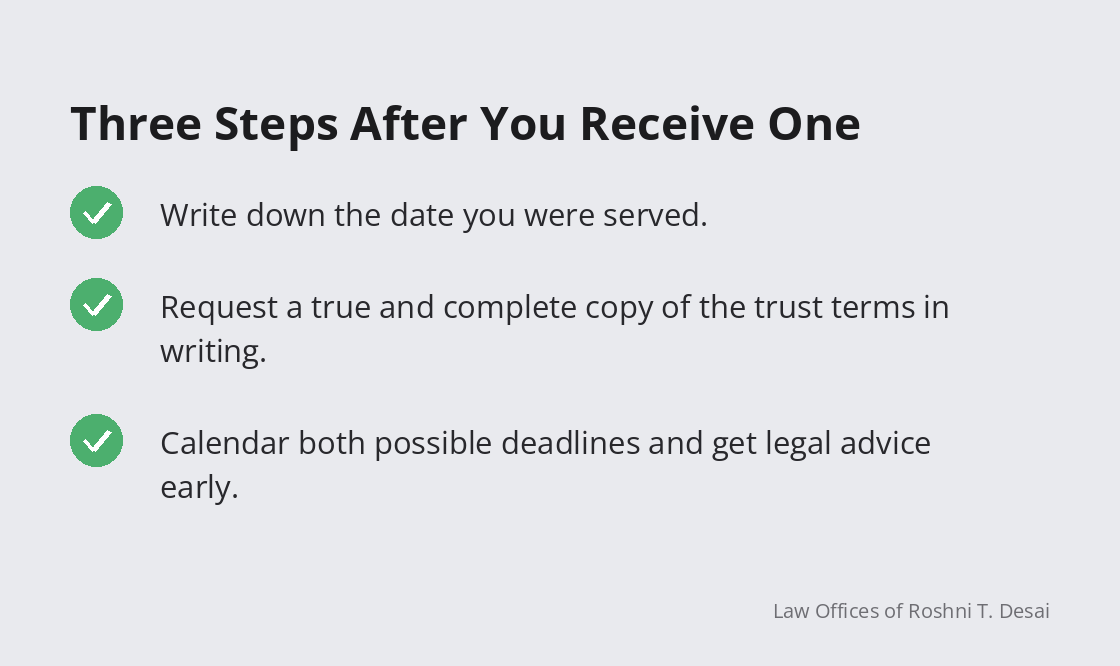
Request a Copy of the Trust Terms
Because the notification must tell you that you may request a true and complete copy of the trust terms, requesting that copy is often the first step. The 60-day extension in section 16061.8 runs from the date a copy of the terms is delivered to you during the 120-day period, so the timing of the request and delivery can matter. Make the request in writing and keep proof of when it was sent and when the copy arrived.
Record the Service Date and Calendar the Deadline
Keep the envelope, the date of delivery, and the notification itself. Count forward from the date of service, and then calculate the alternative date if a copy of the terms is delivered. Do not assume that a delay in the trustee’s own timing changes your deadline, because section 16061.8 applies whether the notification was served within or after the trustee’s 60-day period.
Why a Waiver Does Not Remove the Notice
Section 16061.7(i) states that any waiver by a settlor of the requirement to serve the notification is against public policy and void. A trust that tries to excuse the trustee from sending the notice does not change the trustee’s duty, and it does not prevent the notice from starting the contest period once it is served.
Consider the Whole Picture Before Acting
A contest is a serious step that affects family relationships as well as legal rights. Review the trust, any amendments, and the circumstances surrounding them. Think about what outcome you actually want, and talk through the options with an attorney who can look at your specific facts and the documents involved. Acting thoughtfully within the time allowed is better than acting hastily or missing the window.
Final Thoughts
The California trust contest deadline is easy to overlook because it begins with a notice that many people treat as routine paperwork. Probate Code section 16061.8 sets a limit of 120 days from service of the notification, or 60 days after delivery of a copy of the trust terms during that period, whichever is later. Section 16061.7 explains who must be served, what the notice must say, and how it must be delivered.
If you have received a trustee’s notification or are a trustee preparing one, contact the Law Offices of Roshni T. Desai to speak with our team. We will review the documents with you and help you move forward with confidence.