




Trust Tax Planning CA: Minimizing Burden for California Estates
California trusts face a complex tax landscape that catches many estate owners off guard. Without proper trust tax planning in CA, you could pay thousands more than necessary in state and federal taxes.
We at Law Offices of Roshni T. Desai have helped countless California residents reduce their tax burden through strategic trust structures and timely planning decisions. This guide walks you through the tax rules, proven strategies, and common pitfalls to avoid.
How Trust Taxes Work in California
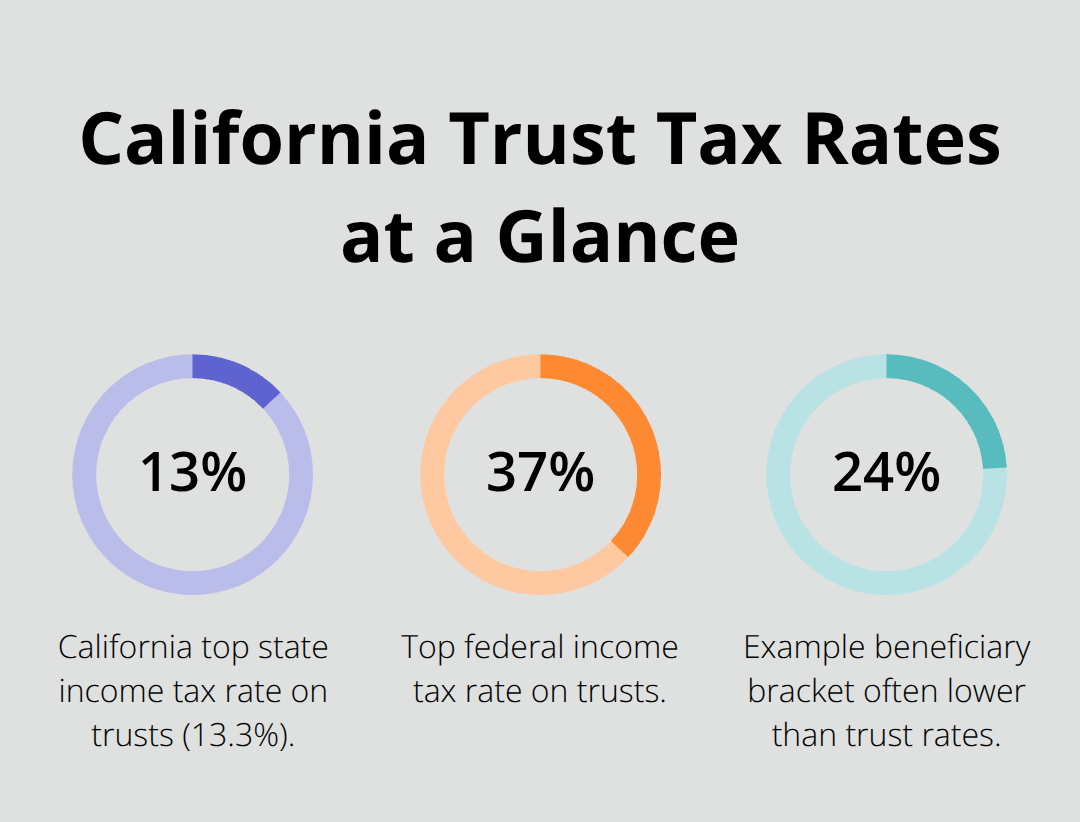
California taxes trusts at the state level and the federal level simultaneously, which means your trust pays taxes twice on the same income. The state’s top tax rate hits 13.3 percent, the highest in the nation according to the Tax Foundation. This compounds federal rates that reach 37 percent for trusts in the highest bracket.
Revocable vs. Irrevocable Trust Tax Treatment
Revocable trusts, which you control during your lifetime, don’t trigger separate tax liability while you’re alive-the trust income flows through to your personal tax return. Irrevocable trusts work differently. Once you transfer assets into an irrevocable trust, you surrender control, but the trust becomes its own taxable entity.
This distinction matters enormously because irrevocable trusts can shift income to beneficiaries in lower tax brackets, potentially saving thousands annually. If your trust generates $50,000 in investment income and you distribute it to a beneficiary in a 24 percent tax bracket instead of keeping it in the trust at 37 percent, you save $6,500 on federal taxes alone. California compounds this advantage because beneficiaries often pay lower state rates than the trust itself.
Filing Deadlines and Penalties
Trustees must file Form 1041 with the IRS and California’s Franchise Tax Board within specific windows, or penalties accumulate fast. The deadline is April 15 following the tax year, though trustees can request extensions. California requires separate state filings even when federal requirements are met-many trustees miss this critical step.
Beneficiaries receive Schedule K-1 forms showing their share of trust income, and they report this on their personal returns. If a beneficiary lives in another state with lower tax rates, distributing income to them reduces the overall California tax burden. Trustees who overlook these filing requirements face penalties ranging from 5 to 25 percent of unpaid taxes.
Income Distribution and Tax Brackets
Your trust structure determines whether income concentrates at the trust level, where rates spike quickly, or distributes to beneficiaries where rates may be substantially lower. The practical reality is that trust tax planning starts with understanding who pays what and when. Strategic income distribution to beneficiaries in lower brackets can transform your overall tax outcome, which is why the next section covers specific strategies that California residents use to minimize their tax exposure.
Strategies to Minimize Trust Taxes in California
Shifting Income to Lower-Bracket Beneficiaries
The most direct way to cut your trust’s tax bill is to move income out of the trust itself and into the hands of beneficiaries who pay lower rates. Trust tax brackets compress dramatically-a trust hits the 37 percent federal bracket at just $14,250 in taxable income as of 2026, according to IRS tables. Your adult child in a 24 percent bracket receives that same $14,250 and pays thousands less in federal tax alone. California magnifies this advantage because beneficiaries often face lower state rates than the trust entity itself.
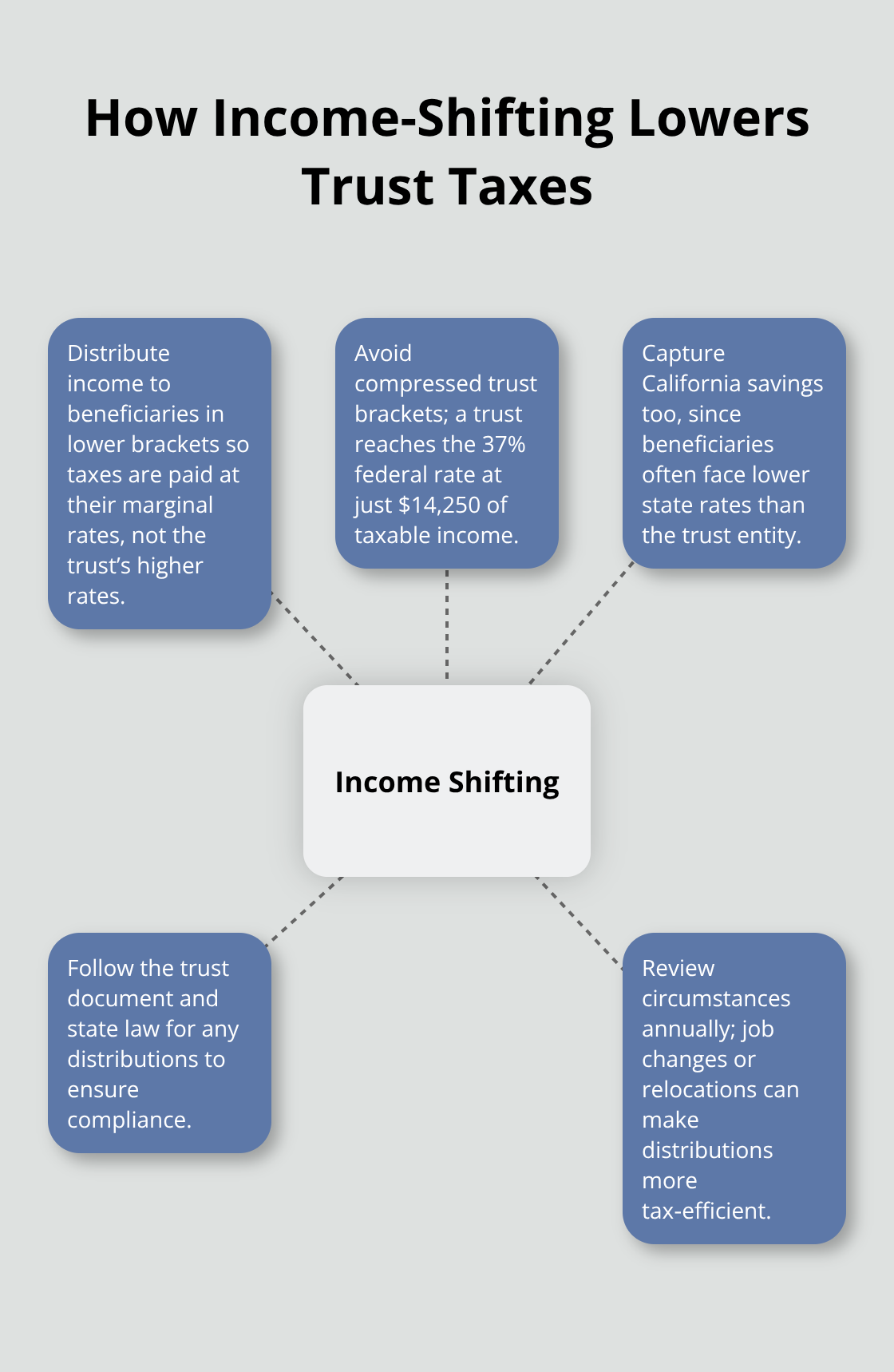
Trustees distribute actual income or principal to beneficiaries, which shifts the tax obligation to their returns. The catch is that distributions must follow the trust document’s language and state law, so random distributions won’t work. Annual reviews of your trust’s distribution provisions matter because life changes-a beneficiary’s job loss, retirement, or relocation to a lower-tax state-can dramatically improve tax outcomes through intentional distributions.
Charitable Remainder Trusts for Deductions and Income
Charitable remainder trusts offer a second path that combines philanthropy with real tax relief. These irrevocable trusts pay you or your beneficiaries income for a set term, then transfer remaining assets to a qualified charity. The immediate benefit is a substantial charitable deduction when you fund the trust-typically 20 to 40 percent of the assets you contribute, depending on your age and the payout rate. If you donate appreciated property worth $500,000 to a charitable remainder trust, you might claim a $150,000 deduction against your income.
The trust itself pays no capital gains tax when it sells appreciated assets, unlike selling them personally where you’d owe tax immediately. This structure works particularly well for concentrated stock positions or real estate holdings that have grown substantially.
Leveraging Step-Up in Basis for Inherited Property
Property appreciation deserves special attention through step-up in basis planning, which many California residents underutilize. When you hold appreciated assets until death, your heirs inherit them at their stepped-up fair market value, eliminating all accumulated gains from taxation. A rental property purchased for $300,000 that’s now worth $800,000 would trigger $500,000 in capital gains if you sold it today, but your heirs inherit it tax-free at the $800,000 stepped-up basis.
This planning consideration influences whether you should distribute assets during life or hold them in your trust until death-a decision that hinges on your specific situation. The timing and structure of your distributions, combined with your overall estate size and family circumstances, determine which approach saves the most in taxes. Common mistakes in trust administration can wipe out these savings, which is why the next section covers the pitfalls that California residents encounter most often.
Common Trust Tax Mistakes California Residents Make
Missing Filing Deadlines at State and Federal Levels
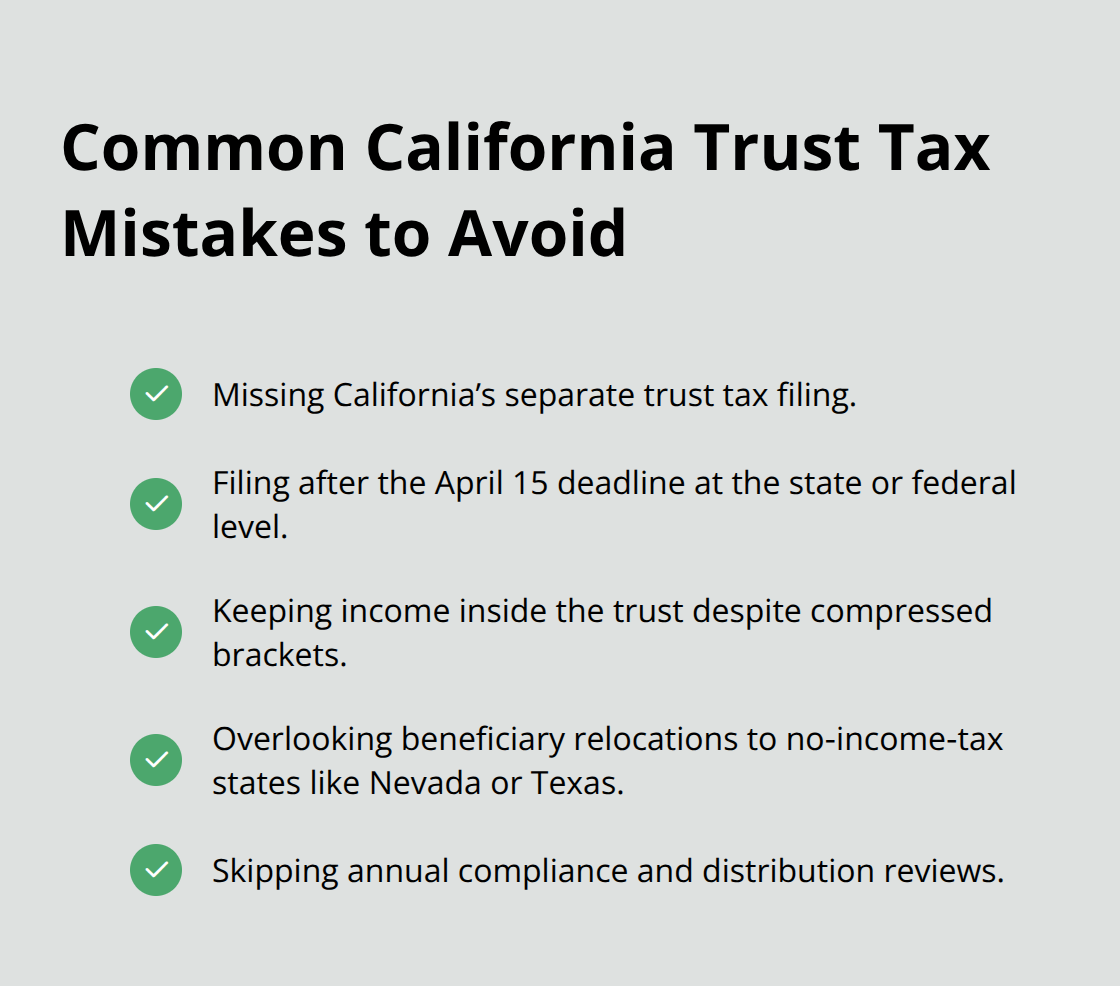
Trustees miss filing deadlines and overlook state requirements with alarming frequency, costing beneficiaries thousands in penalties and lost tax savings. California requires separate trust tax filings at both the state and federal level, yet many trustees treat the California return as optional or secondary. The IRS deadline is April 15 following the tax year, but California’s Franchise Tax Board enforces the same deadline with no exceptions. A trustee who files the federal Form 1041 on time but submits California’s Form 1041-CA late faces penalties starting at 5 percent of unpaid taxes, escalating to 25 percent if the delay extends beyond six months.
The Franchise Tax Board collected over $1.2 billion in penalties statewide in 2024, according to their annual compliance report, and trust administration violations account for a significant portion of those collections.
Failing to Distribute Income Strategically
The real damage emerges when trustees fail to distribute income strategically or ignore life changes that affect tax outcomes. A trustee who receives a beneficiary’s K-1 form showing $30,000 in trust income but never adjusts distributions to that beneficiary misses the opportunity to shift income to a lower tax bracket-potentially costing $7,500 or more in unnecessary federal and state taxes annually. Similarly, when a beneficiary relocates to Nevada or Texas (which have no state income tax), a trustee who continues holding income in the California trust wastes the tax arbitrage opportunity that relocation creates.
Ignoring Life Changes That Trigger Tax Planning Opportunities
Major life events like a beneficiary’s retirement, job change, or inheritance from another estate should trigger an immediate trust structure review, yet most trustees operate on autopilot without reassessing whether the original distribution formula still serves the beneficiaries well. A beneficiary’s job loss can shift them into a lower tax bracket, making distributions far more valuable than they were when the trust was created. Trustees who schedule annual compliance reviews in Q1 catch missed deadlines before penalties apply and identify distribution opportunities that can save thousands before the year closes. This proactive approach confirms that all prior-year filings were submitted correctly and verifies that beneficiary circumstances have changed, allowing trustees to adjust distributions accordingly before the current tax year ends.
Final Thoughts
Trust tax planning in California requires attention to detail and strategic decisions that most estate owners cannot handle alone. California’s 13.3 percent state tax rate combined with federal rates means that a single missed filing deadline or overlooked distribution opportunity costs your beneficiaries thousands annually. The strategies covered in this guide-shifting income to lower-bracket beneficiaries, using charitable remainder trusts, and leveraging step-up in basis-work only when you implement them correctly and adjust them as circumstances change.
Professional guidance transforms trust tax planning CA from a compliance burden into an active wealth-preservation tool. A qualified attorney reviews your trust structure against your current family situation, identifies distribution opportunities you might miss, and confirms that all filings meet both state and federal deadlines. We at Law Offices of Roshni T. Desai combine legal precision with real estate knowledge to catch planning gaps others overlook and streamline property transactions when they’re part of your estate strategy.
Schedule a consultation to review your current trust structure and identify whether your distributions align with your beneficiaries’ tax situations. We offer free consultations with flexible scheduling, whether you prefer meeting at our office or your home. Connect with our team and discuss how trust tax planning can reduce your family’s overall tax burden.