




Trusts for heirs planning: Securing Family Assets
Without a trust in place, your family could spend months or years in probate court while your assets sit frozen. We at Law Offices of Roshni T. Desai know that trusts for heirs planning offers a direct path to protecting what you’ve built and getting assets to your family fast.
A well-structured trust keeps your finances private, reduces taxes, and removes uncertainty about who controls your estate. The right trust strategy depends on your specific situation-and that’s where clear guidance makes all the difference.
How Trusts Keep Your Assets Out of Probate Court
Probate is expensive and slow. When someone dies without a trust, their estate typically enters probate court, where a judge oversees asset distribution. This process costs between 3% and 7% of your estate’s value according to data from the American Bar Association, and it takes an average of 8 to 12 months to complete-sometimes stretching to several years if disputes arise. A trust bypasses probate entirely.
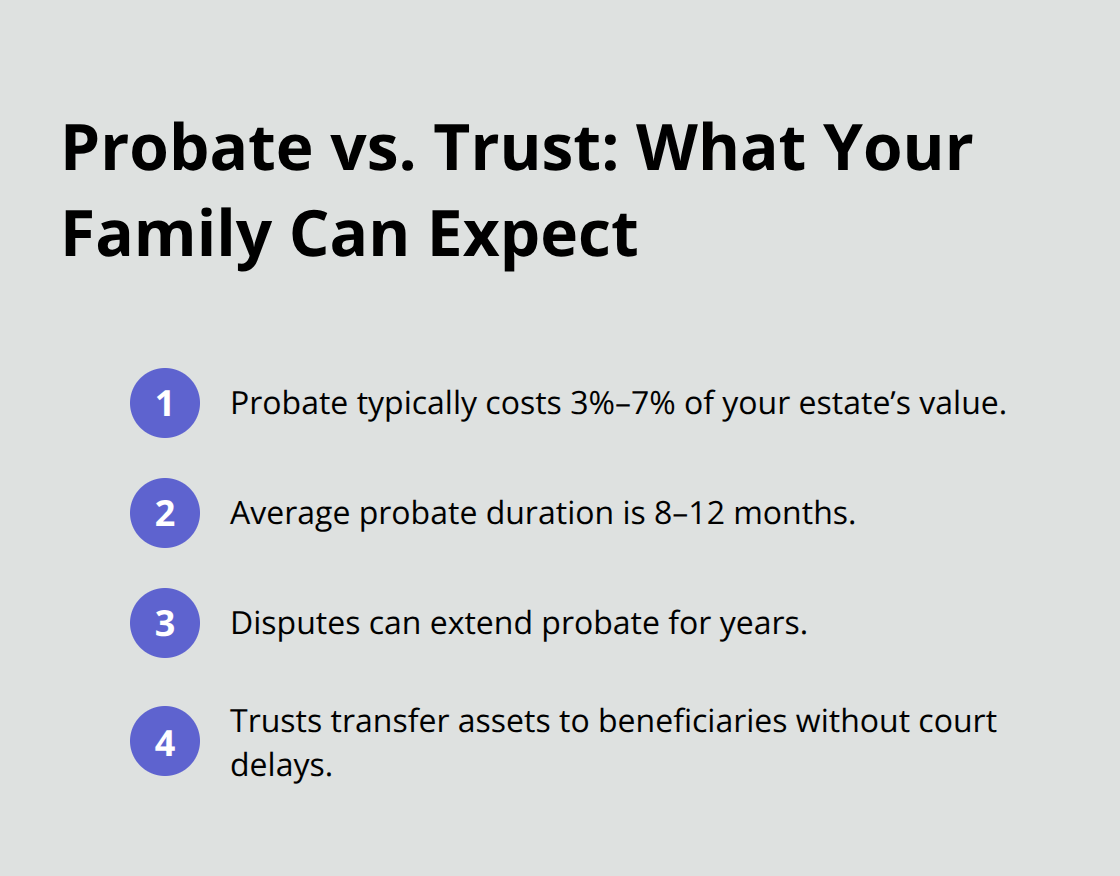
Assets held in a trust transfer directly to your beneficiaries outside the court system, which means your family receives their inheritance within weeks rather than waiting through lengthy court proceedings.
Privacy and Control Over Your Financial Details
Probate court records are public. Anyone can walk into a courthouse and see exactly what you owned, who inherited it, and how much everything was worth. This transparency creates security risks and invites unwanted attention from distant relatives, creditors, or people seeking to contest your will. A trust keeps your financial information completely private. Your trust document never enters the public record, so your beneficiaries’ inheritance remains confidential. Additionally, trusts give you more control over how and when beneficiaries receive their money. You can specify conditions for distributions-for example, funding your child’s education only after they graduate, or delaying a large inheritance until a beneficiary reaches age 30. This flexibility prevents sudden windfalls that might lead to poor financial decisions.
Estate Tax Reduction Through Strategic Trust Structure
Federal estate taxes hit hard. The current federal estate tax exemption is approximately $13.61 million per person in 2024, but this exemption decreases significantly after 2025 unless Congress extends it. California doesn’t impose a state estate tax, but if your assets exceed the federal threshold, your heirs could lose 40% or more to taxes. Irrevocable trusts are powerful tax-reduction tools.
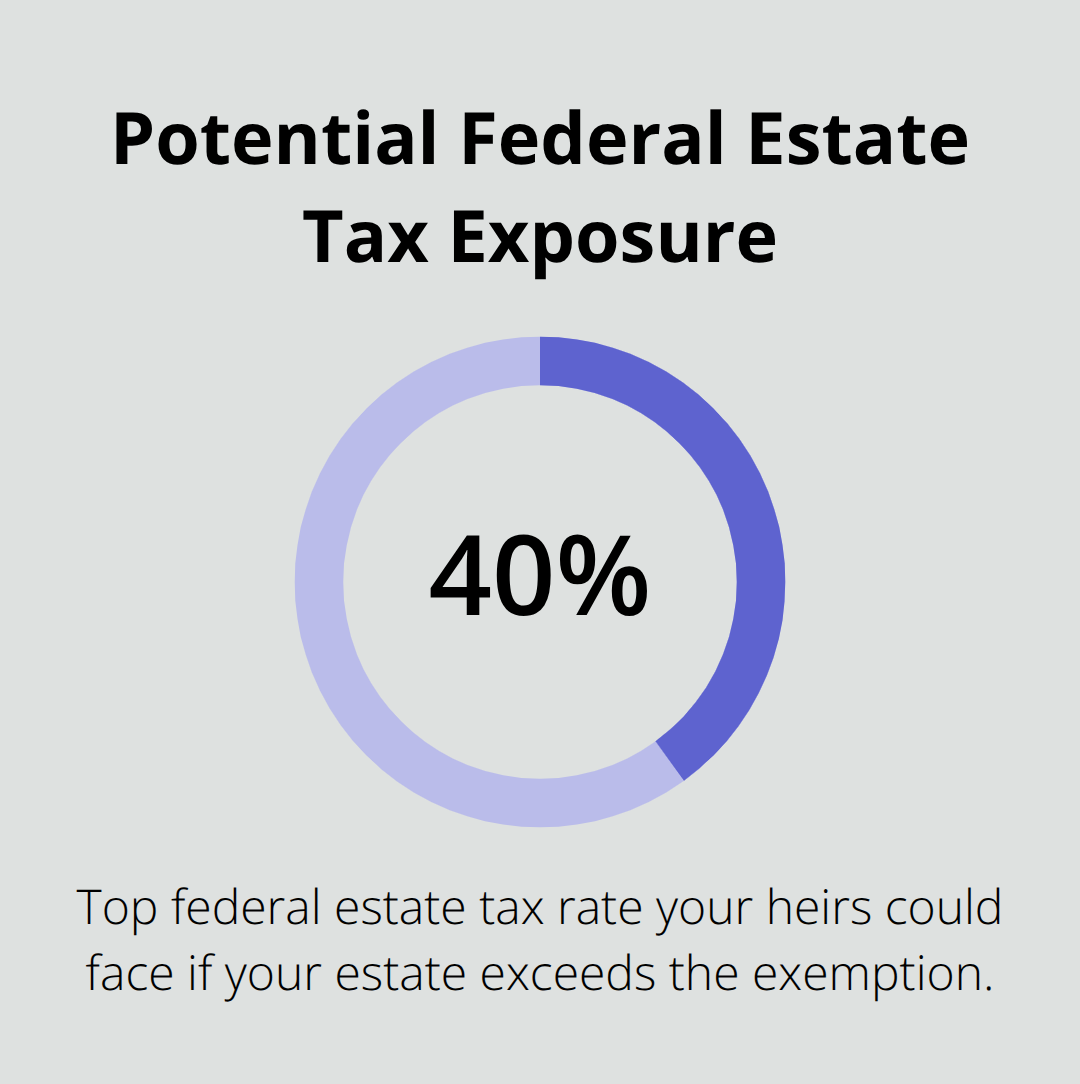
When you transfer assets into an irrevocable trust, those assets are no longer part of your taxable estate, which lowers your estate tax liability. Married couples can use bypass trusts to effectively double their exemption amount, protecting roughly $27 million from federal taxation. The strategy requires careful planning because irrevocable trusts involve giving up control of those assets, but the tax savings often justify the trade-off for larger estates.
Why Trust Structure Matters for Your Situation
The right trust structure depends on your specific circumstances, family dynamics, and financial goals. Different trust types serve different purposes, and selecting the wrong structure can cost your family thousands in unnecessary taxes or create complications during distribution. Understanding which trust works best for your situation sets the foundation for the next steps in your planning process.
Which Trust Type Fits Your Family’s Needs
Revocable Living Trusts: Maximum Control During Your Lifetime
Revocable living trusts offer the most flexibility during your lifetime, which is why they dominate estate planning for middle-class families. You create the trust, transfer your assets into it, and maintain complete control while alive. If your circumstances change-your marriage ends, your children mature, or your financial situation shifts-you can modify or revoke the trust entirely. A Stanford Law School study found that revocable trusts remain the most popular choice because they provide probate avoidance without sacrificing control.
You can serve as your own trustee and manage your investments as usual. No separate tax return is required during your lifetime. When you become incapacitated or pass away, your successor trustee steps in immediately and distributes assets to your beneficiaries without court involvement. This matters tremendously in California, where probate courts face significant backlogs.
The downside is straightforward: revocable trusts offer zero tax benefits. Your assets remain part of your taxable estate, so if you have substantial wealth exceeding the federal exemption, this structure won’t reduce what your heirs owe in taxes.
Irrevocable Trusts: Permanent Protection and Tax Savings
Irrevocable trusts take the opposite approach. Once you transfer assets into an irrevocable trust, you cannot change your mind, modify terms, or take the money back. This permanence is precisely what makes them powerful for tax reduction. The IRS recognizes irrevocable trusts as separate taxpaying entities, meaning those assets no longer count toward your estate tax liability.
For high-net-worth families, this distinction saves hundreds of thousands of dollars. A married couple with a net worth of $15 million could shield approximately $1.4 million from federal taxation through irrevocable trust strategies, according to calculations based on current federal exemption limits. Irrevocable trusts also protect assets from creditors and lawsuits in ways revocable trusts cannot.
Testamentary Trusts: A Limited Middle Ground
Testamentary trusts created within your will offer a middle ground, but they have a critical weakness: they still go through probate. The court must validate your will before the testamentary trust takes effect, which means your family faces the same delays and public exposure you were trying to avoid.
Testamentary trusts work only when your estate is small or when you want specific conditions applied to a minor’s inheritance after probate concludes. For most families seeking to avoid court involvement, this option falls short of your actual needs.
Selecting the Right Trust Structure for Your Situation
The right trust structure depends on your specific circumstances, family dynamics, and financial goals. Different trust types serve different purposes, and selecting the wrong structure can cost your family thousands in unnecessary taxes or create complications during distribution. Understanding which trust works best for your situation sets the foundation for the next critical step: identifying your assets and beneficiaries, then choosing the trustees who will carry out your wishes.
Creating a Trust-Based Succession Plan
Map Out Every Asset You Own
Start with a complete financial inventory before you transfer anything into a trust. Most people underestimate what they own. Beyond bank accounts and investment portfolios, you need to list real estate properties, business interests, vehicles, life insurance policies, retirement accounts, and digital assets like email accounts and social media profiles. The IRS data shows that estates valued over $5 million commonly miss 15% to 20% of their actual assets during initial planning, which creates gaps in your trust structure.
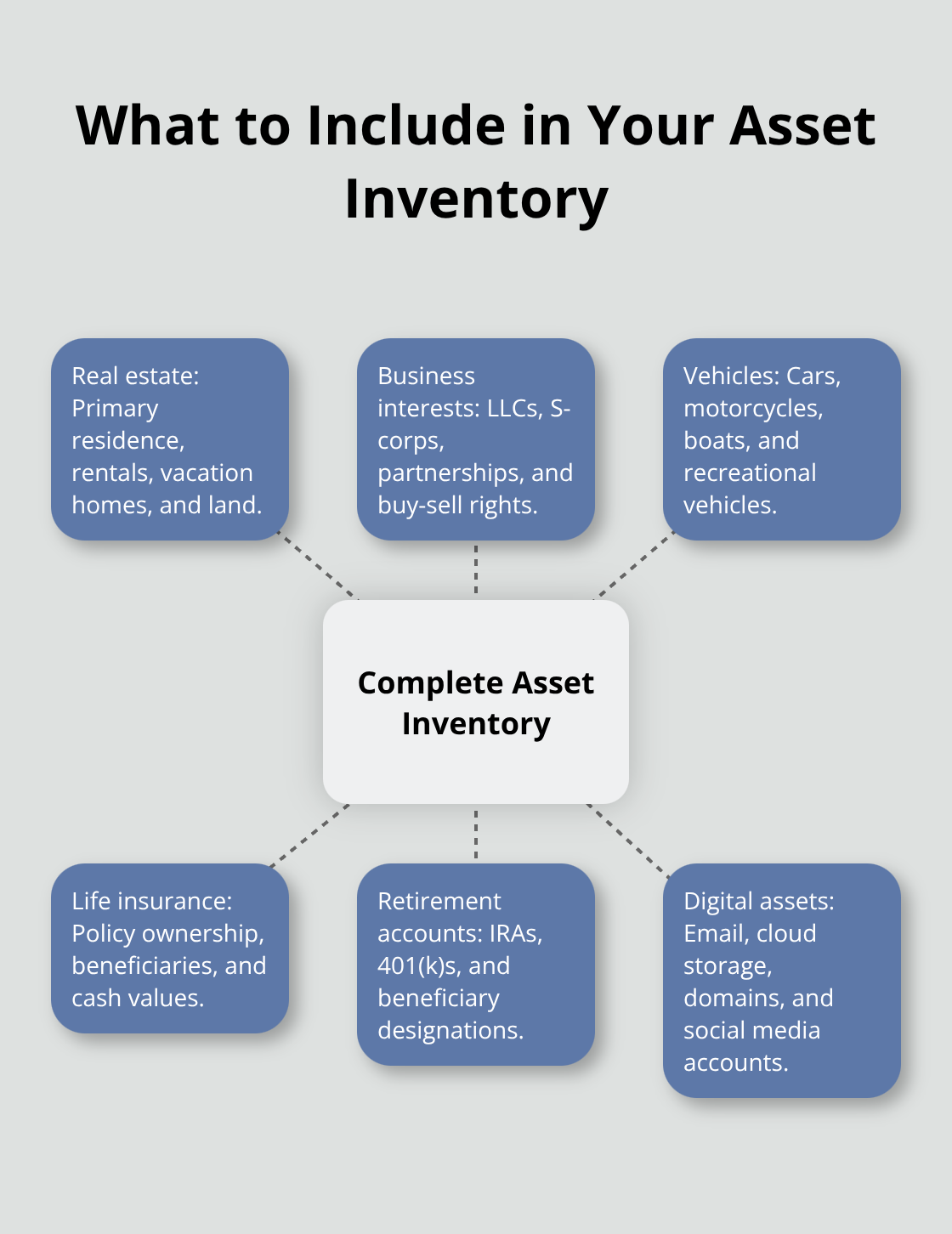
Write down the current value of each asset and note which ones are jointly owned versus solely in your name. Joint accounts transfer automatically to the surviving owner and typically don’t need to be in your trust. Retirement accounts like IRAs and 401(k)s pass through beneficiary designations you’ve named, so they also stay outside your trust. This distinction matters because incorrectly titling assets wastes your trust’s protection.
Name Your Beneficiaries With Specificity
Once you have your complete list, identify who should receive each asset. Be specific about timing and conditions. Instead of leaving everything to your children equally, you might direct that one child receives your business, another receives the rental property, and a third receives investment accounts. Some assets make sense to distribute immediately upon your death, while others benefit from delayed distribution.
If you have minor children, you absolutely must name who will manage their inheritance until they reach adulthood. Many people name the same person as guardian and trustee, but these roles serve different functions. A guardian cares for the child personally, while a trustee manages their money. You might want your sibling as guardian but your accountant as trustee if financial management isn’t your sibling’s strength.
Select Trustees Who Can Handle the Responsibility
Choosing trustees requires honest assessment of who can handle responsibility and family dynamics without creating conflict. The trustee’s job involves detailed record-keeping, filing tax returns for the trust, making investment decisions, and communicating with beneficiaries about distributions. This demands both competence and integrity.
Many families choose a corporate trustee like a bank trust department for larger estates because they provide professional management and eliminate personal favoritism disputes. However, corporate trustees charge annual fees ranging from 0.5% to 1.5% of trust assets annually, which can cost thousands of dollars per year for substantial estates. Individual trustees, whether family members or professionals like attorneys, avoid these fees but require significant time commitment.
If you name a family member as trustee, expect potential resentment from other beneficiaries who worry about favoritism. California law requires trustees to act in the best interest of all beneficiaries and maintain detailed accounts, but enforcement relies on beneficiaries catching problems. Your trust document should specify how often the trustee must provide accountings and what information they must share.
Update Your Trust When Life Changes
Your trust is not finished once it’s signed. Life changes demand updates. When you have another child, marry, divorce, or experience significant wealth changes, your trust needs revision. If you purchase new real estate, that property won’t be protected by your trust unless you formally transfer it into the trust. The same applies to substantial business acquisitions or inheritances.
Review your trust every three to five years, or whenever major life events occur. California law allows amendments through a simple document called a trust amendment rather than recreating the entire trust, which saves time and attorney fees. We can help you navigate these updates and ensure your trust reflects your current wishes and circumstances.
Final Thoughts
A trust-based approach to heirs planning removes the guesswork from what happens to your family’s assets. When you structure your estate with the right trust, your beneficiaries avoid months of probate delays, your financial details stay private, and your wealth transfers according to your exact wishes rather than state law defaults. The peace of mind comes from knowing your family won’t face court battles, public exposure of your finances, or unnecessary tax bills that could have been prevented.
Trust planning isn’t one-size-fits-all because your situation is unique. The trust structure that works for your neighbor might create tax problems for you, or fail to address your specific family dynamics. A revocable living trust might be perfect if you have moderate assets and want maximum flexibility, but an irrevocable trust could save your family hundreds of thousands in taxes if you have substantial wealth (testamentary trusts rarely make sense for most families since they still require probate court involvement). Getting this decision right matters because changing course later becomes expensive and complicated.
We at Law Offices of Roshni T. Desai help families across Southern California build trust strategies tailored to their actual circumstances. Contact Law Offices of Roshni T. Desai to discuss your trust planning needs and take the first step toward protecting what you’ve built for the people you care about most.