



California Trust Administration Attorney: Roles and Benefits
When a trust is created, someone needs to manage it properly. A California trust administration attorney handles the complex legal and financial responsibilities that come with overseeing a trust after it’s established.
We at Law Offices of Roshni T. Desai know that trust administration involves far more than most people realize. Without proper guidance, families often make costly mistakes that could have been prevented.
What a California Trust Administration Attorney Actually Handles
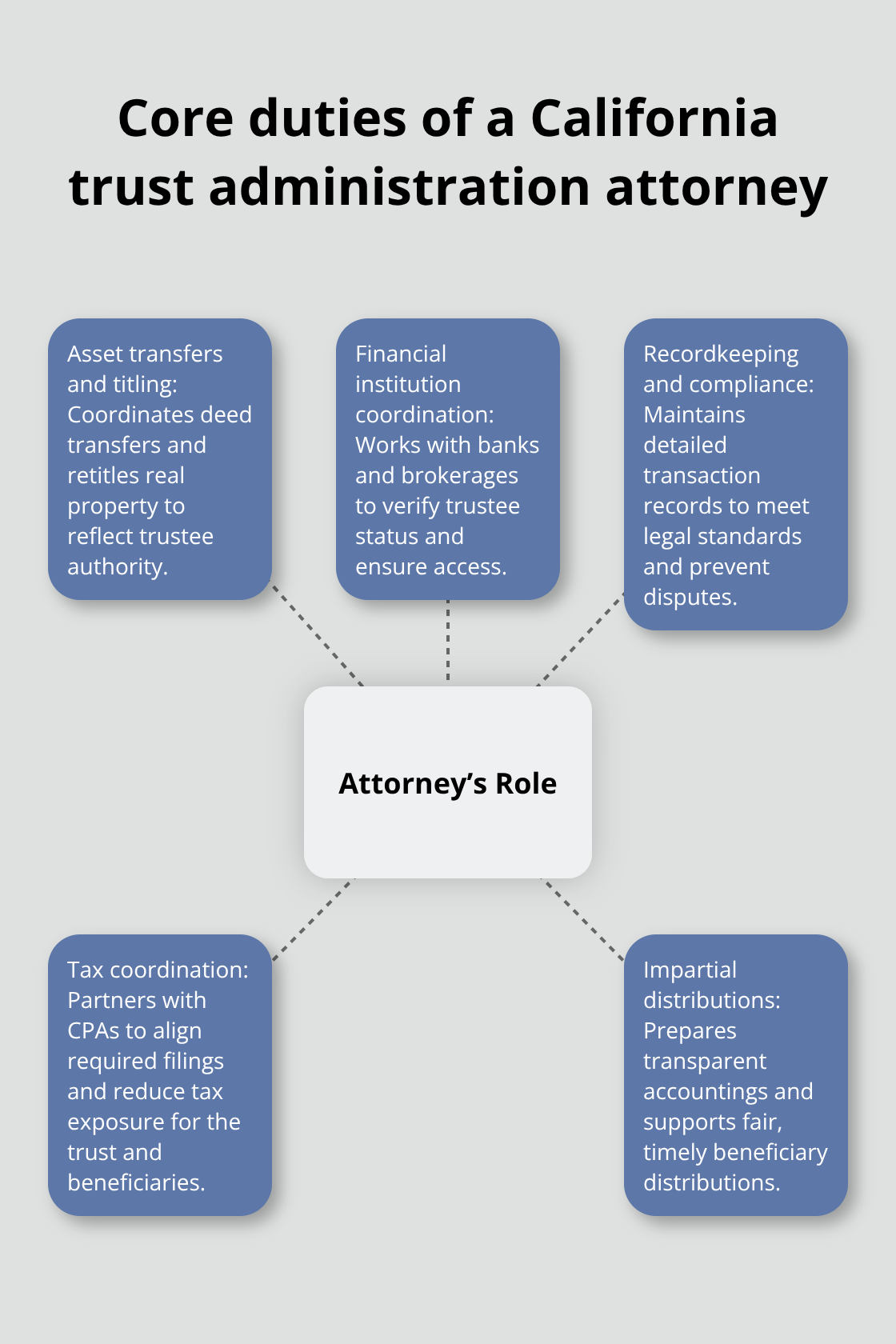
A trust administration attorney manages the day-to-day operations that keep a trust functioning legally and fairly. This includes locating and securing all trust assets, ensuring proper title transfers, and maintaining detailed records of every transaction. When real property is involved, the attorney coordinates deed transfers and handles retitling to reflect the trustee’s authority. Financial accounts, investment holdings, and retirement assets require careful attention to avoid costly mistakes. The attorney also works with financial institutions to ensure accounts are properly designated and accessible to the trustee, which often involves navigating institutional requirements that vary by bank or brokerage.
Tax Returns and Deadline Compliance
Trust tax returns must be filed on specific deadlines set by the IRS and California, with penalties ranging from hundreds to thousands of dollars for late submissions. A trust administration attorney coordinates with CPAs to determine which returns are required-trust income tax returns, estate tax returns, or final individual income tax returns for the decedent-and ensures all filings happen on time. California Probate Code Section 16012 requires trustees to apply their full skills to trust management, which means understanding tax implications of distributions and timing. The attorney helps identify strategies to minimize tax burdens for both the trust and beneficiaries, such as considering portability of estate tax exemptions for surviving spouses or timing distributions to reduce income tax liability. Without this coordination, trustees often miss critical deadlines or fail to claim deductions that could save thousands.
Impartial Asset Distribution
Distributions to beneficiaries must be lawful, timely, and supported by clear accounting. California Probate Code Section 16003 requires trustees to act impartially when managing trusts with multiple beneficiaries, taking into account their differing interests. A trust administration attorney prepares detailed accountings that show where money came from, how it was spent, and what each beneficiary receives. This transparency prevents disputes before they start. When conflicts do arise-disagreements over fairness, interpretation of trust language, or questions about trustee compensation-an attorney represents the trustee and works toward resolution without costly litigation. The attorney also ensures the trustee complies with fiduciary duties around loyalty and prudence, protecting the trustee from personal liability that can reach 100 percent for serious breaches. These responsibilities demand attention to detail and knowledge of California law, which is why many trustees turn to professional guidance when navigating the next phase of trust administration.
Why You Need Professional Help With Your Trust
Personal Liability and Fiduciary Duties
California law imposes strict personal liability on trustees-up to 100 percent for serious breaches of fiduciary duty. A single mistake in asset management, tax filing, or distribution timing exposes you to lawsuits from beneficiaries or creditors. California Probate Code Section 16002 requires trustees to act solely in beneficiaries’ interests, and Section 16003 demands impartial treatment when multiple beneficiaries exist. Courts enforce these standards rigorously. A trust administration attorney translates these legal requirements into concrete actions that protect you.
Meeting California’s Strict Deadlines
Without professional guidance, trustees often miss the 30, 60, or 120-day deadlines embedded throughout California Probate Code. Missing even one deadline triggers penalties, litigation, or personal liability that no amount of good intentions can reverse. The attorney handles creditor claims, which California law requires trustees to address before distributions.
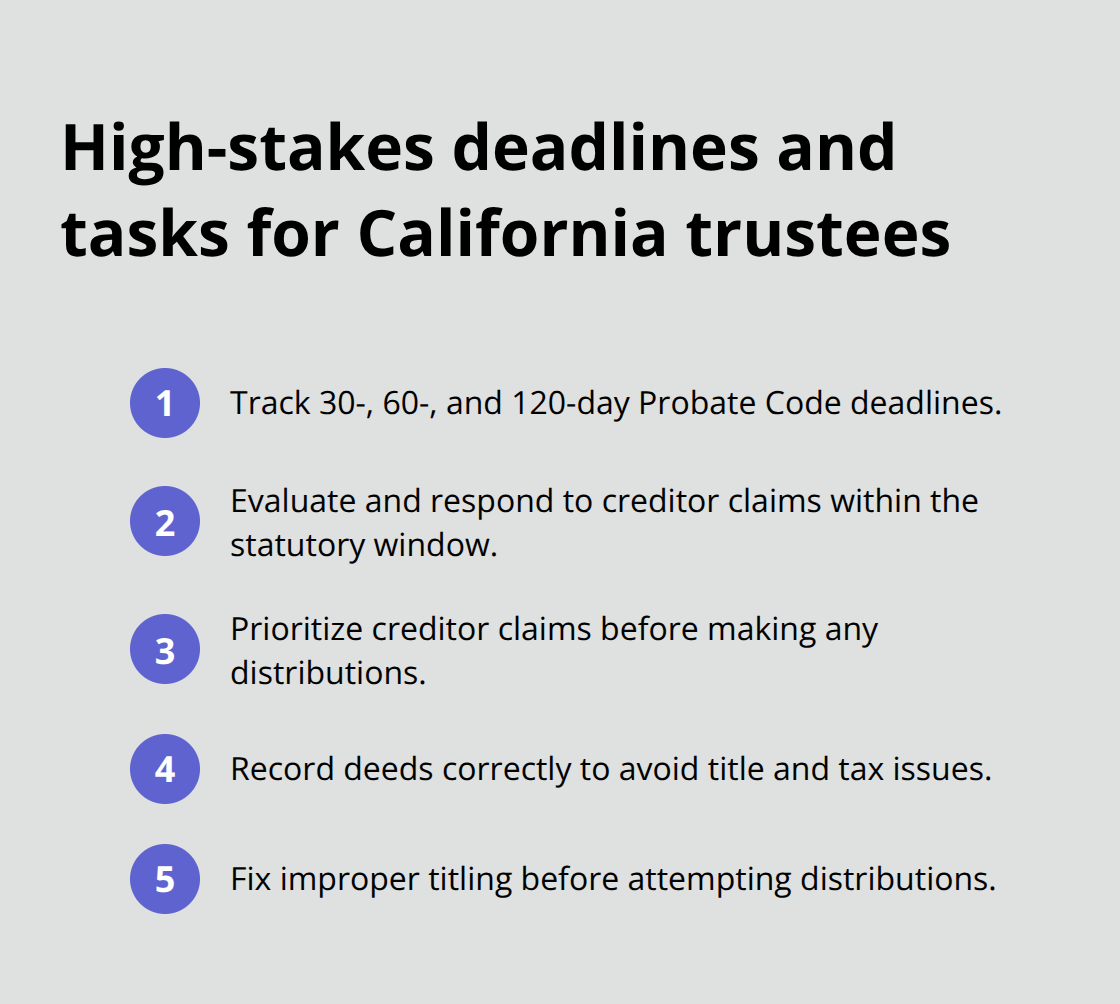
Failing to properly evaluate or respond to a creditor claim within the statutory window means the trustee pays claims personally. Real estate transfers demand particular attention; improper titling or failure to file deeds correctly complicates distributions and creates tax consequences.
Navigating Financial Institutions and Tax Obligations
Financial institutions impose their own requirements for trustee verification and account transfers, varying significantly between banks and brokerages. An attorney navigates these institutional requirements and coordinates with your CPA to ensure tax returns meet correct deadlines. The IRS and California impose penalties ranging from hundreds to thousands of dollars for late trust income tax returns or estate tax filings.
Managing Family Conflict and Emotional Burden
Trust administration typically takes one year or longer, and families often underestimate the emotional and logistical burden. Beneficiaries demand frequent updates, question distributions, or challenge the trustee’s decisions. An attorney manages these conflicts and handles formal notices required by law, reducing family tension through clear communication and documented accountability. Trustee burnout is real; coordinating asset inventories, managing ongoing property maintenance, preparing detailed accountings, and resolving beneficiary disagreements demands sustained attention over months. Professional guidance removes this burden from you and your family, allowing you to grieve and move forward without constant worry of making a costly mistake.
Cost Comparison and Financial Protection
The cost of hiring an attorney for trust administration is typically far lower than probate fees would be, and significantly lower than defending a lawsuit for breach of fiduciary duty. These financial protections, combined with the peace of mind that comes from proper legal guidance, make professional help a practical investment. As you move forward with trust administration, understanding the specific mistakes that trustees commonly make-and how to avoid them-becomes your next priority.
Costly Mistakes Trustees Make Without Legal Guidance
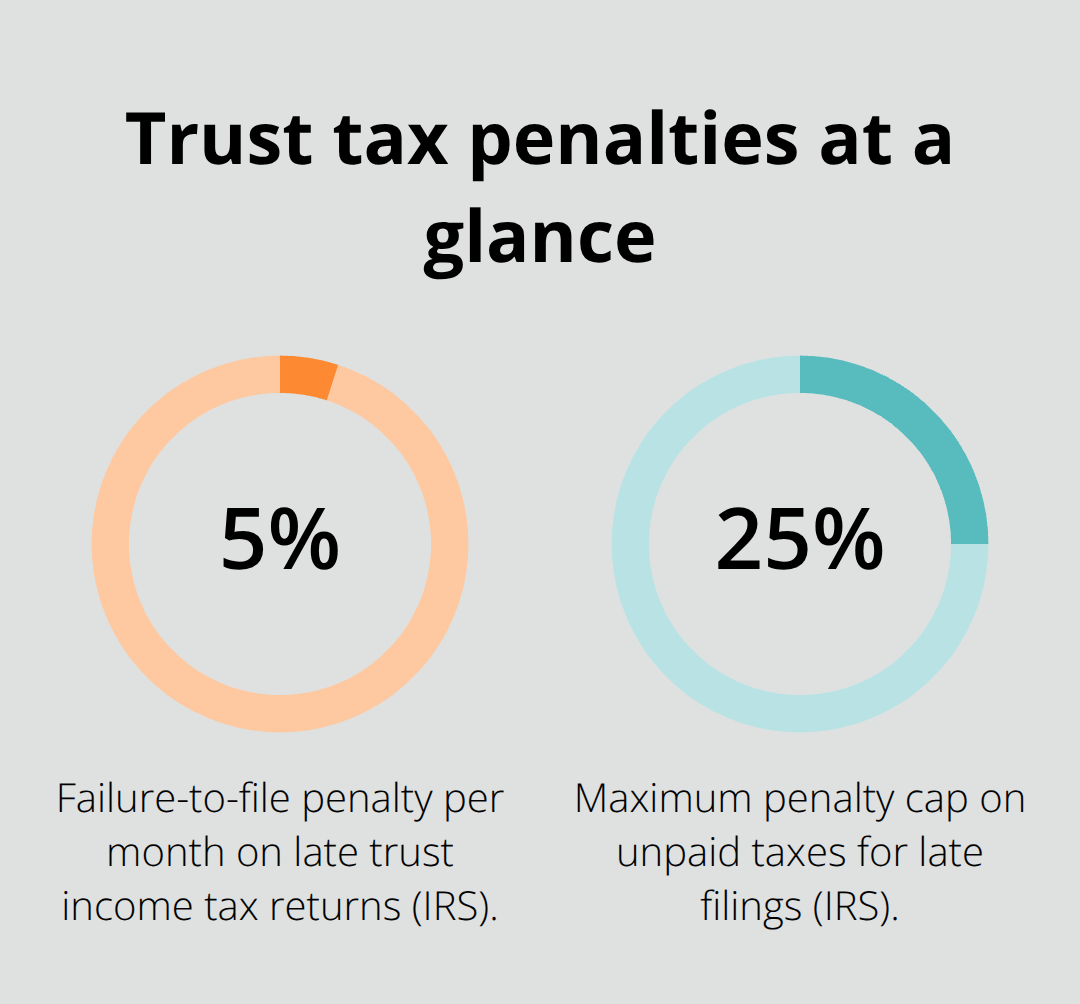
Trust administration without professional guidance leads to concrete financial and legal consequences. The IRS imposes failure-to-file penalties of 5 percent per month on late trust income tax returns, capped at 25 percent of unpaid taxes. California adds its own penalties, making a delayed return on a trust earning $50,000 in income cost hundreds or thousands in fines alone.
Trustees often overlook the fact that trust tax returns carry different deadlines than individual returns-a trust income tax return (Form 1041) is due by March 15 following the tax year, not April 15. A single day’s delay triggers penalties that beneficiaries may later challenge the trustee for failing to avoid.
Tax Filing Errors and Penalty Exposure
Beyond taxes, trustees frequently fail to properly retitle assets into the trust, leaving real property, investment accounts, or vehicles in the decedent’s name. This creates probate exposure for assets that should have remained trust-protected, forcing beneficiaries into court proceedings that consume months and tens of thousands in legal fees. One trustee transferred a rental property incorrectly, missing the opportunity to step up the property’s basis at death-a mistake that cost the beneficiary $40,000 in unnecessary capital gains taxes when the property eventually sold. The IRS and California revenue agencies enforce these deadlines strictly, and trustees who miss them absorb the financial consequences personally.
Missing Statutory Deadlines and Creditor Claims
California Probate Code imposes 30, 60, and 120-day deadlines throughout trust administration, and trustees who miss these windows face personal liability. Creditor claims require evaluation within four months of the trustee’s receipt of the claim, or the trustee personally pays the claim. One trustee missed a creditor’s claim deadline by three weeks and ended up writing a personal check for $15,000 to settle a disputed medical bill. Distributions to beneficiaries before all debts and taxes are paid expose the trustee to surcharge-meaning the trustee reimburses the trust personally for any shortfall. Trustees also commonly fail to send the required California Probate Code Section 16061.7 notice to beneficiaries and heirs when a trust becomes irrevocable, a procedural failure that can invalidate distributions or trigger litigation. Real estate transfers demand particular attention; improper deed recording or failure to remove the decedent from title creates title complications that prevent future sales and generate tax consequences years later.
Asset Management and Accounting Failures
Trustees frequently underestimate the documentation burden of trust administration. California law requires trustees to maintain detailed records of every transaction, and beneficiaries have the right to request a full accounting showing opening balances, income received, expenses paid, and distributions made. Trustees who fail to track these details face accusations of self-dealing or mismanagement, even when no actual wrongdoing occurred. One trustee commingled trust funds with personal accounts for convenience, then struggled to reconstruct trust transactions during an accounting dispute-a recordkeeping failure that cost thousands in accounting fees to sort out. Trustees also make distribution timing mistakes, paying beneficiaries before all liabilities are settled or distributing assets unequally without clear documentation of why differing amounts went to different beneficiaries. These mistakes generate beneficiary lawsuits that consume time, money, and family relationships over months or years of litigation.
Real Property and Title Complications
Real estate within a trust requires proper titling and deed transfers to avoid probate exposure and tax consequences. Trustees who fail to record deeds correctly or remove the decedent’s name from title create obstacles that prevent future sales and complicate beneficiary distributions. Property tax reassessment issues (related to California Proposition 13) can also arise when trustees handle transfers improperly, resulting in unexpected tax bills years after the initial transfer. Financial institutions and title companies often require specific documentation and trustee verification before accepting transfers, and trustees who don’t understand these requirements face delays that extend the administration timeline. Proper real estate handling protects beneficiaries from costly complications and preserves the trust’s intended benefits.
Final Thoughts
Trust administration demands precision, legal knowledge, and sustained attention over months. A California trust administration attorney translates fiduciary duties into concrete actions that protect you, your beneficiaries, and your estate from costly mistakes. Missing a single deadline costs hundreds in penalties, improper asset titling forces beneficiaries into probate court, and recordkeeping failures generate litigation that consumes years and tens of thousands in legal fees.
Professional guidance protects your estate by ensuring all California Probate Code requirements are met on time, all tax returns are filed correctly, and all beneficiaries receive fair, documented distributions. An attorney manages creditor claims, handles financial institution requirements, and resolves disputes before they escalate into lawsuits. This protection costs far less than defending a breach of fiduciary duty claim or paying penalties and surcharges that result from administrative errors.
If you serve as trustee or face trust administration decisions, consult with an attorney who understands California law and can guide you through the specific requirements of your trust. We at Law Offices of Roshni T. Desai provide personalized guidance on trust and probate administration across Southern California. Contact us to discuss your trust administration situation and take the first step toward protecting your family and your estate.