




Trustee Succession Planning Attorney: Securing Your Family’s Continuity
A trustee succession plan protects your family when leadership transitions happen. Without one, your trust can face costly delays, family disputes, and assets left unprotected during critical moments.
At Law Offices of Roshni T. Desai, we help families establish clear trustee succession plans that keep their wishes intact. This guide walks you through choosing the right successor, avoiding common pitfalls, and taking action today.
Why Trustee Succession Planning Matters
Leadership Gaps Create Costly Delays
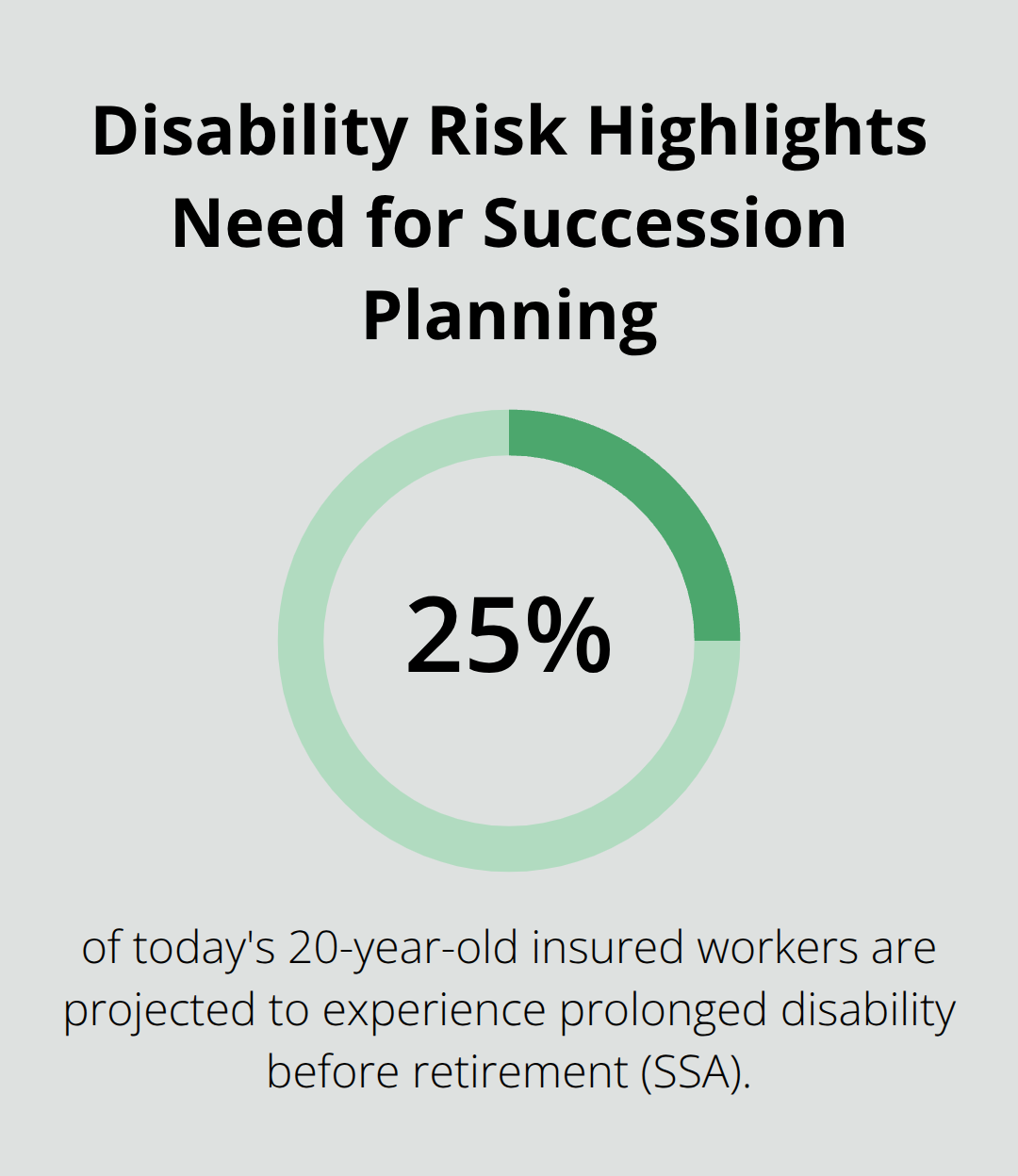
Without a clear succession plan, your trust faces real operational breakdowns when your current trustee cannot continue. The Social Security Administration reports that roughly 25 percent of today’s 20-year-old insured workers will experience prolonged disability before retirement, and trustees face the same risk. Death, illness, or declining mental capacity can leave your trust without leadership overnight.
When this happens without a plan in place, family members often scramble to petition the court for intervention, triggering delays that can last months or years while assets sit frozen and bills go unpaid. Your beneficiaries suffer financially during these gaps, and the costs of court proceedings eat into the estate itself. A formal succession plan eliminates this chaos by naming a backup trustee in advance, allowing seamless transitions without court involvement or family debate about who should take over.
Family Conflict Erodes Wealth and Relationships
Family conflict over trustee succession ranks among the most damaging outcomes of poor planning. When you have not named a successor or discussed the role with candidates beforehand, family members often disagree about who should step in-with some pushing for a family member while others advocate for a professional trustee. These disputes fracture relationships and drag on for months while the trust remains mismanaged. Northern Trust’s research on wealth transfer outcomes shows that trustee selection significantly influences whether families preserve their wealth or watch it erode through conflict and mismanagement. The practical solution is straightforward: decide now who will serve, confirm they understand the responsibilities and are willing to accept the role, and document your choice clearly in your trust documents. This eliminates guesswork and gives your family permission to move forward without second-guessing your judgment.
Continuity Protects Assets During Transitions
A succession plan protects your trust’s assets during transitions by establishing continuity in investment management, tax compliance, and beneficiary communication-all critical functions that cannot pause while families sort out leadership questions. When a trustee steps in without advance preparation, investment portfolios sit unmanaged, tax deadlines slip, and beneficiaries receive no updates on their distributions. These operational gaps compound quickly and reduce the value your trust was designed to preserve. Naming a successor trustee in advance and providing them with clear instructions and access to financial records means your trust continues operating smoothly the moment a transition occurs. The next section walks you through the specific qualities and characteristics that make a successor trustee effective, so you can identify the right person for your family’s situation.
How to Choose the Right Successor Trustee
Selecting the right successor trustee demands more than good intentions or family loyalty. This person will manage your assets, file taxes, communicate with beneficiaries, and make decisions that affect your family’s financial security for years. The wrong choice creates the exact problems succession planning is meant to prevent.
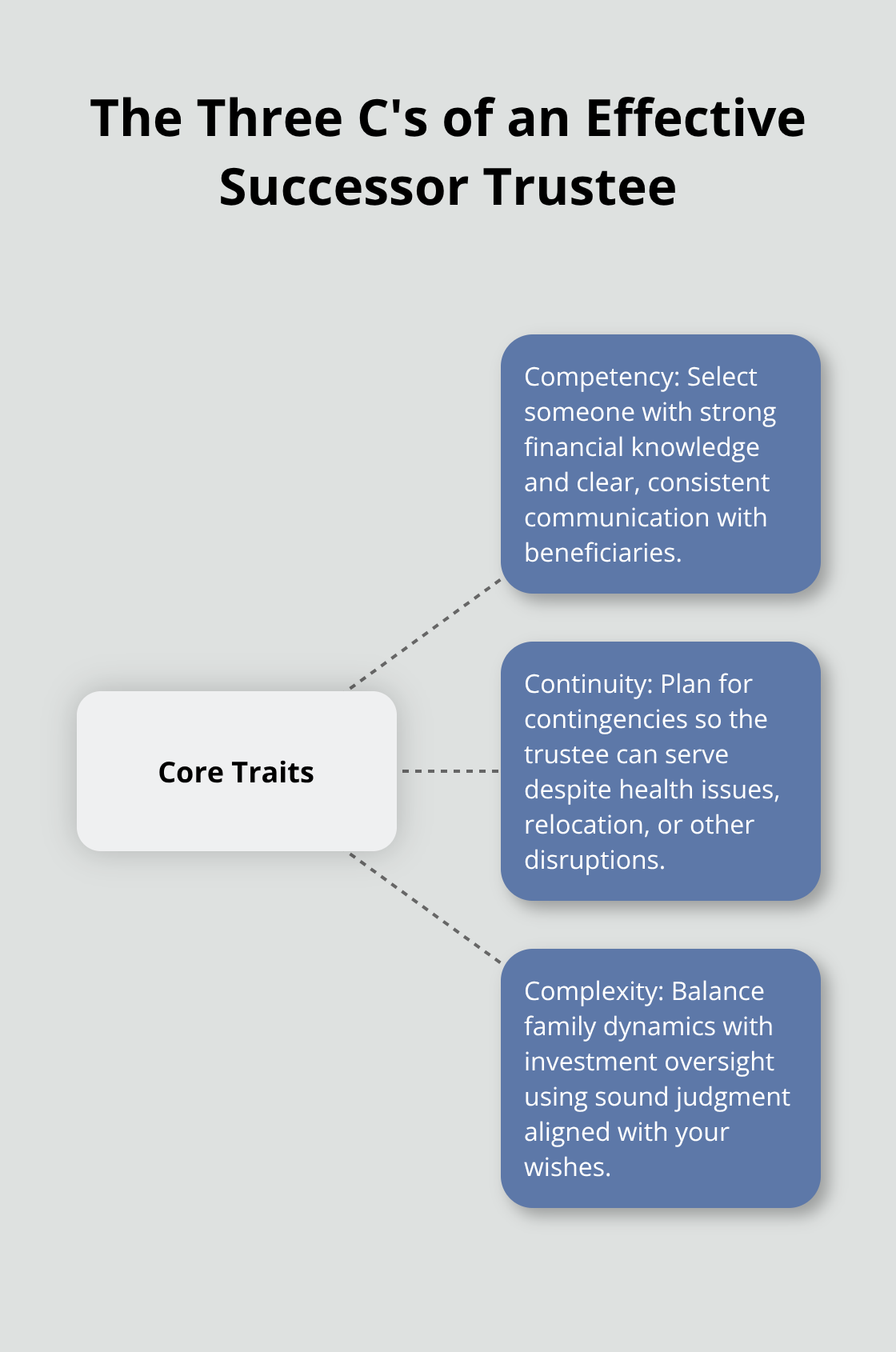
Start by separating trustworthiness from capability. A family member you trust completely may lack the financial discipline or time to manage a complex portfolio, file tax returns accurately, or handle beneficiary disputes fairly. Conversely, a financially sharp professional trustee may lack the personal knowledge of your family’s values and dynamics that helps them make decisions aligned with your wishes. Northern Trust’s research identifies three core traits to evaluate: Competency, Continuity, and Complexity. Competency means selecting someone with the right mix of financial knowledge and the ability to communicate clearly with beneficiaries. Continuity requires planning for contingencies since your successor may face health issues, relocation, or other circumstances that prevent them from serving when needed. Complexity recognizes that family dynamics and investment portfolios interact in ways that demand careful judgment.
Do not appoint someone to honor them or out of obligation. Choose candidates who are genuinely willing and able to handle the role, and have an honest conversation with them about what succession means before you name them in your trust documents.
Individual Trustees, Co-Trustees, and Professional Models
Individual trustees cost less and move faster than committees, but they also face burnout and concentration risk if that person becomes incapacitated or dies. A single trustee works best when you have someone capable and willing to serve long-term, and you name clear backups. Co-trustee arrangements split decision-making between two people, which can prevent one person from misusing assets, but they also create deadlock risk if the co-trustees disagree on major decisions. If you choose co-trustees, define decision rules clearly: specify which decisions require unanimous approval and which allow a single trustee to act.
Corporate trustees or trust banks charge higher fees-typically 1 to 2 percent of estate value annually-but they bring institutional resources, professional management, and continuity that family members cannot match. Non-depository trust companies generally charge 50 to 80 percent less than traditional trust banks. Many families blend approaches by naming a family member as co-trustee alongside a professional, combining familiarity with professional oversight. This hybrid model often works better than pure family trusteeship because it insulates family members from fiduciary liability and provides institutional backing when complex decisions arise.
Whichever model you choose, always designate backups. If your primary successor cannot serve when needed, a documented backup prevents your family from fighting in court while your trust sits unmanaged.
Assess Availability and Willingness Before You Commit
Someone brilliant with money but unwilling to serve does you no good. Before you name a successor trustee, discuss the role openly with them and obtain their explicit agreement. Many families skip this step and later discover their chosen trustee feels blindsided or resentful about accepting unpaid work.
Explain what trustee duties involve: reviewing beneficiary requests, filing tax returns, managing investments or overseeing investment advisors, communicating distribution decisions, and potentially handling family conflicts. Be honest about time demands. A simple trust with one or two beneficiaries requires less work than a large family trust with multiple beneficiaries and competing interests. Ask whether your candidate has the bandwidth to handle the role for ten, twenty, or thirty years.
Consider age and health. Appoint someone who will still be capable when you reach advanced age or when a crisis occurs. A trustee in their seventies may lack the stamina to serve effectively through a complex administration lasting several years. Plan for succession within succession: if your successor is significantly older than you, name a backup who will carry the role forward when your primary successor steps down.
Revisit Your Choices Every Few Years
After you establish your succession plan, revisit it every three years to reflect life changes, new relationships, and shifts in your family’s asset profile. A trustee who was ideal five years ago may face changed circumstances that affect their ability to serve. These regular reviews catch problems early and keep your plan aligned with your current situation. The next section addresses the mistakes families make when they fail to plan carefully, and how to avoid them in your own trust.
Common Trustee Succession Mistakes to Avoid
Naming a Successor Without Discussing the Role
Naming a successor trustee without discussing the role beforehand ranks among the most common and damaging succession mistakes families make. You assume your brother understands what trustee duties entail, or you believe your closest friend will accept the responsibility out of loyalty, but neither conversation actually happens. When the transition occurs and your named trustee learns for the first time that they must file tax returns, manage investments, handle beneficiary disputes, and potentially navigate family conflict, resentment sets in fast. Some refuse the role entirely, forcing your family back to square one while assets sit unmanaged. Others accept reluctantly and perform poorly, making rushed decisions or neglecting critical tasks.
Have a direct conversation with your successor before you name them in your trust documents. Explain what trustee duties involve, discuss time commitments honestly, and ask explicitly whether they are willing and able to serve. Obtain their agreement in writing or at minimum document that they have accepted the role. This single step eliminates misunderstandings and confirms your successor understands what lies ahead.
Failing to Update Your Plan as Life Changes
Failing to update your succession plan as life unfolds creates a second critical failure. You named your trustee five years ago when circumstances were stable, but today your primary successor faces health issues, has relocated across the country, or is dealing with financial problems that undermine their ability to manage your trust responsibly. Many families establish a plan and then never revisit it, assuming once done the work is finished.
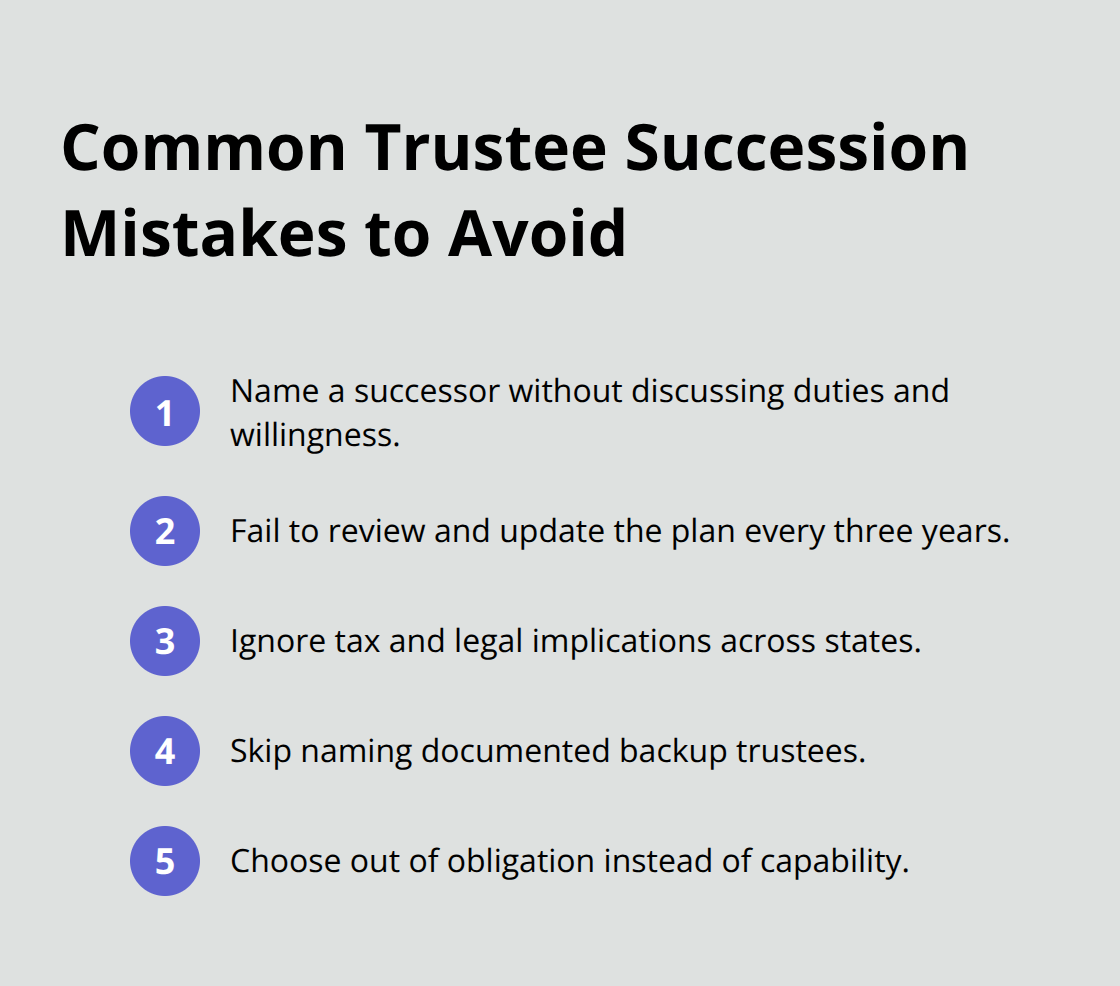
Review your succession plan every three years to reflect job changes, relocations, health developments, and shifts in family relationships. A trustee who was ideal years ago may no longer fit your situation. Designate backup trustees with the same care you give your primary choice-without documented backups, your family faces the same court battles and delays that succession planning was meant to prevent.
Ignoring Tax and Legal Implications of Transitions
The third mistake involves ignoring the tax and legal complexities that trustee transitions trigger. When a trustee changes, your trust may face income tax filing obligations, property transfer considerations, and potential state tax exposure that vary depending on where your trustee and beneficiaries live. Some states impose higher taxes on trust income or distributions than others, and moving a trustee across state lines can unexpectedly increase your family’s tax burden.
California’s Prop 13 and Prop 19 considerations add another layer of complexity for real estate held in trust. A trustee unfamiliar with these rules may make decisions that trigger unnecessary taxes or cause property reassessments. Work with an estate planning attorney when you establish your succession plan to address these tax implications upfront. Professional guidance identifies which states offer tax advantages for your trustee and beneficiaries, clarifies how property transfers work when a trustee changes, and accounts for tax elections that protect your family’s wealth during transitions.
Final Thoughts
A trustee succession plan transforms your trust from a document that sits in a drawer into active protection for your family’s financial security. Without one, your family faces leadership gaps that freeze assets, family conflict that erodes relationships, and operational breakdowns that reduce the wealth you worked to build. With a clear plan in place, your trust continues operating smoothly when transitions occur, your beneficiaries know they will be cared for, and your family avoids the court battles and delays that derail unprepared estates.
Choose your successor trustee based on genuine capability and willingness to serve, not obligation or sentiment. Have honest conversations with your candidates before you name them, confirm they understand what the role demands, and designate clear backups. Review your plan every three years to reflect life changes and shifts in your family’s circumstances, and address the tax and legal complexities that trustee transitions trigger-particularly if your trustee or beneficiaries span multiple states or if your trust holds California real estate subject to Prop 13 and Prop 19 considerations.
A trustee succession planning attorney helps you navigate these decisions and formalize your plan in documents that actually work when needed. We at Law Offices of Roshni T. Desai bring over 25 years of experience helping families across Southern California establish succession plans that protect their assets and preserve their values. Contact us to schedule your free consultation and take the next step toward securing your trust’s future.