




Probate Attorney California: Navigating Local Law With Confidence
Probate in California comes with specific rules, tight deadlines, and complex paperwork that trips up many families. When you’re managing an estate, missing a single filing deadline or overlooking a procedural requirement can cost you thousands in delays and legal fees.
We at Law Offices of Roshni T. Desai help families work through probate with clarity and confidence. This guide walks you through what to expect and how a probate attorney in California can protect your interests.
What Probate Actually Means in California
Probate in California is the court-supervised process that transfers a deceased person’s assets to their heirs or beneficiaries. It’s not optional-if property is titled solely in the decedent’s name and lacks a named beneficiary or survivorship rights, it must pass through probate. The process starts when you file a petition with the probate court to appoint a personal representative, who then collects all assets, pays debts and taxes, and distributes what remains.
How California’s Probate Structure Works
California probate differs significantly from other states because of its specific filing deadlines, mandatory creditor notification periods, and strict inventory requirements. You must file the initial petition within 30 days in many situations, and creditors receive a set timeframe to submit claims-typically four months from the first publication of notice. This structure protects heirs but also creates hard deadlines that, if missed, can derail the entire process.
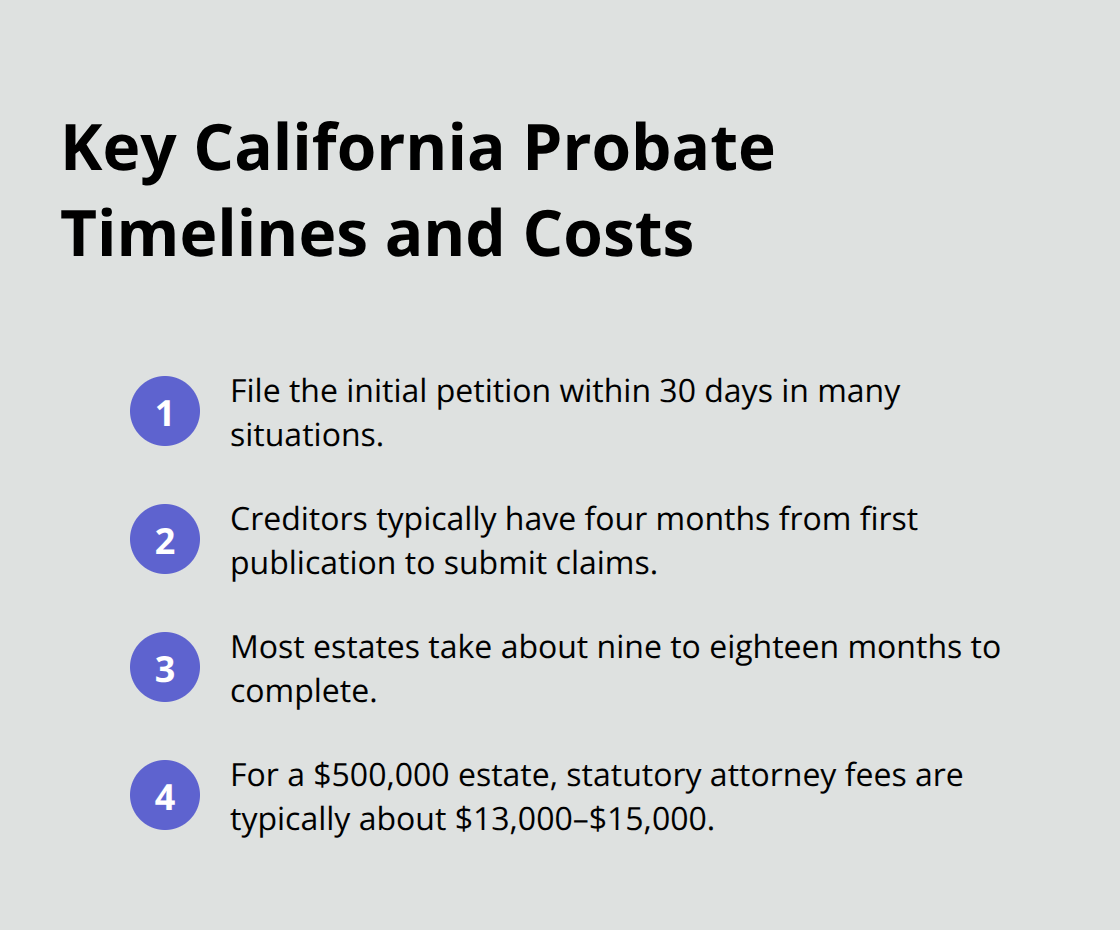
Unlike some states where probate moves quickly, California’s typical timeline runs nine to eighteen months, depending on estate complexity and court backlogs. The cost varies widely: if an estate is valued at $500,000, attorney fees under California’s statutory fee schedule typically range from $13,000 to $15,000, though contested cases or complex assets can increase this substantially.
Simplified Pathways for Smaller Estates
Not all estates require formal probate. California offers simplified pathways for smaller estates that can save significant time and money. As of April 1, 2025, estates under $208,850 in total value can use a small estate affidavit process, and the primary residence of a decedent can qualify for summary disposition under Probate Code sections 13150-13157 if its value doesn’t exceed $750,000. This 2025 increase from the previous limit reflects Assembly Bill 2016, which expanded access to simplified procedures. Understanding which pathway your estate qualifies for makes an enormous difference in both timeline and cost.
Why California’s Rules Demand Precision
California requires that most probate documents receive verification under penalty of perjury, meaning executors and administrators face real legal consequences for inaccurate filings. The state also mandates specific notice procedures-you cannot simply email or call beneficiaries and creditors. Publications in local newspapers, certified mail to known creditors, and formal court filings create a paper trail that protects everyone but demands precision.
Missing a single deadline or filing requirement does not just delay the process; it can invalidate distributions, expose the personal representative to personal liability, and trigger costly court motions to correct errors. Real estate titles, bank accounts, retirement assets, and business interests each follow different transfer rules within California probate, requiring knowledge of which assets pass outside probate and which must go through the court system. The state also imposes creditor claim deadlines that are shorter than in many other states, meaning legitimate creditors face exclusion from collecting if proper notice procedures don’t occur.
What Comes Next in Your Probate Journey
These procedural complexities form the foundation of why California probate demands careful attention from the start. The specific rules that govern your estate-from filing deadlines to asset transfers-directly shape the challenges you’ll face and the strategies that work best for your situation.
Common Probate Challenges in California
Family Disputes That Drain Estates and Relationships
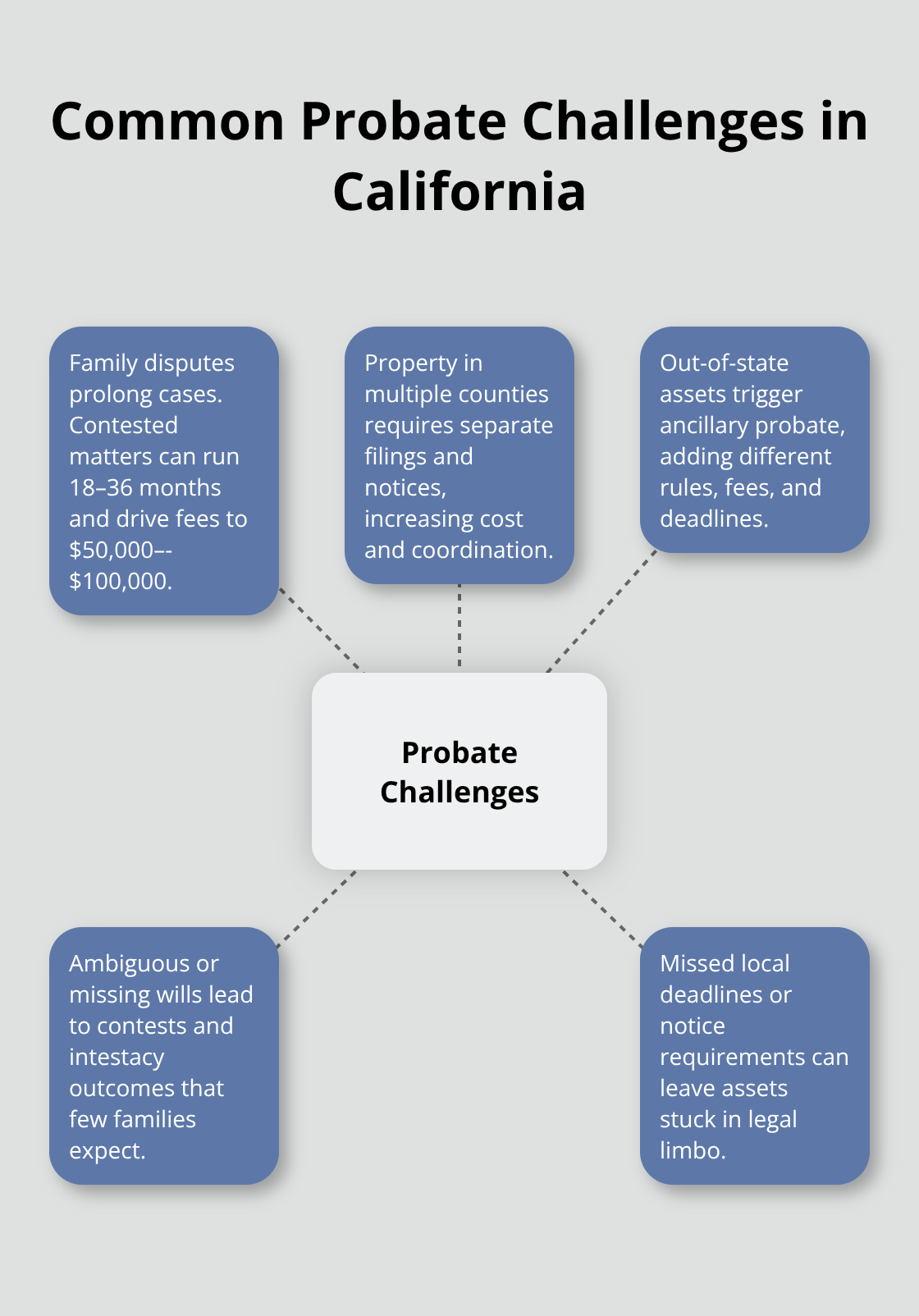
Family disagreements over an estate rarely stay quiet during California probate. When multiple heirs contest the will, question the executor’s decisions, or dispute property valuations, the court process stretches from months into years. According to the American Bar Association, contested probate cases average 18 to 36 months in resolution, and attorney fees in disputed estates can easily exceed $50,000 to $100,000.
Each legal filing costs money, and every court hearing delays distributions to beneficiaries who are already grieving.
When a will is ambiguous about who receives what, or when no will exists at all, California’s intestacy laws determine distribution-but those laws don’t always match what family members expected or wanted. A surviving spouse might inherit differently than a child anticipated, or a business interest could pass to someone with no management experience. These situations trigger will contests, claims of undue influence, or allegations that the decedent lacked capacity when signing documents. Each claim requires separate legal defense, testimony, and court appearances that drain both the estate’s resources and family relationships.
Property Scattered Across Multiple Counties
Managing property scattered across multiple California counties adds another layer of complexity that many families underestimate. Real estate in Kern County, bank accounts in Los Angeles County, and rental property in San Diego County don’t all transfer through a single probate process-each property may require separate filings, separate creditor notices, and coordination with different local court systems. When a decedent owned out-of-state property, ancillary probate becomes necessary, meaning you file in multiple states with different rules, different filing fees, and different creditor claim deadlines. Missing a single county’s deadline or filing requirement can leave property stuck in legal limbo while heirs wait for resolution.
The Consequences of Inadequate Estate Planning
Missing estate planning documents create the worst scenarios. When a decedent dies without a will, without a trust, and without beneficiary designations on accounts, California probate courts must follow intestacy laws that may distribute assets in ways the family never intended. A parent who wanted their business to pass to their eldest child instead sees it divided equally among all children under California law. A person in a long-term unmarried relationship leaves nothing to their partner because intestacy law recognizes only spouses, children, and blood relatives.
These situations force families into formal probate with no clear guidance, higher court costs, and distributions that contradict the decedent’s actual wishes. Inadequate estate planning also leaves personal representatives scrambling to locate assets, decode financial records, and gather documentation without clear instructions from the decedent about where accounts are held, what debts exist, or which assets were meant for specific people. The absence of organized records transforms what could be a straightforward probate into months of detective work-and every month of delay costs the estate money in court fees, attorney time, and lost investment returns on frozen assets.
These challenges reveal why the right support matters from the moment probate begins. Understanding how to navigate disputes, coordinate across counties, and work with incomplete documentation shapes whether your estate resolves smoothly or spirals into years of conflict and expense.
How a California Probate Attorney Handles the Details
Filing Requirements and Court Deadlines
The difference between a smooth probate and a prolonged nightmare often comes down to who manages the procedural requirements from day one. California’s court system demands precision filing, strict adherence to notice deadlines, and coordination across multiple agencies and financial institutions. A probate attorney knows exactly which forms to file, where to file them, and what happens if you miss a deadline. The 30-day petition filing window, the four-month creditor claim period, and the specific language required in court notices are not suggestions-they are mandatory rules that, when missed, create costly delays or require expensive motions to correct.
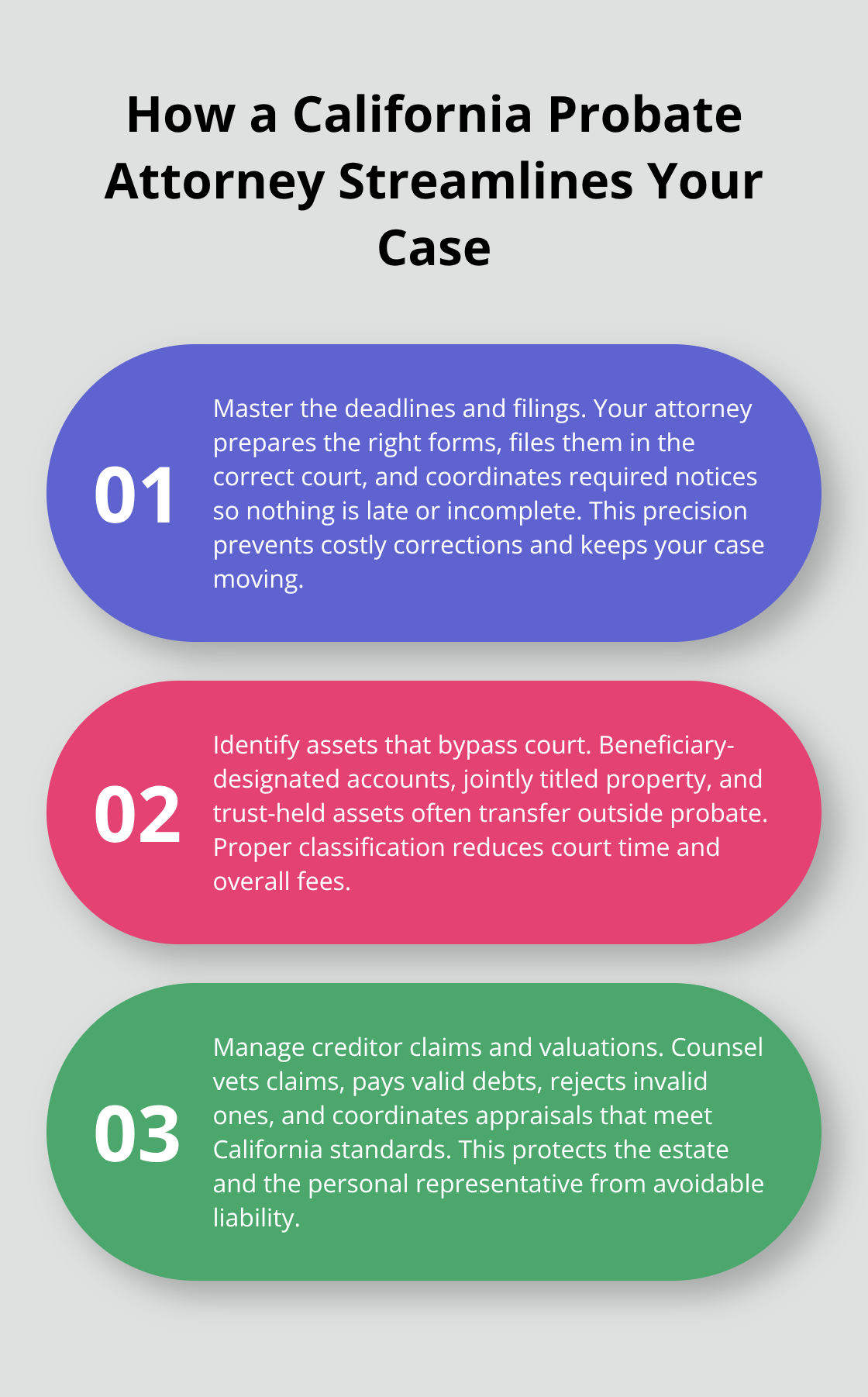
An attorney files the petition correctly the first time, ensures all notices reach creditors and heirs through proper channels, and responds to court orders before deadlines pass. This prevents the situation where an estate sits in probate limbo for an extra year because a single notice was sent to the wrong address or a filing deadline was overlooked.
Identifying Assets That Avoid Probate
Beyond procedural compliance, an attorney protects your rights by identifying which assets actually belong in probate and which can transfer outside the court system. Many families overpay in probate costs because they assume everything must go through court when, in reality, assets with named beneficiaries, jointly owned property, or accounts held in trust bypass probate entirely.
An attorney reviews the entire asset picture and uses available tools-spousal property petitions under California Probate Code sections 13150-13157, small estate affidavit procedures for estates under $208,850, or beneficiary designation transfers-to move assets faster and cheaper than formal probate would allow. This strategic approach directly reduces attorney fees because less time is spent in court and less paperwork accumulates.
Managing Creditor Claims and Estate Assets
Creditor claims and estate assets demand constant attention to detail that most personal representatives cannot handle alone. Creditors have strict timeframes to submit claims, and an attorney must evaluate each claim’s validity, negotiate settlements when appropriate, and either pay legitimate debts or formally reject invalid claims. If a claim is rejected and the creditor sues, the attorney defends the estate rather than leaving the personal representative exposed to personal liability.
Real estate appraisals, business valuations, and personal property inventories all require coordination with specialized professionals, and an attorney ensures these appraisals meet California court standards and withstand scrutiny from beneficiaries or creditors who might challenge valuations. Bank accounts must be identified and secured, tax returns filed for both the decedent and the estate itself, and distributions planned in a way that minimizes tax liability for beneficiaries.
Defending Against Estate Disputes
A contested estate where beneficiaries dispute distributions or challenge the executor’s decisions requires active legal defense. An attorney files responses to objections, prepares witnesses for court testimony, and presents evidence to support the executor’s position. Without legal representation, an executor faces these conflicts alone, often making mistakes that expose them to personal liability or cause distributions to be delayed while courts sort out disputes.
The cost of hiring an attorney upfront is almost always recovered through faster resolution, avoided court errors, and protection against personal liability claims that could otherwise drain the estate or the executor’s personal assets.
Final Thoughts
California probate demands precision, timing, and knowledge of rules that shift based on estate size, asset type, and family circumstances. Missed deadlines, incorrect filings, or overlooked assets that could have avoided probate entirely create costly mistakes that affect both the estate and family relationships during an already difficult time. A probate attorney California brings clarity to confusion by filing documents correctly, meeting every deadline, identifying which assets bypass court, and defending your interests if disputes arise.
We at Law Offices of Roshni T. Desai understand that probate is not just about paperwork-it protects your family and honors the decedent’s wishes with confidence. Ms. Desai’s dual licensure as an attorney and real estate professional streamlines estate-related property sales and transactions, reducing costs, delays, and communication problems that families often face. We provide personalized estate planning and probate services across Southern California, handling wills, trusts, powers of attorney, trust and probate administration, elder law, and small business succession.
The right support starts with a conversation. Contact Law Offices of Roshni T. Desai to explore how we can help your family move forward with confidence, and we offer free consultations with flexible home or office visits so you can discuss your situation without pressure or upfront costs.