



Trust Administration Attorney Services: Expert Help at Every Step
Administering a trust after someone passes away involves managing assets, paying taxes, and handling beneficiary concerns-all while following strict legal requirements. Many trustees attempt this alone and end up making costly mistakes that delay distributions or create family conflict.
We at Law Offices of Roshni T. Desai help trustees navigate trust administration attorney services with clarity and confidence. This guide walks you through what trust administration involves and how professional legal support protects everyone involved.
What Trust Administration Actually Requires
The Scope of Work Trustees Face
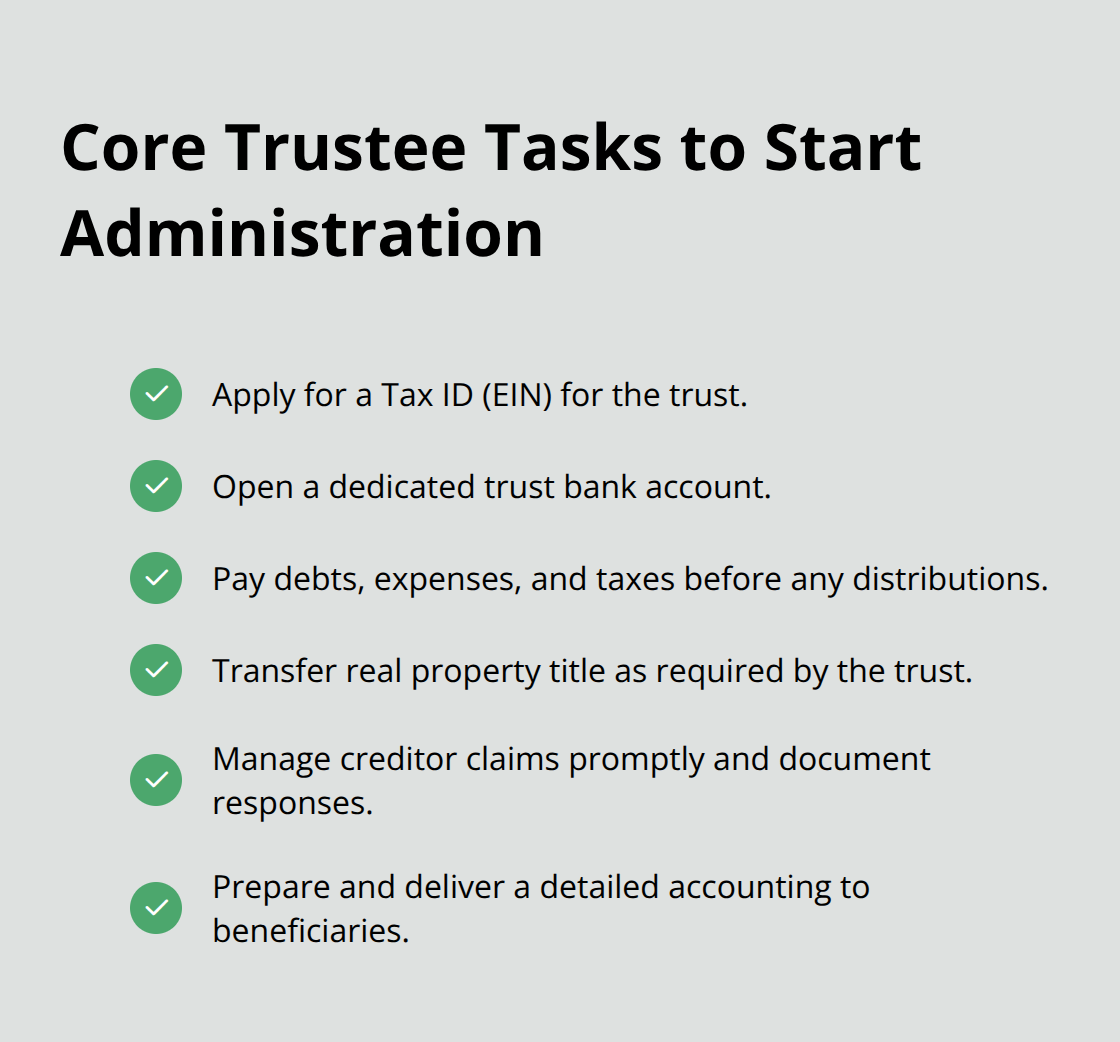
Trust administration begins the moment a trustee accepts the role, and the scope of work extends far beyond what most people anticipate. The trustee must locate and secure all trust assets-bank accounts, investment statements, real estate deeds, business interests, and personal property scattered across multiple institutions. California law mandates notification of all beneficiaries within 60 days of the trust becoming irrevocable, per Probate Code 16061.7, and beneficiaries then have 120 days to challenge the trust under Probate Code 16061.8. This notification window is non-negotiable; missing it creates serious legal exposure. The trustee must apply for a Tax ID number for the trust, open a dedicated trust bank account, and begin paying debts, expenses, and taxes before any distributions occur. Real property requires title transfers, creditor claims demand management, and a detailed accounting showing all assets, income, expenses, and distributions must reach beneficiaries. Most trusts settle within 6 to 12 months under normal circumstances, though timelines extend when assets require sale, beneficiary disputes arise, or complex tax situations demand attention.
Critical Errors That Derail Administration
Trustees who attempt administration without guidance consistently make the same preventable errors. Missing the 60-day beneficiary notification deadline exposes the trustee to claims of breach of fiduciary duty and can invalidate distributions already made. Incorrectly valuing assets as of the date of death leads to tax problems and inaccurate accountings that beneficiaries rightfully challenge. Commingling trust funds with personal accounts obscures the financial trail and makes transparent accounting impossible.
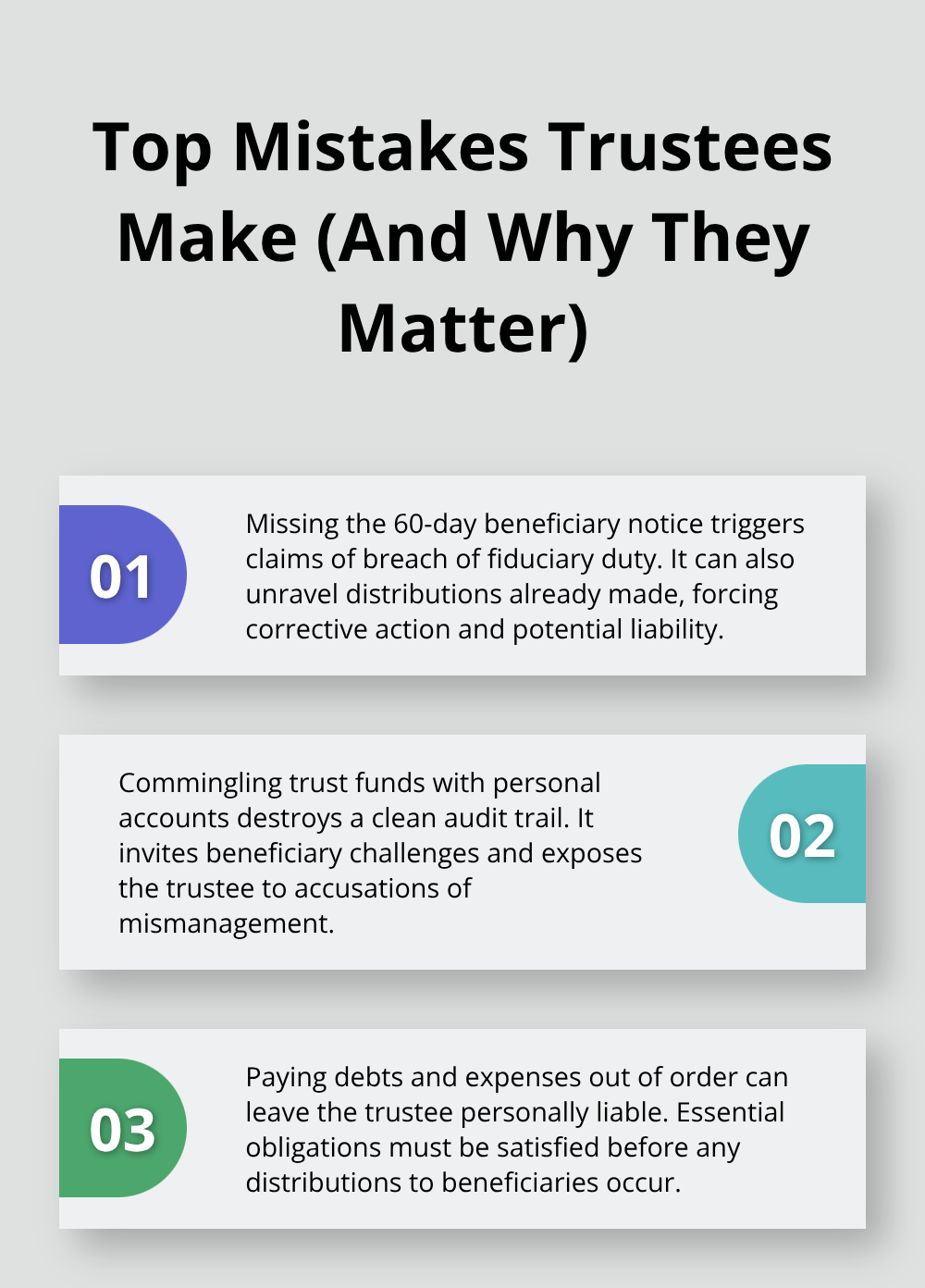
Paying debts and expenses out of order-distributing assets to beneficiaries before addressing funeral costs, medical bills, credit card balances, and property expenses-leaves the trustee personally liable for unpaid claims. Tax mismanagement occurs frequently when trustees fail to file the decedent’s final Form 1040, the fiduciary Form 1041 for trust income, or Form 706 when the estate exceeds the federal exemption of 13.61 million dollars in 2024. Poor communication with beneficiaries breeds suspicion and conflict; when beneficiaries feel uninformed, they assume wrongdoing even when none occurred. These preventable mistakes transform straightforward administrations into protracted disputes that cost far more in time and money than hiring guidance from the start.
How Professional Guidance Changes the Outcome
A trust administration attorney handles these complex requirements systematically, protecting both the trustee and beneficiaries from costly errors. The attorney ensures all deadlines are met, assets are properly valued, and funds flow in the correct order. Transparent communication with beneficiaries becomes standard practice, reducing conflict and building confidence in the process. Detailed record-keeping and proper accounting satisfy California’s fiduciary requirements and provide clear documentation if disputes later arise. When you work with a trust administration attorney, the trustee gains clarity on what the trust document actually requires and how California law applies to the specific situation.
Key Responsibilities of a Trust Administration Attorney
Marshaling and Securing Trust Assets
A trust administration attorney manages the operational and legal machinery that keeps trust administration moving forward without derailing into disputes or missed deadlines. The first responsibility is marshaling and securing all trust assets-locating bank statements, investment accounts, real property deeds, business interests, and personal property across multiple institutions and verifying ownership in the trust’s name. A comprehensive asset inventory valued as of the date of death feeds directly into tax reporting and final accounting to beneficiaries. The attorney coordinates with financial institutions to transfer accounts, manages the title transfer process for real estate to avoid probate complications, and handles the mechanics of opening a dedicated trust bank account and obtaining the Tax ID number that separates trust income from personal funds. This separation is non-negotiable under California fiduciary law because commingled accounts create an audit trail nightmare and expose the trustee to claims of mismanagement.
Paying Liabilities in the Correct Sequence
The attorney identifies and pays liabilities in the correct order-funeral costs, medical bills, property taxes, mortgage payments, and credit card balances must be addressed before any beneficiary receives a penny. Distribution timing depends entirely on what the trust document says; some trusts distribute immediately after debts are settled, while others retain assets for ongoing purposes (like supporting a minor child or a beneficiary with special needs), which can extend administration well beyond the typical 6-to-12-month window. This sequencing protects the trustee from personal liability and ensures the trust administration follows California law.
Managing Tax Obligations and Filings
Tax obligations consume significant time and create substantial risk if handled incorrectly. The attorney coordinates with a CPA to file the decedent’s final Form 1040 income tax return, the fiduciary Form 1041 for any trust income earned during administration, and Form 706 federal estate tax returns if the estate exceeds the 13.61 million dollar federal exemption in 2024. California has no state inheritance tax, but federal tax liability remains a real concern for larger estates, and the IRS penalties for missed deadlines or incorrect valuations are steep. The attorney ensures assets are valued correctly as of the date of death-not current market value-because this step directly impacts beneficiary basis calculations and tax liability.
Resolving Disputes and Maintaining Transparency
When disputes arise between beneficiaries, between a trustee and beneficiaries, or between co-trustees, the attorney remains neutral, preserves assets, provides transparent accounting, and coordinates with legal proceedings if litigation becomes necessary. The attorney can represent the trustee in probate court if a Heggstad petition becomes necessary to add assets that weren’t formally funded into the trust before death, or defend against claims of undue influence, lack of capacity, or breach of fiduciary duty. Clear communication with all beneficiaries throughout administration-not just at the final accounting-reduces conflict dramatically; beneficiaries who feel informed and respected are far less likely to challenge distributions or question the trustee’s decisions. This ongoing dialogue transforms the administration process from a source of family tension into a structured, transparent journey toward final distribution.
Working With a Trust Administration Attorney
The Timeline: What Happens at Each Phase
Trust administration moves through distinct phases, and understanding what happens at each stage removes much of the anxiety trustees feel when starting the process. The initial phase spans weeks one through eight, during which an attorney reviews the trust document, gathers financial records, obtains death certificates (typically five to ten copies), and notifies beneficiaries within the mandatory 60-day window required by California Probate Code 16061.7. Once beneficiaries receive notice, they enter a 120-day contest period under Probate Code 16061.8 to challenge the trust’s validity, so the attorney tracks this deadline carefully. During months three through nine, the core administration work occurs: the attorney coordinates with financial institutions to transfer accounts, manages property title transfers, applies for the trust’s Tax ID number, opens a dedicated trust bank account, and works with a CPA to handle tax filings.
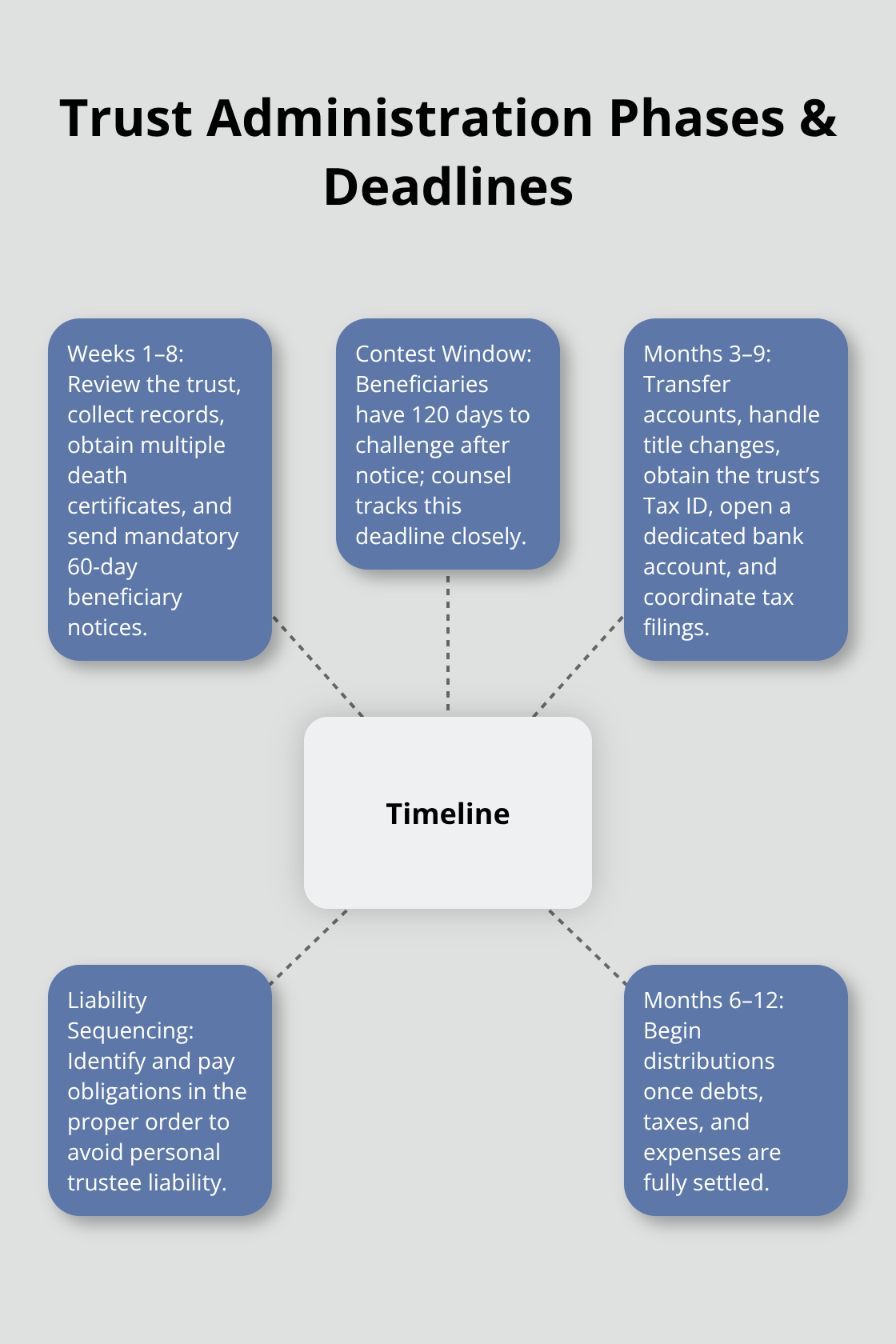
The attorney also identifies all liabilities and arranges payment in the correct sequence to avoid leaving the trustee personally responsible for unpaid claims. Around months six through twelve, distributions begin once debts, taxes, and expenses are settled.
Duration and Complexity Factors
Most trusts complete within six to twelve months under typical circumstances, though complex situations involving real estate sales, multiple properties in different states, or beneficiary disputes can extend the timeline significantly. The trust document itself determines distribution timing; some trusts distribute immediately after debts are settled, while others retain assets for ongoing purposes (like supporting a minor child or a beneficiary with special needs), which can extend administration well beyond the typical window. An attorney tracks all these variables and adjusts the administration plan accordingly.
Understanding Costs and Fee Structures
Costs for trust administration vary depending on complexity, asset types, and whether disputes arise. Some firms charge hourly rates ranging from 150 to 400 dollars per hour, while others offer flat-fee pricing for straightforward administrations. We at Law Offices of Roshni T. Desai offer free consultations where you can discuss your specific situation and understand what administration will actually require before committing to any fees. Ms. Desai’s background as both an attorney and real estate professional proves particularly valuable when trust administration involves property sales or transfers, streamlining transactions and reducing unnecessary costs and delays.
When Professional Guidance Becomes Essential
If the trust owns real estate requiring sale, involves beneficiaries spread across multiple states, includes significant tax obligations, or faces potential disputes, professional guidance becomes not optional but necessary to protect the trustee from personal liability and ensure distributions comply with California law and the trust’s actual terms. The cost of hiring an attorney typically proves far smaller than the cost of fixing mistakes made during DIY administration, particularly when those mistakes trigger beneficiary litigation or IRS penalties for incorrect tax filings.
Final Thoughts
Trust administration without professional guidance leaves trustees vulnerable to missed deadlines, incorrect tax filings, and family conflict that could have been prevented. The 60-day beneficiary notification requirement, asset valuation as of the date of death, proper sequencing of debt payments, and transparent accounting are not optional steps-they are legal obligations under California law. A single mistake, like commingling trust funds with personal accounts or distributing assets before taxes are filed, can expose the trustee to personal liability and trigger beneficiary litigation that costs far more than hiring guidance from the start.
We at Law Offices of Roshni T. Desai understand that most trustees have never administered a trust before and feel overwhelmed by the complexity. Our trust administration attorney services remove the burden from your shoulders while keeping you informed at every step, and Ms. Desai’s background as both an attorney and real estate professional proves invaluable when trust administration involves property sales or transfers. With over 25 years of experience serving Southern California, we handle wills, living and irrevocable trusts, powers of attorney, trust and probate administration, elder law, and small business succession with personalized, compassionate guidance tailored to your specific situation.
Schedule a free consultation with Law Offices of Roshni T. Desai to discuss your trust, understand what administration will require, and learn how we can protect your interests and those of your beneficiaries. We offer flexible home or office visits to make the process convenient for you. Contact us today to begin your trust administration with confidence.