



Probate Attorney Consultation Tips: Get the Right Questions Ready
Walking into a probate attorney consultation unprepared often leads to wasted time and missed opportunities to protect your interests. The right questions can transform a vague meeting into a focused strategy session that addresses your actual concerns.
At Law Offices of Roshni T. Desai, we’ve seen how probate attorney consultation tips make the difference between clients who feel confident and those who leave confused. This guide walks you through the questions you should ask before, during, and after your consultation.
Understanding Probate Timelines and Costs in California
How Probate Works in California
Probate in California follows a court-supervised process that validates your will, inventories assets, pays debts, and distributes remaining property to heirs or beneficiaries. The California probate code requires the court to oversee these steps, which means delays are built into the system. If you die without a will, California’s intestacy laws determine who receives your assets, but the probate process still applies. The court validates every action, and this oversight protects beneficiaries-but it also slows things down considerably.
California Probate Timelines: What to Expect
Most people assume probate happens quickly, but California probate typically takes 9 to 12 months minimum, and complex estates routinely extend beyond 18 months. Disputes among beneficiaries, unclear asset ownership, or multi-state property holdings add months to the timeline. Ask your attorney specifically about California’s probate court schedules in your county-some courts move faster than others, and your attorney’s familiarity with local judges and procedures directly affects how efficiently your case moves. Your attorney should outline the major milestones: filing the petition, the probate hearing, creditor notification periods, and final distribution. This roadmap shows you where delays typically happen and what you can control.
Attorney Fees and Court Costs
California probate fees follow a statutory schedule based on gross estate value: attorneys typically charge between 4% to 7% of the estate for straightforward cases, though complex estates may cost less as a percentage but more in absolute dollars. Court filing fees, bond premiums if required, and publication costs add another 1% to 2% to total expenses. A $500,000 estate could cost $20,000 to $35,000 in attorney and court fees alone.
Ask your attorney upfront whether they charge hourly rates, flat fees, or statutory percentages, and request a written estimate. Clarify what costs come directly from the estate versus what you’ll pay out of pocket. Some attorneys bundle services while others charge separately for document preparation, court appearances, and asset valuations. Understanding these specifics prevents sticker shock and helps you make informed decisions about your estate plan.
Questions to Ask About Your Specific Situation
Your family structure, asset types, and potential disputes all affect both timeline and cost. Ask how your particular circumstances-blended families, out-of-state property, or business ownership-change the probate process. Your attorney should explain which of your assets will move through probate and which will transfer directly to beneficiaries (like life insurance or assets in a trust). This distinction matters because it affects both timeline and total costs. The more you understand upfront, the better you can plan for what comes next.
How Different Assets Move Through Probate
Probate Assets vs. Non-Probate Assets
Not all assets follow the same path through probate. Life insurance proceeds, retirement accounts with named beneficiaries, and assets held in a trust bypass probate entirely-meaning they transfer to beneficiaries within weeks rather than months. Bank accounts, investment portfolios without named beneficiaries, real estate in your name alone, and business interests enter probate instead. This distinction matters because probate assets face court delays, public record exposure, and full statutory fees, while non-probate assets move faster and cost significantly less to transfer.
Your attorney should categorize each of your holdings into these two groups during your consultation. Many people own a mix of both types and don’t realize it, which means they pay probate costs on assets that could have bypassed the process entirely with minimal planning.
The Cost Difference Between Probate and Non-Probate Assets
The financial impact of this distinction is substantial. A $300,000 house in probate costs roughly $12,000 to $21,000 in California fees alone; the same house in a trust transfers to your heirs for minimal expense. If you own property in multiple states, probate becomes exponentially more expensive because each state requires its own probate process-ancillary probate-which doubles or triples fees.
Your attorney should identify which assets create the most probate exposure and recommend specific restructuring steps to eliminate unnecessary court involvement.
Restructuring Assets Before Probate Becomes Necessary
The real opportunity sits in restructuring certain assets before death. Transferring real estate into a living trust, adding beneficiary designations to bank accounts and investments, and ensuring retirement accounts have current beneficiary forms all eliminate probate for those specific holdings without complex strategies. These moves require minimal effort during your lifetime but produce massive savings for your beneficiaries after your death.
We at Law Offices of Roshni T. Desai help clients reorganize holdings strategically before probate becomes necessary, which protects both your timeline and your beneficiaries’ inheritance. Our dual licensure as both an attorney and real estate professional streamlines estate-related property sales and transactions to reduce costs, delays, and communication hassles when restructuring real estate holdings into trusts.
Your attorney’s role extends beyond explaining probate rules-they should actively show you which restructuring steps apply to your specific situation and what timeline makes sense for implementation. This proactive approach prevents costly mistakes and positions your estate for efficient transfer when the time comes.
Your Family Structure and Estate Disputes
Family dynamics shape probate outcomes more than most people realize. Blended families, estranged relatives, and unequal asset distributions create friction that extends timelines and multiplies legal costs. Ask your attorney directly how your specific family structure affects probate administration and which relationships might generate disputes. If you have adult children from a prior marriage alongside a current spouse, your attorney needs to understand this upfront because California community property laws interact differently with blended families than with traditional households.
When Family Conflict Extends Probate Timelines
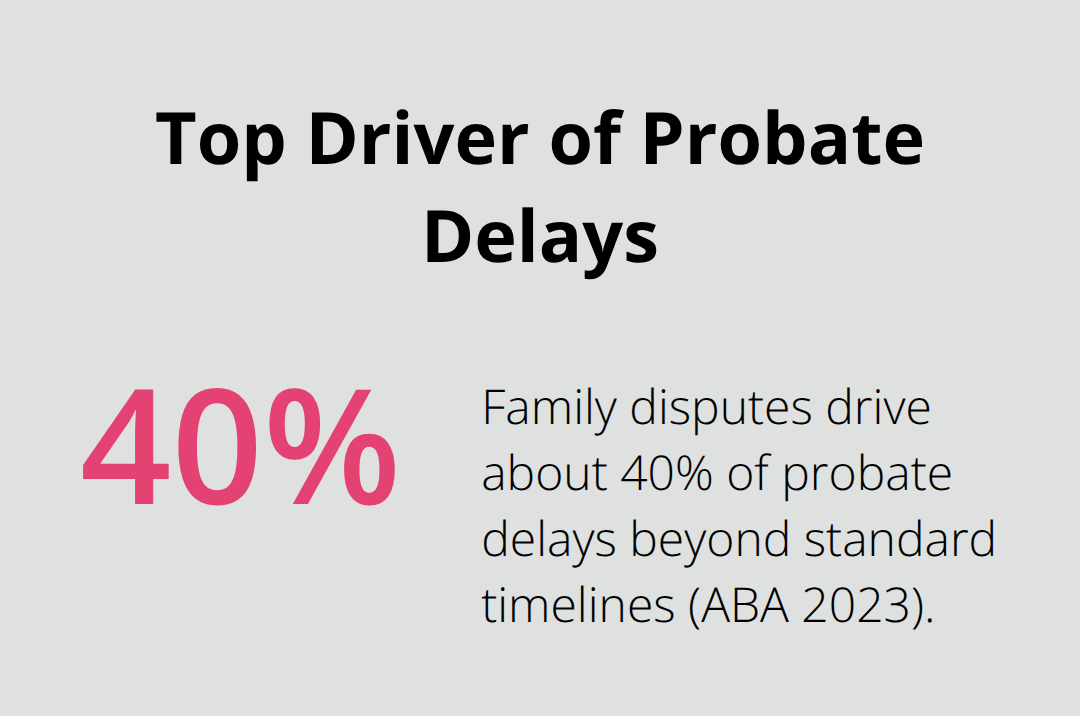
Children who feel excluded or spouses who believe they deserve more often file formal objections during probate, which transforms a routine 12-month process into a contested case lasting 2–3 years. A 2023 survey by the American Bar Association found that family disputes account for roughly 40% of probate delays beyond the standard timeline. Your attorney should identify which family members might contest distributions and recommend protective language in your will or trust to prevent challenges. If you anticipate disagreement, ask whether a trust structure would reduce conflict compared to a will-based probate, since trusts operate outside court and limit opportunities for public objections.
Tax Planning Requires Specific Numbers Now
Federal estate taxes only apply to estates exceeding $13.61 million in 2024, but California generates no state estate or inheritance tax, which means most California residents escape federal taxes entirely. However, this doesn’t mean taxes vanish from your probate picture. Your beneficiaries inherit a stepped-up basis on appreciated assets, meaning if you bought stock for $50,000 and it grows to $200,000 before death, your heirs inherit it valued at $200,000 with no capital gains tax owed. Conversely, inherited retirement accounts like traditional IRAs trigger mandatory distributions and income taxes for beneficiaries within 10 years under the SECURE Act rules.
Ask your attorney whether income tax planning during probate administration matters for your specific holdings, particularly if you own retirement accounts, real estate with significant appreciation, or business interests. If your estate approaches the federal exemption threshold, your attorney should discuss portability elections and lifetime gifting strategies to minimize taxes. A CPA or financial planner working alongside your probate attorney often identifies tax optimization opportunities that attorneys alone might miss. Coordinate with your tax professional before finalizing probate strategy, and you’ll address both estate administration and tax efficiency simultaneously.
Unequal Distributions Trigger the Most Contentious Disputes
Unequal distributions create the most contentious probate disputes. When one child receives real estate while others receive cash, or when a spouse receives ongoing income while adult children receive lump sums, beneficiaries frequently challenge the fairness of distributions and file formal objections with the court. These challenges delay distributions by months and generate additional attorney fees that reduce what all beneficiaries ultimately receive.
Your attorney should ask whether your intended distributions might trigger objections and recommend specific language in your will or trust explaining your reasoning. Some clients include no-contest clauses that penalize beneficiaries who file unsuccessful challenges, though California enforces these clauses narrowly only in certain circumstances. If you anticipate conflict, ask your attorney whether a family meeting before death, a letter explaining your decisions, or a mediation process after death would reduce tension.
How Trust Administration Protects Privacy and Reduces Disputes
Trusts offer a significant advantage here: they operate privately without court involvement, so family disputes stay confidential rather than becoming public court records. Your attorney should explain how your choice between will-based probate and trust-based administration affects both privacy and the likelihood of disputes escalating. A trust structure often discourages challenges because beneficiaries cannot access court records to scrutinize distributions or contest decisions publicly. This privacy protection frequently prevents disputes from starting in the first place, since family members lack the transparency that probate court records provide.
Final Thoughts
Preparing for your probate attorney consultation transforms what could be a confusing meeting into a productive strategy session. The questions you ask about California timelines, asset categorization, family dynamics, and tax implications directly shape how efficiently your estate transfers and how much your beneficiaries ultimately receive. Walking in with organized documents, a clear picture of your assets and debts, and specific concerns about your family structure signals to your attorney that you’re serious about planning, which allows them to focus on solutions rather than basic information gathering.
After your consultation, the real work starts. Your attorney should provide a written roadmap that outlines probate steps, realistic timelines for your specific situation, and fee estimates broken down by service. If restructuring assets makes sense for your circumstances, implement those changes promptly rather than delaying, and review beneficiary designations on retirement accounts and life insurance policies to confirm they align with your overall plan.
We at Law Offices of Roshni T. Desai guide clients through probate administration and estate planning with personalized attention across Southern California. Our dual licensure as both an attorney and real estate professional streamlines property-related transactions during estate restructuring, reducing costs and communication delays. Whether you’re facing immediate probate administration or planning ahead to avoid unnecessary court involvement, contact our team to discuss your specific situation and protect your legacy.