




California Trust Administration Attorney: Choosing The Right Advocate For Your Estate
Trust administration requires navigating California’s complex legal requirements while managing family dynamics. Finding the right California trust administration attorney makes the difference between a smooth process and costly delays.
We at Law Offices of Roshni T. Desai help families handle these responsibilities with clarity and confidence. This guide shows you what to look for and how to avoid common pitfalls.
What Trust Administration Actually Requires
Trust administration in California demands hands-on management across three interconnected areas that most people underestimate. The successor trustee becomes responsible for identifying every asset the deceased owned, determining how each asset is titled, and documenting values as of the date of death. This isn’t paperwork shuffling-it’s detective work. You’ll contact banks, brokerage firms, and insurance companies. You’ll obtain appraisals for real estate and valuables. You’ll search for accounts the family didn’t know existed. Assets left outside the trust-like retirement accounts, payable-on-death accounts, or property refinanced after the trust was created-create complications. California courts recognize the Heggstad petition, established in Estate of Heggstad (1993), which allows trustees to bring assets into the trust when they were clearly intended to be there. This process takes time and costs money, which is why many trustees hire an attorney upfront to avoid discovering missing assets months into administration.
Locating and Protecting Trust Assets
Once you’ve located everything, you must preserve and protect trust assets while administration continues. Open a dedicated trust bank account using the trust’s federal Tax Identification Number, which you obtain from the IRS. Never mix trust funds with your personal money. If the trust holds real estate, you’ll record the Affidavit of Death of Trustee with the county and decide whether to sell or transfer the property to beneficiaries. Property tax implications under California Proposition 19 affect whether children can keep a family home without reassessment, so this decision intertwines with tax planning. You’ll manage ongoing expenses-insurance premiums, property taxes, maintenance costs-all paid from trust funds before beneficiaries receive distributions.
Understanding Your Fiduciary Duties
The trustee’s core duty is to act with loyalty and impartiality, treating all beneficiaries fairly. California Probate Code sections 16000–16015 impose fiduciary duties that carry personal liability if breached. A trustee who mismanages assets faces 100 percent personal liability for losses. This reality makes professional guidance essential to protect yourself and the estate.
Filing Taxes and Managing Distributions
The decedent’s final individual tax return must be filed, and if the trust earns income after death, a separate fiduciary Form 1041 return is required. You’ll work with a CPA to determine whether an estate tax return is necessary and to calculate the step-up in basis for inherited assets, which affects capital gains taxes when assets are sold. Trust administration typically takes 6 to 12 months depending on complexity, and rushing distributions before taxes are settled creates liability. You must account for all trust income, settle the deceased’s debts, pay administrative expenses, and file final tax returns before distributing assets to beneficiaries. Beneficiaries have the right to request an accounting showing where money came from and where it went. Disputes arise when beneficiaries perceive unfair treatment or don’t understand why distributions are delayed. California offers non-judicial settlement agreements where all beneficiaries can sign off on a distribution plan without court involvement, streamlining the process. If conflicts escalate, California Rule of Court 3.1380 requires a Mandatory Settlement Conference where parties must attend and file settlement statements.
Understanding these three areas-asset identification, fiduciary duties, and tax compliance-reveals why many trustees turn to professional guidance. The next section examines what qualities matter most when selecting an attorney to guide you through these responsibilities.
What to Look for in a California Trust Administration Attorney
The attorney you choose shapes whether trust administration runs smoothly or spirals into conflict and expense. California trust law is state-specific, and mistakes cost money fast. A trustee who hires the wrong advisor-or none at all-often pays thousands more in corrective filings, tax penalties, and court fees than professional guidance would have cost upfront.
California-Specific Knowledge Matters Most
Your first filter is California-specific knowledge. The attorney must understand Probate Code sections 16000–16015 on fiduciary duties, the Heggstad petition process for assets titled outside the trust, and how Proposition 19 affects property tax when beneficiaries inherit real estate.
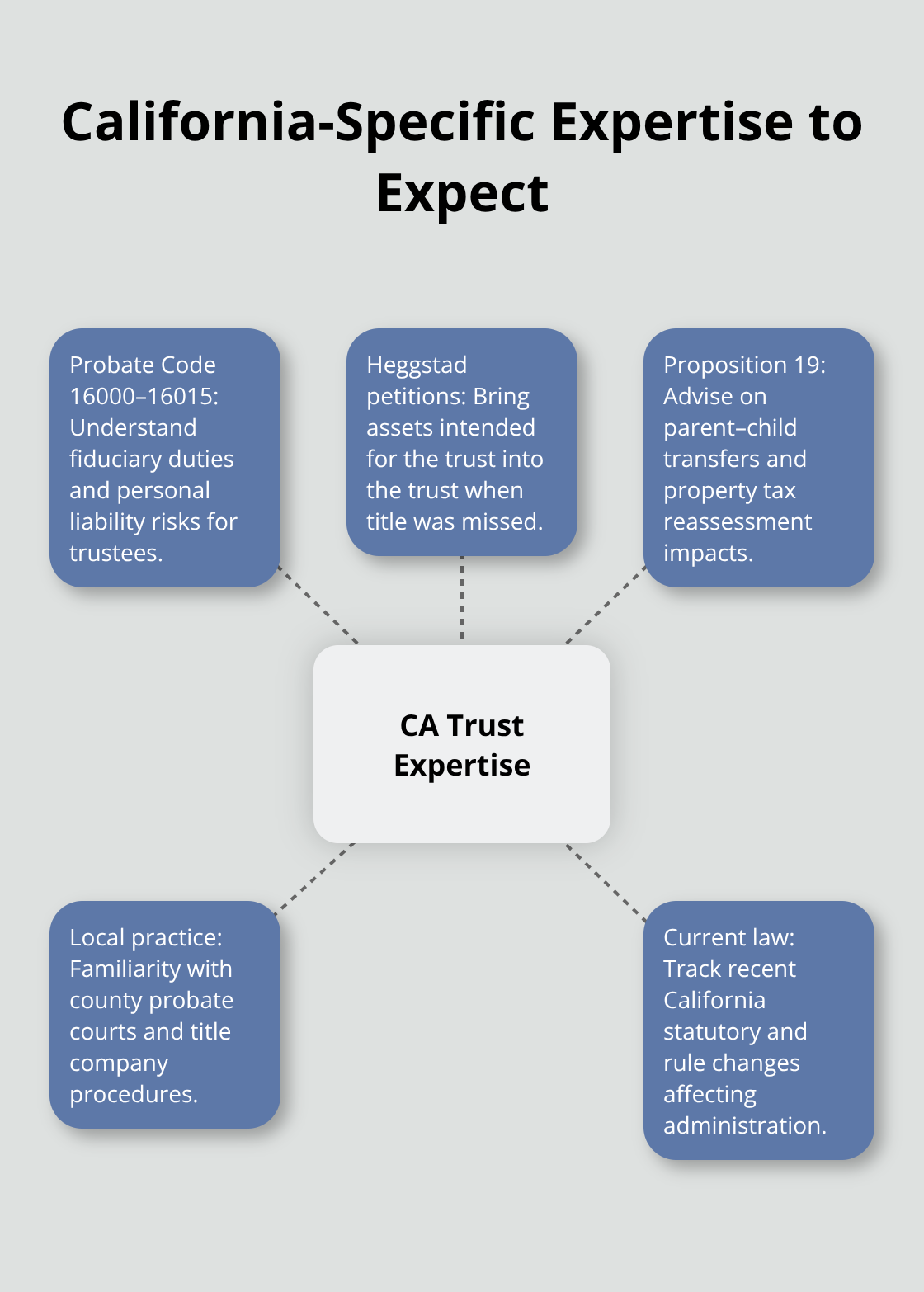
Many national estate planning services offer templates and generic advice that miss California’s quirks. A local attorney familiar with your county’s probate court, local title company practices, and current California statutory changes is non-negotiable. Check whether the attorney has handled trust administrations in your county and ask how many they completed last year-someone doing two a year versus twenty tells you a lot about their depth.
Verify Fee Structures in Writing
Next, verify the fee structure upfront and in writing. Corporate trustees typically charge 0.3 to 2 percent of trust assets annually, while individual professional trustees may charge $25 to $45 per hour in California, with specialized trust attorneys often exceeding $100 per hour. Some firms offer flat-fee packages for straightforward administrations; others bill hourly. The worst surprise is discovering hidden costs mid-process. Ask whether the fee covers all communications, document preparation, and coordination with the IRS for the trust’s Tax Identification Number, or whether those incur separate charges. Transparency about billing prevents disputes later.
Assess How Attorneys Handle Family Conflict
The third quality separates good attorneys from those who add stress to an already difficult time: the ability to manage family conflict without escalating it. Trust administration often exposes family tensions-siblings who disagree on selling the family home, beneficiaries who question the trustee’s decisions, or adult children with competing financial needs. An attorney who acts as a buffer between family members, explains delays in plain language, and documents decisions in writing prevents small disagreements from becoming litigation. Some attorneys specialize in this by drafting beneficiary update letters, facilitating family calls, and preparing detailed accountings that show exactly where trust funds went. This skill matters more than credentials alone. Ask the attorney about their approach to beneficiary communication and whether they’ve handled administrations where family members disagreed. If they mention court battles as their primary tool for resolving disputes, that’s a warning sign.
Finding the Right Fit for Your Situation
When you evaluate candidates, look for someone who listens to your specific circumstances rather than applying a one-size-fits-all approach. The attorney should explain complex concepts in plain language, answer your questions without impatience, and involve you in key decisions throughout administration. Request references from past clients or ask about their track record with administrations similar to yours (multi-state assets, family businesses, or significant real estate holdings). A firm that offers free initial consultations lets you assess whether the working relationship feels right before you commit.
Law Offices of Roshni T. Desai brings over 25 years of experience in trust administration and probate services across Southern California, with personalized guidance designed to reduce family friction and keep administration on track. Ms. Desai’s dual licensure as an attorney and real estate professional streamlines estate-related property sales and transactions to reduce costs, delays, and communication hassles. The firm offers free consultations with flexible home or office visits, making it accessible to discuss your trust administration needs without pressure.
With the right attorney in place, you’re ready to understand the common mistakes that derail many administrations-and how to avoid them.
Common Mistakes Trustees and Beneficiaries Make
Trustees stumble hardest when they treat trust administration as a one-time event rather than a structured process with fixed deadlines and legal obligations. The most common failure is misunderstanding fiduciary duty-trustees believe they can prioritize one beneficiary’s interests or delay distributions indefinitely without consequence. California Probate Code sections 16000–16015 impose strict duties of loyalty and impartiality, meaning a trustee who favors one child over another or uses trust funds for personal expenses faces personal liability. A trustee discovered years later spending $50,000 from the trust on a vacation isn’t forgiven just because no one complained immediately. Courts will order repayment with interest, and the trustee’s personal assets become vulnerable.
Procrastination on Administrative Tasks
The second critical mistake is procrastination on administrative tasks. Many trustees believe they have unlimited time, but California law expects action within specific windows. The IRS requires a federal Tax Identification Number for the trust within 60 days of death. Banks won’t transfer assets without this number. Procrastination on this single step cascades into frozen accounts, missed investment opportunities, and accumulated expenses that could have been avoided.
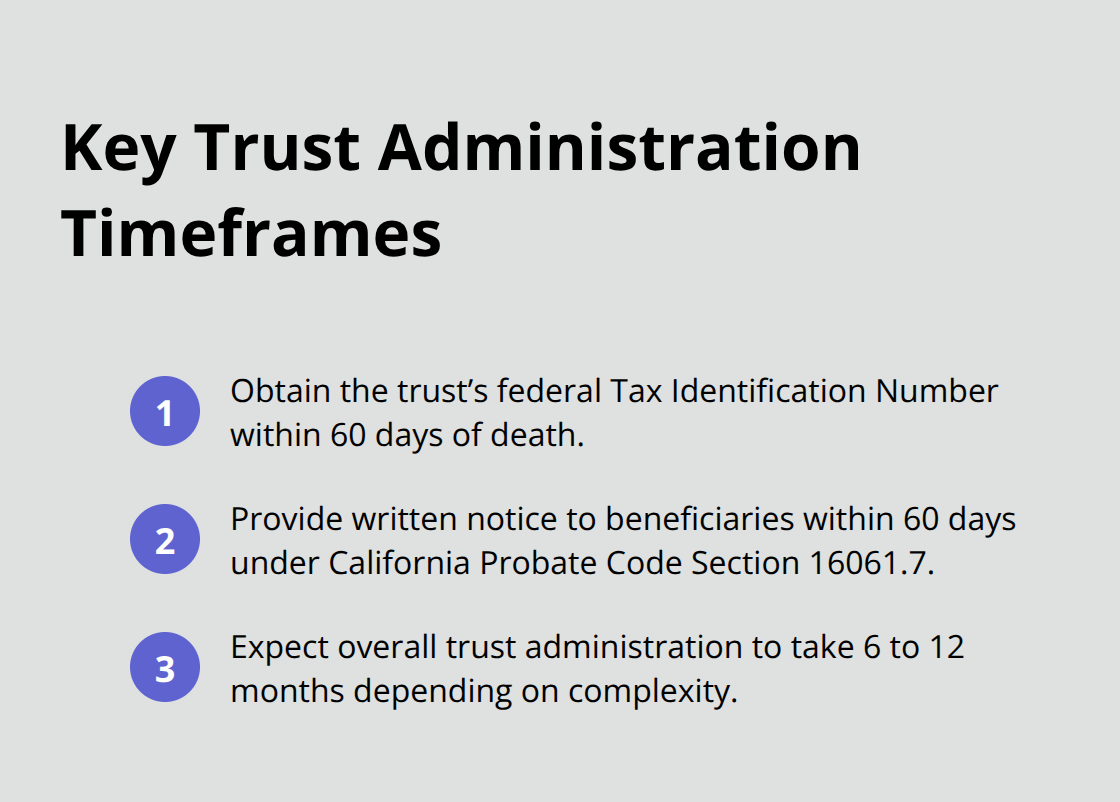
Similarly, trustees who wait six months to notify beneficiaries violate California Probate Code Section 16061.7, which requires written notice within 60 days. Beneficiaries who discover they weren’t properly notified can challenge the entire administration later, forcing the trustee to restart the process or face litigation costs that dwarf the original administration fees.
Ignoring Legal Help During Conflicts
The third mistake-avoiding legal help during conflicts-transforms manageable disagreements into expensive court battles. A trustee who receives a critical email from a beneficiary questioning a distribution and ignores it is making a costly gamble. Beneficiary disputes over distributions, fairness, or perceived favoritism escalate fast when communication breaks down. California Rule of Court 3.1380 requires a Mandatory Settlement Conference where all parties must appear and file settlement statements, adding court costs and attorney time that could have been prevented. Trustees who wait too long to seek counsel turn minor disagreements into multi-month disputes.
The Cost of Delayed Professional Guidance
The trustee who hires an attorney at the first sign of family tension-not at the crisis point-protects themselves and the estate. An attorney can draft a beneficiary update letter explaining delays, facilitate a family call to address concerns, or prepare a detailed accounting showing exactly where trust funds went, stopping small complaints from becoming litigation. Trustees who attempt administration without professional guidance often spend 18 months on a process that should take 12 months, incurring higher professional fees for corrections and firefighting than they would have paid for proactive legal support from the start.
Final Thoughts
Trust administration demands more than good intentions, and the stakes are real. A trustee’s mistake creates personal liability, beneficiaries lose money, and family relationships fracture under unresolved disputes. The California trust administration attorney you hire determines whether the deceased’s wishes are honored or whether your family spends years fighting over assets and fairness.
A qualified attorney explains fiduciary duties in plain language, helps you meet California’s strict deadlines, and acts as a buffer when family members disagree about distributions. They coordinate with CPAs on tax filings, work with title companies on property transfers, and prepare detailed accountings that prevent beneficiaries from questioning where trust funds went. This guidance costs far less than correcting mistakes months or years later, when disputes have hardened and court involvement becomes necessary.
We at Law Offices of Roshni T. Desai understand that trust administration happens during one of your family’s most difficult periods. Schedule a free consultation to discuss your specific situation without pressure or obligation, and explore how professional guidance protects your family’s interests and honors the deceased’s legacy.