




In-Home Trust Administration: Convenience and Care for Your Estate
Trust administration after a loved one passes away involves managing assets, paying debts, and distributing property to beneficiaries. It’s a process that demands attention to detail and often takes months or years to complete.
At Law Offices of Roshni T. Desai, we’ve seen families struggle through this period while juggling emotional grief and complex legal requirements. In-home trust administration services bring professional support directly to your family, reducing stress and simplifying every step of the journey.
What Trust Administration Actually Involves
Trust administration is the active management of trust assets after the grantor dies or becomes incapacitated. The trustee must locate and inventory all trust property, pay outstanding debts and taxes, handle ongoing expenses like property maintenance and insurance, and eventually distribute remaining assets to beneficiaries according to the trust terms. This isn’t a single event-it’s a series of interconnected tasks that require precision and documentation.
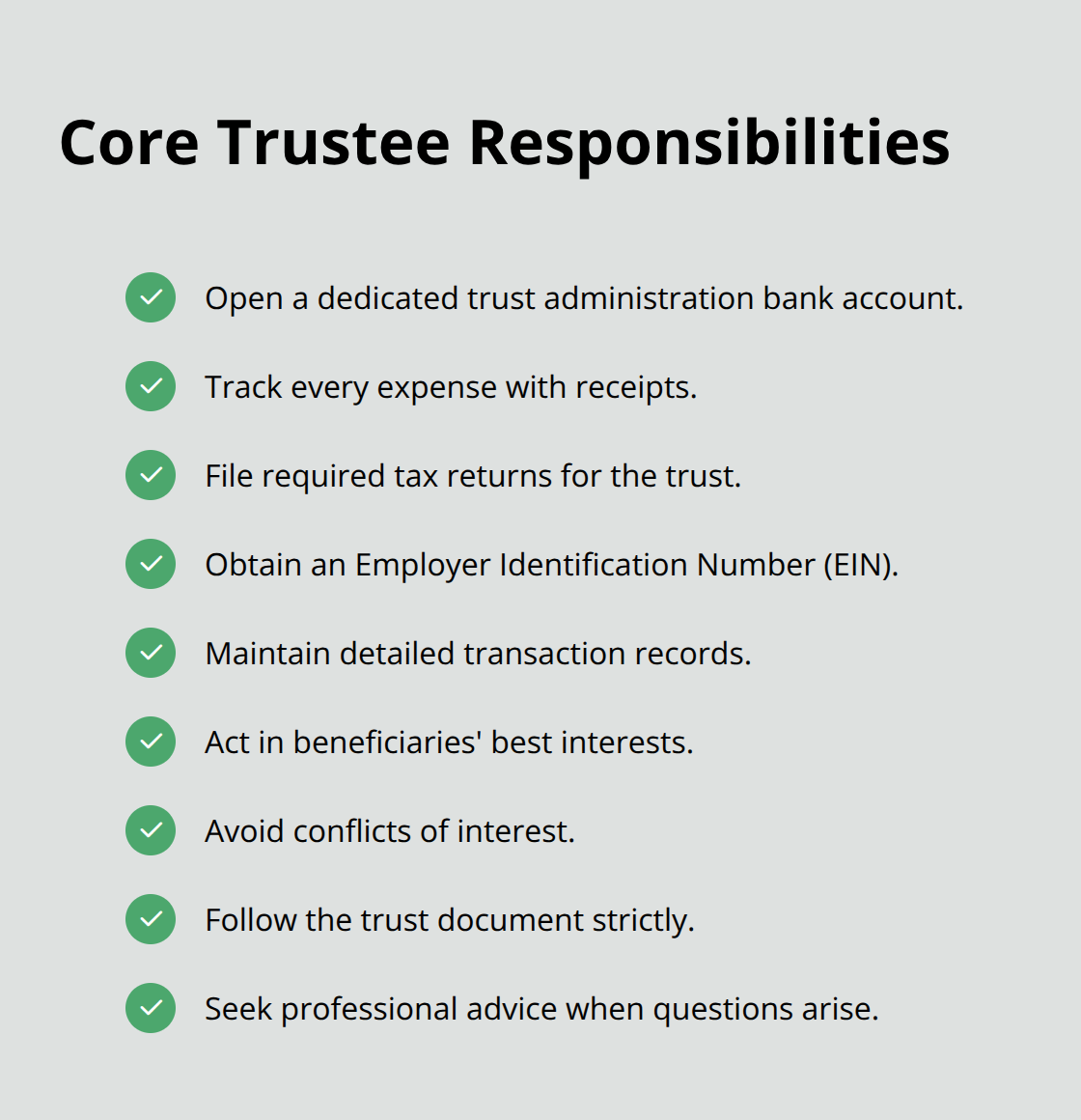
A trustee opens a dedicated trust administration bank account, tracks every expense with receipts, files tax returns if required, obtains an Employer Identification Number for the trust, and maintains detailed records of all transactions. Many families underestimate how much work this involves. The trustee also carries fiduciary duties, meaning they must act in the best interests of beneficiaries, avoid conflicts of interest, adhere strictly to the trust document, and seek professional advice when questions arise.
Without proper structure, costs balloon and disputes emerge between beneficiaries.
Why Families Struggle With Administration
Most people managing a trust for the first time don’t know where to start. They’re grieving, overwhelmed, and often juggling this responsibility alongside their regular jobs and family obligations. The process typically takes six months to two years depending on complexity, and during that time the trustee must coordinate with banks, insurance companies, real estate agents, accountants, and attorneys.
Communication gaps create frustration-beneficiaries want updates but don’t know what to expect, and the trustee feels caught between managing details and keeping everyone informed. Real estate transactions add another layer of difficulty. If the trust owns a home or rental property, the trustee must verify insurance coverage, handle title transfers, manage sale proceeds, and coordinate with mortgage lenders or tenants.
Where Mistakes Happen Most Often
Without clear documentation and a structured timeline, critical deadlines slip past. Property taxes go unpaid, insurance lapses, or distributions happen prematurely and trigger tax problems. These errors compound quickly-a missed deadline can cost thousands in penalties, and a premature distribution can create tax liability that beneficiaries must cover out of pocket.
The complexity multiplies when multiple properties, business interests, or blended families enter the picture. Each asset type carries its own rules and requirements. Real estate demands title work and potential sales coordination. Investment accounts require tax reporting and basis calculations. Business interests need valuation and succession planning. Without someone coordinating all these moving parts, the administration process stretches longer and costs more than necessary.
This is where professional guidance makes the difference. The right support transforms a chaotic, months-long struggle into an organized, manageable process-and that’s exactly what in-home trust administration services provide.
What In-Home Trust Administration Actually Delivers
Professional trust administration removes the burden of coordinating with banks, accountants, insurance companies, and real estate agents from your family’s shoulders. Instead of spending months learning probate timelines, tax filing deadlines, and property transfer rules, you work with someone who handles these tasks routinely. An experienced administrator opens the trust bank account, tracks expenses with proper documentation, files required tax returns, obtains an Employer Identification Number if needed, and maintains the detailed records that prevent disputes later. The real advantage isn’t just convenience-it’s speed and accuracy. When a trustee knows exactly what documents to request from financial institutions, which deadlines matter most, and how to coordinate property sales without delays, the entire process compresses. Families report that professional administration cuts their stress by freeing their energy to grieve and support each other rather than manage logistics.
Why Property Transactions Cost Less With Professional Help
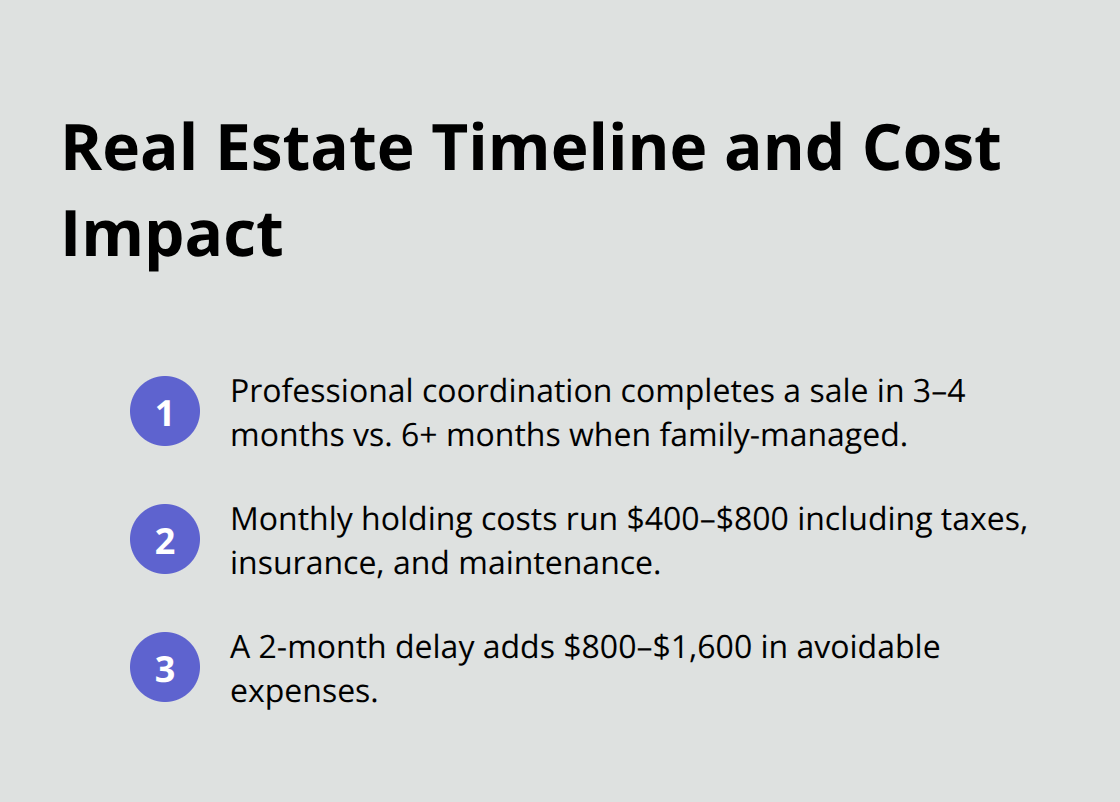
Real estate transactions represent the largest cost variable in trust administration. A property sale that takes eight months instead of four costs thousands more in holding expenses, property taxes, insurance, and maintenance. When an administrator coordinates directly with real estate agents, title companies, and mortgage servicers, miscommunications vanish. An attorney with dual licensure as both a legal professional and real estate agent streamlines estate-related property sales to eliminate unnecessary delays and communication gaps that typically inflate costs. A straightforward home sale handled professionally takes three to four months; the same sale managed by an overwhelmed family member juggling a job and grief often stretches to six months or longer. That difference translates directly to dollars. Property holding costs, even in modest markets, run $400 to $800 monthly when you factor in taxes, insurance, and maintenance. A two-month delay costs $800 to $1,600 that a professional administrator would have prevented through coordinated scheduling and clear timelines with all parties involved.
How Regular Communication Prevents Family Conflict
Beneficiaries grow frustrated when they hear nothing for weeks, then suddenly receive a large document dump demanding decisions. Professional administrators send consistent updates on a predictable schedule-monthly progress reports that explain what happened, what’s coming next, and when distributions will occur. This transparency reduces the suspicion and conflict that emerges when beneficiaries feel left in the dark. Many family disputes during trust administration stem not from the trustee’s dishonesty but from poor communication creating the appearance of secrecy. An administrator who documents everything, explains decisions clearly, and respects beneficiaries’ right to understand the process transforms the entire experience. Families stay aligned instead of fragmenting into competing camps, and the administrator avoids the exhausting emotional labor of managing frustrated relatives alongside complex financial tasks.
What Happens When You Choose Professional Guidance
The decision to hire a professional administrator shapes everything that follows. You gain someone who knows which financial institutions move slowly and which ones respond quickly, who understands tax implications before they create problems, and who coordinates multiple parties without letting details slip through cracks. This person carries the weight of fiduciary responsibility while your family focuses on healing. The administrator’s knowledge prevents costly mistakes-missed deadlines, premature distributions, improper tax filings-that would otherwise haunt your family for years. With professional support in place, the path forward becomes clear, and the next critical step involves selecting the right person to guide your family through this journey.
Selecting the Right Administrator
The administrator you choose will manage thousands of dollars, coordinate with multiple institutions, and represent your family’s interests during a vulnerable period. This decision demands careful consideration rather than defaulting to whoever offers the lowest price or moves fastest.
Evaluating Experience and Track Record
Start by asking potential administrators about their experience with estates similar to yours in size and complexity. Someone who routinely handles trusts worth $500,000 may struggle with a $2 million estate involving multiple properties and business interests. Request specific examples of recent administrations they’ve completed-how long did they take, what complications arose, and how were they resolved. An administrator who can walk you through real scenarios demonstrates competence beyond theoretical knowledge.
Ask directly about their timeline expectations. If someone promises to wrap up a complex estate in six months, that’s a warning sign. Realistic administrators acknowledge that straightforward estates take six to twelve months, while those involving real estate sales, business valuations, or family disputes stretch longer. They’ll explain the factors that affect their timeline and show you a sample schedule breaking down major milestones.
Understanding Fees and Service Scope
Inquire about their fee structure with absolute clarity. Some administrators charge hourly rates ranging from $150 to $400 per hour depending on location and credentials. Others charge a percentage of estate assets, typically one to three percent. A few charge flat fees for straightforward administrations.
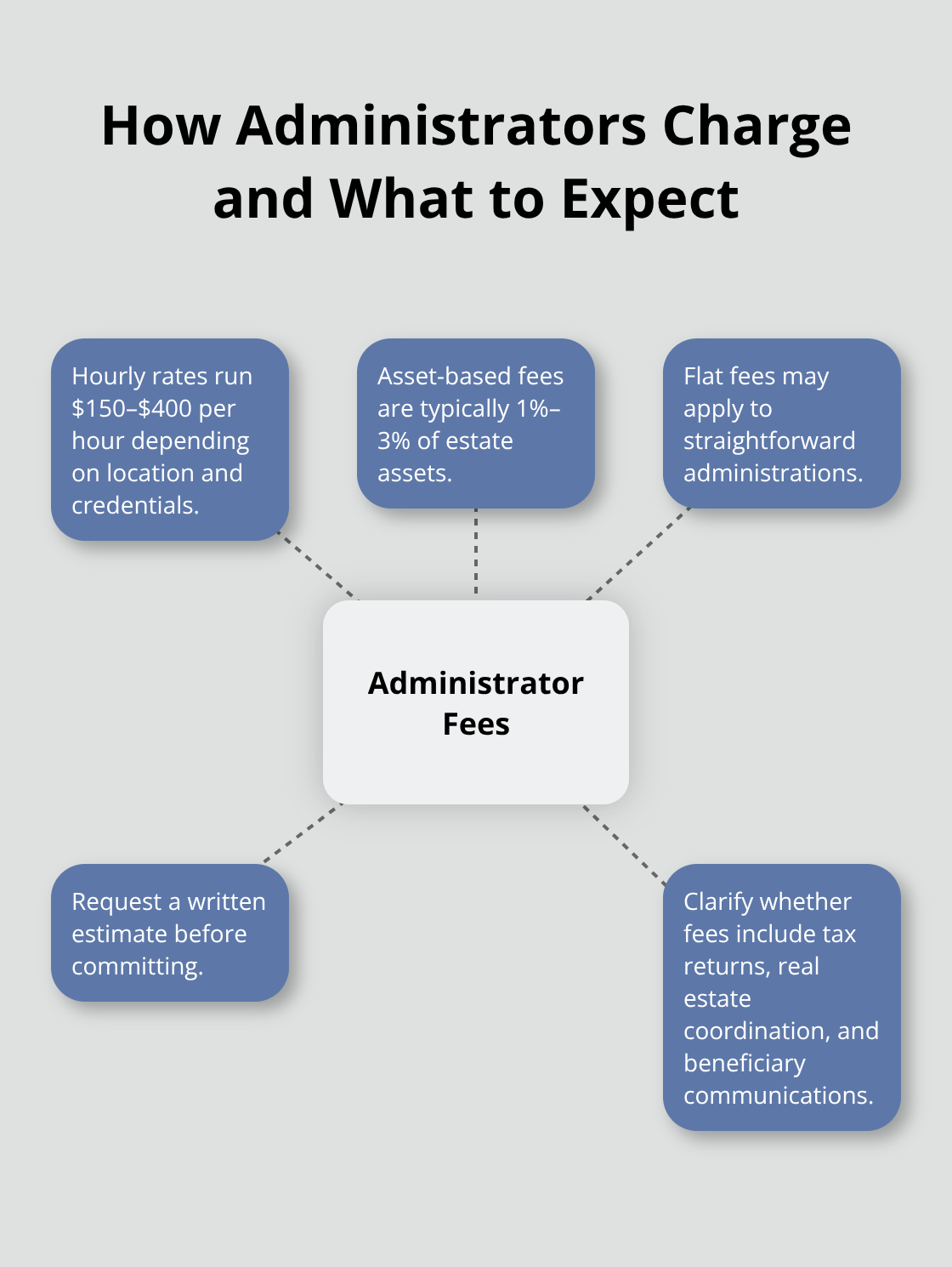
Request a written estimate before committing, and ask what services that estimate includes. Does it cover tax return preparation, real estate coordination, beneficiary communications, or do those cost extra? An administrator who refuses to provide written estimates or explains fees vaguely signals trouble ahead.
Identifying Red Flags
Watch for red flags that indicate you should keep looking. An administrator who pressures you to decide quickly or criticizes other professionals handling aspects of the estate shows poor judgment. They should collaborate with accountants, real estate agents, and attorneys rather than compete with them. Avoid anyone unwilling to provide references from recent clients or who dodges questions about their experience. If they claim they handle everything and you won’t need outside professionals, that’s deceptive-every complex estate benefits from coordinated support across multiple disciplines.
Assessing Communication and Fit
Consider whether the administrator will communicate proactively or only respond when you initiate contact. The best administrators send monthly or quarterly updates without prompting and explain decisions in plain language. Someone who requires constant follow-up will drain your energy. Pay attention to whether they seem genuinely interested in your family’s specific situation or whether they’re rushing through a standard script. The right administrator listens carefully to your concerns, asks clarifying questions, and explains how they’ll address your particular circumstances.
When comparing options, prioritize administrators who demonstrate competence, communicate transparently, show genuine interest in your situation, and provide clear written fee agreements. The lowest price rarely delivers the best value when administration extends months longer or costs accumulate from preventable errors. An administrator with dual licensure as both attorney and real estate professional streamlines property transactions and eliminates communication gaps that plague many administrations. This matters most when your estate involves real property sales. An administrator coordinating directly with title companies and real estate agents without translation layers completes transactions in three to four months rather than six.
Final Thoughts
Trust administration demands precision, patience, and coordination across multiple institutions and professionals. Families who navigate this process most successfully recognize early that managing a trust alone stretches their emotional and practical capacity beyond what most people can handle. In-home trust administration services eliminate the burden of learning complex timelines, tracking scattered documents, and coordinating with banks, accountants, and real estate agents while your family grieves.
Professional administrators compress what typically takes six months to two years into a streamlined process that costs less and prevents costly mistakes. They open dedicated accounts, track expenses with proper documentation, file required tax returns, and maintain the detailed records that protect your family from disputes. When real estate enters the picture, the savings multiply-a property sale coordinated by someone with both legal and real estate credentials takes three to four months instead of six, eliminating thousands in holding costs that accumulate during delays.
We at Law Offices of Roshni T. Desai understand that trust administration happens during your family’s most vulnerable period. Our team provides personalized guidance across Southern California, and Ms. Desai’s dual licensure as both attorney and real estate professional streamlines property sales to reduce delays and communication gaps. Contact us for a free consultation to discuss how in-home trust administration can protect your family’s future and simplify the path forward.