




Petition for Instructions California: When Trustees and Beneficiaries Ask the Court for Answers
A petition for instructions in California gives trustees and beneficiaries a way to ask the court a direct question when a trust leaves them unsure what to do. Maybe the trust language can be read two ways, a beneficiary believes the trustee is ignoring a duty, or a trustee wants a judge to approve a sale or a distribution before acting on it. Instead of guessing and hoping no one objects later, the people involved can bring the issue to the probate court and get an answer that everyone must follow. Knowing how this process works gives you real control over a trust that has stalled or drifted into conflict.
We at Law Offices of Roshni T. Desai help trustees and beneficiaries throughout Southern California resolve trust questions before they turn into long, bitter disputes, so you can move forward with confidence. This guide walks you through what a petition under Probate Code Section 17200 actually covers, how the filing and notice process works, and the mistakes that most often slow these cases down.
What a Petition for Instructions Actually Does in California
California’s Trust Law is designed so that most trusts are handled privately. Probate Code Section 17209 states that the administration of trusts is intended to proceed expeditiously and free of judicial intervention, subject to the jurisdiction of the court. In other words, a trustee normally does not need a judge’s permission to manage and distribute trust property. When a real question comes up that the parties cannot settle on their own, though, Section 17200 opens the courthouse door. Under that section, a trustee or a beneficiary may petition the court concerning the internal affairs of the trust or to determine whether a trust exists at all.
Questions About What the Trust Means
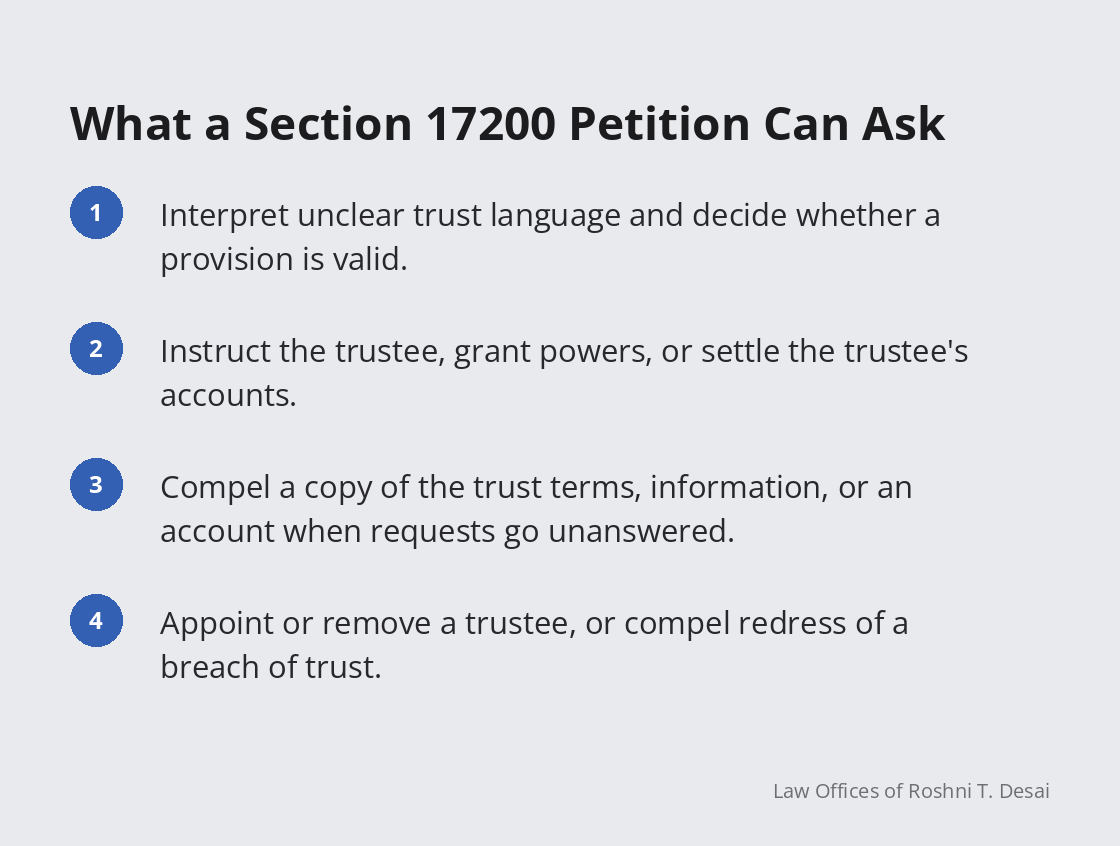
Many petitions begin with a document that is unclear. Section 17200 allows a petition for determining questions of construction of a trust instrument, which is the legal term for deciding what the words actually mean. A petition can also ask the court to decide whether a particular trust provision is valid, or to ascertain the beneficiaries and determine to whom property should pass when the trust ends or partially ends, to the extent the trust instrument does not already answer that question. These petitions are common when a trust was written decades ago, refers to people or property that no longer exist, or was amended in ways that do not fit neatly together.
Instructions and Approval for the Trustee
The phrase “petition for instructions” reflects Section 17200(b)(6), which lists instructing the trustee as one of the purposes of a proceeding. A trustee who faces a difficult decision, such as whether a distribution is permitted, how to handle a family home, or whether a proposed action fits the trust’s terms, can ask the court for direction before acting. The statute also allows petitions for determining the existence or nonexistence of any power, duty, or right, for granting powers to the trustee, and for settling the trustee’s accounts and passing upon the trustee’s acts, including the exercise of discretionary powers. A court order on these points can give a careful trustee a clear path forward.
Holding a Trustee Accountable
Beneficiaries use the same statute when they believe a trustee is not doing the job. Section 17200 allows petitions for compelling the trustee to provide a copy of the terms of the trust, to provide information about the trust when the trustee has not responded within 60 days after a reasonable written request, and to account to the beneficiary when a requested account has not been delivered within 60 days after a written request, in each case subject to the conditions written into the statute. The list also includes appointing or removing a trustee, accepting a trustee’s resignation, and compelling redress of a breach of the trust by any available remedy. A related article on removing a trustee in California explains that path in more detail.
How the Petition Process Works in Southern California Courts
A petition under Section 17200 is a court proceeding, so it follows specific rules about where to file, what the petition must say, and who must receive notice. Getting these steps right from the beginning keeps the hearing on schedule and helps avoid a continuance that can add months to an already stressful situation. The process is more structured than many families expect, but it is also more focused than a full civil lawsuit.
Choosing the Right Court
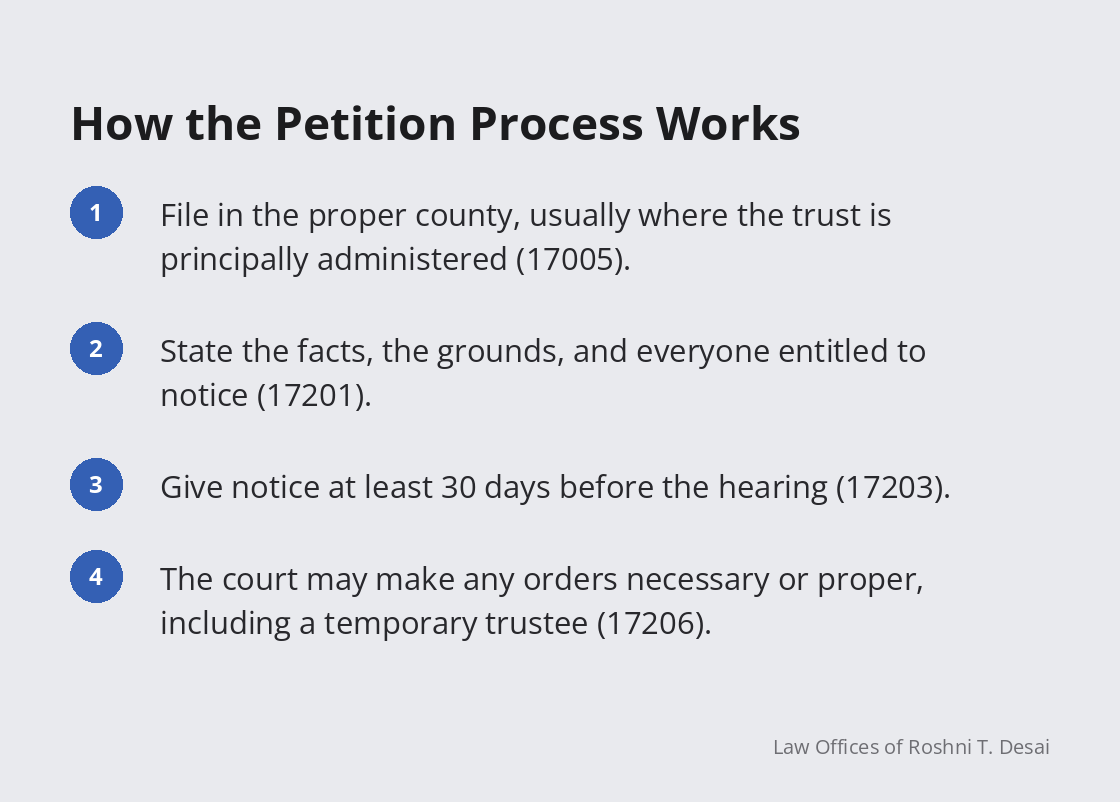
Probate Code Section 17005 sets the proper county for trust proceedings. For a living trust, the proper county is the county where the principal place of administration of the trust is located, which is usually tied to where the trustee manages the trust. For a testamentary trust created through a will, the proceeding may be brought either in the county where the decedent’s estate is administered or in the county where the trust’s principal place of administration is located. If a living trust has no trustee, a petition to appoint one may be brought in a county where some portion of the trust property is located.
What the Petition Must Say
Section 17201 explains that a proceeding begins by filing a petition stating facts showing that the petition is authorized under this chapter. The petition must also state the grounds of the petition and the names and addresses of each person entitled to notice. In practice, a strong petition tells the court exactly what question needs an answer, quotes the trust language at issue, explains the relevant history, and asks for specific orders. Vague requests invite objections and make it harder for a judge to grant clear relief.
Notice to Trustees, Beneficiaries, and Others
Under Section 17203, notice of the hearing must be delivered at least 30 days before the hearing date to all trustees and to all beneficiaries, subject to the rules for revocable trusts, and to the Attorney General if the petition relates to a charitable trust within the Attorney General’s jurisdiction. Anyone else whose right, title, or interest would be affected must be served with notice and a copy of the petition at least 30 days before the hearing, and the statute states that the court may not shorten that time. Once the matter is properly before it, Section 17206 gives the court broad discretion to make any orders and take any other action necessary or proper to dispose of the matters presented, including appointing a temporary trustee.
Common Mistakes That Derail a Trust Petition
Petitions for instructions are powerful tools, but they are not automatic. Courts look closely at whether a petition is necessary, whether the right people have been included, and whether the person filing actually has the right to ask. Many delays trace back to a handful of avoidable errors that are easier to prevent than to fix after the hearing date is set.
Filing When the Settlor Still Controls the Trust
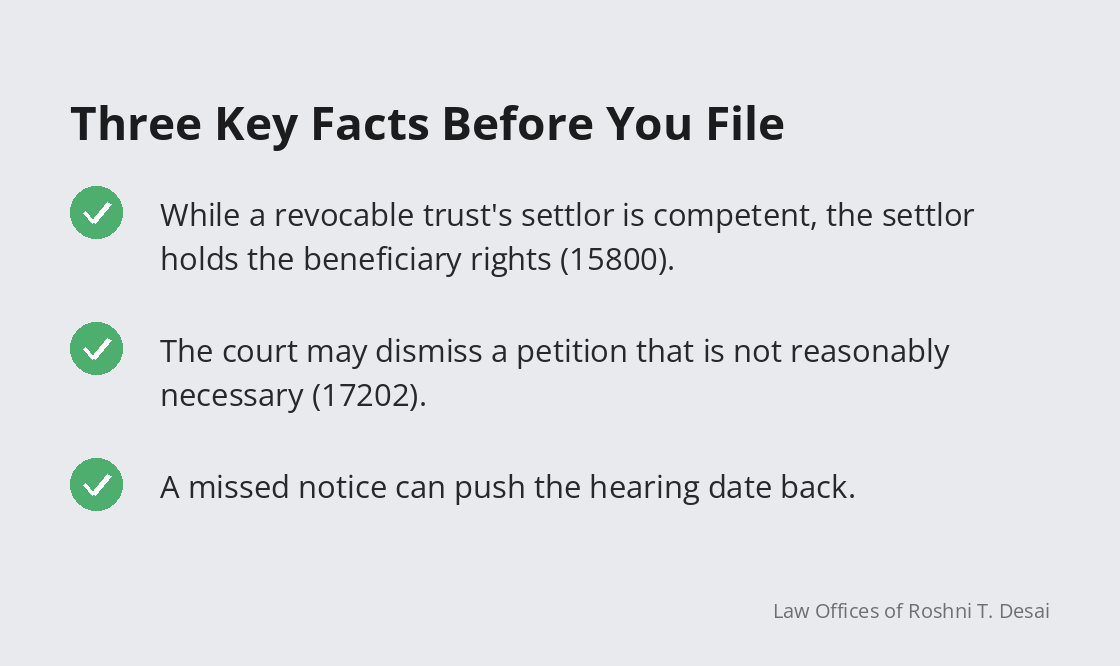
Section 17200 begins with an important exception that refers to Section 15800. While a trust is revocable and at least one person holding the power to revoke it is competent, that person, and not the beneficiary, has the rights the Trust Law gives beneficiaries, and the trustee’s duties are owed to the person holding the power to revoke. This means a named beneficiary usually cannot use the petition process to second-guess a living parent who still controls a revocable trust, unless the trust instrument provides otherwise. Many disputes only become ripe for a petition after the settlor dies or loses capacity.
Asking the Court to Do Too Much or Too Little
Probate Code Section 17202 allows the court to dismiss a petition if it appears that the proceeding is not reasonably necessary for the protection of the interests of the trustee or beneficiary. A trustee who files for instructions on a routine question the trust already answers clearly risks having the petition dismissed. On the other hand, a petition that asks only for a narrow ruling may leave the larger conflict unresolved. Framing the request carefully, and combining related issues when it makes sense, helps the court resolve the real dispute in one proceeding.
Missing a Person Who Is Entitled to Notice
Notice problems can easily force a hearing to be continued. Beneficiaries who have moved, contingent beneficiaries who were overlooked, or people whose interests would be affected even though they are not named beneficiaries can all create defects that must be corrected before the court rules. Because the statute requires at least 30 days of notice, discovering a missing person shortly before the hearing usually pushes the matter back. Building a complete list of interested persons at the start, and keeping proof of delivery, protects the timeline and the final order.
Final Thoughts
A petition for instructions in California is often the most practical way to resolve uncertainty in a trust without letting it grow into full-scale litigation. Section 17200 lets trustees and beneficiaries ask the court to interpret unclear language, confirm or grant trustee powers, settle accounts, compel information, and address a trustee who is not meeting their duties. The process works best when the petition is filed in the right county, clearly states the question, and gives proper notice to everyone whose interests are involved.
Trust disputes are personal, and they often arise when a family is already grieving. Taking a structured approach through the court can lower the temperature, protect the trustee who wants to act correctly, and give beneficiaries the information they need to understand what is happening with the trust.
If you are a trustee facing a difficult decision or a beneficiary with unanswered questions, contact the Law Offices of Roshni T. Desai to speak with our team about your options. We will review the trust, explain whether a petition makes sense, and help you take the next step with clarity.