




Removing a Trustee California: Grounds, Process, and Protecting the Trust
Removing a trustee in California is a step many beneficiaries consider when trust administration stalls, information stops flowing, or the person in charge seems to be putting their own interests first. It is also a step that families often hesitate to take, because the trustee may be a sibling, a stepparent, or a longtime family friend chosen by the person who created the trust. California law gives beneficiaries, cotrustees, and settlors a clear path to ask the court for a change, but that path depends on specific grounds and a careful record. Knowing how the rules work gives you real control over the outcome instead of leaving the trust in the hands of someone who is not doing the job.
At Law Offices of Roshni T. Desai, we help beneficiaries, cotrustees, and trustees throughout Southern California understand their rights during trust administration, so you can move forward with confidence. This guide explains what trustee removal actually means, how courts decide whether a trustee should be replaced, and the mistakes that most often derail a removal petition.
What Trustee Removal Actually Means in California
A trustee holds legal title to trust property and manages it for the beneficiaries. That role comes with duties written directly into the Probate Code. Section 16002 states that the trustee has a duty to administer the trust solely in the interest of the beneficiaries, Section 16009 requires the trustee to keep trust property separate from other property, and Section 16060 requires the trustee to keep the beneficiaries reasonably informed of the trust and its administration. When a trustee falls short of those duties, removal is one of the remedies the law makes available.
Who Can Ask for Removal
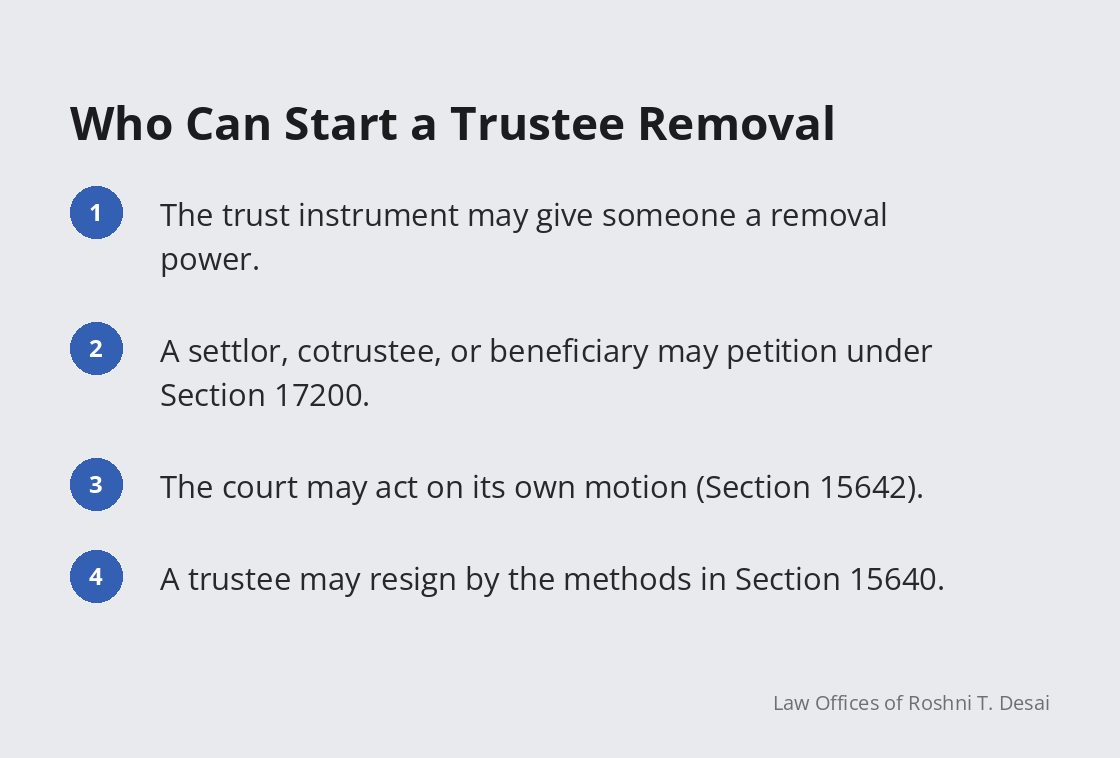
Probate Code Section 15642(a) provides that a trustee may be removed in accordance with the trust instrument, by the court on its own motion, or on petition of a settlor, cotrustee, or beneficiary under Section 17200. Section 17200 is the general statute that lets a trustee or beneficiary petition the court about the internal affairs of a trust, and its list of proceedings expressly includes appointing or removing a trustee. In practice, most removal cases begin when a beneficiary files a petition in the superior court that has jurisdiction over the trust and asks the judge to replace the current trustee.
Removal Under the Trust Instrument
Before going to court, read the trust document itself. Some trusts give a specific person, such as a trust protector, an adult child, or a majority of the beneficiaries, the power to remove and replace a trustee without a court order. Others describe exactly who serves next if a trustee steps down or is removed. When the trust provides a workable removal method, following it can be faster and less contentious than litigation. When the language is unclear or the trustee refuses to recognize the removal, the court can interpret the instrument through a Section 17200 petition.
Resignation as an Alternative
Sometimes the most practical solution is a negotiated resignation. Under Section 15640, a trustee who has accepted the trust may resign as provided in the trust instrument, with the consent of the person holding the power to revoke a revocable trust, with the consent of all adult beneficiaries who are receiving or entitled to receive income or principal from a trust that is not revocable, or by court order on the trustee’s own petition. A trustee who feels overwhelmed may welcome a clean exit, and an agreed resignation avoids a contested hearing about the trustee’s conduct.
How the Court Decides Whether to Remove a Trustee
A court does not remove a trustee simply because a beneficiary is unhappy. Section 15642(b) lists grounds for removal, and the person seeking removal must show facts that fit those grounds. Judges also give weight to the settlor’s choice of trustee, so the petition needs to explain why the trust cannot be properly administered with the current trustee in place.
Breach of Trust and Unfitness
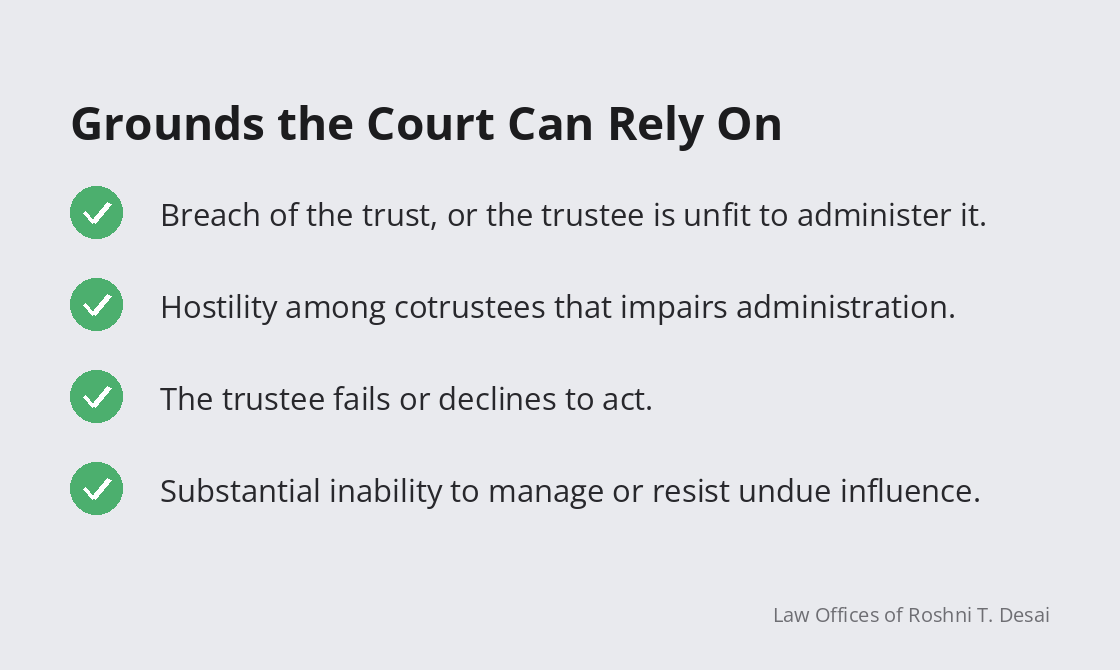
The first two grounds in Section 15642(b) are where the trustee has committed a breach of the trust and where the trustee is insolvent or otherwise unfit to administer the trust. A breach can include mixing trust assets with personal accounts, favoring one beneficiary over others, refusing to provide information, or using trust property for the trustee’s own benefit. Section 16420 confirms that removal is only one possible response to a breach. A beneficiary or cotrustee may also ask the court to compel the trustee to perform their duties, enjoin a threatened breach, appoint a receiver or temporary trustee, or set aside improper acts, subject to the protections the statute provides.
Cotrustee Conflict and a Trustee Who Will Not Act
Section 15642(b) also allows removal where hostility or lack of cooperation among cotrustees impairs the administration of the trust, and where the trustee fails or declines to act. These grounds come up often in family trusts where two siblings were named to serve together. If the cotrustees cannot agree on whether to sell a house, how to invest, or when to distribute, the trust can sit frozen for months. A trustee who simply ignores the role, never gathers assets, or never responds to beneficiaries can also be replaced on this basis, even without proof of dishonesty.
Incapacity, Undue Influence, and Other Good Cause
The statute further permits removal if the trustee is substantially unable to manage the trust’s financial resources or otherwise substantially unable to execute properly the duties of the office, and if the trustee is substantially unable to resist fraud or undue influence. When the trustee holds the power to revoke the trust, these inabilities may not be proved solely by isolated incidents of negligence or improvidence. Section 15642(b) closes with a catch-all that allows removal for other good cause, which gives the court flexibility when the facts do not fit neatly into a listed category.
Protecting Trust Property While the Petition Is Pending
Removal proceedings take time, and assets can be lost while the case moves forward. Section 15642(e) addresses that risk. If it appears that trust property or a beneficiary’s interests may suffer loss or injury while a removal petition is pending, the court may compel the trustee to surrender trust property to a cotrustee, a receiver, or a temporary trustee, and it may suspend the trustee’s powers to the extent it deems necessary. Asking for this interim relief early can prevent a sale, transfer, or depletion of assets before the judge makes a final decision.
What Derails a Trustee Removal Petition
Many removal petitions fail not because the trustee behaved well but because the petition was filed too early, without evidence, or without a plan for what happens next. Avoiding the most common missteps keeps the focus on the trustee’s conduct and on protecting the trust.
Filing Without a Paper Trail
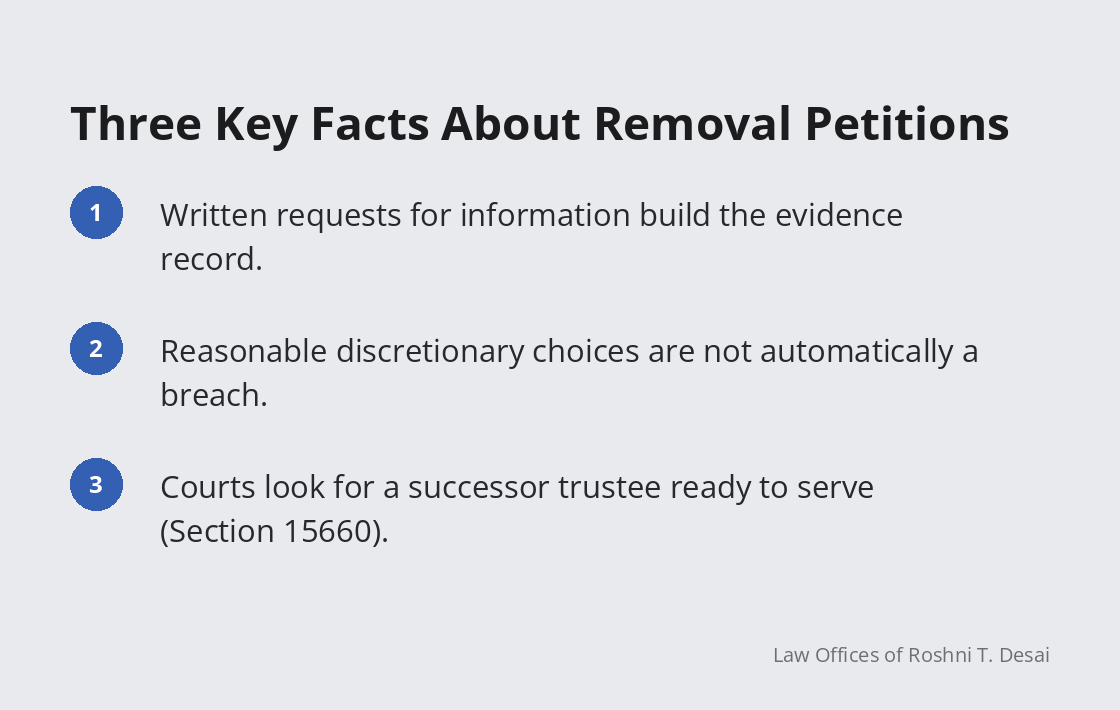
Judges decide removal petitions on evidence, so start by building a record. Section 16061 requires the trustee, on reasonable request by a beneficiary, to report information about the administration of the trust that is relevant to that beneficiary’s interest. If the trustee ignores a written request, Section 17200(b)(7) allows a beneficiary to petition the court to compel the information when the trustee has failed to provide it within 60 days after a reasonable written request and the beneficiary has not received the requested information within the six months before the request. A similar rule applies to requested accounts. Written requests and the trustee’s silence often become the strongest exhibits in a later removal case. Our article on trustee notification in California explains the separate notice a trustee must send when a trust becomes irrevocable.
Confusing Disagreement With Breach
A trustee who makes a reasonable decision you dislike has not necessarily breached the trust. Trust instruments often give trustees discretion over timing, investments, and distributions, and courts generally respect that discretion when it is exercised in good faith. Petitions built mainly on personal conflict or frustration tend to struggle. Section 15642(d) also allows the court to impose consequences on the people seeking removal if it finds the petition was filed in bad faith and that removal would be contrary to the settlor’s intent. Focusing on concrete duties, such as reporting, loyalty, and keeping trust property separate, produces a far stronger case.
Forgetting the Successor Trustee
Removing a trustee creates a vacancy, and the court will want to know who fills it. Under Section 15660, a vacancy is filled as the trust instrument provides when it names a successor or gives a practical method of appointment; if that does not work, the vacancy may be filled by a trust company that has agreed to accept the trust on the agreement of the qualifying adult beneficiaries, and otherwise the court may appoint a trustee on petition. Section 15644 then requires the former trustee to deliver trust property to the successor and keeps the former trustee responsible for that property until it is delivered. Identifying a willing, qualified successor before filing makes the court’s decision easier and the transition smoother.
Final Thoughts
Removing a trustee in California is a serious step, but it is available when a trustee breaches the trust, cannot or will not act, is locked in conflict with a cotrustee, or otherwise gives the court good cause. The process usually starts with the trust document and a Section 17200 petition, and it succeeds most often when beneficiaries have documented their requests, focused on specific duties, and lined up a successor ready to serve.
If the trust assets are at risk while a dispute plays out, remember that the court can suspend a trustee’s powers and place property with a cotrustee, receiver, or temporary trustee before the final hearing.
If you are a beneficiary or cotrustee concerned about how a trust is being managed, contact Law Offices of Roshni T. Desai to speak with our trust administration team. We will review the trust, explain your options under California law, and help you protect the trust and your interests with confidence.