



Probate Attorney Consultations: What to Ask Before Hiring
Hiring a probate attorney is one of the most important decisions you’ll make during an estate settlement. The right attorney can guide you through complex paperwork and protect your interests, while the wrong choice can lead to costly mistakes.
Probate attorney consultations give you a chance to evaluate whether someone is truly qualified for your case. We at Law Offices of Roshni T. Desai believe that asking the right questions upfront saves you time, money, and stress down the road.
Questions About Attorney Qualifications and Experience
Years in practice matter far less than what an attorney has actually done during those years. Ask specifically how many probate cases your potential attorney has handled, not just how long they’ve been practicing law. Someone with 20 years of general practice may have handled only a handful of probate matters, while another attorney with 8 years focused entirely on probate administration brings far more relevant knowledge.
Ask About Years of Practice in Probate Law
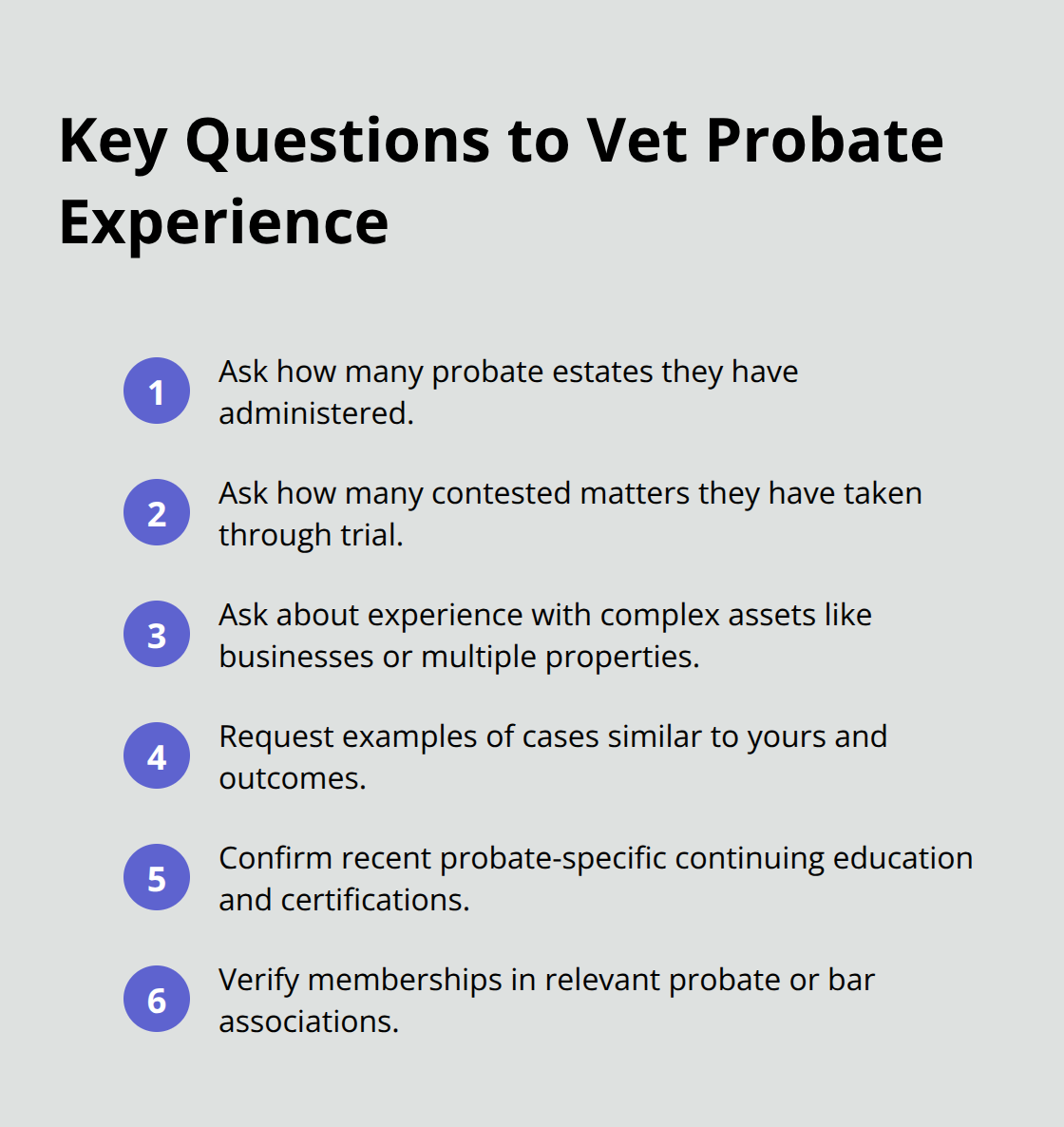
Push for concrete numbers: How many estates has the attorney administered? How many contested cases has the attorney taken through trial? How many involved complex assets like family businesses or multiple properties? The answers reveal whether probate is genuinely their focus or just one service among many. An attorney who handles mostly straightforward estates may lack the skill to manage your more complicated situation.
Inquire About Track Record with Similar Cases
Your situation has specific characteristics that demand matching experience. If your estate includes commercial real estate, ask whether the attorney has handled probate cases involving property sales and title transfers. If family conflict seems likely, ask how many will contests or executor disputes they’ve resolved. If the deceased owned a business, find out whether they’ve navigated succession planning within probate.
Florida Statute 733.6171 allows courts to award extraordinary compensation for complex matters like will contests, postmortem tax planning, and business-related probate issues-but only attorneys with genuine experience in these areas can handle them effectively. Don’t settle for vague assurances; ask for specific examples of similar cases they’ve completed.
Find Out About Continuing Education and Professional Memberships
Probate law changes regularly through court decisions and legislative updates. An attorney who hasn’t pursued continuing education in the past two years operates with outdated knowledge. Ask what probate-related courses or certifications they’ve completed recently and whether they maintain membership in relevant bar associations or probate-focused organizations (these memberships often require demonstrating current knowledge and adherence to professional standards).
Probate administration typically lasts 12 to 18 months, and your attorney needs to understand current rules affecting everything from creditor notification timelines to tax filing requirements. Ongoing professional development signals that an attorney takes their probate practice seriously and can guide you through the fee structures and cost considerations that come next.
Understanding Probate Attorney Fees and Cost Structure
Attorney fees for probate work fall into three distinct structures, and Florida law explicitly prohibits one common misconception. Under Florida Statute 733.6171, there is no mandatory statutory fee for probate administration-fees are negotiable and paid directly from estate assets. Many people assume probate attorneys charge a fixed percentage of the estate value, but that’s not how it works in Florida. An attorney handling a $500,000 estate doesn’t automatically earn a set amount; instead, the fee depends on the complexity of work performed and what you agree to upfront.
Request a Detailed Breakdown of All Fees
Demand a written fee agreement before any work starts. Florida law requires that if your attorney drafted the will, they must provide you with a separate written compensation agreement and cannot charge more than what’s stated in that agreement. Your attorney must also disclose in writing whether fees are negotiable, that compensation isn’t strictly tied to estate size, and that you-as the personal representative-select the attorney. Without these disclosures, the attorney cannot be paid without prior court approval or written consent from all interested parties.
Ask About Flat Fees versus Hourly Rates
Hourly billing typically ranges from $200 to $400 per hour depending on the attorney’s background and location, while flat fees for straightforward probate cases often fall between $2,000 and $7,000 according to commonly cited industry ranges. Some attorneys use a hybrid approach, charging a base flat fee for routine administration tasks and hourly rates for anything beyond that scope. The structure you choose affects your budget predictability and total cost exposure.
Clarify What Costs Are Included and What Are Additional Expenses
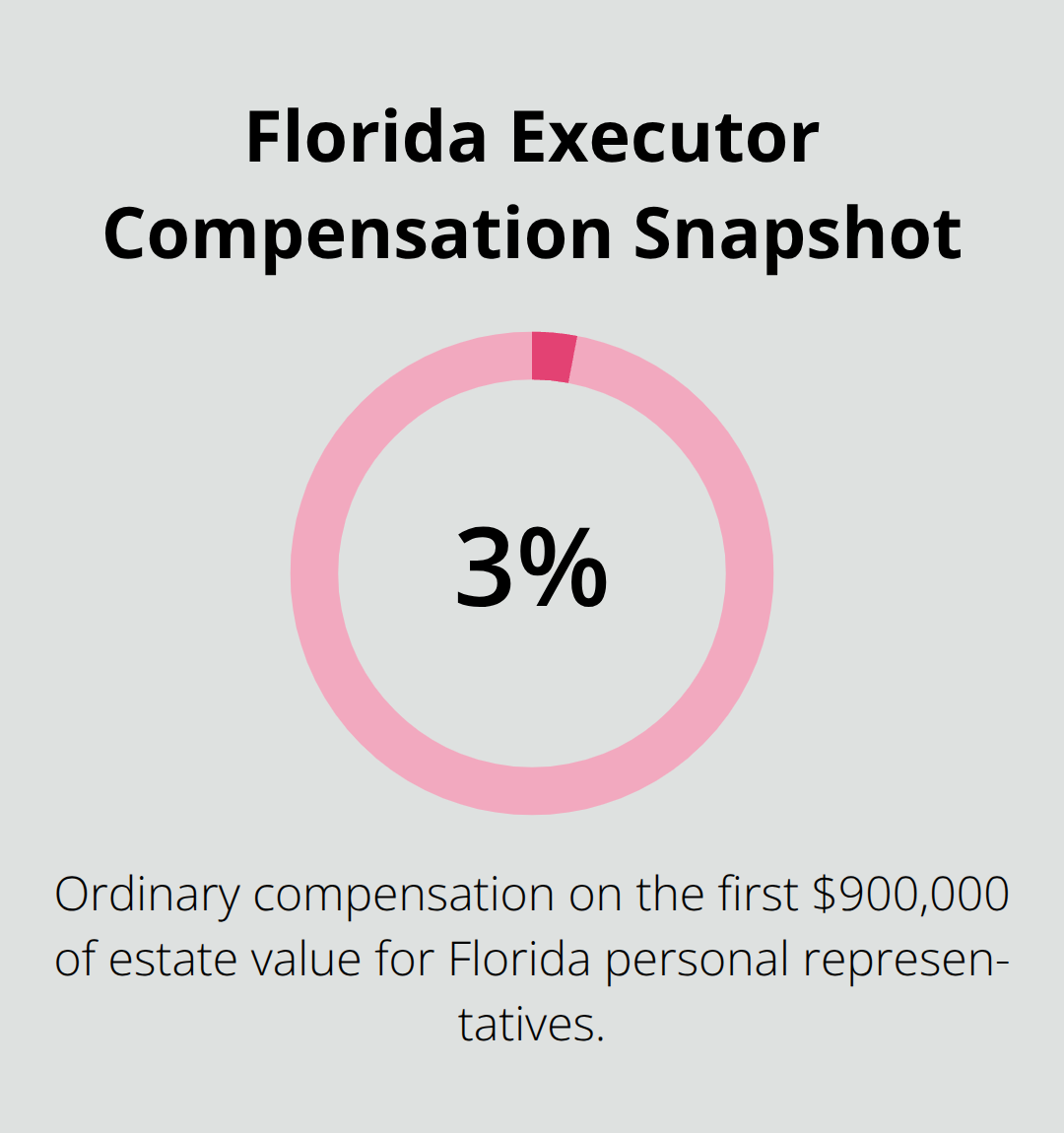
Beyond attorney fees, probate involves numerous additional costs that accumulate quickly and often catch people off guard. Court filing fees, publication costs for creditor notices, and postage add up fast, particularly in estates with multiple properties or many creditors to notify. If the estate includes real property that needs appraisal for tax purposes, that’s another significant expense. Executor compensation is separate from attorney fees; in Florida, the personal representative can receive ordinary compensation based on the estate’s value, starting at $1,500 for estates valued at $40,000 or less and scaling up to 3% of the first $900,000 for larger estates.
Ask your attorney to itemize every potential cost category and provide realistic estimates based on your specific situation-the number of assets, whether assets need professional appraisal, how many heirs require notification, and whether creditor disputes are likely. Some attorneys bundle certain costs into their fee while others bill them separately; clarify what’s included before signing anything. Understanding your complete fee picture now prevents surprises later, which brings us to an equally important consideration: how your attorney will actually communicate with you throughout the process.
How Your Probate Attorney Will Actually Stay in Touch
Probate administration takes 12 to 18 months on average, and you’ll spend a significant portion of that time waiting for updates or answers. An attorney who disappears for three months between court filings creates unnecessary anxiety and makes you question whether your case is progressing. The communication structure you establish in your initial consultation directly determines whether probate feels manageable or frustrating.
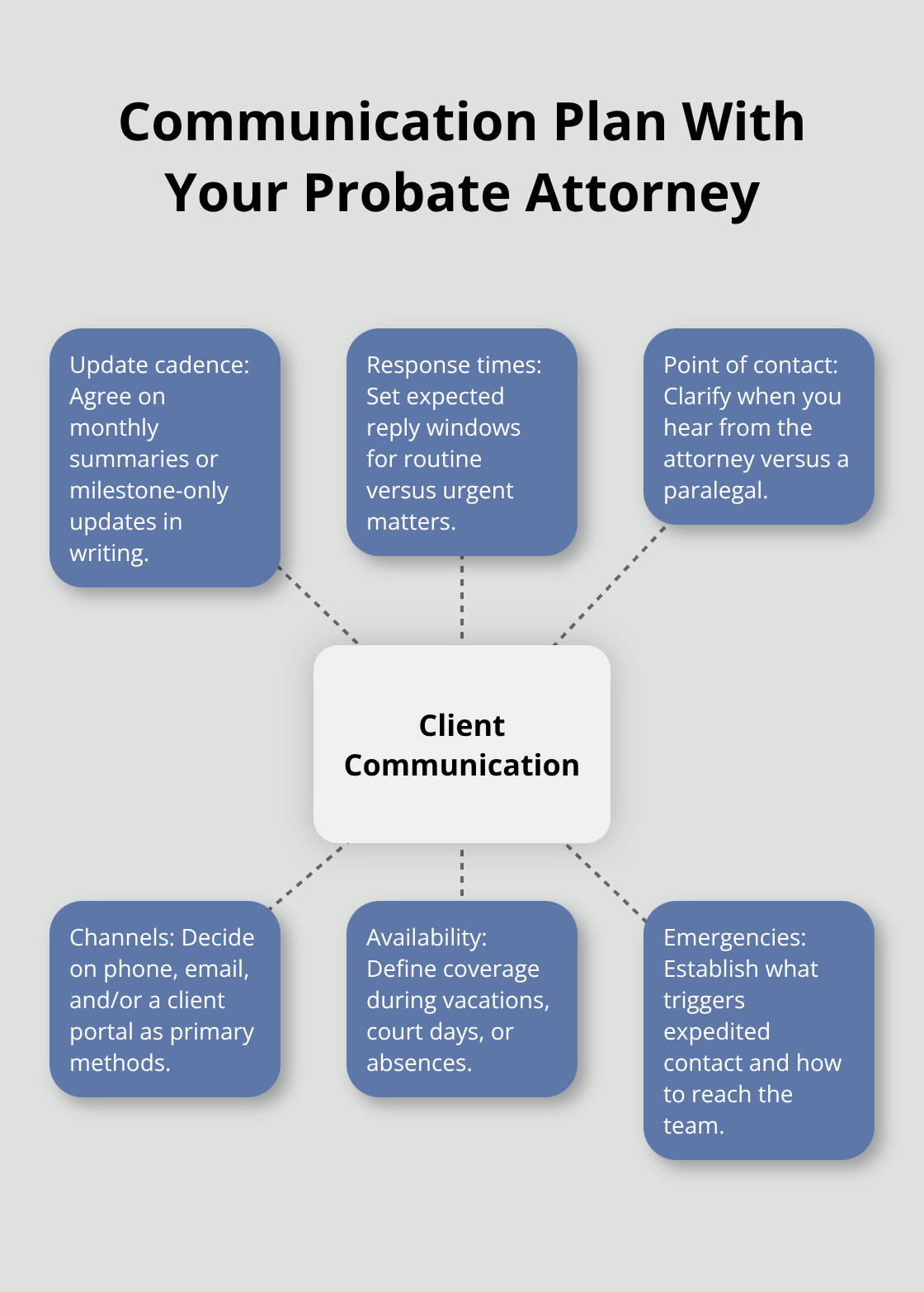
Ask your potential attorney to commit to specific update frequencies in writing. Some attorneys provide monthly written summaries regardless of activity level, while others contact you only when something concrete happens. Neither approach is inherently wrong, but you need to know which one you’re getting and whether it matches your expectations. If you’re the personal representative managing the estate, you’ll need regular touchpoints to report to beneficiaries, coordinate asset sales, or address creditor issues. An attorney who only calls when court dates arrive leaves you scrambling to fill information gaps.
Establish Clear Update Expectations
Determine whether your attorney will send brief email updates on routine progress or require formal meetings for every development. Ask directly: What happens in months when nothing major occurs? Do you still get a status report, or do you hear nothing until the next filing deadline? Florida Statute 733.6171 requires a summary of services at the end of probate administration, but that’s a backward-looking document. You need forward-looking communication throughout the process.
Response Time Matters More Than You Think
An attorney who responds to emails within 24 hours creates vastly different stress levels than one who takes a week. Probate moves on court schedules, not your timeline, but deadlines for creditor claims, tax filings, and asset sales don’t wait for slow responses. Ask your potential attorney what their standard response time is for routine questions and what constitutes an urgent matter that receives faster attention. Some firms guarantee 48-hour responses for all inquiries; others prioritize only matters affecting court deadlines.
If your personal representative has a time-sensitive question about selling real estate or resolving a creditor dispute, you need an answer within days, not weeks. Find out whether you’ll work with the attorney directly or primarily with paralegals and support staff. Many firms assign a paralegal to manage day-to-day communication while the attorney handles strategy and court appearances. This structure reduces costs but means your quick questions go to someone without final decision-making authority. Ask how this delegation works and whether the attorney reviews paralegal responses before they reach you.
Choose Your Communication Channel
Some firms use client portals where you can upload documents and check case status anytime; others rely entirely on phone calls and emails. Try to match the method to your communication style and comfort level. Some attorneys list a phone number but rarely answer calls, preferring email. Others take calls directly but rarely check email. If you communicate best by phone but your attorney only responds to written messages, friction develops quickly. Establish upfront how you’ll actually reach them, not how the firm’s website says you should contact them.
Plan for Gaps in Availability
Probate doesn’t follow business hours. You might discover a missing asset on a Sunday or realize you need clarification on executor duties while reviewing bank statements on a weekend. Ask whether your attorney has an emergency contact process for genuinely time-sensitive matters and what constitutes an emergency. A creditor making a claim against the estate requires immediate attention; a general question about timeline can wait until Monday.
Clarify what happens when your attorney is on vacation or temporarily unavailable. Do they have a colleague who covers their cases, or does everything stall? A firm with multiple probate attorneys can ensure continuity; a solo practitioner may leave you stranded during their absence. Ask directly whether the attorney takes extended vacations during the probate timeline and how they handle coverage. Understanding attorney fees and costs upfront also helps you evaluate whether the firm’s communication structure justifies their pricing and whether you’re getting responsive service for what you’re paying.
Final Thoughts
The questions you ask during probate attorney consultations directly shape your entire probate experience. You’ve learned what matters: years spent specifically on probate cases, track records with situations matching yours, current knowledge through continuing education, transparent fee structures with written agreements, and communication patterns that keep you informed without creating unnecessary delays. Trust your instincts during the consultation, and if an attorney seems dismissive of your questions, vague about their experience, or unwilling to provide written fee agreements, that’s your signal to keep looking.
After your consultation, compare what you learned across multiple attorneys before making your final decision. Request written fee agreements from your top choice and review them carefully before signing anything. Confirm that all disclosures about negotiable fees and your role in selecting the attorney appear in writing, as Florida law requires. Probate administration lasts 12 to 18 months, and you’ll spend that time relying on someone to guide you through unfamiliar legal territory, manage deadlines, and protect your interests.
We at Law Offices of Roshni T. Desai offer free consultations to help you evaluate whether we’re the right fit for your situation. Our firm provides personalized probate and estate planning services across Southern California, and we work with clients both in-person and through remote Zoom consultations. Contact us to schedule your consultation and start asking the right questions about your probate needs.