




Probate Lawyer Referrals: Finding Trusted Probate Attorneys
Choosing the right probate lawyer can feel overwhelming when you’re grieving and managing an estate. We at Law Offices of Roshni T. Desai know that probate lawyer referrals matter-they connect you with attorneys who understand your state’s specific laws and your family’s needs.
This guide walks you through what to look for, where to find qualified lawyers, and mistakes to avoid. You’ll have the information needed to make a confident decision.
What Makes a Probate Lawyer Worth Hiring
The right probate lawyer brings hands-on knowledge of your state’s specific court procedures, estate tax rules, and asset distribution timelines. You need someone who has actually managed dozens of estates, not just read about them. Ask potential candidates how many probate cases they handle annually-lawyers managing 12 or more per year have developed efficient workflows and know exactly what problems surface. Look for attorneys who have handled estates similar in size and complexity to yours. A lawyer comfortable with a $200,000 estate might struggle with a $2 million portfolio involving commercial property or multiple beneficiaries in dispute.
State law matters enormously. California probate law differs significantly from Michigan or New York rules, so local experience translates directly to faster timelines and fewer costly mistakes. You can verify disciplinary history through your state bar’s official channels. Avoid attorneys who seem eager to take every case-the right lawyer will be honest about whether your situation fits their wheelhouse.
Understanding Fee Structures
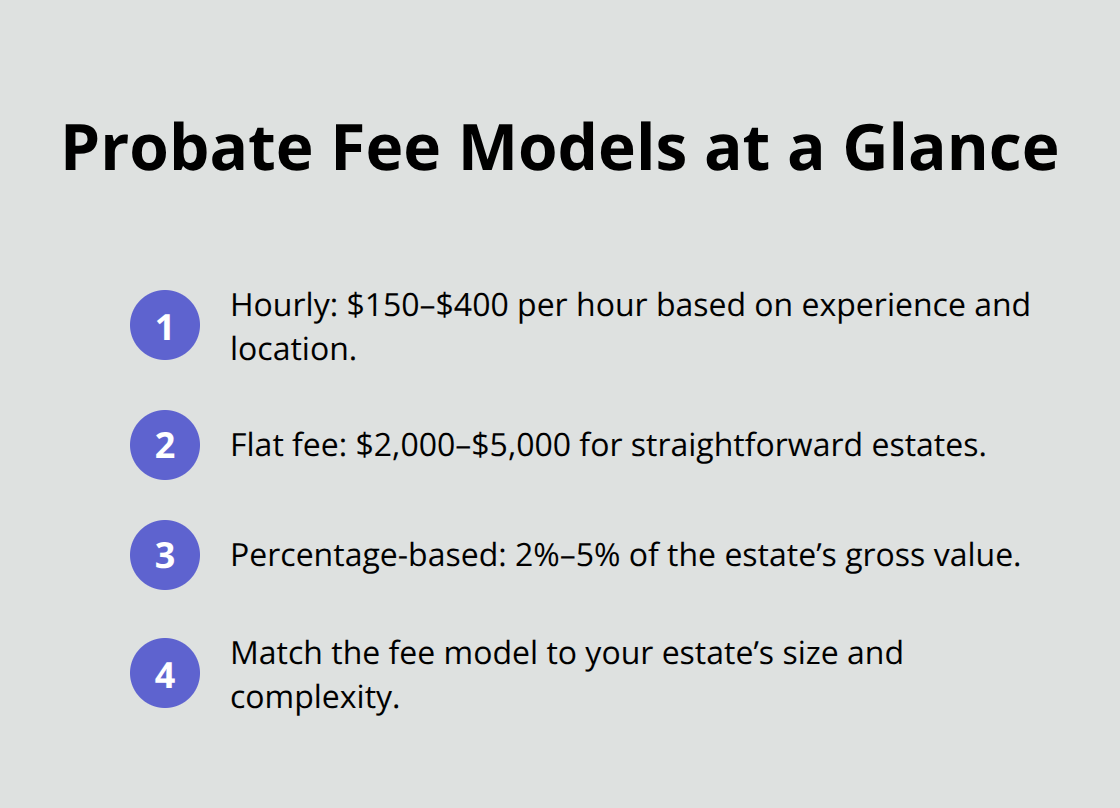
Most probate attorneys charge hourly rates, flat fees, or a percentage of estate value. Hourly billing typically ranges from $150 to $400 per hour depending on experience and location, while flat fees for straightforward estates run $2,000 to $5,000. Percentage-based fees generally fall between 2% and 5% of the estate’s gross value.
For smaller estates under $100,000, flat fees make sense. For mid-sized estates between $100,000 and $500,000, percentage-based fees often align both your interests and the attorney’s. For larger estates exceeding $1 million, hourly rates frequently prove cheaper.
What Tasks Cost Extra
Ask your attorney upfront what specific tasks are included-whether they handle creditor negotiations, tax coordination, and deed transfers or if those cost extra. Some lawyers bundle everything; others charge separately for appraisals, court filing fees, or working with the tax preparer. Transparent pricing prevents arguments later when the final bill arrives.
Comparing Fee Models for Your Estate
The choice of fee structure should reflect your estate’s size and complexity. Hourly rates work well when you need ongoing counsel and support throughout probate. Flat fees provide budget certainty for straightforward administrations. Percentage-based arrangements can feel fair when the attorney’s effort scales with your estate’s value, though you’ll want to confirm the calculation method upfront.
Before you commit to any fee arrangement, understand exactly what deliverables you’ll receive and what remains outside the scope. This clarity sets expectations and protects both you and your attorney from misunderstandings as the probate process unfolds.
Where to Find Probate Lawyers Who Know Your State
Tap Into Referrals From People With Real Experience
Referrals from people who’ve already hired probate attorneys carry real weight because they come from firsthand experience. Ask your financial advisor, CPA, or investment manager for names-they regularly work alongside probate lawyers and see which ones deliver results. Family members and friends who’ve settled estates recently can point you toward attorneys who actually answered their calls and hit promised timelines. However, personal referrals alone won’t protect you.

You need to verify credentials independently through your state bar’s official directory.
Verify Credentials Through Official State Bar Channels
The State Bar of Michigan Member Directory, for example, lets you filter by practice area and city, then cross-check disciplinary history through the Attorney Discipline Board. This step matters because not every referral comes with scrutiny-someone might recommend an attorney based on a single positive interaction without knowing about complaints filed against them. Search your state bar’s website directly rather than relying on aggregator sites that may not reflect current disciplinary status. This verification protects you from hiring an attorney with hidden problems.
Read Client Reviews That Focus on Probate Outcomes
Once you’ve shortlisted three to five candidates from referrals and verified their standing, read what actual clients say. Google reviews mentioning specific probate outcomes-like how quickly the attorney closed an estate or handled a beneficiary dispute-tell you more than generic praise. Real feedback from clients focused on probate results matters far more than general ratings. Look for patterns in reviews rather than individual comments. If multiple clients mention slow communication or surprise fees, that’s a red flag.
Ask Direct Questions About Their Caseload and Experience
Don’t stop at reviews alone. Call each attorney’s office and ask how many probate cases they handled last year. If they can’t answer that question or seem vague, move on. Ask whether they’ve handled estates similar to yours in size and complexity. Request references from clients with comparable situations-a lawyer comfortable managing a $150,000 estate with one beneficiary may not be right for a $750,000 estate with three contentious heirs. These conversations reveal whether an attorney has the specific background your situation requires.
Conduct Thorough Consultations as Interviews
When you narrow your list to your top two or three candidates, schedule consultations. Treat these as interviews where you’re assessing fit, not just gathering information. Prepare questions about their process, timeline estimates, and how they’d handle specific challenges in your situation (asset disputes, creditor claims, tax coordination). The attorney who listens carefully and asks detailed questions about your family dynamics and assets is likely to serve you better than one who rushes through the meeting. This conversation sets the tone for your entire working relationship and helps you identify whether the attorney will truly advocate for your family’s interests.
Common Mistakes When Choosing a Probate Attorney
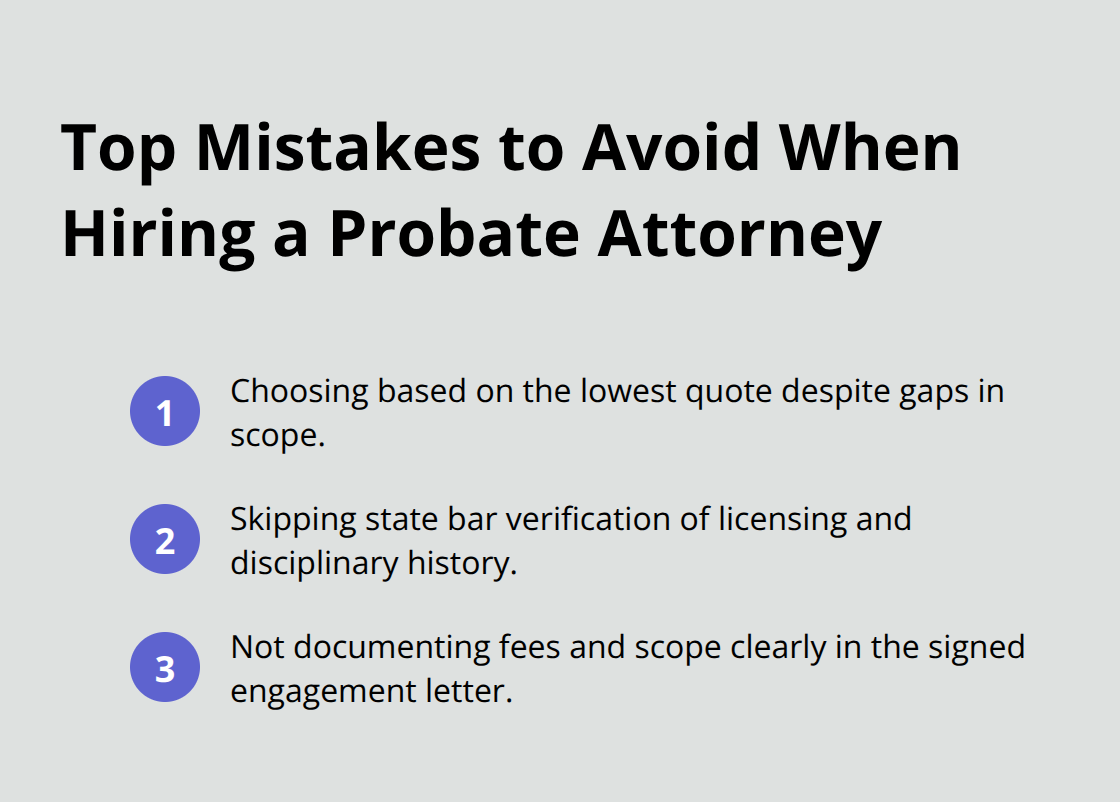
Hiring a probate attorney based primarily on the lowest quote is one of the fastest ways to end up paying far more than you anticipated. A lawyer quoting $2,500 flat for estate administration might not include creditor negotiations, tax coordination, or deed transfers-services another attorney bundles into a $4,000 fee. When those extra tasks surface, you’ll face surprise invoices that dwarf the original quote.
The cheapest option rarely accounts for the actual work your estate requires, and cutting corners during probate creates delays that extend timelines by months and compound costs through court filing fees and extended administration expenses.
Selecting Based on Price Alone
Low initial quotes often hide significant gaps in scope. You need to compare what each attorney actually includes in their fee, not just the headline number. Two attorneys quoting different prices may offer completely different services-one handles everything while the other charges separately for appraisals, deed transfers, or tax coordination. Request itemized breakdowns from each candidate so you can compare apples to apples. The attorney who costs more upfront might save you thousands by preventing delays and handling all tasks under one fee structure.
Failing to Verify Licensing and Disciplinary History
An attorney’s state bar license tells you whether complaints, disciplinary actions, or sanctions exist against them. Many people skip this step because they trust referrals from friends or assume online directories verify attorneys automatically-they don’t. Search your state bar’s official website directly and look for the Attorney Discipline Board or Grievance Commission records. If an attorney has faced multiple complaints about billing practices, missed deadlines, or client communication failures, that pattern matters far more than a single positive review. Some attorneys operate with suspended licenses or restrictions you won’t find on general directories. This verification takes 15 minutes and protects you from hiring someone with a documented history of problems. Don’t rely on aggregator sites or Google alone-go directly to your state bar’s official channels.
Not Discussing Fees and Scope of Work Upfront
The most damaging misunderstandings happen when you and your attorney have different expectations about what’s included. Before you sign any engagement letter, ask your attorney in writing whether they handle creditor claim negotiations, coordinate with your tax preparer, obtain property appraisals, prepare deed transfers, or manage beneficiary communications. Some attorneys include everything in their fee; others charge separately for appraisals, court filings, or working with outside professionals. Get this clarity in your engagement letter-not verbally, not in an email, but in the formal agreement you both sign. Ask what happens if your estate becomes more complex than initially anticipated. Will the fee structure change, and if so, how much notice do you get? Attorneys who resist putting scope details in writing are signaling they’re comfortable with vague arrangements, which inevitably lead to disputes when the final invoice arrives.
Final Thoughts
Finding the right probate lawyer comes down to three core factors: relevant experience handling estates similar to yours, transparent communication about fees and scope, and verified credentials through your state bar. An attorney who manages a dozen or more probate cases annually has developed the workflows and problem-solving skills your estate needs. They understand your state’s specific court procedures, tax rules, and asset distribution timelines in ways that prevent costly delays.
Before you hire anyone, ask how many probate cases they handled last year, whether they’ve managed estates similar in size and complexity to yours, and what specific tasks their fee covers. Request an itemized breakdown so you can compare offers fairly. These conversations reveal whether an attorney will truly serve your family’s interests or simply process your estate like a transaction.
We at Law Offices of Roshni T. Desai understand that probate lawyer referrals matter most when you’re grieving and managing an estate. We offer personalized guidance tailored to your family’s needs, and Ms. Desai’s dual licensure as an attorney and real estate professional streamlines estate-related property sales to reduce costs and delays. We provide free consultations with flexible home or office visits, so you can discuss your situation without pressure or upfront fees.