




Probate Streamlining for Estates: Faster Closings And Fewer Hassles
Probate can drag on for months or even years, leaving families frustrated and finances frozen. Court delays, missing paperwork, and family disagreements are common culprits that slow everything down.
We at Law Offices of Roshni T. Desai know that probate streamlining for estates makes a real difference in how quickly families can move forward. This post covers the main obstacles, practical strategies to overcome them, and how professional guidance can cut through the complexity.
What Causes Probate to Stall
Court Backlogs Create Unavoidable Delays
Court systems across California face overwhelming caseloads. The Los Angeles Superior Court processes thousands of probate cases annually, and many courts experience backlogs that stretch timelines by six months or longer. Criminal cases take priority over probate matters, and staff shortages mean fewer people process estate filings. When you file probate documents, they sit in a queue waiting for review, causing delays that have nothing to do with your case’s complexity. Administrative bottlenecks happen because courts lack the resources to move cases faster.
Paperwork Problems Multiply Delays
Missing or incomplete paperwork multiplies court backlogs significantly. According to California Courts guidance, the personal representative must verify filings under penalty of perjury using Form MC-030, and any errors or missing signatures send documents back for correction. This creates a cycle where one missing document adds weeks to your timeline. Courts also hold up proceedings when property ownership is unclear, tax liens exist, or title issues remain unresolved.
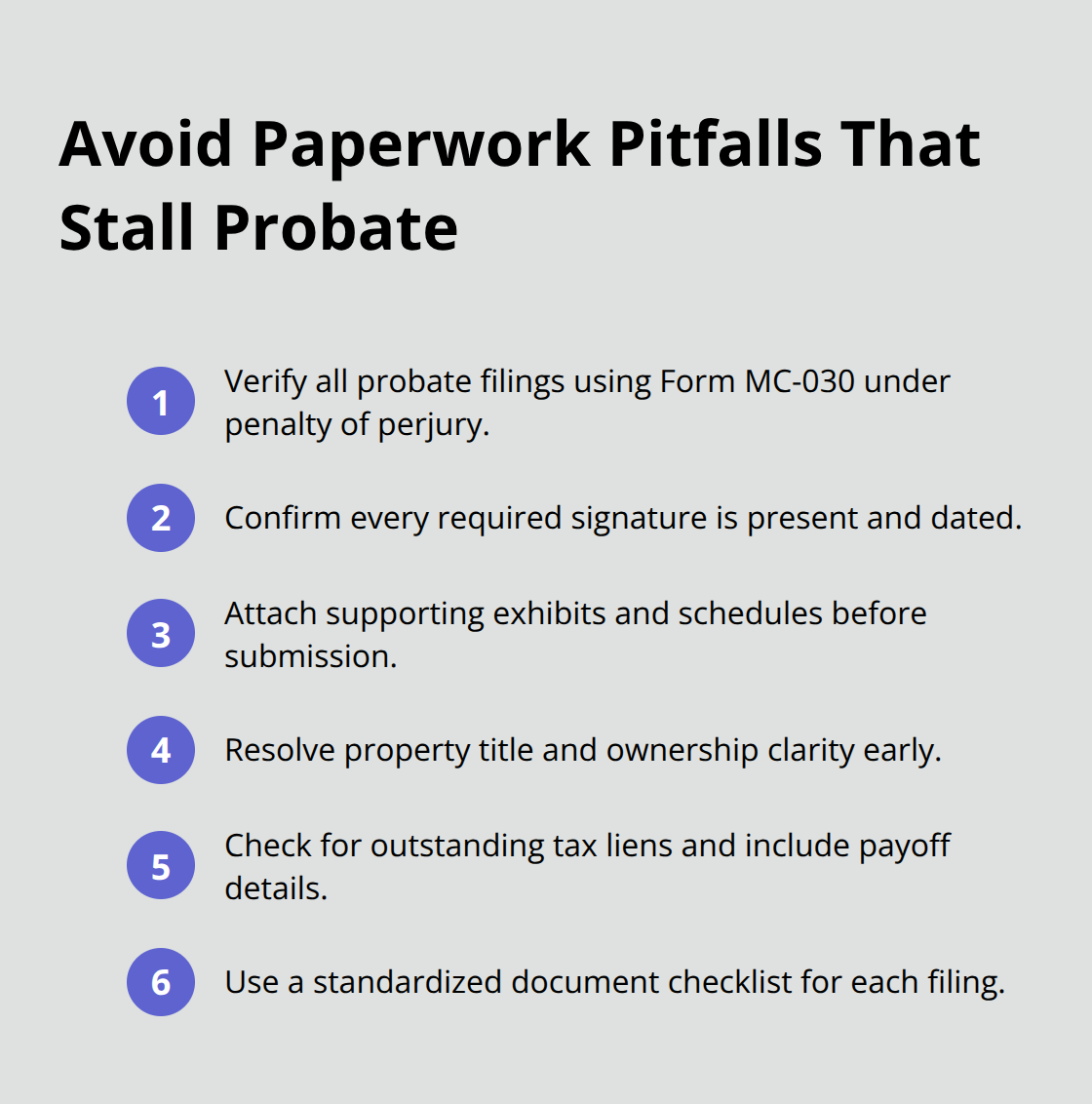
A single documentation gap can trigger a cascade of delays.
Family Conflicts Halt Everything
Family disagreements over asset distribution damage probate timelines more than any administrative problem. When beneficiaries dispute the will’s validity, contest distributions, or claim the executor mishandled assets, the entire probate process halts while courts mediate conflicts. These disputes extend probate by years, not months, because litigation consumes court time and legal resources that could otherwise move estates forward.
Act Fast to Prevent Cascading Problems
The probate process moves fastest when the personal representative acts within weeks of death, not months. Immediate action on death certificates, asset documentation, and creditor and beneficiary notifications prevents information gaps that courts later flag. Organizing estate information early (compiling a complete list of assets, liabilities, and account numbers) allows you to estimate the total estate value and determine which probate pathway applies. Some estates qualify for simplified procedures that bypass formal probate entirely, saving substantial time.
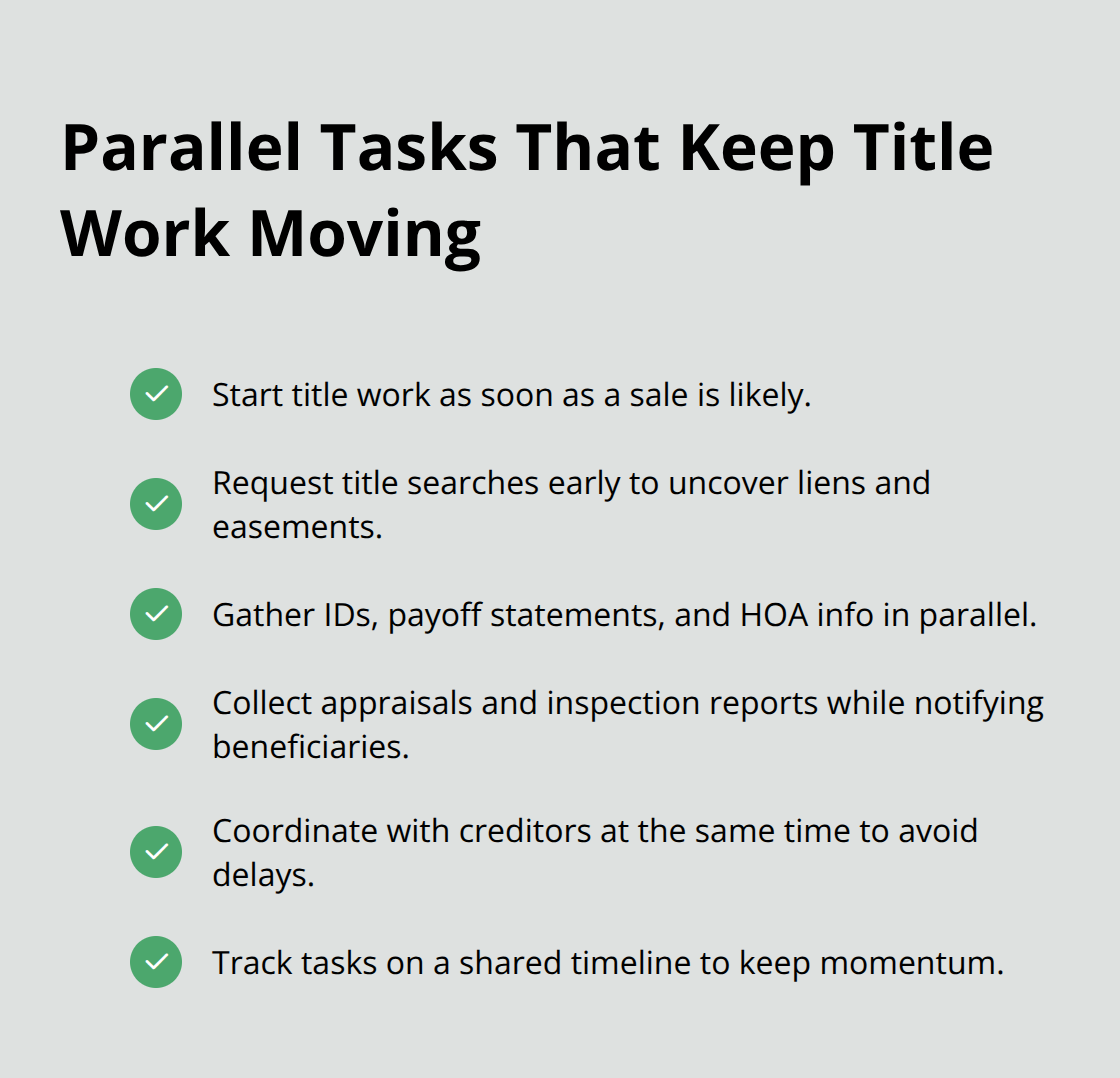
Title work should start as soon as property sales become likely because liens, easements, and ownership discrepancies discovered late derail closing timelines. Missing identification documents, payoff statements, and HOA disclosures create last-minute obstacles when everything else is ready. Parallel processing of tasks prevents bottlenecks where one delayed task blocks everything else. While you gather assets, file required tax returns on schedule. While you notify beneficiaries, collect property appraisals and inspection reports. This coordinated approach keeps momentum moving forward.
Professional Guidance Identifies Hidden Risks
An experienced probate attorney shortens timelines considerably because attorneys know which documents courts actually require and spot potential title issues before they become problems. We at Law Offices of Roshni T. Desai understand how estate-related property sales interact with probate timelines, and our dual licensure in law and real estate helps streamline transactions that often complicate closings. Understanding these interconnected challenges positions you to move forward strategically rather than react to problems as they surface.
How to Organize Your Estate Before Probate Starts
Compile Complete Asset and Liability Lists Immediately
Estates that move quickly separate themselves through organized documentation from the start. The California Courts Self-Help Guide emphasizes that organizing asset and liability information early prevents the documentation gaps that trigger court delays. You must compile a complete list of assets, liabilities, and account numbers before filing anything with the court. Start by obtaining multiple certified copies of the death certificate immediately after death-order at least 15 copies rather than the minimum you think you need, since every financial institution and creditor requires originals and financial institutions process requests slowly. Next, create a spreadsheet listing every asset the deceased owned: bank accounts with balances and account numbers, investment accounts, real estate properties with estimated values, vehicles, business interests, and personal property of significant value. Include liability information the same way-mortgages, credit card debts, medical bills, and tax obligations. This organized inventory lets you estimate the total estate value and determine whether your estate qualifies for simplified probate procedures that bypass formal court proceedings entirely, potentially saving months of processing time.
Start Title Work and Property Documentation Early
Title work for any property sales must start immediately because liens, easements, and ownership discrepancies discovered late derail closing timelines significantly. You should request title searches as soon as property sales become likely, and gather identification documents, payoff statements, and HOA information in parallel rather than sequentially. This parallel approach prevents bottlenecks where one delayed task blocks everything else. While you collect property appraisals and inspection reports, you can simultaneously notify beneficiaries and creditors. This coordinated effort keeps momentum moving forward from the moment probate begins.
File Complete and Accurate Paperwork From the First Submission
Working with an attorney to file complete, accurate paperwork from the first submission prevents the costly cycle of rejected documents that send cases back for corrections. According to California Courts guidance, all probate filings must be verified under penalty of perjury using Form MC-030, and any missing signatures or incomplete information sends documents back for revision, adding weeks to your timeline. An attorney who understands your jurisdiction’s specific requirements catches errors before submission and ensures verification statements are completed correctly.
Maintain Clear Communication With All Parties
Clear communication with beneficiaries and creditors prevents disputes that halt probate entirely. You should notify all parties promptly about the probate process, timeline expectations, and their roles to reduce confusion and prevent beneficiaries from filing contests later based on incomplete information. Send written notification to all known creditors within the probate timeline required by California law, and provide beneficiaries with regular updates about asset collection progress and distribution timelines. Maintain thorough records of all correspondence, filings, and decisions so nothing slips through the cracks, and respond to creditor claims and beneficiary questions within the deadlines courts set.
Professional Guidance Prevents Costly Mistakes
An experienced probate attorney shortens timelines considerably because attorneys know which documents courts actually require and spot potential title issues before they become problems. The Law Offices of Roshni T. Desai understands how estate-related property sales interact with probate timelines, and our dual licensure in law and real estate helps streamline transactions that often complicate closings. Understanding these interconnected challenges positions you to move forward strategically rather than react to problems as they surface. With proper organization, complete filings, and consistent communication in place, your estate is positioned to handle the tax obligations and debt settlement that often create unexpected delays in the probate process.
Why Professional Administration Stops Property Sales From Derailing Probate
Property Sales Create Overlapping Legal and Real Estate Demands
Property sales within probate estates create cascading complications that derail timelines if handled without coordination between legal and real estate processes. When an estate includes real property, the personal representative must obtain court approval for the sale, manage title issues, coordinate with buyers and lenders, and handle closing logistics-all while probate administration continues. Missing a single deadline in this interconnected process delays the entire closing, and delayed closings mean beneficiaries wait longer for distributions while estate costs accumulate. Title searches reveal liens, easements, and ownership discrepancies that must be resolved before closing, and discovering these issues late in the transaction adds weeks to resolution timelines. Starting title work immediately when property sales become likely prevents these last-minute obstacles from blocking closings.
Tax Deadlines and Creditor Claims Operate on Strict Timelines
Tax filings and debt settlement operate on strict deadlines that independent executors frequently miss, creating penalties and compounding estate costs that reduce distributions to beneficiaries. Federal estate tax returns must be filed within nine months of death if the estate exceeds the federal exemption threshold, and state income tax returns for the decedent and the estate itself must be filed on time or interest and penalties accumulate. California requires the personal representative to notify creditors within probate timelines, and creditors have four months from notification to file claims or lose the right to collect.
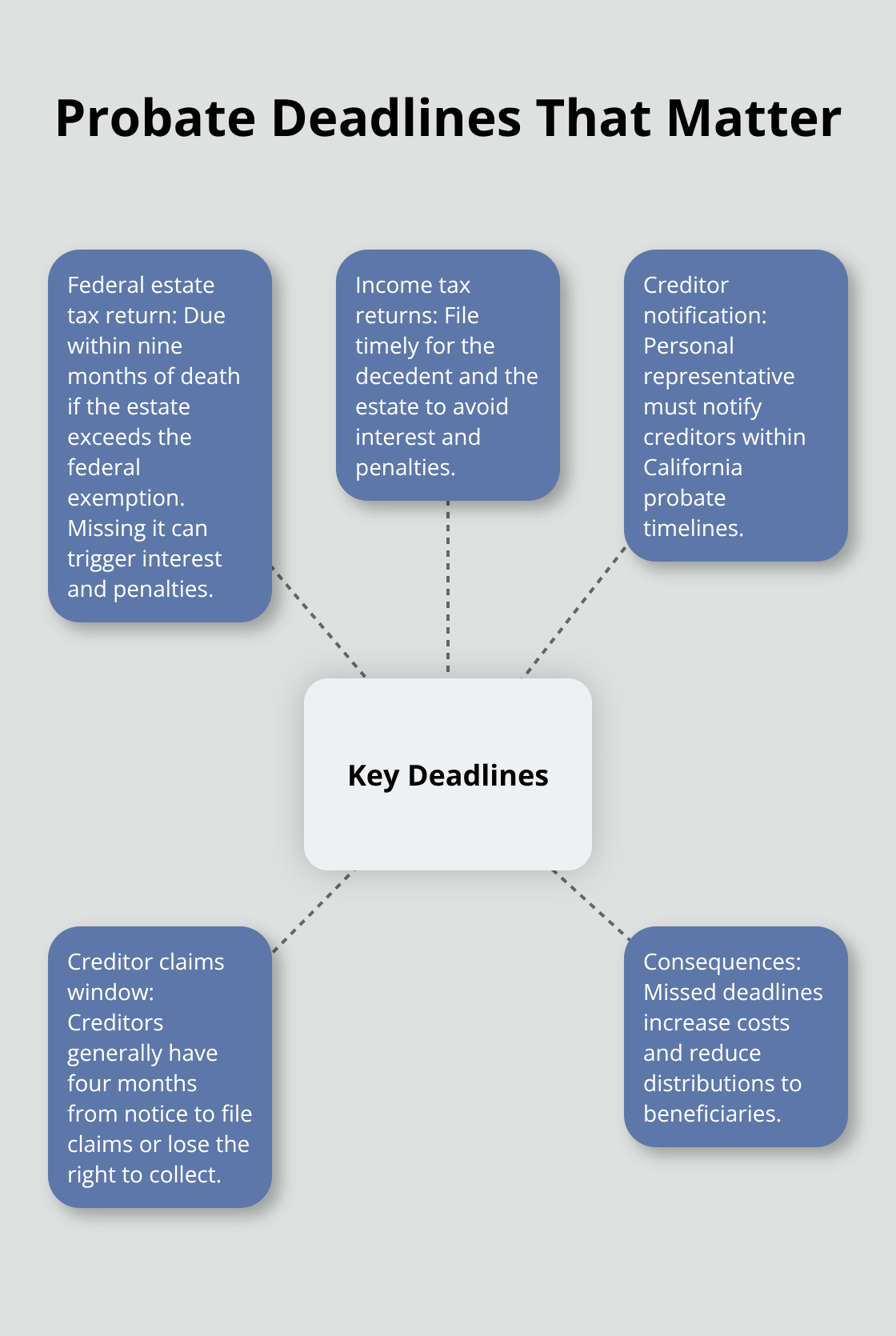
Missing these deadlines costs money that should go to beneficiaries instead.
Professional Administration Maintains Deadline Calendars and Tax Compliance
Professional probate administration maintains a calendar of all filing deadlines, prepares tax returns accurately and submits them on time, and tracks creditor claims to prevent disputes that surface months later. This systematic approach prevents the information gaps and missed deadlines that extend probate timelines and frustrate families during an already difficult period.
Coordination With Courts and Third Parties Requires Consistent Follow-Up
Coordinating with courts and third parties-banks, insurance companies, investment firms, creditors, and government agencies-requires consistent follow-up because each institution moves at its own pace and requires specific documentation. A probate attorney manages this coordination, sends required notices in the correct format and timeframe, responds to court orders promptly, and maintains records that demonstrate compliance with every procedural requirement. The Law Offices of Roshni T. Desai brings dual licensure as both an attorney and real estate professional, which streamlines estate-related property sales and transactions to reduce costs, delays, and communication challenges that typically complicate closings.
Final Thoughts
Probate streamlining for estates requires you to act immediately on three fronts: organize your documentation, file complete paperwork from the start, and maintain consistent communication with all parties. Court backlogs, missing documents, and family conflicts will slow you down if you wait passively for the process to unfold, so acting fast prevents cascading delays that compound over months and years. An attorney who understands your jurisdiction’s requirements catches errors before submission, spots title issues before they derail closings, and maintains deadline calendars so tax filings and creditor notifications happen on time.
When your estate includes property sales, the coordination between legal and real estate processes becomes essential. Missing a single deadline in this interconnected system delays the entire closing and frustrates families during an already difficult period. We at Law Offices of Roshni T. Desai bring dual licensure as both an attorney and real estate professional, which streamlines estate-related property sales and reduces the costs, delays, and communication challenges that typically complicate closings.
Your next step is straightforward: contact us for a free consultation to discuss your estate’s specific situation and timeline. We offer flexible home or office visits to make the process convenient for your family. Schedule your consultation with Law Offices of Roshni T. Desai and take control of your probate timeline today.